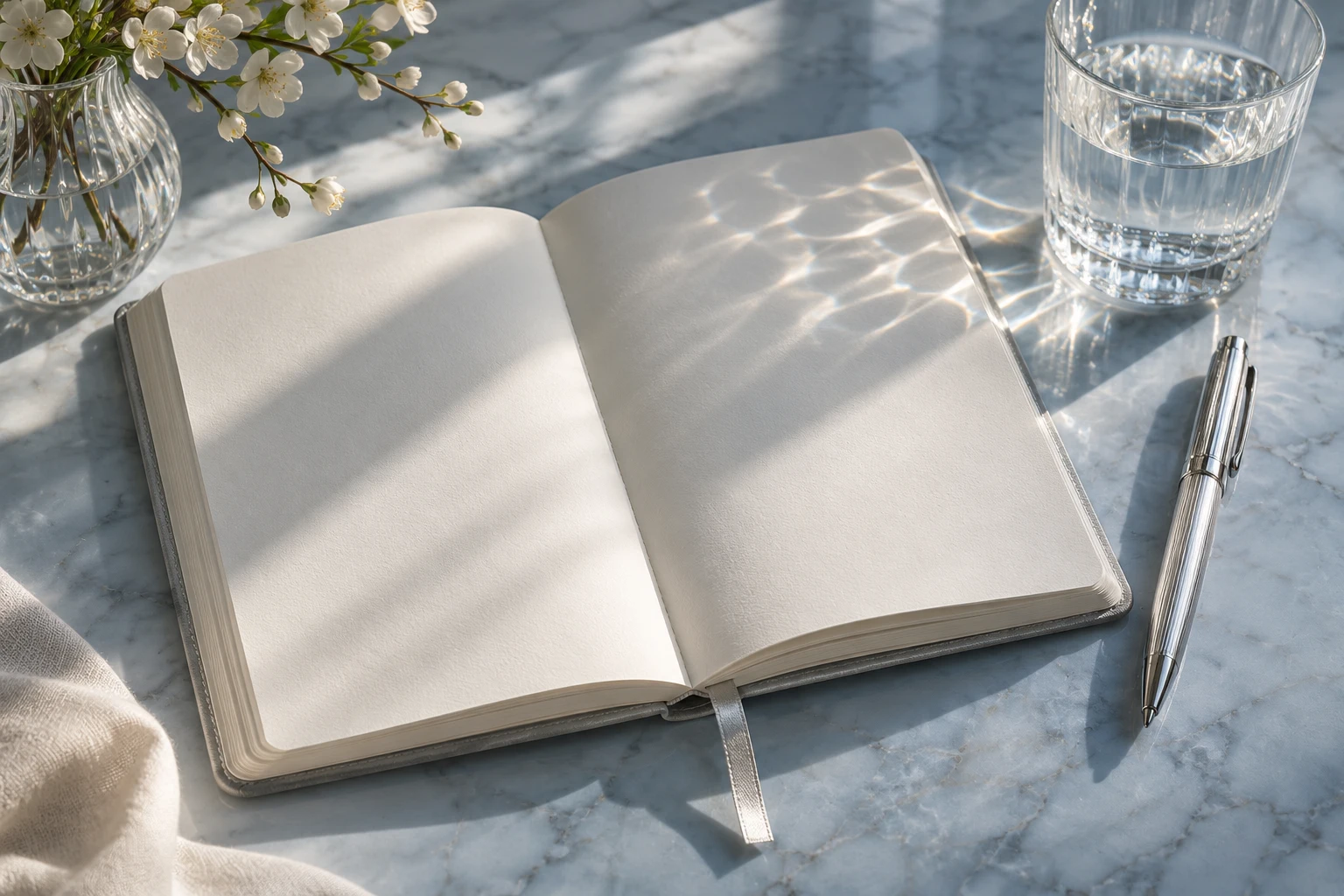
Water gives a space movement without adding another object. A reflection shifts. A ripple breaks a straight line. Light turns a familiar surface into something that feels briefly new.
Borrow a quality, not a theme
A room does not need to look like an ocean to feel fluid. Choose one quality you enjoy: transparency, a soft blue, a rounded edge, or a little reflected light. Let that quality appear in a few considered places.
A clear vase and a softly folded curtain can do more than a collection of matching decorations. The connection can be subtle.
Mix reflection with texture
Too many glossy surfaces can feel visually busy. Set glass beside linen, a matte wall, or an unpolished ceramic piece. The quieter material gives the reflective one something to play against.
Look at the arrangement from the place where you actually sit. A beautiful reflection may be less enjoyable if it shines directly into your eyes.
Keep movement gentle
The most interesting details often take a moment to notice. A sheer curtain, changing daylight, or an object with an irregular surface can bring variety without making the room feel restless.
Digital spaces can follow the same principle. Motion should be adjustable, sound should be a choice, and the words should remain easy to read.
Leave a little stillness
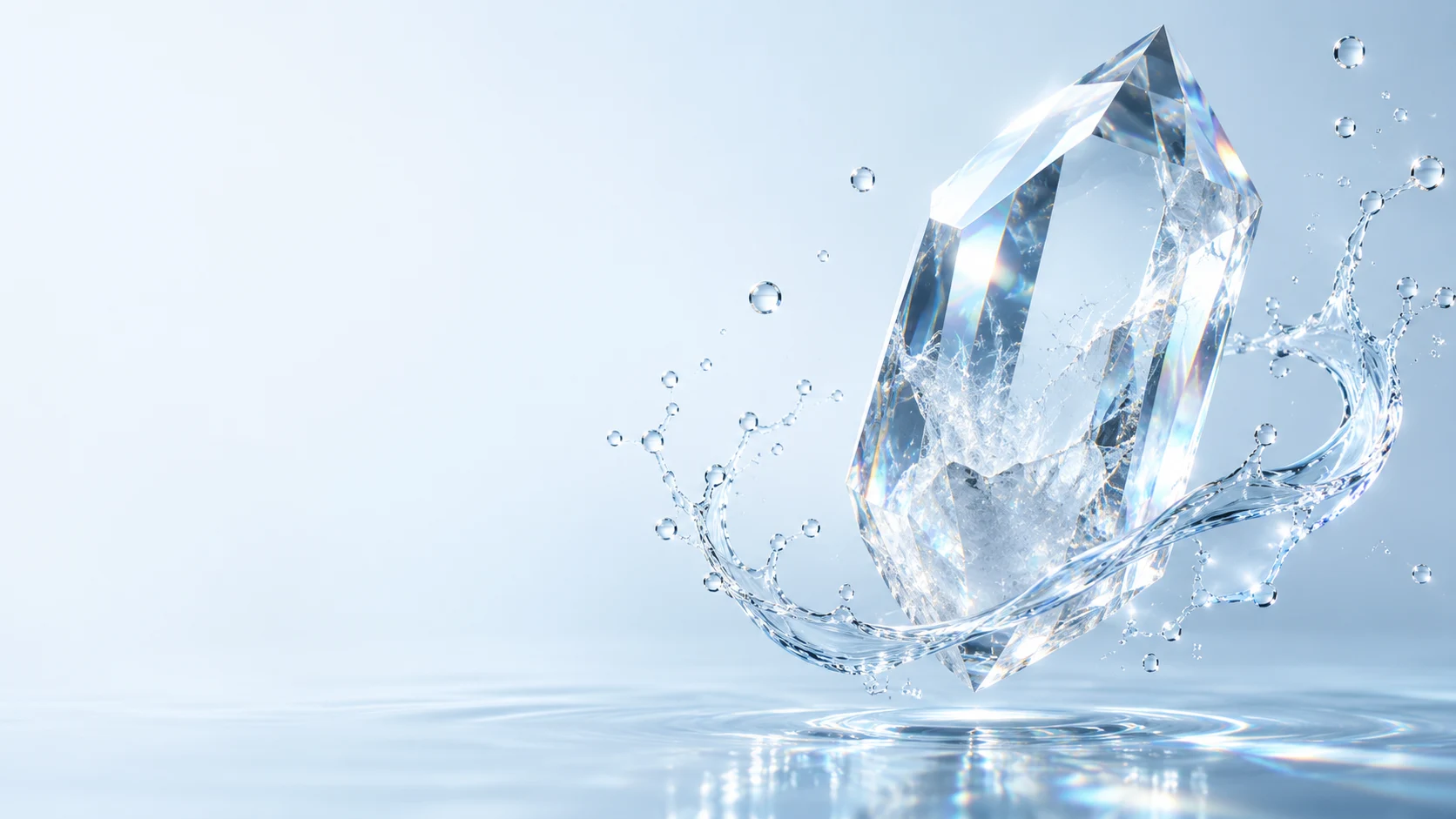
Water is part of this journal's visual language because it allows both movement and quiet. The crystal catches the light; the surface gives it somewhere to rest.
Bring the same balance into your own composition. Let something hold attention, and let something else simply be.
This content is for informational purposes only and reflects our personal opinions and experiences.