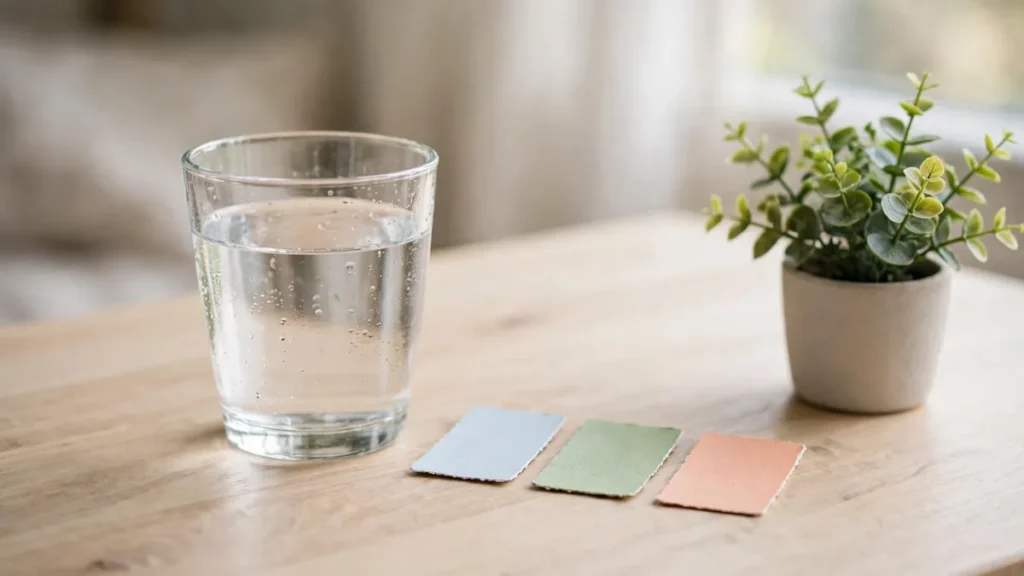
Some skin days ask for less, not more. The skin feels a little unsettled after washing, a little tight in heated air, yet heavy creams and strong products feel like too much. A gentle step, built mostly on water, can be the kindest answer.
Tea tree is a fresh, green-scented oil from the leaves of the tea tree plant, used in skin care for a long time. Used gently and diluted well, on calm skin only, it can be part of a simple routine. Used neat, or on broken skin, it can sting and irritate, so the gentle way matters more than the product.
This guide explains what tea tree is, why water comes first, how to dilute it, how to patch test, and how to build a short daily habit around it. It makes no medical claims and promises no cure, only a gentle step that suits ordinary skin on ordinary days.
Key Takeaways
- Tea tree is a strong oil, so it must always be diluted before skin use.
- Plain water comes first: clean skin, a small amount, a gentle hand.
- Always patch test on the wrist first and wait a full day before the face.
- Tea tree is a gentle habit, not a treatment; it will not cure skin problems.
- Real skin problems deserve a doctor or dermatologist, not a home remedy.
What Tea Tree Is
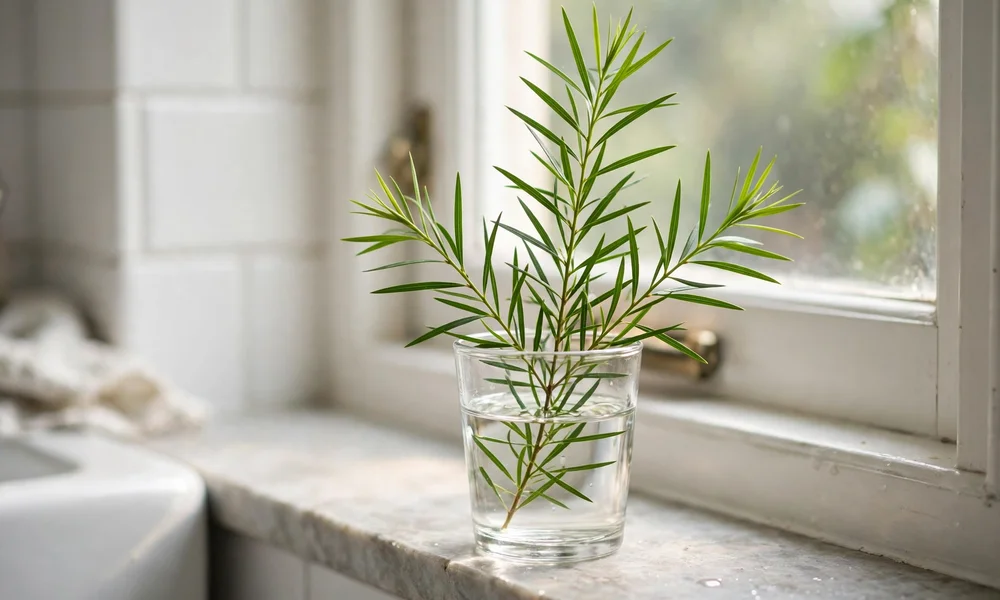
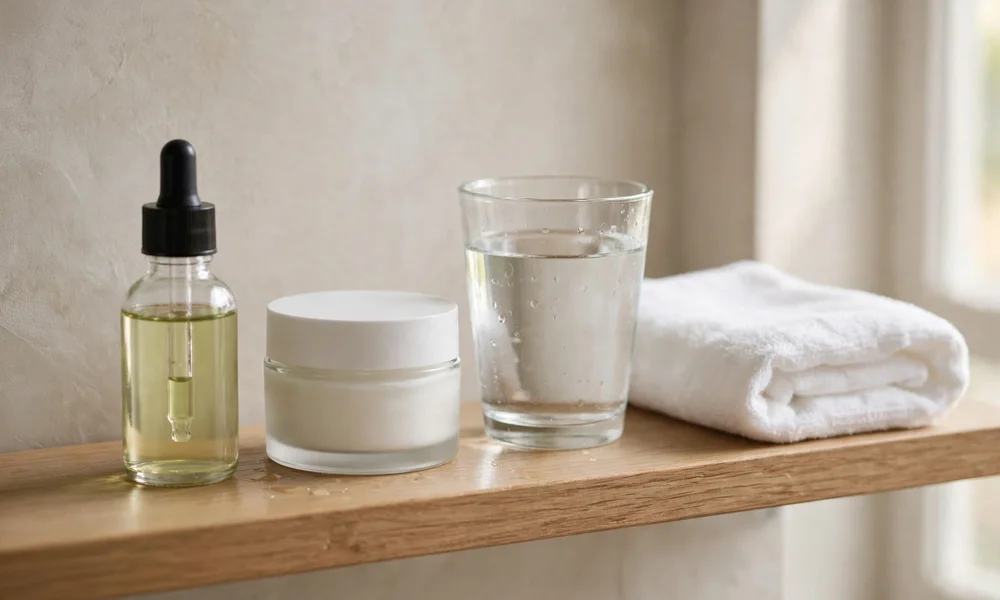
Tea tree oil comes from the leaves of Melaleuca alternifolia, a small tree that grows in Australia. The leaves are narrow and green, with a fresh, sharp scent like eucalyptus and pine. The oil is steam-distilled from the leaves, and a small amber bottle holds a very concentrated liquid.
That concentration is the whole point of this guide. A single drop of tea tree oil is strong, and it is meant to be spread thinly through water or a plain carrier before it ever touches the skin. The diluted liquid feels light and clean.
Why Water Comes First
Water comes first because washing leaves the skin clean but a little dry, and the next step works better on slightly damp skin. A splash of plain water, or a thin layer of a water-based step, gives the face that dampness, without adding oil or weight, and it dries down quickly.
The step also slows the routine down. One minute of patting water over the face is a pause between washing and moisturising, and a pause is often what unsettled skin needs. The same gentle idea runs through aloe water toners for light hydration, where a water-light liquid does the same quiet job with aloe.
Diluting Tea Tree Safely
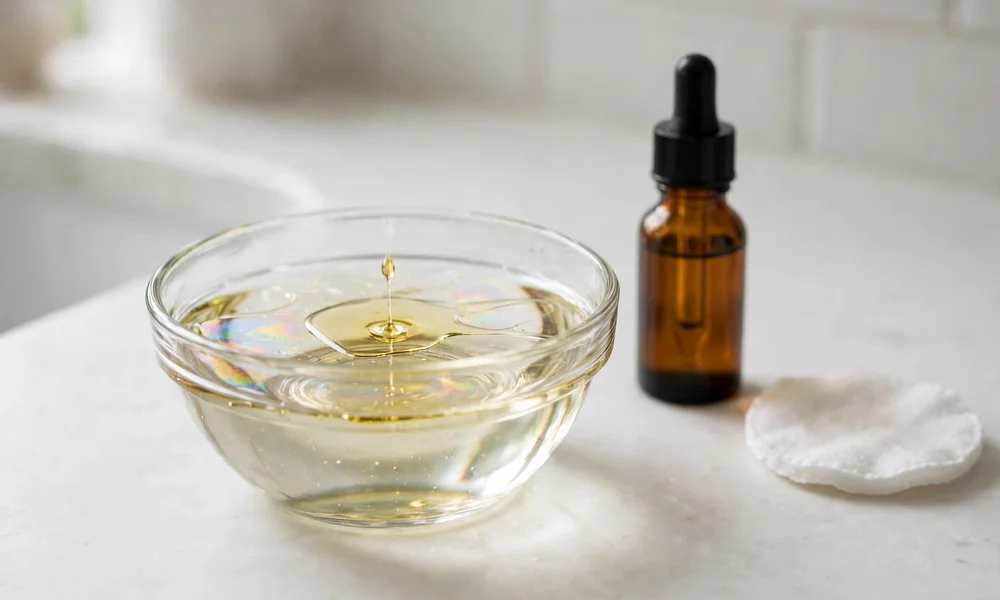
Diluting tea tree is simple, and the amounts are small. Start with clean drinking water in a small bowl, and add one single drop of tea tree oil to a full tablespoon of water, then stir it well. That is the dilution to use on the face, already stronger than most skin needs, so never start with more.
Never put undiluted tea tree oil on the face, and never use it on broken, cut or irritated skin. Neat oil can sting, redden and dry the skin, which is the opposite of what a gentle routine is for. Mix only what you will use today.
The Patch Test
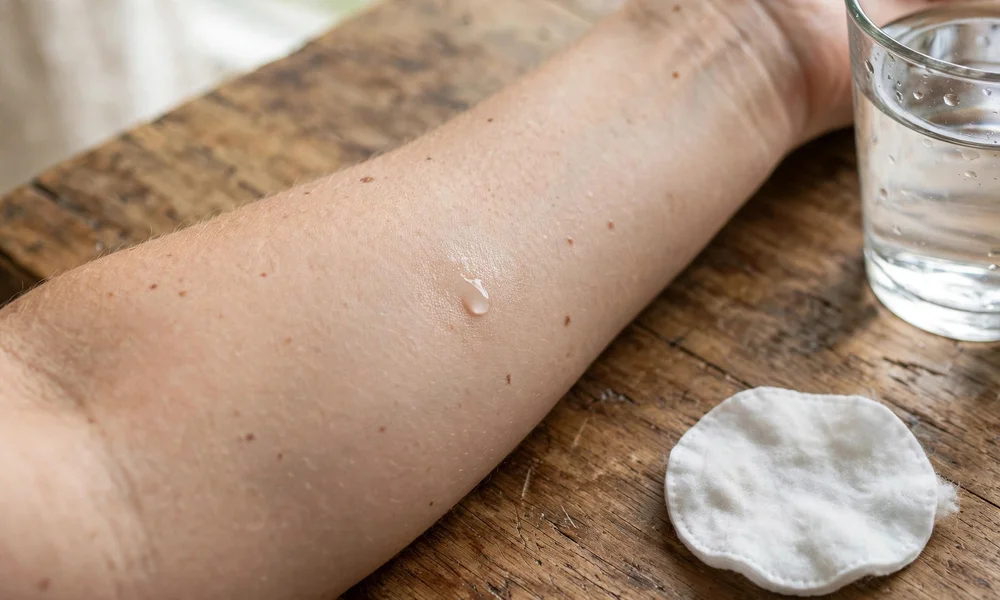
Every new use of tea tree deserves a patch test, even when you have used it before. Put a drop of the diluted water on the inside of your wrist, where the skin is thin, and leave it there. Wait a full day before using it on your face.
If the wrist stays calm, with no redness, itching or tightness, the diluted water is probably fine for your face. If the skin reacts, stop and wash the area with plain water, and leave the idea alone. A patch test takes a day, but it saves a week of unhappy skin.
A Gentle Daily Method
Using diluted tea tree water takes about a minute, and the method matters more than the product. Begin with clean hands and a freshly washed face. Pour about a teaspoon of the diluted water into your palm, or onto a cotton pad.
Pat the liquid gently over your face, or sweep the pad lightly across the skin, avoiding the eyes. Do not rub hard. The goal is an even, thin layer, not a scrub. Use it once a day at first, and only move to twice a day if your skin stays calm for two weeks.
Morning Use: A Fresh Start
Mornings suit diluted tea tree water well. The face has just been washed, the skin is clean, and a cool, fresh layer wakes it up without any sting. Pat the water over damp skin, wait half a minute, then move on to moisturiser and sun protection.
Keep the morning routine short, because a short routine is one you will repeat. One gentle water step, one moisturiser and one sunscreen is a complete morning routine for many people. Add the tea tree water first, while the skin is damp, and let each layer settle.
Evening Use: A Gentle Close
Evenings suit diluted tea tree water just as well, for a different reason. The day is over, the makeup is off, and the skin has been washed clean. A layer of fresh water is a gentle close to the day.
Use the same gentle method as in the morning. If you wore makeup, make sure cleansing came first, because a water step is not a makeup remover, and sweeping it over makeup only moves the makeup around. Clean skin first, water step second, moisturiser last.
Choosing a Good Bottle
Choosing well starts with the label. Look for a bottle that says pure tea tree oil, or Melaleuca alternifolia oil, with nothing else in the list. A good bottle is dark amber glass, with a dropper cap that lets out one drop at a time, and a clear expiry date.
Price is a poor guide. An expensive bottle in beautiful packaging may be lovely to own, but it cannot tell you how the oil will feel on your skin. A plain bottle from a brand you trust, with a clear label, is the safer choice. Keep it in a cool, dark place, and throw it away if the smell turns harsh or stale.
What Tea Tree Will Not Do
Be honest about what tea tree will not do. It will not cure anything: it will not cure spots, rashes, infections or any skin condition, and it will not fix skin overnight. It is a gentle habit, and a gentle habit is all it is, and no honest seller should claim otherwise.
The quiet is the part that helps, in an ordinary way: clean skin, a thin layer of water, and a short routine you can repeat. That is a real, modest pleasure, not a treatment, and the moment the skin asks for more, it is time to ask a professional.
When to See a Dermatologist
Some skin problems need a doctor, and no home step can stand in for one. See a dermatologist if the skin stays red, sore, swollen or itchy for more than a few days, if spots keep spreading, or if the skin breaks, blisters or weeps. The same applies to any problem that keeps coming back.
Take the bottle with you, and tell the doctor exactly what you used and how often. A doctor can see what a mirror cannot, and a short visit can save months of guessing. Gentle habits are for ordinary days, and real problems deserve real care.
Tea Tree at a Glance
| One drop | One spoon | Patch test |
|---|---|---|
| Tea tree oil | Clean fresh water | Wrist first |
| Always diluted well | Mix fresh daily | Wait a full day |
| Never neat oil | Throw leftovers away | Stop if red |
| Eyes avoided always | Gentle pat only | Doctor for problems |
Your Tea Tree Gentle Skin Checklist
- Wash with plain water first, then pat the skin dry.
- Dilute one drop of tea tree oil in a tablespoon of water.
- Patch test on the wrist first, and wait a full day.
- Pat a teaspoon of diluted water over the face, avoiding the eyes.
- Follow with moisturiser, and sunscreen in the morning.
- See a dermatologist if skin stays red, sore or spreading.
Frequently Asked Questions
Can I use tea tree oil neat on my skin?
No. Tea tree oil is strong and must always be diluted before it touches the skin. Mix one drop in a tablespoon of clean water, patch test first, and never use it neat, or on broken or irritated skin.
How do I patch test tea tree water?
Put a drop of the diluted water on the inside of your wrist, where the skin is thin, and leave it there for a full day. If the wrist stays calm, with no redness, itching or tightness, it is probably fine for your face. If the skin reacts, wash with plain water and stop.
How often can I use diluted tea tree water?
Start once a day, and watch how your skin responds for two weeks. If the skin stays calm, keep the habit at once a day, or move to twice a day. More is not better, and if the skin feels dry or tight, step back to plain water.
Can tea tree cure spots or skin problems?
No. Tea tree will not cure spots, rashes, infections or any skin condition, and it will not fix skin overnight. It is a gentle habit, not a treatment. Skin that stays red, sore, swollen or spreading deserves a dermatologist, not a home remedy.
Does tea tree water replace moisturiser?
No. A water step adds water but cannot lock it in alone, so a moisturiser still follows on most days. The same gentle idea runs through rose water toner for a fresh face, where a light water step sits under moisturiser, never instead of it.
Can I use tea tree water on my hair too?
Tea tree water is a skin step in this guide, and hair has its own gentler rituals. One example is described in green tea rinse for hair, where cooled green tea water is poured over the hair as a final rinse, never as a drink.
The Bottom Line
Water and tea tree, used gently, is one small step: clean skin, one drop diluted, a patch test, and moisturiser to follow.
Keep it gentle, keep it diluted, keep it simple.
A Note for Gentle Skin Days
Keep it calm, keep it light, keep it yours. The water will do the rest.