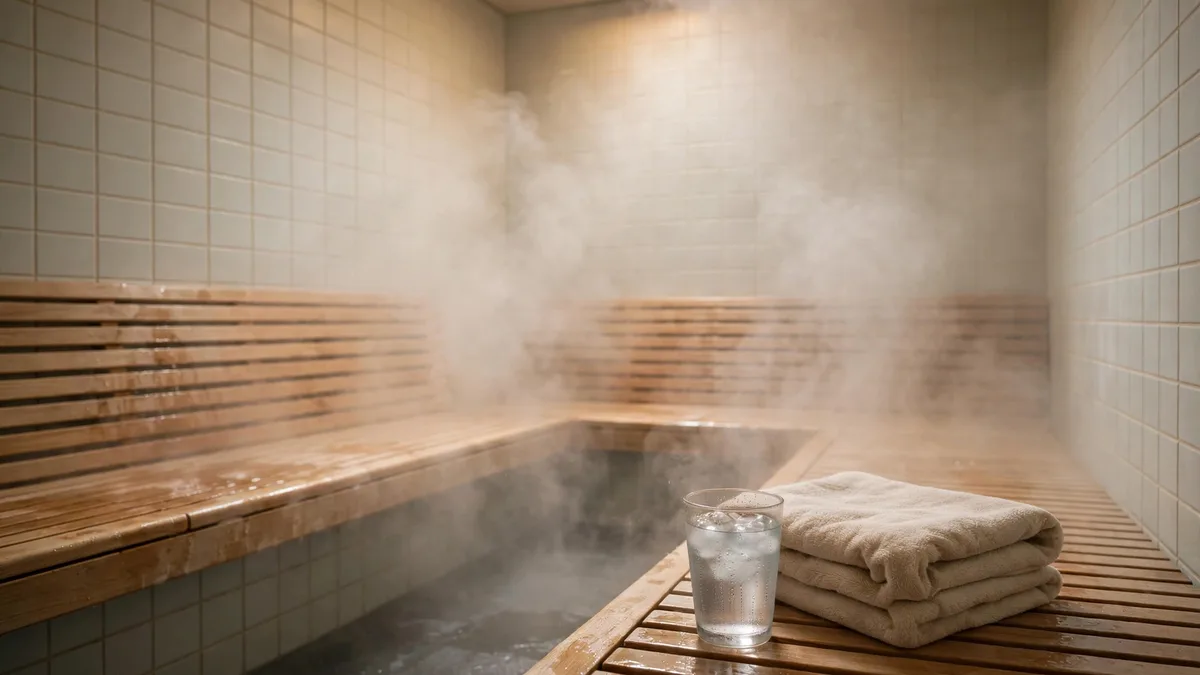
Some evenings call for warmth and soft air. The day has been long, the shoulders feel tight, and all you want is a quiet warm room, a little steam, and a glass of cool water waiting for you when you step out.
Water and steam rooms belong together. The steam warms you slowly, the damp air softens each breath, and the cool water afterwards brings you back to yourself. Done gently, it is a calm ritual, not a test of endurance. This guide explains what a steam room is, how the steam works, and how to enjoy a short gentle session safely.
It is general information only, never medical advice, and it makes no promise to cure or treat anything. If you have a real health problem, see a doctor, not a steam room.
Key Takeaways
- Water and steam rooms mean short gentle steam, cool water, and slow rest.
- A steam room is a warm tiled room, filled with soft clouds of steam.
- Drink water before, during and after, and keep sessions short.
- Cool down slowly, rest, and drink more water before going back to the day.
- This is general information only; real health problems need a doctor.
What a Steam Room Is
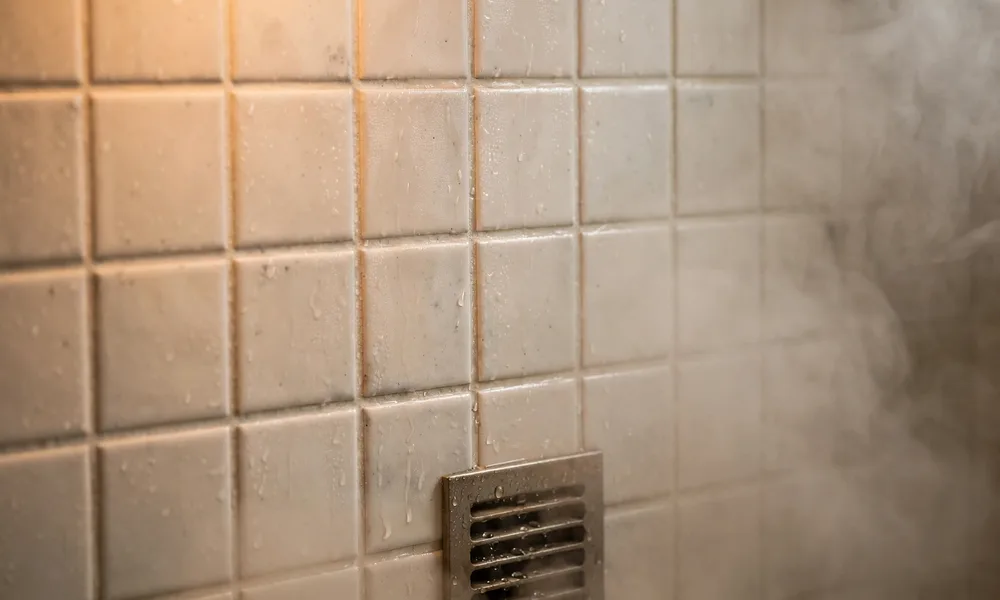
A steam room is a small room lined with tiles, warmed by a steam generator that fills the air with soft clouds of steam. The walls are smooth and pale, the benches are low and warm, and the whole room is built for sitting still and doing nothing at all. The air feels damp and warm, like a summer morning after rain.
Steam rooms come from the old bath houses of many countries, where people have used warm steam for centuries as a quiet evening habit. The heat is steady and damp, and the steam comes all the time, soft and even. Nothing about a steam room needs to be extreme to be pleasant, and the gentlest session is often the best one.
How Steam Rooms Work
Steam rooms work in a simple rhythm: warm up, steam, cool down, rest. You sit in the warm room until you feel comfortably warm, you breathe the damp air slowly, and then you step out, cool down slowly, and drink water. Then you rest, and you may repeat the round once more if you wish.
The steam matters as much as the warmth. Warm rooms make you sweat, and sweat is water leaving the body, so drinking water is part of the ritual, not an afterthought. A glass of cool water waiting outside the steam room is the kindest thing you can prepare.
Why Gentle Steam Feels Calming
Gentle steam feels calming because it asks the body to slow down. Warm air loosens tight shoulders, the low light quiets the eyes, and the damp steam softens the breath. Sitting still in a warm room, with nowhere to go and nothing to answer, is restful in itself.
The calm is ordinary, not magical. Steam will not cure an illness or fix a hard week. What gentle warmth does is give you a quiet half hour, and a quiet half hour is often enough to make the evening feel easier.
Before You Step In
Before you step in, drink a glass of water and take a quick warm shower. The shower washes the day off your skin and warms you up gently, so the steam room does not feel like a shock. Bring a towel to sit on, a second towel for drying, and a bottle or glass of water for afterwards.
Wear only a towel, or swimwear if the steam room is shared, and leave your phone outside. A steam room is a place for quiet, and the damp heat is unkind to electronics. If you feel unwell, tired beyond words, or dizzy before you start, skip the steam room and rest instead. A short soak at home can be a gentler choice on those days, and water bath salts for a gentle soak describes a calm bath ritual with plain warm water.
Water Before, During and After
Water before, during and after is the golden rule of the steam room. Drink a glass of water before you go in, so you start well hydrated, and keep a glass waiting for the moment you step out. Sip slowly, and never rush the water down in big gulps.
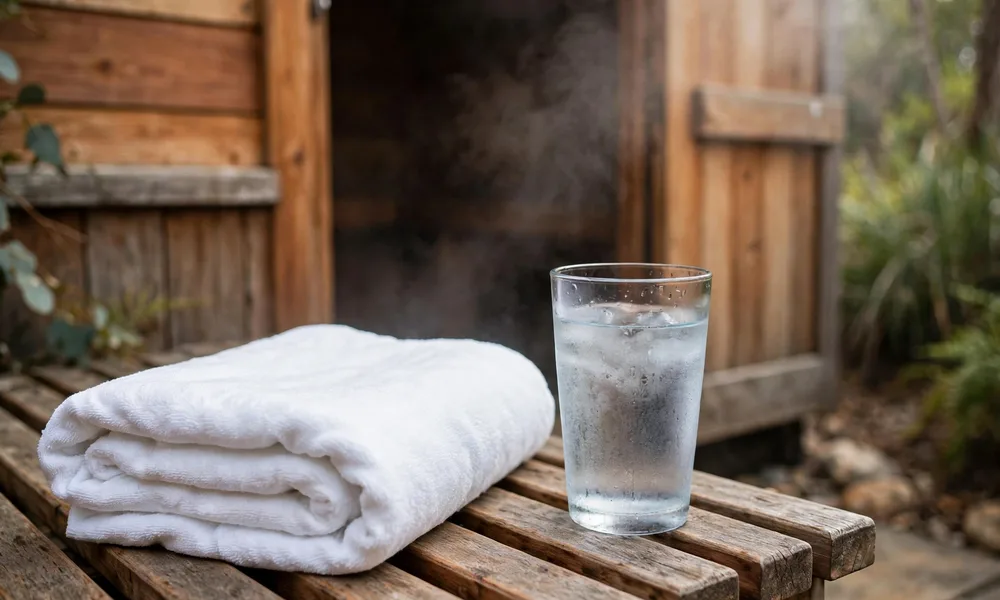
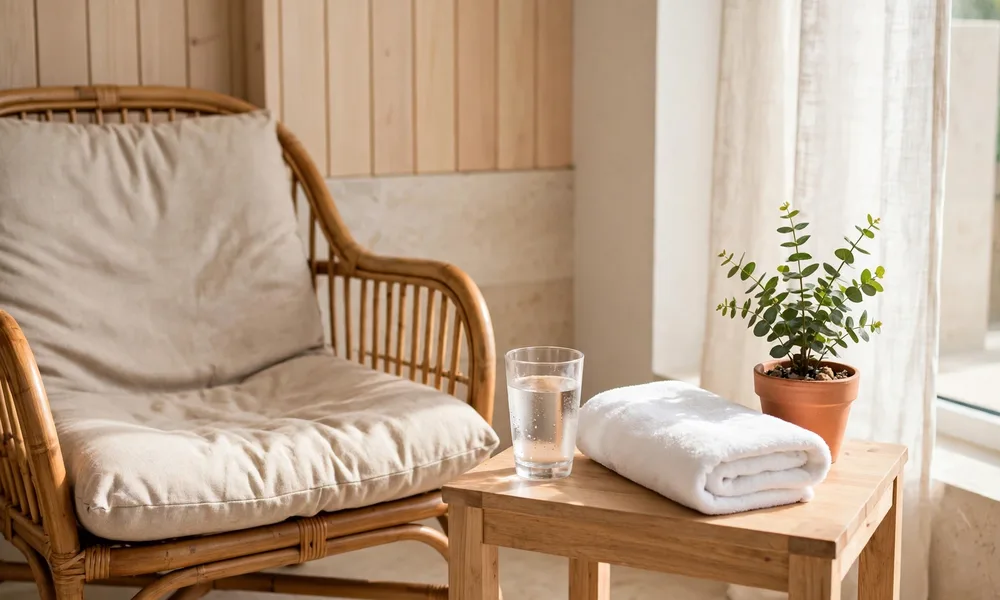
Do not take water into the steam room itself, since the room is wet and the glass can slip or break. Keep the water just outside the door, where it stays cool and safe. After your session, drink another glass, then rest for a while before you drink more. Plain water is best, and it is all the steam room asks of you.
A Short Gentle Session
A short gentle session is the heart of the steam room. Sit down on a low bench, lean back, and let the steam rise around you. Breathe slowly through your nose, keep your eyes soft, and do not try to stay in for a long time. Ten to fifteen minutes is enough for most people, and five minutes is a fine first visit.
Watch for signs that it is time to leave: if you feel dizzy, too hot, or short of breath, step out at once, sit down, and drink water. There is no prize for staying longer, and the calm comes from the quiet, not from the heat. Leave while you still feel good, and the steam room will stay a pleasure you want to repeat.
Cooling Down Slowly
Cooling down slowly is as important as the steam itself. Step out of the warm room, sit on the bench outside, and let the cool air reach your skin. Take a lukewarm shower, not a cold one, and dry yourself gently with a soft towel. The body needs time to come back to its normal warmth.
Rest for ten minutes or more, with your feet up if you can, and drink another glass of water. Do not rush back to work, to driving, or to a busy room. A gentle cool-down after heat is described in water cold showers for beginners, where a short cool rinse suits days that ask for a fresh start.
Who Should Skip or Ask First
Some people should skip the steam room, or ask a doctor first. If you are pregnant, if you have a heart condition, low or high blood pressure, breathing problems, or a skin condition that heat makes worse, talk to your doctor before you try a steam room. Children and older people should keep sessions very short, and only with an adult nearby.
Never use a steam room after drinking alcohol, and never go in alone if you feel unwell. If you feel chest pain, faintness, or trouble breathing, leave at once and ask for help. These are not small warnings, and a careful guide says them plainly, because a steam room is a pleasure for healthy days, not a treatment for sick ones.
Steam Room or Sauna?
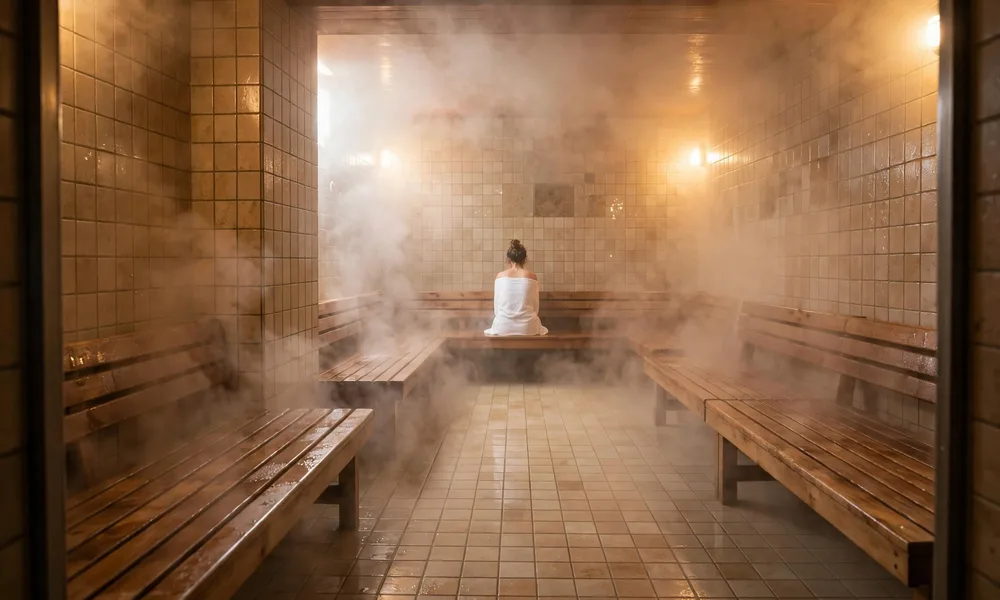
A steam room and a sauna are cousins, not twins, and the difference is the air. A sauna is a dry wooden room, where the heat is dry and the steam comes only when you pour water on hot stones. A steam room is a tiled room, where the air is damp all the time and the steam never stops.
Choose a steam room when you want soft, damp warmth and gentle air, and choose a sauna when you want dry heat and a wooden room. The dry heat ritual is described in water and sauna for gentle heat, where water on hot stones makes a soft cloud of steam in a warm wooden room. Both are kept short, both need water before and after, and neither is a treatment.
Steam Rooms at a Glance
| Warm steam | Short session | Cool water |
|---|---|---|
| Tiled damp room | Ten short minutes | Glass outside door |
| Soft clouds rise | Leave while good | Sip water slowly |
| Low bench rest | Rest ten minutes | Lukewarm shower next |
| Damp gentle air | Ask doctor first | Plain water best |
Your Steam Room Checklist
- Drink a glass of water before you go in, and keep one waiting outside.
- Take a quick warm shower first, and bring two towels.
- Keep sessions short, ten to fifteen minutes, and five for a first visit.
- Leave at once if you feel dizzy, too hot, or short of breath.
- Cool down slowly, rest ten minutes, and drink more water.
- Remember this is general information only; real health problems need a doctor.
Frequently Asked Questions
What is a steam room?
A steam room is a small tiled room filled with soft clouds of steam from a steam generator, with low benches and warm, damp air. It is built for sitting still and resting quietly, for ten to fifteen minutes at a time.
How long should a steam room session last?
Ten to fifteen minutes is enough for most people, and five minutes is a fine first visit. Leave while you still feel good, and step out at once if you feel dizzy, too hot, or short of breath.
Should I drink water before a steam room?
Yes. Drink a glass of water before you go in, keep a glass waiting just outside the door, and drink another glass after you step out. Plain water is best, sipped slowly.
What is the difference between a steam room and a sauna?
A sauna is a dry wooden room where steam comes only when you pour water on hot stones, while a steam room is a tiled room where the air is damp all the time. Choose steam for soft, damp warmth, and a sauna for dry heat.
Who should avoid steam rooms?
People who are pregnant, or who have a heart condition, blood pressure problems, breathing problems, or a skin condition that heat makes worse, should ask a doctor first. Children and older people should keep sessions very short, with an adult nearby.
Will a steam room cure anything?
No. A steam room will not cure an illness or treat a medical condition, and no honest guide should claim otherwise. It is a quiet pleasure, a warm room and a slow rest, and real health problems need a doctor.
The Bottom Line
A steam room is warm damp air, a short quiet sit, and cool water waiting outside.
Keep it gentle, keep it short, and rest well after.
A Note for Gentle Steam
Keep it soft, keep it slow, keep it simple. The steam will do the rest.