Flying is hard on skin. The cabin air is dry, the hours are long, and by landing the face feels tight, the lips feel dry, and the hands feel rough. It is uncomfortable, and a little planning makes the whole journey easier.
The answer is not a bag full of products. The answer is a small routine you can do in your seat, with one small bottle of plain water and one soft cloth. That is the whole kit, and it fits in your seat pocket. This guide gives you that routine, hour by hour, from takeoff to landing.
This guide covers water and flights as a simple in-seat skin routine: why cabin air dries skin, what one small bottle can do, and how to keep the routine short and gentle. It is general information only, never medical advice, and plain water does not replace sunscreen or moisturiser.
Key Takeaways
- Cabin air is very dry, so skin loses moisture faster on a flight than at home.
- The whole in-seat routine needs very little: one small bottle of plain water and a soft cloth.
- Sip plain water slowly through the flight, a little at a time.
- A damp cloth pressed gently to the face is the kindest refresh at altitude.
- Water is comfort and care, not a treatment, and real skin problems need a doctor.
Why Cabin Air Dries Skin
Cabin air is dry because it comes from outside the plane, high in the sky, where the air holds almost no moisture. At cruising height the cabin humidity often falls below twenty percent, while a comfortable room sits near forty or fifty percent. Dry air pulls moisture from the skin's surface, and the skin answers by feeling tight, a little itchy, or dull.
Lips dry first, because their skin is thin, and hands follow. None of this is harmful, but it is worse on long flights and after a poor night of sleep. The answer is calm and small: a little water, a little cream, and a little patience, repeated through the flight.
The Small Bottle: Your Whole Routine
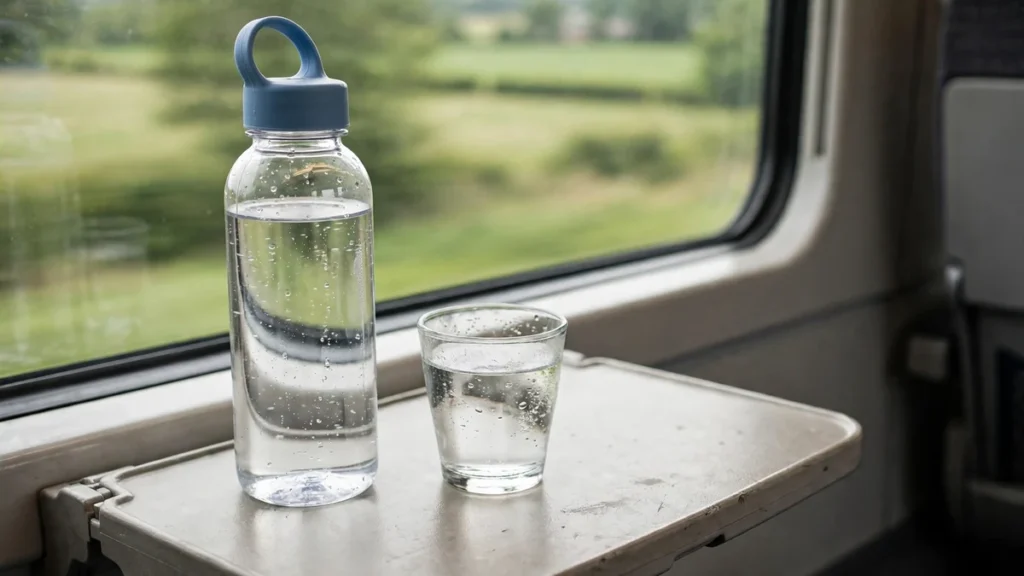
The whole routine starts with one small bottle of plain water. It is the bottle you sip from, the bottle that wets the cloth, and the bottle that keeps you going through the flight. One bottle, used slowly, does the work of a whole bag of products.
Keep the bottle where you can reach it without standing up: in the seat pocket, or in the small space beside your leg. A bottle you can reach is a bottle you will use; a bottle buried overhead is a bottle you will forget. Ask the cabin crew for water when they pass.
Before Takeoff: A Calm Start
The routine starts before the flight leaves the ground. Drink a glass of plain water at home, and fill your small bottle after security, so you board with water in hand. A short, gentle wash with lukewarm water and a little plain cream gives the skin a calm start.
Eat lightly and drink slowly, in small sips, through the morning. The same steady idea runs through water first morning routine, where plain water starts the day gently. Board calm, board hydrated, and let the flight begin quietly.
The First Hour in Your Seat
The first hour in your seat sets the tone for the whole flight. Settle in, put the bottle in the seat pocket, and take three slow sips of plain water. Smooth a little plain cream onto your hands, and lip balm onto your lips, while the skin is still calm.
Do not reach for a strong product in the first hour. Tired skin in dry air wants less, not more, and the first hour is for settling, not for fixing. Read, rest, or look out of the window, and let the routine begin slowly.

The Seat Routine, Hour by Hour
A good seat routine is a rhythm, not a task. Once an hour, take a few slow sips of plain water, smooth a little cream onto your hands, and touch a little lip balm to your lips. That takes less than a minute. The rhythm matters more than the amount: small, often, gentle.
Between hours, leave your skin alone. Do not wash again and again, do not rub your face, and do not try a new product at altitude. Every extra wash takes a little more moisture away. One quiet hour, one small sip, one small touch of cream, and the flight passes gently.
A Gentle Face Refresh at Your Seat
Halfway through the flight, give your face five quiet minutes. Dampen the soft cloth with a little plain water from your small bottle and press it gently to your face. Hold it there for a minute. Pat the skin dry, never rub, and smooth on a small amount of plain cream while the skin is still slightly damp.
That is the whole routine, and it is enough. Do not wash with the tiny airplane soap, which is often harsh, and do not try a new mask or a strong product at altitude. If you want the packing side of this story, the carry-on kit behind this routine is described in water and travel skin: a carry-on routine, which covers what to pack and how the liquid rules work.

Hands, Lips and Small Comforts
Hands and lips suffer most on a flight, because they are always out in the dry air. Smooth a little plain cream onto your hands after washing, and keep a lip balm in your seat pocket. A small amount, used often, works better than a large amount once.
Wash your hands with lukewarm water when you can, and pat them dry rather than rubbing them under the hot air dryer. If the dryer is the only choice, dry them quickly and smooth on cream at once, while the skin is still damp.
Sleep, Sips and the Long Flight
On a long flight, sleep is the best skin care there is. A full night of sleep does more for travel skin than any product in the bag, so make the seat as restful as you can: a soft cloth over the eyes, a quiet hour, and the bottle within reach.
If you wake dry, take three slow sips, touch a little cream to your hands and lips, and go back to sleep. The body recovers while you sleep, and the skin follows. Skip the extra coffee and alcohol, because both can leave the body drier than before. Water should be the main drink, taken slowly.

Landing Refresh
Landing is a good moment for a fresh start. Once you are through the airport, wash your face gently with lukewarm water, pat it dry, and smooth on a little cream. The flight is over, the air is normal again, and the skin can recover.
Drink another glass of plain water, slowly, and eat something light if you are hungry. Walk a little, stretch, and let the blood move again. Fresh air helps too, even a few minutes outside the terminal. The landing refresh is short on purpose: one gentle wash, one quiet meal, one early night.
What Water and Flights Will Not Do
Be honest about what water and flights skin care can and cannot do. Plain water will not cure dry skin, eczema, acne, or any skin condition, and no amount of drinking will undo a long flight. Water is comfort and care, not a treatment. A plain cream can seal in moisture, but it cannot heal a medical condition.
If the skin is cracked, bleeding, or blistered, or if redness or pain lasts more than a couple of weeks, see a doctor or a dermatologist. Spreading rashes or swelling also deserve professional care. This guide is general information only, not medical advice. The same gentle honesty runs through water and skin barrier: a gentle repair guide, where water supports the skin without claiming to cure anything.
Water and Flights at a Glance
| Flight moment | Water habit | Skin care |
|---|---|---|
| Before takeoff | Glass of water | Cream on damp |
| First hour | Three slow sips | Hands and lips |
| Mid-flight | Damp cloth press | Cream little often |
| At landing | Glass of water | Wash gently first |
Your Water and Flights Seat Checklist
- Keep one small bottle of plain water in your seat pocket.
- Sip plain water slowly through the flight, a little at a time.
- Once an hour, smooth a little cream on your hands and lips.
- Freshen the face with a damp soft cloth, then cream on slightly damp skin.
- Skip extra coffee and alcohol, and new or strong products at altitude.
- See a doctor if redness, itching or pain lasts more than two weeks.
Frequently Asked Questions
How much water should I drink on a flight?
Sip plain water slowly through the whole flight, a little at a time, rather than drinking a large amount all at once. Ask the cabin crew for water when they pass.
Can I wash my face on the plane?
Yes, gently. Dampen a soft cloth with a little plain water, press it to your face, pat dry, and smooth on a small amount of plain cream while the skin is still slightly damp. Skip the airplane soap and new or strong products at altitude.
Why does my skin feel tight after flying?
Cabin air is very dry, often below twenty percent humidity, while a comfortable room sits near forty or fifty percent. Dry air pulls moisture from the skin, so the face feels tight and the lips dry first. Water, rest and a gentle routine help.
Does drinking water replace moisturiser on a flight?
No. Plain water does not replace sunscreen or moisturiser. Drinking water supports the body gently, while a plain cream seals moisture into the skin from the outside. Use both, in small amounts.
What should I do at landing to refresh my skin?
Wash your face gently with lukewarm water, pat it dry, and smooth on a little plain cream. Drink a glass of plain water slowly, walk a little, and get some fresh air. Keep the evening simple and early.
When should I see a doctor about travel skin?
See a doctor or a dermatologist if the skin is cracked, bleeding, blistered or weeping, or if redness, itching or pain lasts more than a couple of weeks. Spreading rashes or swelling also deserve professional care.
The Bottom Line
Water and flights skin care is a small in-seat routine: one small bottle, one soft cloth, and gentle habits, hour by hour.
Sip slowly, refresh gently, and let the skin rest when you land.
A Note for Flyers
Keep it small, keep it plain, keep it gentle. The calm hours can still belong to your skin.