A train journey begins on the platform, with a ticket in your pocket and a bag at your feet. The train pulls in, the doors open, and you find your seat by the window as the fields begin to move past. It is one of the calmest ways to travel, and a little water makes it better.
Trains are gentle on travellers, but they are still dry, warm and long. The heating runs high in winter, the sun warms the window in summer, and the hours between stations can pass without a single drink. By arrival, the mouth feels dry, the skin feels tight, and the head feels heavy.
This guide is about water and train journeys: how to pack water for the rails, how to drink well while the train moves, and how to step off the train feeling fresh. It is simple, practical advice for any train journey, long or short.
Key Takeaways
- A train journey needs water packed before the platform, not bought in a rush.
- A reusable bottle and a small glass suit the tray table and the seat.
- Drink in small sips through the journey, not all at once at the end.
- Trains differ from flights, road trips and the daily commute.
- Arrive fresh by drinking, resting and washing up before the final station.
What a Train Journey Needs
A train journey needs very little, and water is first among it. A full reusable bottle, a ticket, a phone, a book and a small bag are enough for most journeys. The bottle matters most, because trains do not always sell water, and the trolley may not reach your carriage.
Pack the bottle where you can reach it without standing up: the side pocket of your bag, or the seat-back pocket in front of you. A bottle that is easy to reach is a bottle you will actually drink from.
Why Trains Are Different
Trains are different from other travel because you can move, stand and stretch, yet you cannot stop when you like. The train decides the stops, the timetable decides the hours, and the buffet car may be two carriages away. You are free to walk, but the water is not always near.
Trains are also different because the air is warm and dry, the seats are close, and the journey can last for hours. A good train habit is a slow one: small sips, regular pauses, and a bottle that is never far from your hand.
Packing Your Water for the Rails
Packing water for the rails starts the night before, or at least an hour before you leave. Fill a clean reusable bottle with fresh water, and check the lid twice so it cannot leak into your bag. A bottle of about half a litre to one litre suits most journeys, and a larger bottle suits a long day on the rails.
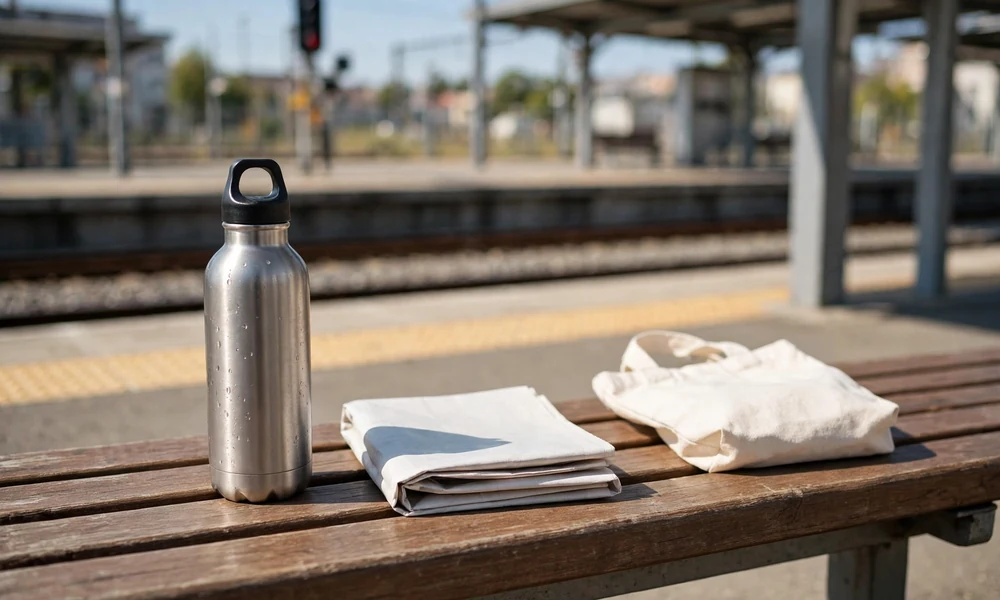
Pack a small cloth too, for wiping the bottle and the tray table, and a snack that does not need water to eat. Keep the bottle upright in the bag, and keep the bag by your feet or on the rack above, never under a heavy coat.
Before You Leave the Platform
Before you leave the platform, drink a full glass of fresh water at home or at the station. A journey that starts with a drink is easier than one that starts thirsty. Fill the bottle at a station tap or a cafe, and buy a second small bottle if the journey is longer than three hours.
Check the platform board, find your carriage, and stand where the doors will stop. When the train arrives, step on calmly, find your seat, and put the bottle on the tray table or in the seat pocket before the train moves.
Settling Into Your Seat
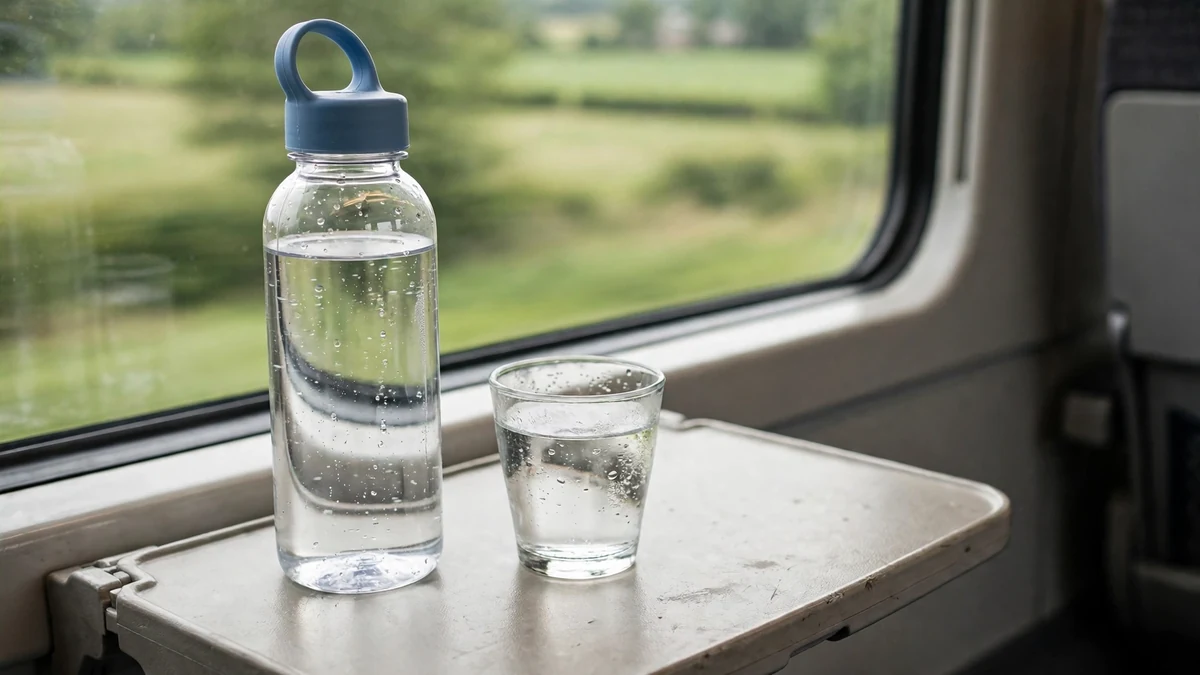
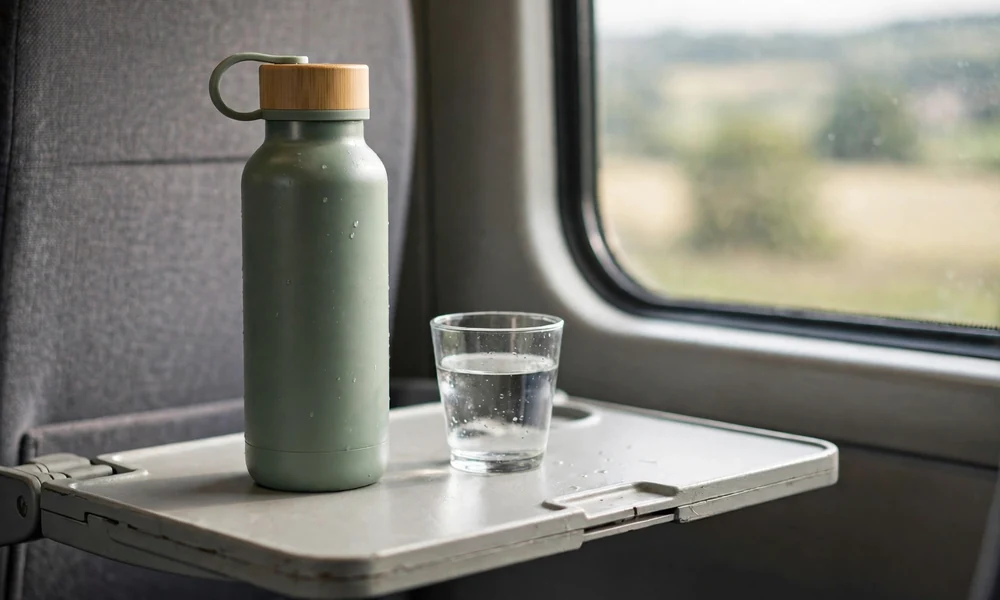
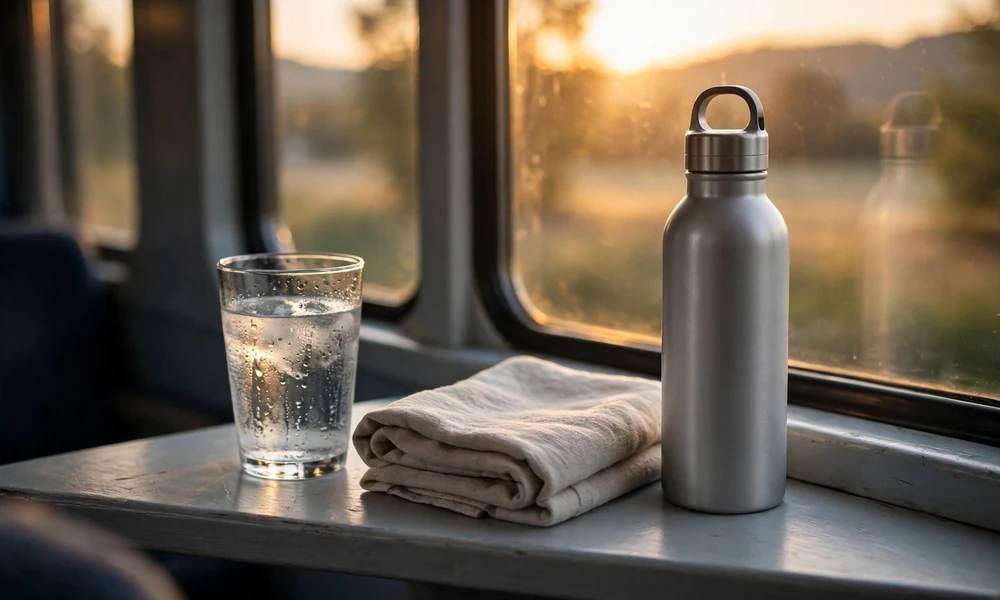
Settling into your seat is the first calm moment of the journey. Put your bag on the rack or under the seat, fold your coat beside you, and set the bottle where you can see it. Wipe the tray table with your cloth, and put a book or a phone beside the bottle.
Take a slow drink as the train pulls away, and look out of the window for a few minutes. The fields, the towns and the hills pass by, and the journey begins at its own pace, with water close at hand.
Drinking Well on a Moving Train
Drinking well on a moving train means small sips, often, rather than large drinks all at once. Take a few sips every twenty minutes, and a longer drink at each station stop. A moving train can make a full glass hard to hold, so sip from the bottle with the lid close by.
If the train sways, hold the bottle with both hands and drink slowly. Keep the lid on between sips, so a sudden stop cannot spill water on your bag. By the middle of the journey, the bottle should be half empty, and you should feel steady, not thirsty.
Staying Fresh on Long Journeys
Staying fresh on a long journey takes a little care beyond drinking. Wash your hands at the station before you board, and again at a longer stop, with soap and water. Wipe your face with a clean, damp cloth after a few hours, and change into a fresh top if the journey lasts all day.
Stand up and walk to the end of the carriage once an hour, stretch your legs, and look out of the window. Fresh air at a station stop helps too: step onto the platform, breathe deeply, and drink a little water before the doors close.

Water and Train Journeys at a Glance
| Pack before leaving | Sip on the train | Arrive fresh |
|---|---|---|
| Full clean bottle | Small sips, often | Wash hands, face |
| Lid checked twice | Lid on, spill-free | Drink before arrival |
| Bottle within reach | Half empty mid-way | Stretch, breathe deep |
Trains and Flights
Trains and flights both take you far, but they ask for different kinds of care. A flight is a dry cabin in the sky, with little room to move and a long time between drinks, so the skin routine matters most. A train is a moving room on the rails, with space to walk, a window to look out of, and stations along the way.
Where water flights simple skin routine keeps a skin routine for dry cabin air, this guide keeps a drinking routine for the rails.
Trains and Road Trips
Trains and road trips both cover long distances, but only one of them lets you relax. A road trip means driving, watching the road, and stopping for petrol, with the water bottle in the door pocket. A train journey means sitting back, watching the fields, and letting the driver do the work, with the water bottle on the tray table.
Where water road trips fresh on the go keeps a fresh routine for car travel and petrol stops, this guide keeps a fresh routine for the rails.
Trains and the Daily Commute
Trains and the daily commute both use the rails, but they are different journeys. The commute is short, crowded and repeated every day, with a bag packed in a hurry and a train that is already full. A train journey is longer, calmer and rarer, with time to settle in, time to read, and time to drink slowly.
Where water commuting staying fresh on the go keeps a fresh routine for the daily trip to work, this guide keeps a fresh routine for a real journey on the rails.
When Travel Leaves You Tired
Travel can leave you tired even when the journey goes well, and tiredness is a sign to rest, not to push on. Drink a glass of fresh water when you arrive, eat a simple meal, and rest for an hour before you do anything else. A short walk in fresh air helps, and a good night of sleep helps more.
If you feel unwell during or after a journey, please see a doctor. This guide is general information only, and it will not heal anything or replace medical care.
Your Train Journey Checklist
- Fill a clean reusable bottle with fresh water before you leave.
- Drink a full glass of water before you board the train.
- Keep the bottle on the tray table or in the seat pocket.
- Take small sips every twenty minutes, with the lid on between sips.
- Wash your hands and wipe your face at longer stops.
- Drink again before arrival, so you step off the train feeling fresh.
Frequently Asked Questions
How much water should I bring on a train journey?
Bring a bottle of about half a litre to one litre for a short journey, and a larger bottle, or a second small one, for a journey longer than three hours. Fill it before you leave, and refill it at a station when you can.
Can I refill my bottle on a train?
Some trains have a buffet car with water for sale, and some stations have drinking taps and cafes. Do not count on the train alone: fill the bottle before you board, and refill it at a station stop.
How often should I drink on a train?
Take a few small sips every twenty minutes, and a longer drink at each station stop. Small sips through the journey keep you steady, while one large drink at the end comes too late.
What if the train is delayed?
If the train is delayed, stay calm, drink a little water, and check the station board for news. A delay is a good time to refill the bottle and to stretch your legs on the platform.
Is train air really that dry?
Yes, train carriages are often warm and dry, with heating in winter and sun through the windows in summer. The dry air is why small, regular sips matter more on a train than at home.
What should I pack besides water?
Pack a ticket, a phone, a book, a small cloth, a snack and a light coat. Keep the bag small, the bottle within reach, and everything you need in one place.
The Bottom Line
Water and train journeys go together: a full bottle, small sips on the rails, and a fresh arrival at the final station. Pack before the platform, drink through the journey, and step off the train feeling calm and fresh.
A Note for the Rails
Keep it simple, keep it slow, keep it fresh. A bottle of water, a seat by the window, and the fields moving past can carry a journey well.