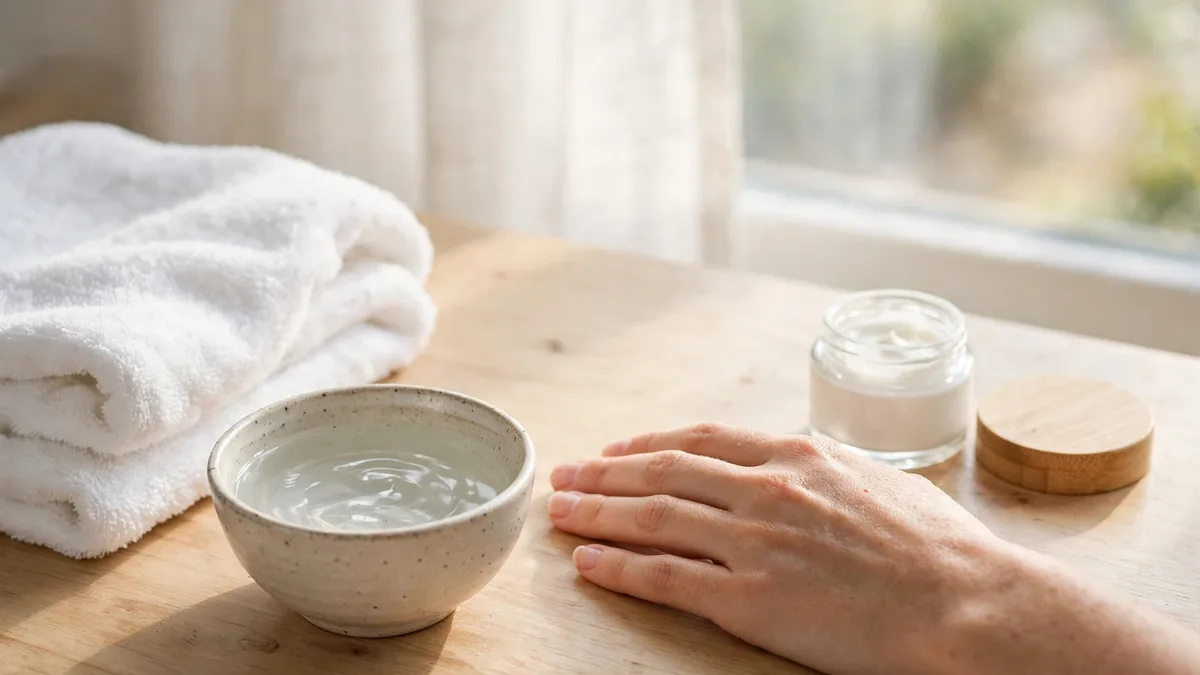
Cuticles are small, and easy to forget. They are the thin rims of skin at the base of each nail, and they sit in plain view all day long, tapping on keyboards, holding a pen, and opening jars. When they are soft and neat, nobody notices them at all, and that is exactly how it should be.
Water and cuticles belong together, but only in the right way. A short lukewarm soak softens the cuticle and makes gentle care easy, while long hot soaks dry it out and leave it ragged. The difference is only a few minutes and a little warmth.
This guide explains water and cuticles in plain steps: what cuticles are, how water helps and harms them, how to soak briefly and safely, how to push them back gently, and when a cuticle problem needs a doctor. It is gentle general information only, never medical advice.
Key Takeaways
- Water and cuticles means short lukewarm water, gentle handling, and plain cream.
- Cuticles protect the nail as it grows, so they are pushed back gently, never cut.
- Lukewarm water softens cuticles for care, while hot water dries them out.
- A wooden stick, a soft towel, and plain cream are all the tools needed.
- Real cuticle problems, like infection, bleeding, or pain, need a doctor, not a home routine.
What Cuticles Are
A cuticle is the thin rim of skin where the nail meets the finger. It seals the small gap at the base of the nail, keeping out dirt and germs while the new nail grows underneath. It is a small job, but it matters: without that seal, the growing nail is open to the world.
Healthy cuticles look smooth and lie flat against the nail, with no ragged edges and no sore spots. They need very little care to stay that way, and most of the damage they suffer comes from habits, not from neglect: picking, biting, cutting, and long hot soaks.
How Water Helps Cuticles
Water helps cuticles because it softens them. A cuticle is skin, and skin drinks in water and grows supple, so after a short soak the cuticle is soft enough to push back gently with a wooden stick. Dry cuticles resist and tear; softened cuticles move easily and stay smooth.
Water also helps by washing away the day. Hands collect dust, soap, and soil, and a gentle lukewarm wash leaves the cuticles clean and ready for cream. Plain water is enough: no salt, no oils, no special soaks are needed for a simple routine. A warm bowl on the table, a soft towel beside it, and ten quiet minutes are all the setting this small ritual needs.
How Water Harms Cuticles
Water harms cuticles when there is too much of it, or when it is too hot. Skin that stays wet for a long time swells and then shrinks as it dries, and that swelling and shrinking weakens the cuticle until it splits and peels. Hot water is worse, because it strips the skin's natural oils along with the dirt.
Dishwashing without gloves, long hot showers, and constant hand-washing all soak the cuticles again and again. Each cycle leaves them a little drier, and dry cuticles catch on clothes, tear, and hurt. Short and lukewarm is the rule that keeps water a helper instead of a harm.
The Short Lukewarm Soak
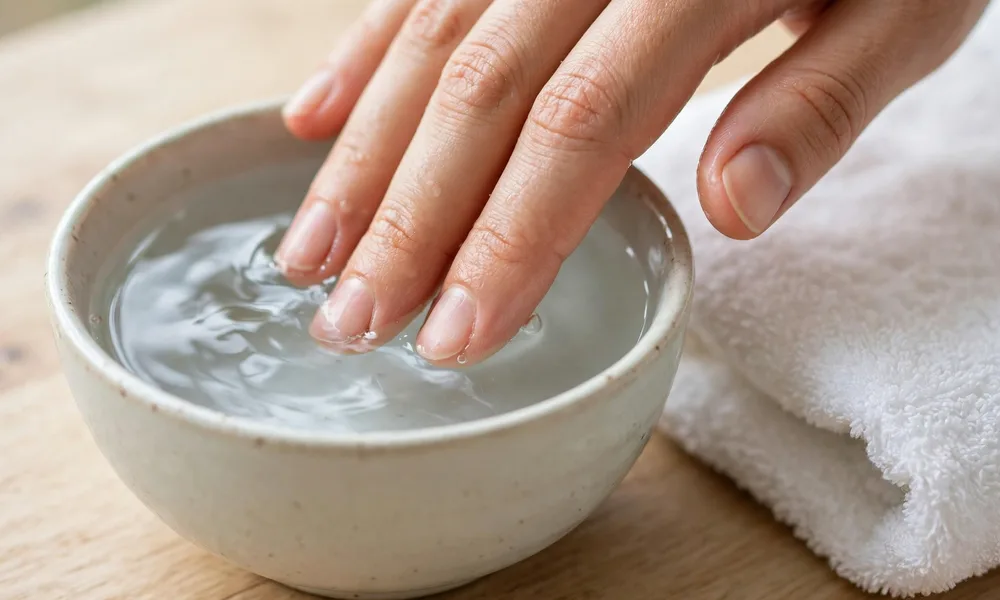
A good soak is short, warm, and plain. Fill a small bowl with lukewarm water, comfortable on the inside of your wrist, and soak your fingertips for three to five minutes. Plain water is enough: no soap, no oils, no salt, nothing extra is needed for a simple soak.
Three to five minutes softens the cuticles just enough for gentle care, without the long swelling that weakens them. After the soak, pat your hands dry with a soft towel, and care for the cuticles while the skin is still slightly soft, but not dripping wet. The same gentle logic runs through nail care with water for stronger nails, where short soaks protect the nails too.
Pushing Back Cuticles Gently
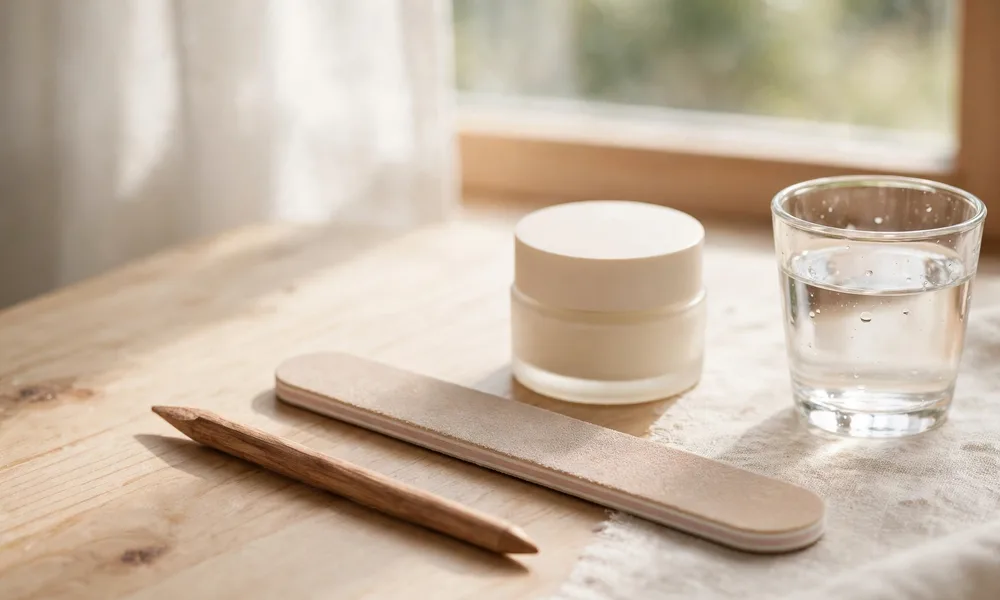
Push cuticles back gently, and only when they are soft from a short soak. Use a wooden orange stick, never a metal tool, and press the cuticle back slowly, in small strokes, toward the base of the nail. The stick should glide, never scrape, and the skin should move without pain.
Never cut your cuticles. Cutting opens the seal that protects the growing nail, and the gap it leaves invites germs in. A cut cuticle can bleed, swell, and turn sore, and it grows back ragged and uneven. Pushing back is enough, and it keeps the seal whole.
Drying and Moisturising After Water
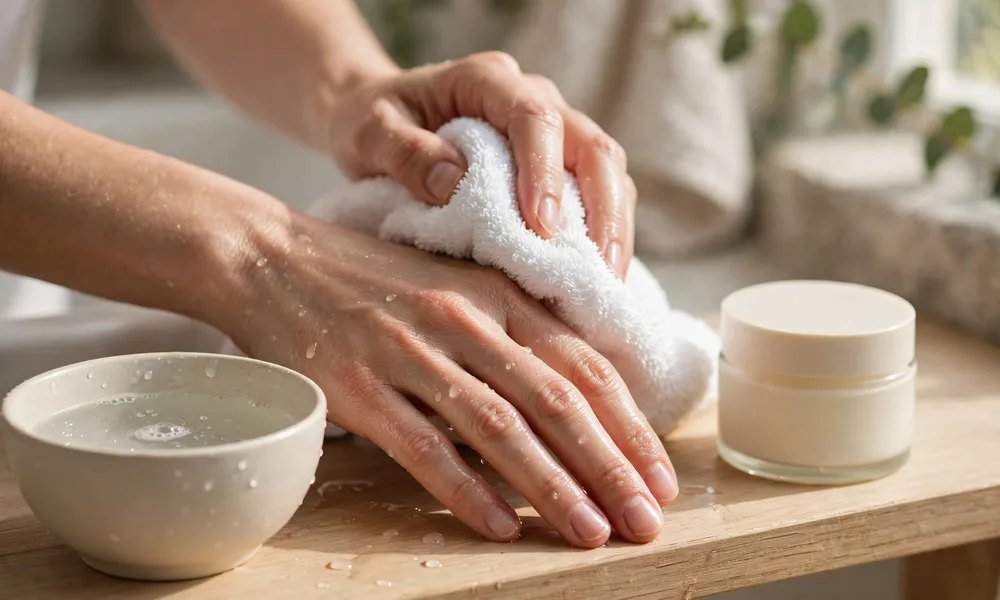
Drying matters as much as washing. After every wash, pat your hands dry with a soft towel, taking care around each nail, and never rub roughly. Rough rubbing frays the cuticle edge, and wet skin tears more easily than dry skin.
While the skin is still slightly damp, smooth a little plain, fragrance-free cream over the hands and around each nail. Damp skin holds the cream in, and the cuticle stays soft for hours. The same simple care helps the skin around the nails too, as water and skin barrier gentle repair explains for skin that needs a gentle touch.
Habits That Hurt Cuticles
Some habits hurt cuticles a little every day, and they are easy to miss. Picking at a ragged edge tears the skin further, biting leaves the seal open and sore, and pushing cuticles back when they are dry cracks the edge. Each small hurt adds up, and the cuticle grows back rougher than before.
Gloves help where water and dirt are the problem. Wear them for dishes, cleaning, and garden work, and your cuticles will thank you: soil, sun, and harsh soap dry the hands badly, as water and gardening for hands that stay soft shows for hands that work in the soil. Keep the nails short, and the cuticles have less to catch on.
A Simple Weekly Cuticle Routine
A weekly cuticle routine takes about ten minutes, and Sunday evening suits it well. Soak the fingertips for three to five minutes in lukewarm water, pat them dry, and push each cuticle back gently with a wooden stick. Then smooth plain cream around every nail, and let it sink in.
That is the whole routine, and it is enough. No oils, no special tools, no long sessions are needed. A short weekly habit keeps cuticles soft and neat, and it is far kinder than a harsh monthly session that leaves the skin sore. Keep the wooden stick, the towel, and the cream together in one small tray, so the routine is ready whenever Sunday evening arrives.
When to See a Doctor
Some cuticle problems need a doctor, not a home routine. See a doctor or dermatologist if a cuticle is red, swollen, hot, or painful, if it bleeds and will not stop, if pus appears around the nail, or if the finger throbs. These are signs of infection, and infections need proper care.
Do not try to treat an infected cuticle at home with creams, soaks, or cutting, and do not wait for it to pass on its own if it is getting worse. A doctor can tell quickly what is wrong and what will help, and early care is simpler than late care. While you wait for the appointment, keep the finger clean and dry, and leave the cuticle alone.
| Cuticle care | Water rule | Tool |
|---|---|---|
| Short lukewarm soak | Three to five minutes | Small plain bowl |
| Push back gently | Only when soft | Wooden orange stick |
| Pat dry softly | Never rub roughly | Soft white towel |
| Cream on damp skin | Plain fragrance free | Small cream jar |
Your Water and Cuticles Checklist
- Soak fingertips for three to five minutes in lukewarm water, never hot.
- Push cuticles back gently with a wooden stick, only when soft.
- Never cut your cuticles, and never pick or bite at ragged edges.
- Pat hands dry softly, then smooth plain cream around each nail.
- Wear gloves for dishes, cleaning, and garden work.
- See a doctor for redness, swelling, bleeding, pus, or pain.

Frequently Asked Questions
What are cuticles?
Cuticles are the thin rims of skin at the base of each nail, where the nail meets the finger. They seal the small gap there, keeping out dirt and germs while the new nail grows underneath, and healthy cuticles look smooth and lie flat against the nail.
Should I cut my cuticles?
No. Never cut your cuticles, because cutting opens the seal that protects the growing nail and invites germs in. A cut cuticle can bleed, swell, and turn sore, and it grows back ragged and uneven. Pushing back gently is enough.
How long should I soak my cuticles?
Soak your fingertips for three to five minutes in lukewarm water, comfortable on the inside of your wrist. That is long enough to soften the cuticles for gentle care, without the long swelling that weakens them. Plain water is enough.
What cream should I use on cuticles?
Use a little plain, fragrance-free hand cream, smoothed over the hands and around each nail while the skin is still slightly damp. Damp skin holds the cream in, and the cuticle stays soft for hours. No special cuticle oil is needed.
Why are my cuticles dry and peeling?
Cuticles usually dry and peel from too much water, hot water, harsh soap, or picking at ragged edges. Short lukewarm washes, gloves for dishes and cleaning, and plain cream on damp skin help. If a cuticle is red, swollen, bleeding, or painful, see a doctor.
How often should I care for my cuticles?
Once a week is enough for most people: a short soak, a gentle push back, and plain cream, taking about ten minutes. Daily care is simply patting dry softly and using cream after washing, with gloves for dishes and cleaning. If your hands are in water all day, a little cream after each wash helps too.
The Bottom Line
Water and cuticles need very little: a short lukewarm soak, a gentle push, and plain cream.
Keep it short, keep it soft, and let the cuticles do their quiet work.
A Note for Healthy Cuticles
Small rims, small habits, soft hands. That is the whole guide.


