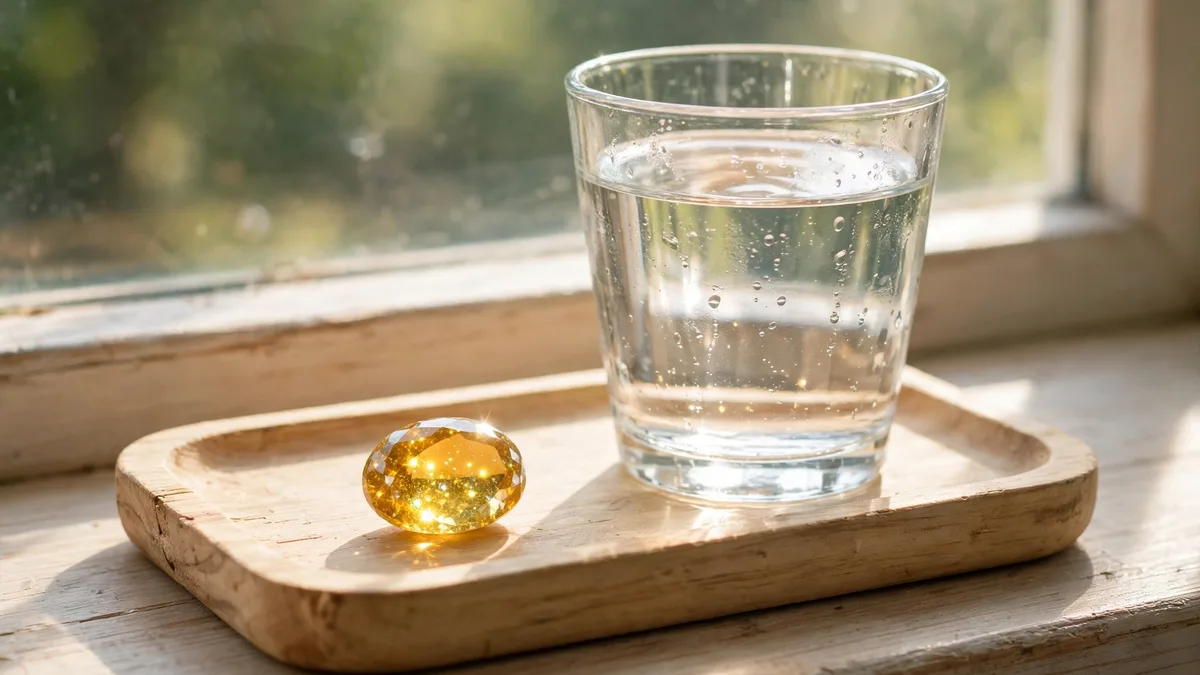
Some days arrive bright and stay bright, with the sun up early and the windows open wide. The house feels lighter, the rooms feel warmer, and even ordinary chores feel easier when the light is good.
Yellow zircon is a stone for days like these: a warm golden-yellow zircon, faceted and sparkling, the colour of late morning sun through a clear window. Set it on a tray beside a glass of fresh water, and it looks like a small piece of sunshine that stays put.
Here is what this guide covers: yellow zircon itself, picking a good piece, setting it out on a tray, and spending a bright day with it nearby. The stone is for display only, and it will not heal anything.
Key Takeaways
- Yellow zircon is a warm golden-yellow zircon, faceted and sparkling, for bright days.
- Its warm yellow colour suits bright days, strong light and open windows.
- Yellow zircon differs from blue zircon, clear zircon, citrine, yellow calcite, yellow sapphire, yellow fluorite, imperial topaz and honey calcite.
- Yellow zircon is for display and handling only; it will not heal anything.
- The stone stays beside drinking water, never in it, and stays dry and dusted.
What Yellow Zircon Is
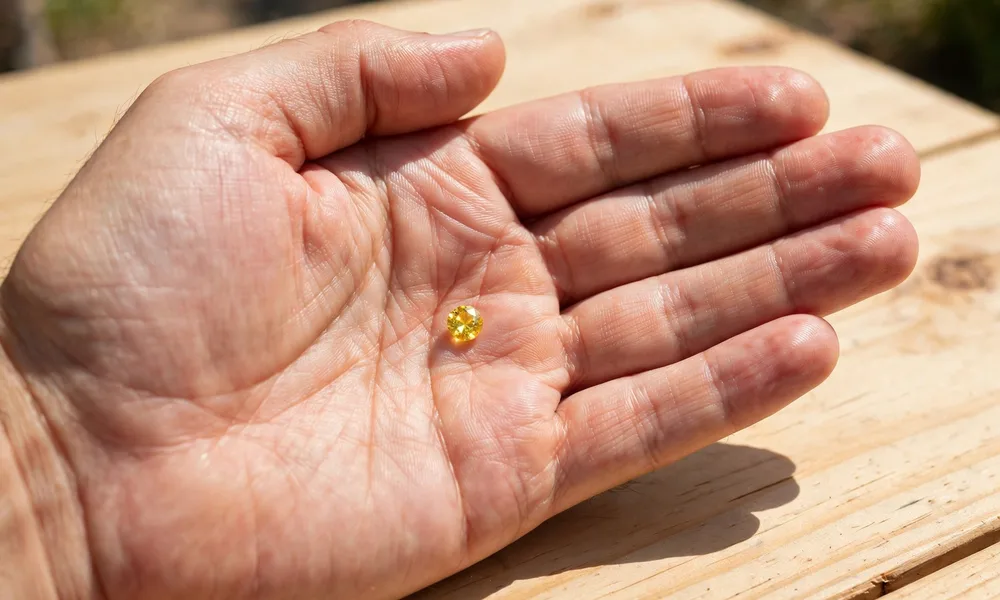
Yellow zircon is zircon in its warm yellow form, a mineral long loved for its bright shine. Its name comes from an old Persian word meaning gold-coloured, and the yellow stones live up to that name: they glow warm gold in sunlight, with a sparkle that comes from the stone itself, not from any coating.
Hold a polished piece in your palm and it feels cool, smooth and solid, with flat faces that catch the light in small golden flashes. A good yellow zircon is clear and sunny, never cloudy and never painted-looking, and its colour stays warm from every side. Turn it slowly in the sun and the flashes move across its faces, first bright, then soft, then bright again, like light playing on still water.
At Crystal by Ayesha, we treat yellow zircon as a decorative object, not a medical treatment. It will not fix your mood, but it can give your attention a warm, bright place to rest.
Choosing a Yellow Zircon Stone
Choosing a yellow zircon stone comes down to a slow look in daylight and trusting what your eye sees. A good piece shows a warm, even golden yellow, not a dull brown-yellow or a washed-out pale yellow, and the facets should be clean and sharp, with no dull patches.
Look for a smooth surface with no sharp chips. A small faceted piece is the safest first stone, and a round polished stone suits a tray where it will be looked at often. Ask the seller where the stone came from, and take your time before you buy: a good seller will let you hold the piece in daylight and look at it from every side. Buy from a trusted seller, never one who promises it will change your health.
A Bright Day with Yellow Zircon
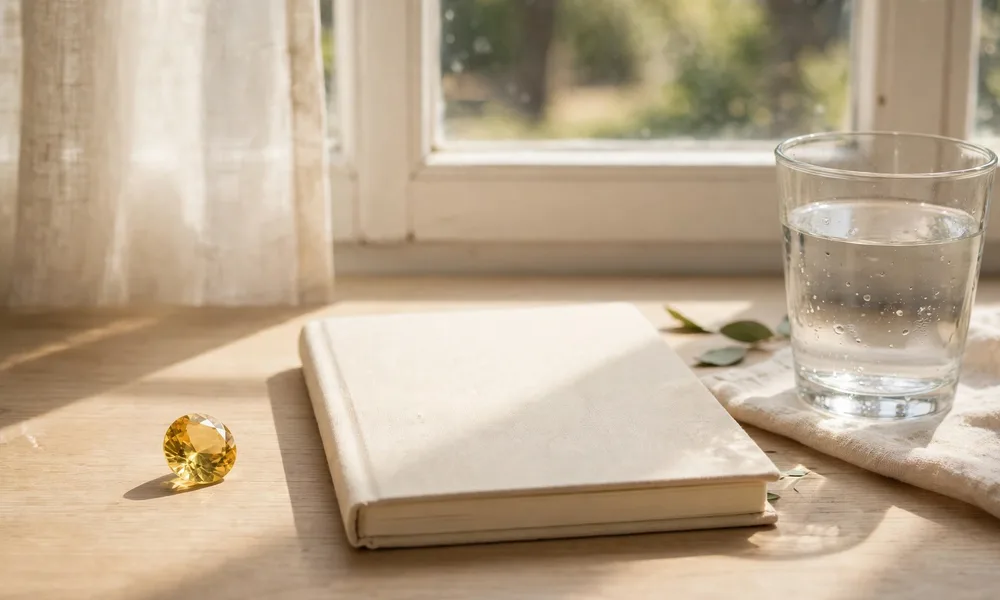
A bright day with yellow zircon takes only a few minutes to begin: place the stone on its tray, fill a clear glass with fresh water, and set it beside the stone. When you sit down, drink the water slowly, in small sips, and then pick up the stone and look at its warm yellow for a few breaths.
Set the stone back down gently, and let the bright day carry on, the tray near a window, where morning light can reach the stone and the glass. Later in the day, when the light shifts, the stone looks different again: softer in the afternoon, warmer near dusk, always the same clear yellow. You can move the tray with the light, from a morning windowsill to a sunny desk, and let the stone sit quietly beside you while you work.
Yellow Zircon Beside Water
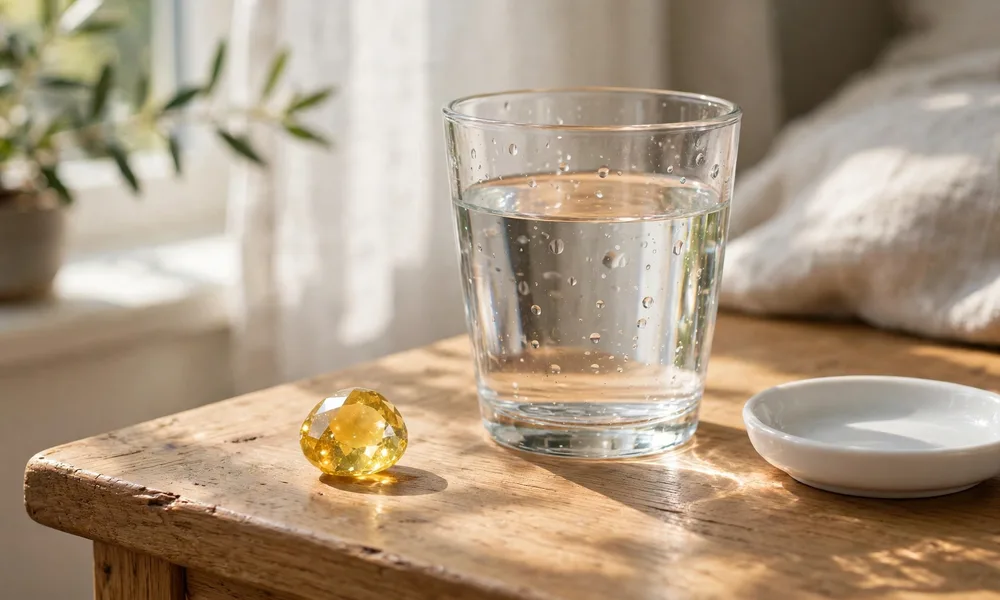
Water belongs beside the stone, never around it: set a clear glass of fresh drinking water next to the stone on the tray. They share a tray, not a glass. Never place the stone inside drinking water, and never soak it, because a stone has no place in a drink.
Zircon can be dusty from handling, so wash your hands after touching it, and keep it away from small children and pets. If the glass spills, lift the stone away and dry it at once. Dust it weekly with a soft, dry cloth, never soap or polish.
Yellow Zircon at a Glance
| Warm yellow zircon | Bright days | Display only |
|---|---|---|
| Golden, faceted, sparkling | Strong light, open windows | Beside water only |
| Cool, smooth feel | Tray, desk, windowsill | Dust with dry cloth |
| Clear, sunny colour | Water, light, pause | Never soak it |

Yellow Zircon and Blue Zircon and Clear Zircon
Yellow zircon has two zircon siblings on this site, and all three are true zircon, yet they differ by colour and mood alone. Blue zircon is a vivid bright blue zircon for calm days, sparkling like clear water under a bright sky, and it suits slow hours in soft light.
Clear zircon is a colourless sparkling zircon for special evenings, bright and quiet, catching lamplight without any colour at all. Yellow zircon is the warm one of the three: golden-yellow and sunny, for bright days rather than calm days or special evenings. Blue zircon for calm days keeps a bright blue stone for calm days; this guide keeps a warm yellow stone for bright days.
Yellow Zircon and Citrine and Yellow Calcite
Yellow zircon and the sunny yellow morning stones — citrine and yellow calcite — all share a yellow colour, yet they are different minerals with different feels. Citrine is the sunny yellow variety of quartz, warm and golden, usually sold as a point or a small cluster, and it suits bright mornings.
Yellow calcite is a sunny lemon-yellow calcite, smooth and glowing, sometimes crossed with soft white bands, and it also suits bright mornings. Yellow zircon is harder and brighter than either one, with sharp facets and a strong sparkle, and it suits the whole bright day, not only the morning. Citrine for bright mornings keeps a warm golden quartz point for bright mornings; this guide keeps a faceted golden-yellow zircon for bright days.
Yellow Zircon and Yellow Sapphire and Yellow Fluorite
Yellow zircon and the other warm yellow stones for bright days — yellow sapphire and yellow fluorite — can look alike at a first glance, yet a closer look sets them apart. Yellow sapphire is a yellow corundum, bright and even, and it carries a soft daylight glow all its own.
Yellow fluorite is a warm yellow fluorite, soft and sunny, like late-morning light falling across a table. Yellow zircon is brighter and more fiery than either one: its facets throw back small golden flashes, while sapphire glows softly and fluorite glows evenly. Yellow sapphire for bright days keeps a warm yellow corundum for bright days; this guide keeps a sparkling warm yellow zircon for bright days.
Yellow Zircon and Imperial Topaz and Honey Calcite
Yellow zircon and the warm gold stones — imperial topaz and honey calcite — all glow warmly, yet each one is plain beside yellow zircon in its own way. Imperial topaz is a deep golden-orange topaz, richer and darker than yellow zircon, and it suits special days, not ordinary bright ones.
Honey calcite is a warm honey-coloured calcite, smooth and soft, kept as a golden autumn companion for skin and slow autumn hours. Yellow zircon is neither of these: not orange-gold like imperial topaz, not soft honey like honey calcite, but a clear sparkling golden-yellow zircon for bright days.
Stones That Must Never Touch Water
Not every stone is safe beside water. Malachite must never go in water or in elixirs, because it can release harmful substances. Hematite must never go in drinking water, and apatite, lepidolite — which contains lithium — pyrite, angelite and amber must never go in drinking water or in soaks either.
The rule stays the same for yellow zircon: it stays beside water, never in it, and it is never soaked. Display it on a tray, keep a glass of water beside it, and never let the two meet. Yellow zircon is a gentle stone for display and handling, but it still stays beside water, never in it.
Your Bright Days Checklist
- Set the stone on a tray beside a clear glass of water.
- Drink a glass of fresh water slowly when the bright day begins.
- Hold the stone gently for a few breaths and look at its warm yellow.
- Keep the stone beside water, never inside drinking water or soaks.
- Dust the stone dry weekly, and wash your hands after handling it.
- Remember the stone will not heal anything; see a doctor for health problems.
Frequently Asked Questions
What is yellow zircon?
Yellow zircon is the warm golden-yellow form of zircon, a mineral loved for its bright shine. Its colour is a clear sunny yellow, and a good piece is faceted and sparkling.
Is yellow zircon safe beside water?
Yes, beside a glass of drinking water, on the same tray or shelf. It must never go inside drinking water or be soaked, and you should wash your hands after handling it.
Is yellow zircon the same as citrine?
No. Citrine is a sunny yellow quartz, usually sold as a point or a cluster, for bright mornings. Yellow zircon is a faceted zircon with a stronger sparkle, for bright days.
Will yellow zircon heal anything?
No. Yellow zircon will not heal anything. It is a beautiful object for display and handling, and the calm comes from the pause and the bright day, not from the stone.
How do I clean yellow zircon?
Dust it weekly with a soft, dry cloth, never soap or polish. Handle it gently, dry it at once if it gets wet, and wash your hands after touching it.
Where should I keep my yellow zircon?
Set it on a small tray by a window in a bright room, a clear glass of water next to it, where the sun can reach it.
The Bottom Line
Yellow zircon brings warm yellow to bright days: a faceted golden-yellow zircon, sparkling in strong light, held beside a glass of fresh water near a window. Keep it beside water, never in it, and handle it gently.
A Note for Bright Days
Keep it warm, keep it dry, keep it bright. One small yellow stone beside a glass of water, and a few sunny minutes, are all a bright day needs.