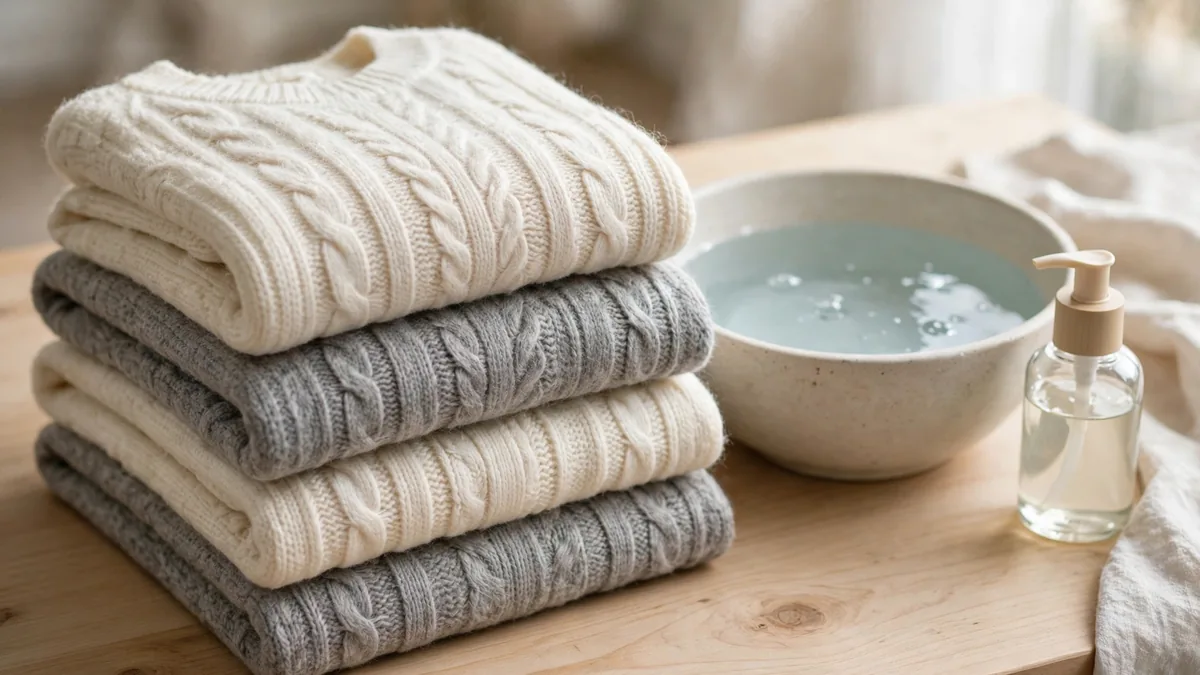
A wool sweater is a quiet comfort. It is warm without weight, soft against the skin, and it asks for very little in return: cool water, a gentle hand, and patience while it dries. Treat it kindly and a good wool sweater can last for years, growing softer with each careful wash.
Most wool is ruined by hurry, not by wear. Hot water shrinks it, rough handling felts it, and a tumble dryer can turn a favourite sweater into a stiff scrap in a single cycle. The whole wash takes about fifteen minutes. This guide explains water and wool care from start to finish: what wool is, why it needs soft water, the gentle wash, flat drying, pilling, and storage.
Wool care is comfort and habit only, never a treatment for skin or health. It is a small, slow skill, and once you have washed one sweater by hand, the next one is easy: cool water, a drop of mild soap, no wringing, and a flat towel to dry on.
Key Takeaways
- Wool is a warm natural fibre from sheep, soft and springy, needing gentle water.
- Wash wool by hand in cool water with a drop of mild soap, never hot water.
- Never wring wool, never agitate it hard, and never dry it in a tumble dryer.
- Dry wool flat on a towel, in shade, and reshape it gently while it is damp.
- Store wool clean, folded, and dry, with cedar or lavender to keep moths away.
What Wool Is
Wool is a natural fibre that grows on sheep, spun into yarn and knitted into cloth. A wool sweater feels warm and springy, holds its shape well, and stays warm even when a little damp, which is why shepherds and sailors have trusted it for centuries. The fibres are covered in tiny scales, and those scales are the whole story of wool care.
Wool also carries lanolin, a natural oil that keeps the fibres soft and helps the cloth resist light rain. Harsh soap strips lanolin away and leaves wool dry and rough, while a drop of mild soap cleans without harming it. Check the label before you wash: it should name the fibre and say whether the piece is pure wool or a blend.
Why Wool Needs Soft Water
Wool needs soft water because its fibres are delicate when wet, and heat and movement together are what damage them. Cool water cleans wool well, lifting light dust and the faint marks of wear. Hot water is the risk: it opens the tiny scales on the fibres, and when those scales lock together the cloth felts, coming out smaller and stiffer, past saving.
Harsh soap is the second risk. Strong detergents and bleach can strip the natural lanolin from wool and leave it rough or spotted. A drop of mild soap, or a soap made for wool and delicates, is all wool needs. The same gentle idea runs through water and cashmere care, a soft wash guide, where another wool fibre is washed the same slow way.
Reading the Label First
Every wool garment carries a small label, and reading it takes seconds. The label tells you the washing temperature, whether it can go in the machine, and whether it can be ironed. A sweater that says hand wash only should never meet a machine cycle, and a piece that says dry clean only should be believed, especially for lined or beaded pieces, or brightly dyed wool that may bleed colour.
The label also tells you what the cloth is made of; many wool clothes are blends, with a little nylon or acrylic mixed in. A blend usually washes like wool but dries faster. When label and habit disagree, trust the label; the maker knows the cloth best.
The Soft Wash, Step by Step
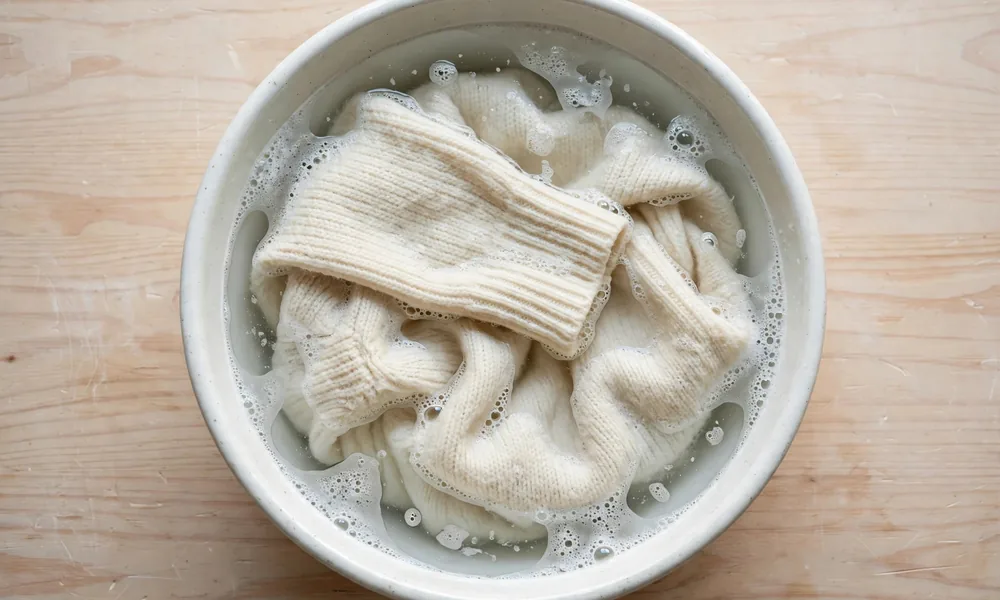
The soft wash is simple, and it takes about fifteen minutes. Fill a clean basin with cool water, about the temperature of your hand, and add a drop of mild soap, stirring it in. Turn the sweater inside out, so the outer face is protected, and lower it gently into the water.
Press the sweater softly under the water and let it soak for ten minutes, then swish it slowly through the water. Press it softly against the side of the basin to work the soapy water through the knit, but never rub, twist, or scrub, because rough handling while wet can felt the sweater out of shape.
Rinsing and Pressing Out Water
Rinsing is where the soap leaves and the softness returns. Lift the sweater out in a loose bundle, empty the basin, and refill it with fresh cool water. Lower the sweater back in, press it gently, and lift it out again. Rinse twice, until the water runs clear.
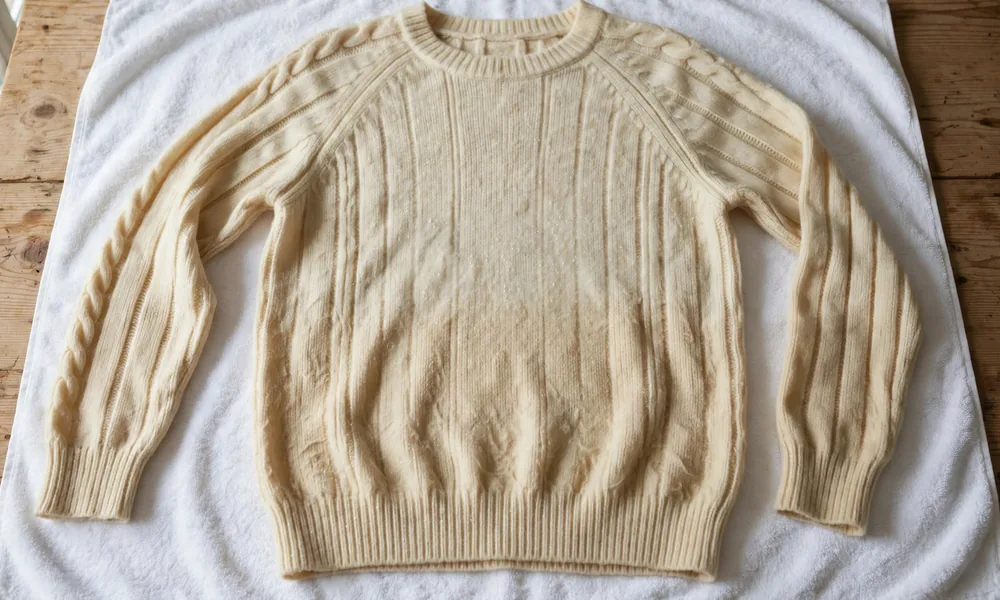
Never wring wool. Wringing twists the wet fibres and can leave a sweater misshapen for good. Instead, lay the wet sweater on a clean white towel, roll the towel up gently, and press it once: the towel takes the water, and the sweater is never wrung. Unroll the towel, and the sweater will be damp but no longer dripping.
Drying Wool Flat
Drying wool is where most damage happens, so take it slowly. Lay the sweater flat on a fresh dry towel, smooth it gently into shape, and leave it in the shade with air moving around it, because wool dries in the shape you leave it in.
Never hang wet wool on a line, because the weight of the water pulls the knit out of shape. Never use a tumble dryer, because the heat and the tumbling can shrink wool and felt the fibres in a single cycle. Never dry wool in direct sun, because strong sunlight fades colour and weakens the fibres.
Dealing with Pills
Pills are the small balls of fluff that form on wool where the fabric rubs, under the arms, at the sides, and where a bag strap sits. They are normal, not a sign of bad wool, and every wool piece pills a little, especially in its first season.
Remove pills with a small fabric comb or a wool comb, laid flat on a table, stroking gently in one direction. Never pull pills off by hand, because pulling tugs the fibres out of the knit and makes the pilling worse. Comb the sweater once a month in the season you wear it, and it will look smooth again.
Stains and Everyday Marks
Stains are part of everyday wool, and most of them come out with a little patience. Treat a stain as soon as you see it, with cool water and a drop of mild soap dabbed on gently, never rubbed hard. Blot the mark from the outside in, so it does not spread.
Never use hot water on a stain, because heat can set it for good, and never use bleach on wool, because bleach eats the fibres. For a stubborn mark, soak the whole sweater in cool soapy water for ten minutes, then wash it as usual.
Storing Wool Between Wears
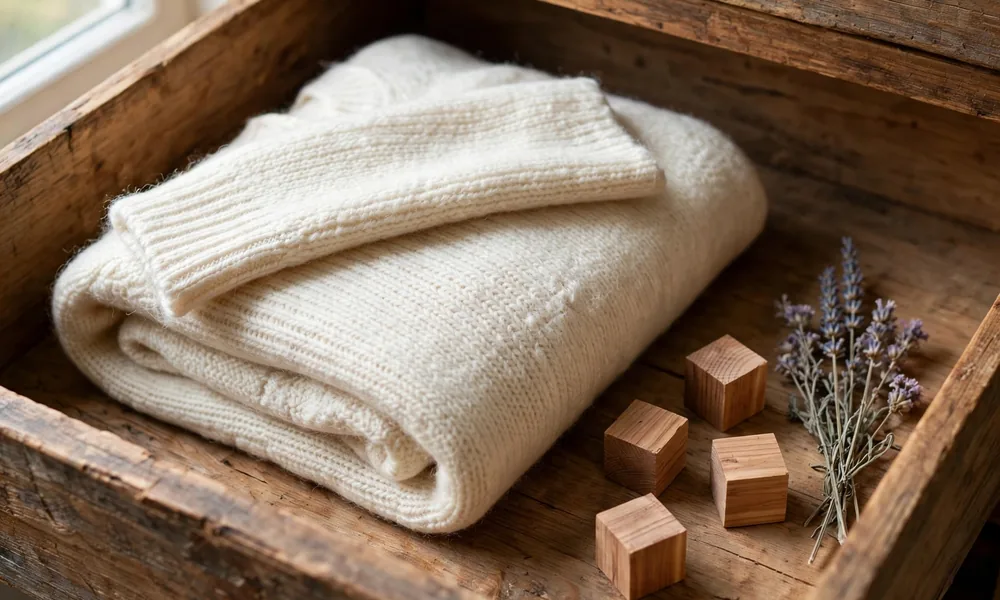
Store wool clean, folded, and dry, because a dirty or damp piece stored away will attract moths and mildew. Moths love wool most when it is dirty, so never put a worn sweater away unwashed at the end of the season. Wash it first, dry it flat, and fold it loosely.
Keep wool in a drawer or a breathable cotton bag, with a little space around each piece and a cedar block or a sprig of dried lavender nearby. Never hang wool sweaters, because hanging stretches the shoulders out of shape. Clean, dry wool stored well smells fresh for months.
Wool Care at a Glance
| Cool water | Gentle wash | Flat drying |
|---|---|---|
| Hand temperature only | Soak ten minutes | Towel under sweater |
| Mild soap drop | Press, never wring | Reshape while damp |
| Rinse water clear | No hot water | Shade, fresh air |
| No bleach ever | No tumble dryer | Fold, never hang |
Your Wool Care Checklist
- Read the care label first, and trust it over habit.
- Fill a clean basin with cool water and a drop of mild soap.
- Soak the sweater for ten minutes, then press it gently, never wring.
- Rinse twice in fresh cool water until the water runs clear.
- Dry the sweater flat on a towel, reshaped, in shade.
- Store it clean, folded, and dry, with cedar or lavender nearby.

Frequently Asked Questions
How often should I wash a wool sweater?
Wool needs washing far less often than cotton, because its fibres resist odour and freshen well in open air. Air a wool sweater after each wear near an open window, and wash it only when it is really dirty or at the end of the season.
Can I wash wool in a machine?
Only if the label says so, and only on a gentle wool cycle with cool water and a short, slow spin. Most wool is safest washed by hand, because a machine can felt the fibres in one rough cycle. When in doubt, wash by hand.
Why did my wool sweater shrink?
A wool sweater shrinks when hot water and movement felt the fibres together, locking the tiny scales on each fibre into a tighter, smaller cloth. Once felted, a sweater cannot be stretched back. The same gentle idea runs through water and silk care, a gentle wash guide, where another delicate fibre is washed the same slow way.
Can I use hot water on wool?
No. Hot water is the fastest way to ruin wool, because heat opens the scales on the fibres and lets them lock together into felt. Always use cool water, about the temperature of your hand, and rinse in cool water too.
How do I keep moths away from wool?
Keep wool clean, because moths love dirty wool most, and store it dry with cedar blocks or dried lavender nearby. Air the drawer now and then, and check stored wool at the start of each season. A clean, dry drawer with cedar is the simplest moth defence there is.
Which fibre is easiest to wash, wool or cotton?
Cotton is the easier fibre, because it is sturdy, loves water, and forgives a warm wash. Wool asks for more care: cool water, no wringing, and flat drying. The full cotton method is described in water and cotton care, a gentle wash guide, where a strong plant fibre takes a simpler wash.
The Bottom Line
Wool care is cool water, a gentle hand, and a flat towel, kept simply.
Wash it slowly, dry it flat, and the sweater will last for years.
A Note for Wool Care
Keep it cool, keep it gentle, keep it flat. The wool will do the rest.