There is a moment in every home when the light changes and the windows give themselves away. A pane that looked clean in the morning shows dust by afternoon, and the garden outside turns grey behind it. The glass has not broken; it has only gathered a thin coat of the everyday, and a little water will take it off.
Water and window cleaning is the simplest version of that small repair. No strong sprays, no strange tools, only plain water, a soft cloth, and a slow pass until the view comes back sharp. It takes less than an hour, costs almost nothing, and leaves the whole room brighter.
This guide sets out the ritual in plain words: what to gather, how to wash the glass without streaks, and how to keep the sills dry. It is gentle general information only.
Key Takeaways
- Water and window cleaning means plain water, a soft cloth, and a slow pass.
- Wash on a cloudy day or in soft light, so the water dries without streaks.
- Keep the water on the glass, never pooling on the sill or the floor.
- A squeegee, a spray bottle, and two cloths are all you need.
- The ritual is a pleasant household habit only; it treats nothing and promises nothing.
What Water and Window Cleaning Means
Water and window cleaning means washing window glass with plain water and a soft cloth, in slow, even passes, until the pane is clear again. The water does the work: it loosens dust, lifts fingerprints, and carries the dirt away. A drop of mild soap suits a very dirty pane, yet plain water alone is enough for most windows.
The ritual belongs to the house, not to a shop. It needs no special skill and no strong chemicals, only patience and a clean cloth. The glass disappears when it is done, and the view outside takes its place.
Gathering Your Water, Cloth and Tools
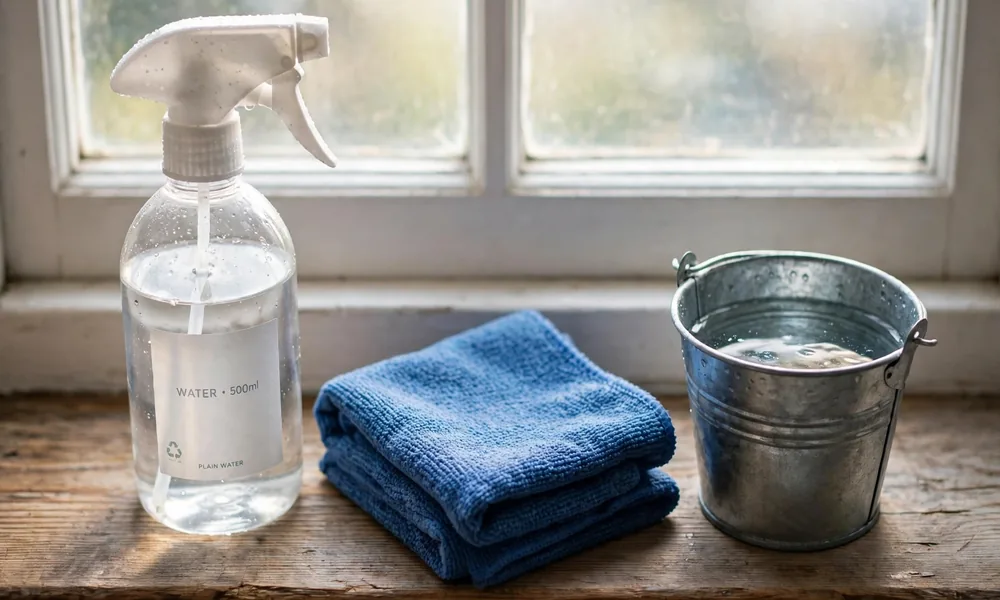
Gather everything before the first drop touches the glass, because a half-washed pane dries into streaks while you search for a cloth. Fill a small bucket with fresh water, fill a spray bottle with plain water, and lay out two microfibre cloths, one damp, one dry. A rubber squeegee suits large panes, and an old towel on the floor catches drips.
Check the cloths before you start: a cloth that has washed a greasy pan will smear the glass, and a rough scouring pad will scratch it. Fold each cloth into a flat pad, so a clean face is always one fold away, and keep the bucket on the floor.
A Simple Fresh Ritual, Step by Step
A simple fresh ritual takes a few minutes per pane, and it starts with the frame. Wipe the frame and sill first, so loose dust does not wash onto the glass. Spray the pane lightly from the top corner downward, and wipe in long, even strokes, folding the cloth to a clean face as it picks up dirt.
Then take the dry cloth and shine the pane in the same slow strokes, top to bottom, until the water is gone and the glass is clear. For a large pane, draw the squeegee across in overlapping passes, wiping its blade after each pass. Step back, look from an angle, and catch any missed corner.
Water on Glass, Never on the Sill
Water belongs on the glass, never pooling on the sill or the floor. Keep the bucket on the floor and the spray bottle upright, and wring the damp cloth well, so no water runs down into the frame. A wet sill swells wood, lifts paint, and leaves dark marks that outlast the clean glass.
If water reaches the sill, dry it at once with the old towel, and wipe the frame corners where water hides. Work one pane at a time, and never spray a whole row at once, because the first pane will dry streaked. Slow water, kept where it belongs, is the whole secret.
Window Cleaning at a Glance
| Plain water, cloth | Soft light, slow | Glass only, dry |
|---|---|---|
| Spray, wipe, shine | Top to bottom | Sill kept dry |
| Two cloths, squeegee | Cloudy day best | Bucket on floor |
| Bucket, spray bottle | One pane, finish | Streaks checked twice |
| Mild soap, rare | Step stool, high | Towel for drips |

Window Cleaning and a Window Seat
Water and a window seat: a simple calm ritual is the closest cousin to this guide: both share a window and a glass of water in soft daylight. The difference is what you do there. A window seat is somewhere to sit with a book and a glass of fresh water, for an hour that pauses the day.
Window cleaning is work, not rest: you stand, you spray, you wipe, and the glass is the point, not the pause. The window seat holds a single seat ready for sitting awake, while this guide keeps the glass ready for looking through. Clean the glass first, and the seat will feel brighter when you sit down.
Window Cleaning and a Fresh Living Room
Water and a fresh living room: simple rituals keeps a whole sitting room feeling new with plain water, open windows, cushions plumped up and shelves wiped down. It looks after the sofas and shelves for long evenings, and the windows are only one part of that larger room.
Window cleaning is smaller and sharper: one pane, one cloth, one slow shine, with nothing else on the list. Use the living room ritual when the whole room needs care, and this one when only the glass needs attention. Clean glass makes a fresh room feel fresher still.
Window Cleaning and Curtains
Water and curtains: simple fresh rituals keeps the cloth beside the glass fresh, shaking out dust and airing the fabric in soft light. Curtains frame the window and soften the room, and they gather dust between washings.
Glass and fabric ask for different hands. Curtains need shaking, airing, and gentle washing, while glass needs water and a cloth, and the two should never meet while wet: a damp curtain will mark a clean pane. Wash the curtains first, let them dry, then clean the glass they frame.
Window Cleaning and a Mirror Polish
A mirror polish belongs to the same family as window cleaning, yet the two surfaces ask for different care. A mirror hangs on a wall and reflects the room, so its polish is about a clear face looking back at you, while a window looks outward, to the garden and the sky beyond it. Mirrors show every fingerprint up close, windows every streak from across the room.
The tools overlap — plain water, a soft cloth, a slow shine — but the habits differ: a mirror is polished in small circles in lamplight, while a window is washed in long strokes in daylight. Keep the two apart, and each surface will stay clear in its own way.
Window Cleaning and the Other Fresh Rituals in This Batch
Several other fresh rituals share this batch, and each one stands apart from window cleaning. A bedtime story belongs to the evening, a glass of water and a book read slowly before sleep, while window cleaning belongs to the daytime, when the light shows every streak. A lullaby is sung softly to settle a small child, a sound rather than a surface, asking for a quiet voice where window cleaning asks for a steady hand. A copper pot is polished on a kitchen shelf until its warm metal glows, a different shine on a different material. Glass, story, song, and copper each have their own hour, and none of them is a window.
Keeping Your Windows Fresh Week by Week
Clean glass stays clean longer when the habit is small and regular. Wipe the insides of the most-used windows weekly, and wash the outsides monthly, or after dust or a long rain. Dust the sills weekly with a dry cloth, and shake the curtains out the same day, so the dust has nowhere to settle back onto the glass.
Store the cloths clean and dry near the bucket, and wash them on their own so they pick up no grease. Keep the squeegee blade wiped and hung up, away from dust, and replace a cloth once it grows thin or rough. A small weekly wipe beats a long yearly scrub.

Gentle General Information Only
This guide is gentle general information, not medical advice. Washing windows will not fix poor sleep, calm anxiety, or treat any health problem. It is a pleasant household habit, and its value is the clear glass itself. If you try a new cleaning product while you work, try it on a small patch of skin first, give it a day, and stop using it if the skin turns sore. If a health worry keeps nagging at you, a doctor is the person to ask; a clean window has no answers there.
Your Fresh Windows Checklist
- Fill a small bucket with fresh water and set it down.
- Spray one pane lightly, then wipe top to bottom.
- Shine the glass with the dry cloth until it is clear.
- Dry the sill at once, so no water pools on the wood.
- Put the cloths away clean, and hang the squeegee up.
- This is a household habit only; health worries belong with a doctor.
Frequently Asked Questions
What is water and window cleaning?
Water and window cleaning is washing window glass with plain water and a soft cloth, in slow, even passes, until the pane is clear.
When is the best time to clean windows?
A cloudy day or soft morning light suits windows best, because the water dries slowly.
Do I need soap to clean windows?
Plain water is enough for most windows, and a drop of mild soap suits only a very dirty pane.
How do I stop streaks on the glass?
Wipe in long, even strokes from top to bottom, shine with a dry cloth before the water dries, and check from an angle.
Is window cleaning with water safe for the glass?
Yes, plain water and a soft microfibre cloth are gentle on window glass, and a rough scouring pad is best avoided.
Where in the house should I start cleaning windows?
Start with the windows you look through most, the living room and the kitchen, one pane at a time.
The Bottom Line
Water and window cleaning is plain water, a soft cloth, and a slow shine: one pane at a time, and the room grows brighter.
A Note for Fresh Windows
Wash slow, shine slow, and let the daylight do the rest. A clear pane and a quiet hour are enough for fresh windows.