
There is a seat in many homes that nobody quite claims: the wide sill by the window, or the low bench built beneath it, with a cushion, a little daylight, and nothing else to do. It waits through the busy hours, and comes into its own when the day slows down.
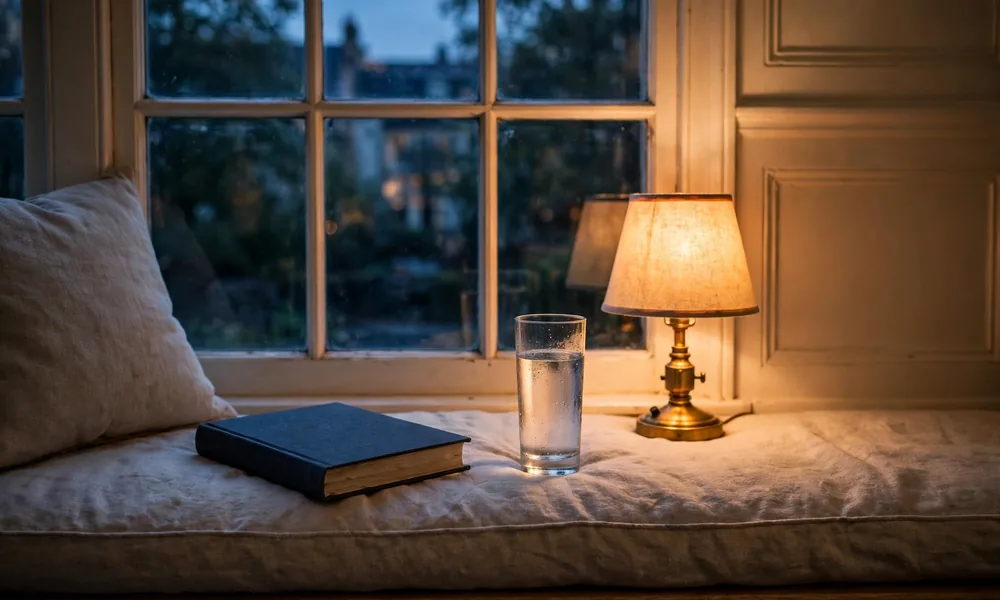
Water and a window seat make a simple calm ritual of that waiting place. A tall glass of fresh water, an open book, and soft light are all it takes. You sit, you sip, you read a few pages, and the rest of the house carries on without you.
This guide sets out that small ritual in plain words: how to choose your seat and glass, how to keep the book dry, how a window seat differs from the other fresh corners of the home, and what the ritual can and cannot do. It is gentle general information only, never medical advice.
Key Takeaways
- Water and a window seat means a glass of fresh water and a book, enjoyed slowly in soft window light.
- A window seat is one seat by a window, not a room, a garden, or a whole house.
- Set the glass beside the book, never above it, so the pages stay dry and safe.
- A calm hour needs very little: water, a cushion, one good book, and unhurried pages.
- The hour ends gently: close the book, finish the water, and let the day rest.
What a Window Seat Is
A window seat is a place to sit beside a window, made for one person and a quiet hour. It may be a bench built into the wall under the glass, a wide sill with a cushion laid on it, or simply a chair pulled close to the window with a small table beside it. What makes it a window seat is the light: daylight falling across the cushion, the book, and the glass, with the world outside kept at a gentle distance. It is not a room and not a garden. It is a single seat, a single glass of water, and a single book, in the brightest corner of the house.
Why a Window Seat Feels Calm
A window seat feels calm because it gives two things at once: light and distance. The light comes in low and soft, warming cushion and pages without glare, while the glass holds street or garden at arm's length. You can watch the day go by without joining it. A chair mid-room faces the house and its jobs; a seat by the window faces outward, and the jobs wait. That small turn, from room to glass, is what makes the hour feel like a pause, not a chore.
Choosing Your Seat, Book and Glass
Choose the seat that catches soft light, not harsh sun: a morning or late-afternoon window is best, with a cushion thick enough for an hour and a small table within reach for the glass. Pick a book for short sittings: a gentle novel, short stories, or a calm book of poems, since you can stop anywhere and pick it up tomorrow. Choose a plain, sturdy glass with a wide base, fill it fresh, and set it on the table, away from the pages.

A Quiet Hour at the Window Seat
A quiet hour at the window seat takes no planning at all, and it starts with the glass. Fill it with fresh water, carry it to the seat, and set it on the table beside the cushion. Sit down, drink slowly, and open the book to the page where you left off. Read a few pages, pause to look out of the window, and sip again. When the chapter ends well, or your eyes feel heavy, close the book and set it on the table beside the glass. The hour is done, and the seat keeps its calm.
Water Beside Your Book, Never Over It
Keep the glass and the book apart on purpose: the glass on the table, the book on the cushion or in your hands, with a clear stretch of wood or cloth between them. That gap is the whole safety rule: water on one side, paper on the other. If the glass tips, the book stays dry. If you lift the glass to drink, hold it away from the open pages, and set it down again before you turn a page. A soaked book cannot be dried back to what it was, so the gap earns its keep every time you sit down.
A Window Seat at a Glance
| Seat by window | Book and glass | Soft daylight |
|---|---|---|
| Cushion, small table | Water beside book | Pages stay dry |
| One seat, one hour | Sip slowly, read | Light, air, pause |
| Morning, afternoon | Close book gently | Tidy seat daily |

A Window Seat and a Reading Night
Water and reading: a quiet night ritual is the closest cousin to this guide: both share a glass of water and a book. The difference is the hour and the place. A reading night belongs to the evening, in a dim corner with a low lamp, when the house has gone quiet. A window seat belongs to the daytime, in soft daylight by the glass, while the morning or afternoon is still open. One ends the day; the other pauses it. For a slow close to the evening, choose the reading night. For a quiet pause in the day, choose the window seat.
A Window Seat and a Fresh Living Room
Water and a fresh living room: simple rituals keeps a whole sitting room fresh with plain water, open windows, plumped cushions and dusted shelves. A window seat is smaller than that by far: one seat, one cushion, one glass, in the brightest corner of the same room. The living room guide tends the sofas and the shelves for long evenings; this guide tends a single seat for a short hour. Use the living room ritual when the whole room needs care, and use the window seat when only you need a pause.
A Window Seat and the Other Fresh Rooms
Every other fresh corner has its own water habit, and none is a window seat. Water and a fresh bedroom: simple rituals keeps a bed and bedside table fresh for sleep, while a window seat keeps one seat fresh for sitting awake. The fresh entryway tidies a hallway, the fresh porch cleans an outdoor step, and the fresh pantry keeps food shelves dry and labelled. The fresh kitchen wipes a sink and counters, the fresh bathroom a mirror and shower, and the fresh garden waters plants at their roots. The fresh car is washed on a driveway, and the balcony corner is one outdoor chair with a plant. A window seat is none of those: an indoor seat by a window, glass and book in hand, for a quiet hour in daylight.

Where a Window Seat Fits at Home
A window seat fits wherever a window has room beside it. A wide sill, a bench under the living room window, or a chair drawn up to the kitchen glass can all become one, if the seat is steady, the light soft, and the glass has a table. Keep the seat away from radiators that dry the air and from draughty corners that chill it. A small cushion, a folded blanket for cooler days, and a plant on the sill are enough to make it yours.
Keeping the Seat Clean and Dry
A window seat stays fresh with a weekly wipe and a daily tidy. Shake the cushion outside once a week, wipe the sill and the small table with a damp cloth, and wash the glass every morning with clean water and a drop of mild soap. Keep the seat dry between sittings, and never let water pool on the sill or the wood. Put the book back on the shelf when the hour is done, fold the blanket, and leave the seat ready.
Gentle General Information Only
This guide is gentle general information, not medical advice. Sitting by a window with water and a book will not cure poor sleep, ease anxiety, or treat any health problem. It is a pleasant habit, and its value is the quiet hour itself. If you try a new hand cream or skin product while you sit, patch test it on a small area first, wait a day, and stop if your skin feels irritated. When something about your health keeps worrying you, talk to a doctor; a quiet hour by a window cannot answer it. Keep the habit small, and let the rest belong to proper care.
Your Calm Days Checklist
- Fill a tall glass with fresh water and set it on the table.
- Sit on the cushion and open the book where you left off.
- Read a few pages slowly, sipping the water between chapters.
- Keep the glass beside the book, never over the pages.
- Tidy the seat when the hour ends, book back on the shelf.
- This is a calm habit only; health worries belong with a doctor.
Frequently Asked Questions
What is water and a window seat as a ritual?
Water and a window seat is a short, repeated pause in the day: a glass of fresh water, a book read slowly in soft daylight, and a gentle close.
Can I drink water while I read at the window seat?
Yes, in slow sips, with the glass on the table away from the book. A wide, steady glass suits the seat best.
What kind of book suits a window seat?
Pick something you can dip into for twenty minutes: short stories, a gentle novel, or poems. A book that demands long, unbroken attention fits the seat less well.
How long should I sit at the window seat?
Twenty or thirty minutes is enough. Read a few pages, look out of the window, sip slowly, and close the book when the hour feels complete.
Will sitting at a window seat help me sleep better?
No. It is a daytime pause, nothing more, and it treats nothing. For troubled sleep, a doctor is the right person to ask.
Where in the house should the window seat be?
Choose the softest light: a morning window in a bedroom, or a late-afternoon one in the living room. The seat needs a steady cushion, a small table, and enough quiet.
The Bottom Line
Water and a window seat is a glass of fresh water, a good book, and a quiet hour in soft daylight. Pour your water, open your book, and let the afternoon move a little more gently.
A Note for Slow Afternoons
Sit slow, sip slow, and let the daylight do the rest. A glass of water and a few pages are enough for a slow afternoon.


