Every garden has a corner where the heavy work gathers: bags of soil waiting to be opened, weeds pulled that morning, pots that need moving from one bed to another. A wheelbarrow is the answer to all of it, one deep tray on a single wheel.
Beginners sometimes see only a metal tub with handles, something for strong gardeners and big jobs. It is friendlier than that: the wheel takes the weight, the handles steer it, and a load that would strain your back becomes a short walk down the path.
This guide starts at the beginning: what a wheelbarrow is made of, how to pick one, how to load it without tipping it over, and how water fits into the routine. It is general information only.
Key Takeaways
- A wheelbarrow carries soil, water and plants so your back does not have to.
- One wheel, two handles and a deep tray are all there is to it.
- Load heavy things low and near the wheel, and never pile above the rim.
- Push with your legs and keep the tray level, and the barrow stays steady.
- Drink water as you work, wash up gently, and rest when your body asks.
What a Wheelbarrow Is
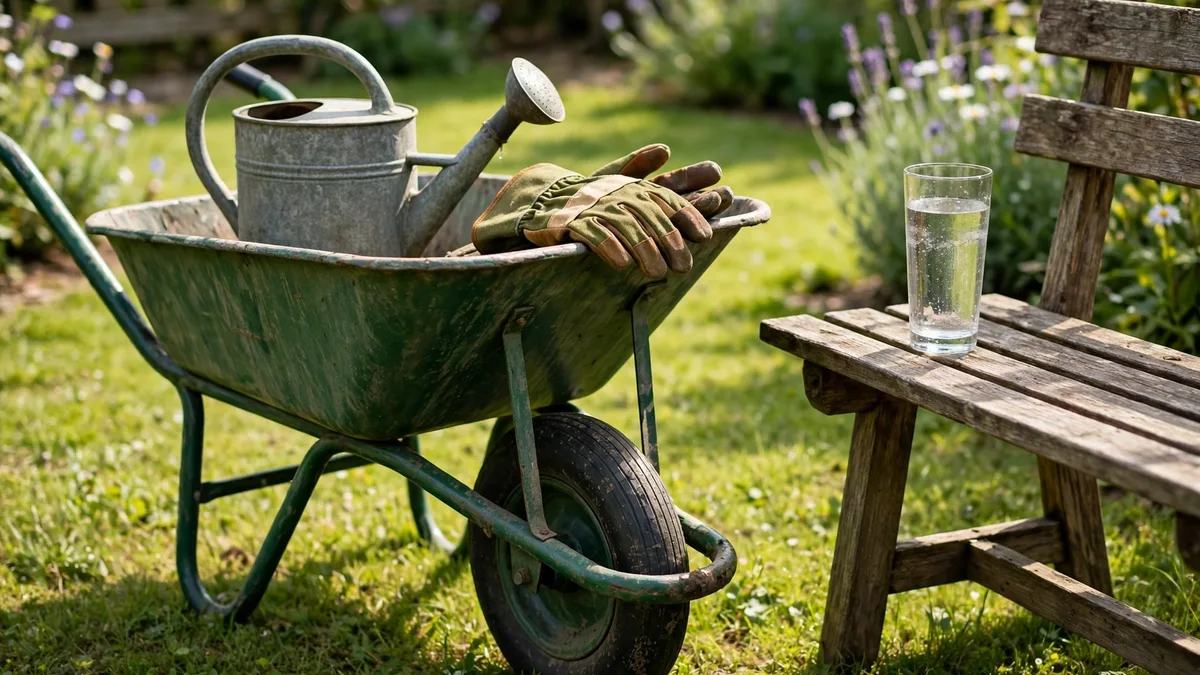
A wheelbarrow is a garden cart with one wheel at the front, a deep tray in the middle, two handles at the back, and two legs that hold it still when it rests. Lift the handles, the legs leave the ground, and the load balances on the single wheel, which is why even a heavy tray feels light once it is moving.
People have used barrows for centuries because the idea is so plain: a wheel carries the weight, and the gardener only guides it.
The Parts of a Barrow
The tray is the deep tub that holds everything, usually painted green or grey. A steel tray is tough and lasts for years, while a plastic tray is lighter and never rusts, though it can crack if dropped hard on a cold day.
The wheel sits at the front, and it matters more than it looks. A pneumatic tyre rolls softly over grass and gravel, while a solid tyre never goes flat but feels harder on rough ground.
The handles are the two long grips you lift, and they should reach about hip height when the barrow rests on its legs. Wooden handles feel warm, metal ones last longer, and rubber grips stop damp palms from slipping.
Water and a Watering Can
Water and a Watering Can: Top Tips for Plants follows the small can that waters one plant at a time, tipping a gentle stream over seedlings and pots exactly where a plant needs it.
A wheelbarrow does a different job with water: it carries it. A full can is heavy, and the barrow takes that weight from your arm to its wheel, so you can roll ten litres to the far bed instead of carrying it.
Water and Garden Walks
Water and Garden Walks: A Simple Fresh Ritual follows the slow morning walk through the beds with a glass of water in hand, looking at what has grown and what is thirsty. The walk is the looking; the barrow is the doing.
After a walk you will know what the garden needs, and the barrow carries the answer: soil for the bed that has sunk, mulch for the border that has dried, or pots that must move into the shade. Walk first, load second.
Water and Gardening: Hands That Stay Soft
Water and Gardening: Hands That Stay Soft follows the hands themselves: how soil dries them, how lukewarm water and plain cream keep them soft, and when a sore hand needs a doctor.
A wheelbarrow helps the hands in its own way, by taking the weight off them. Carrying a heavy bucket bends the fingers and rubs the palms raw, while pushing a barrow spreads the effort through the arms, and the hands only steer.
Think of the two guides as neighbours: one looks after the hands, the other looks after the load they would otherwise carry.
Choosing Your First Wheelbarrow
Start with the size of your garden, not the size of the barrow. A small courtyard needs a tray of about sixty litres, easy to turn in a tight corner, while a big garden earns eighty litres or more, so each trip carries further.
Stand behind the barrow in the shop and lift the handles the way you will at home. The grips should sit near your hips without you bending your back, and the tray should feel balanced.
Press the tyre with your thumb: a pneumatic one should give a little, a solid one should feel firm all the way round. A second-hand barrow is fine if the wheel spins freely and the tray has no holes.

Loading It Well
Load heavy things first, low down, close to the wheel. A bag of compost goes flat at the front, with lighter things like pots and gloves on top. Weight near the wheel steadies the barrow, while weight at the back makes the handles heavy.
Never pile above the rim: a heap over the edge slides off at the first bump. Level the load, and if it will not sit flat, take something out and make a second trip.
Keep water in its own place: a can upright in the middle, a bottle wedged in a corner, and never a loose glass rolling around.
Pushing Without Straining
Stand between the handles, bend your knees, and lift with your legs, not your back. The tray should sit level once the legs clear the ground, and if the load pulls to one side, set it down and shift things until it balances.
When you reach the bed, lower the handles slowly and let the legs take the weight again. Tip the tray only as far as you need, and use a trowel for the last of the soil.
A Morning in the Garden with a Barrow
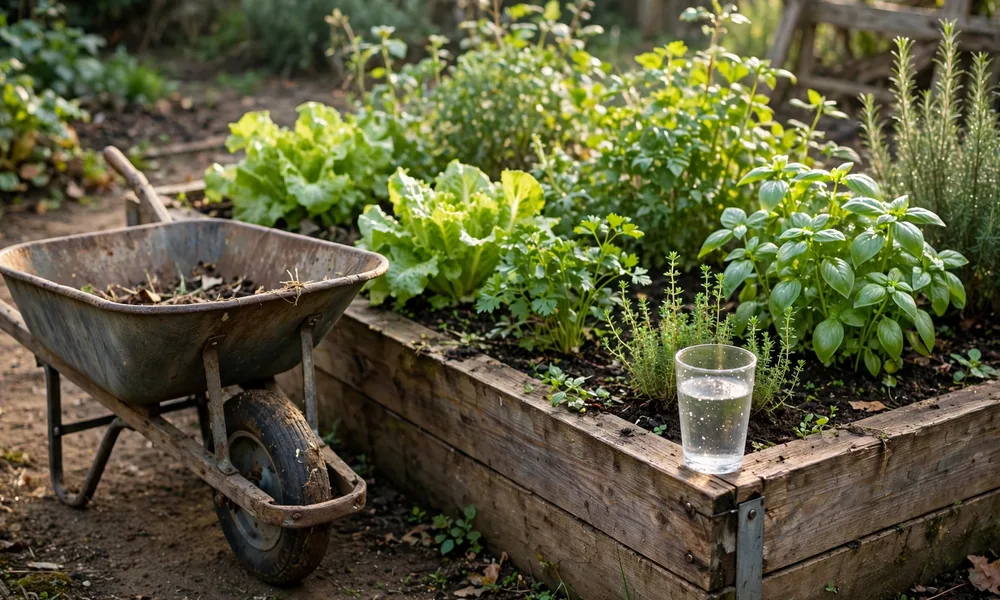
Begin the morning the way the garden asks: a glass of water on the bench, the barrow parked at the path, and a short look at what needs doing. Fill the can at the tap, set it in the tray, and add the trowel and gloves.
Push the barrow to the first bed, water what is thirsty, and drop the weeds you pull into the tray as you go. By the last bed the load has changed from water to weeds.
When the can is empty and the tray is full, tip the weeds onto the compost heap, rinse the tray, and park the barrow under cover. Drink the glass on the bench, and the morning is done.
Wheelbarrow at a Glance
| One front wheel | Sixty to eighty litres | Push, do not lift |
|---|---|---|
| Deep steel tray | Handles at hip height | Load low, near wheel |
| Two resting legs | Pneumatic or solid tyre | Never above the rim |
| Wood or metal grips | Gloves and cloth | Wash hands after |
Water and a Wheelbarrow Among the Other Water Guides
This batch holds four more water guides beside the wheelbarrow, each taking water into a different corner of the house. Water and a lemon slice puts a thin slice in a glass for a fresh morning drink, a small ritual of flavour rather than work. Water and a trowel follows the little hand tool that digs one small hole at a time: the trowel works close, in one spot, while the barrow carries across the whole garden.
Five stone guides share this batch too, each one dry beside its own glass: stibnite kept safely behind glass because it is display-only, cymophane with its moving eye, trilobite the ancient fossil, hydrozincite the soft white crust, and sard the deep red stone for bold days. The bread box and the cake stand serve food indoors, while the barrow works outside on the garden path all day long.
Where the Barrow Lives
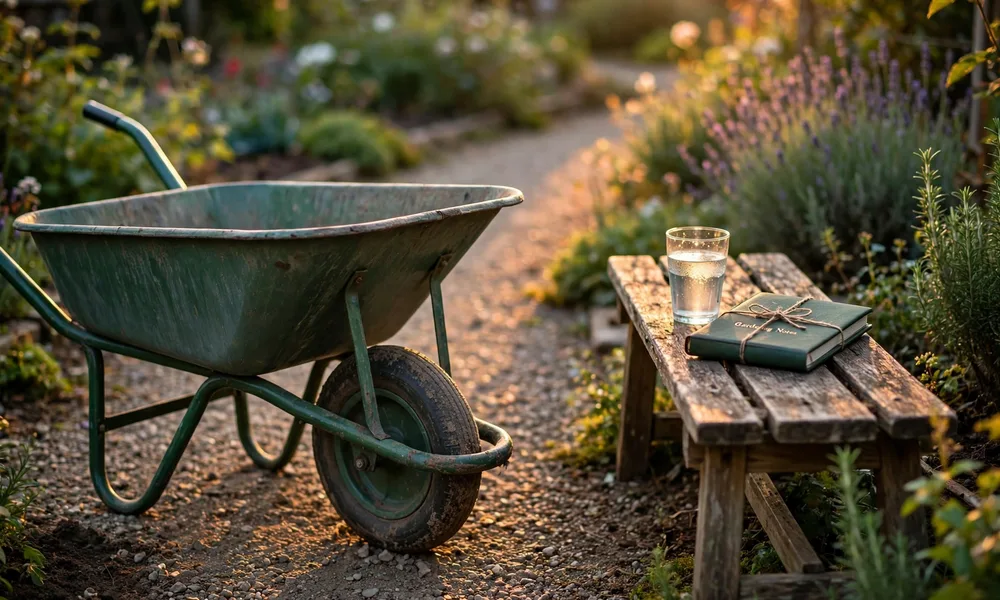
Give the barrow a dry spot under cover, a shed, a lean-to, or the sheltered side of the house. A barrow left out in the rain fills with water, and standing water rusts steel and breeds smells.
Park it upside down if you must leave it outside, so the tray sheds rain instead of holding it. Keep it clear of the path where people walk in the dark. After a muddy day, tip out the soil, rinse the tray, and leave it to dry in the sun before it goes back under cover.
Stones sometimes sit on the garden tray as decoration, and they stay dry there, well away from any drinking glass. Apatite, lepidolite, pyrite, angelite and amber never go into drinking water or a soak, so if one ever drops into a glass, pour the water away and wash the glass well.
Your Beginner's Checklist
- Fill the can at the tap and wedge it upright in the tray with a cloth.
- Load heavy things low and near the wheel, and never pile above the rim.
- Lift the handles with bent knees, keep the tray level, and look ahead.
- Water the thirsty beds first, and drop weeds into the tray as you go.
- Tip the load at the compost heap, rinse the tray, and park it under cover.
- Wash your hands in lukewarm water, smooth on plain cream, and see a doctor if a strain does not settle.

Frequently Asked Questions
What size wheelbarrow should a beginner buy?
About sixty litres suits a small garden and turns easily in tight corners, while eighty litres or more suits a bigger garden.
Can one person push a full wheelbarrow?
Yes, that is the point of the wheel: it carries the weight, and one person only steers, as long as the load is level and not piled above the rim.
How do I stop a wheelbarrow tipping over?
Load heavy things low and near the wheel, keep the tray level, and go slowly over bumps.
Is it safe to carry water in a wheelbarrow?
Yes, if the can stands upright in the middle of the tray with a cloth wedged beside it, and no glass of drinking water rides loose in the tray.
How do I keep a steel wheelbarrow from rusting?
Rinse the tray after muddy work, dry it in the sun, and park it under cover, so dampness never sits on the steel.
When should I see a doctor about a gardening strain?
See a doctor if a strained back, a sore wrist or a cut hand does not settle after a few days, or if pain or redness spreads.
The Bottom Line
Water in the can, soil in the tray, and a wheel that does the heavy work: that is all a beginner needs from a wheelbarrow.
A Note for Fresh Garden Mornings
Load low, push slowly, and drink the water on the bench when the work is done — the garden will still be there tomorrow.