Every evening ends the same way: the ring slips off at the sink, the earrings come out at the mirror, and the chain is unclasped with tired fingers. Without a place of their own, those pieces drift — one on the windowsill, one in a coat pocket, one lost under the bed. A trinket tray stops that drift, giving one day's jewellery a single open home.
Water belongs beside the tray, not on it. A glass of fresh water stands a hand-span away while you take your pieces off, sip slowly, and set each one down where you can see it. The water is for drinking while the day winds down, never for soaking the tray or the jewellery resting on it.
This guide shows six simple ways to keep a trinket tray tidy: choosing one, setting it up, and keeping it clear week after week. It is gentle general information only, and a tray will not heal anything — it simply keeps small things safe and easy to find.
Key Takeaways
- A trinket tray is an open dish that holds one day's jewellery in view.
- A glass of fresh water stands beside the tray, never on it.
- Only today's pieces live on the tray; the rest belong elsewhere.
- Empty the tray each night and wipe it once a week.
- A tray will not heal anything; it is a tidy habit, not a treatment.
What a Trinket Tray Is
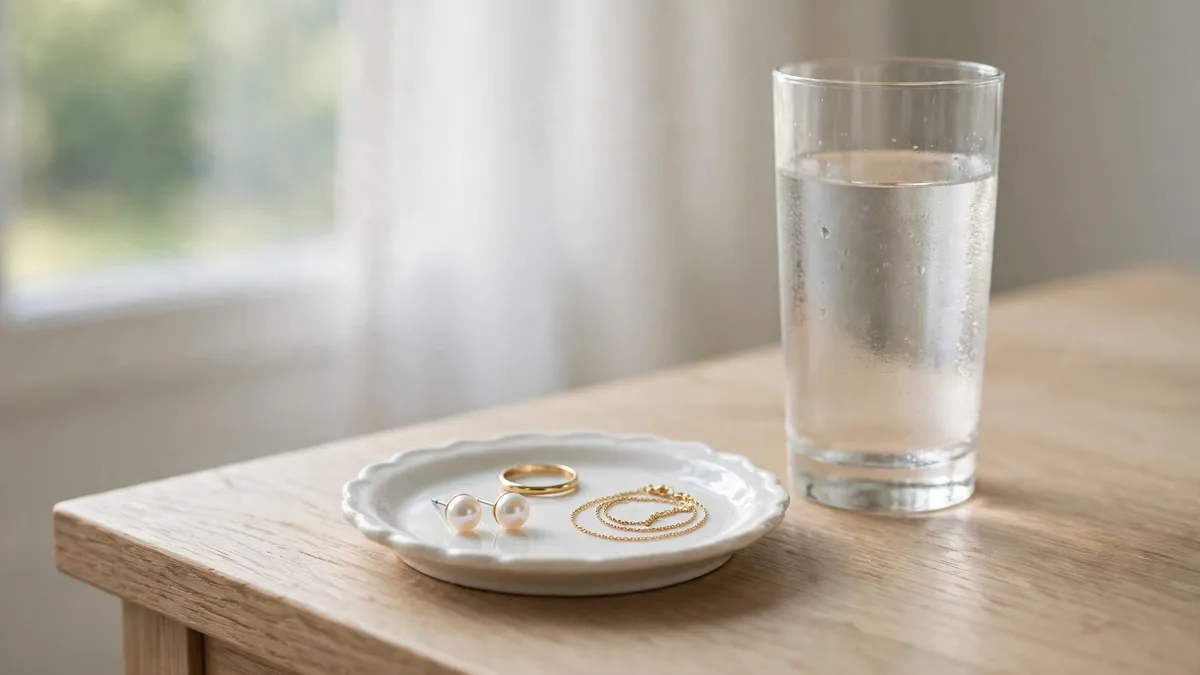
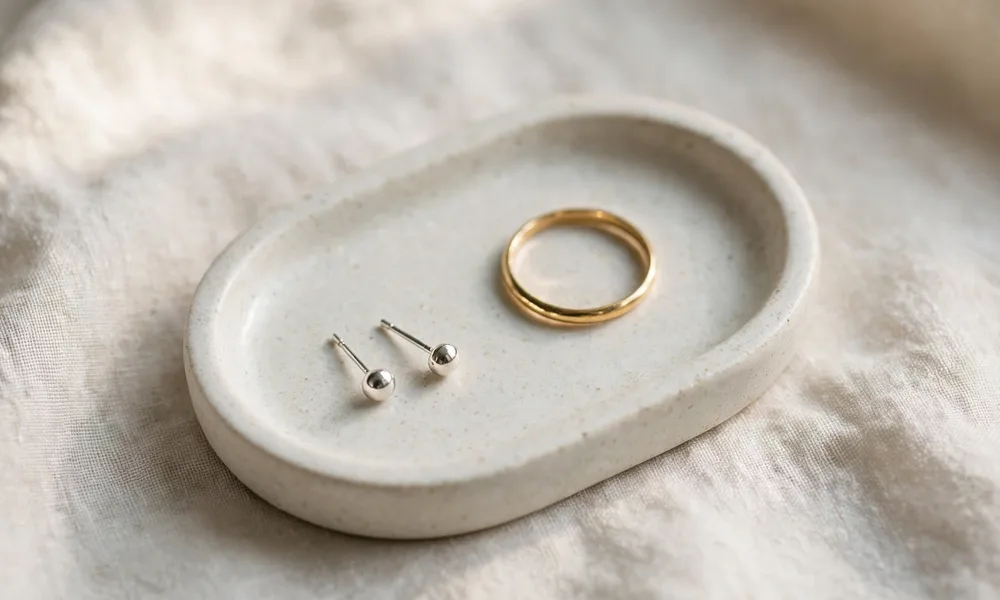
A trinket tray is a small open dish, usually ceramic, glass or wood, that sits on a dressing table or bedside table and holds the jewellery you wore today. It has no lid and no compartments: rings, studs and a chain lie side by side in the open.
The tray is not storage for a whole collection. It holds one day's pieces, the few things you reach for most, while the rest of your jewellery lives somewhere safer. That limit is the point: when the tray holds only a few pieces, nothing hides under anything else, and nothing gets forgotten.
Why Water Belongs Beside a Trinket Tray
A glass of water does two quiet jobs at the dressing table. First, it slows the evening down: one slow sip gives your hands a moment to unclasp a chain properly instead of tugging at it. Second, it marks the habit.
Keep the glass a hand-span from the tray, on the side away from your reaching hand, so a knock cannot send water across the pieces. A wide, steady tumbler beats a tall thin one, and the tray itself should stay dry: wet metal tarnishes, wet pearls dull, and a damp tray stains the wood beneath it.
Choosing a Tray You Will Use
Choose a tray the way you would choose a favourite cup: it has to suit your hand and your table, not someone else's idea of pretty. A tray that is too deep hides small studs in its shadow, while a tray that is too small crowds rings against each other and scratches them.
Look at the surface first: it should be smooth enough that a chain slides without catching, with a rim low enough to see over and high enough to stop a ring rolling off. Ceramic wipes clean in seconds, wood feels warm but needs a dry cloth, and glass shows every fingerprint.
Size matters more than pattern: a tray about the width of your hand holds a day's pieces without crowding them. Buy the plain one you like touching, not the grand one you fear to use.
Setting Up Your Tray for the Day
A tray works best when it has one fixed home: the same corner of the dressing table, the same end of the bedside table, every day. Put it there before you put anything on it, and keep the spot clear of books, bottles and loose paper, because clutter creeps onto any flat surface left unguarded.
Set the glass beside it each evening, fresh water in a clean glass. Rings at the back, studs at the front, the chain coiled loosely in the middle: a small order, repeated daily, becomes a habit that needs no thought.
Six Ways to Keep It Tidy
Start with one piece at a time: take off a single piece, set it on the tray, and only then reach for the next. Pieces taken off in a hurry tangle, and tangled chains take ten minutes to undo.
Keep the tray to one day only. When morning comes, put on what you want and move anything left over back to its proper home. A tray that gathers yesterday's pieces as well as today's soon holds a week's worth.
Wipe the tray once a week with a dry, soft cloth, and wash it only when it needs it — a quick rinse, dried right through, never left damp. Check clasps and earring backs as you go: a loose back found on the tray is a stud saved, while one found on the floor is a stud lost.
End each night by looking at the tray once: if it holds only today's pieces, each in its own space, the habit is working. If it does not, clear it now — thirty seconds tonight beats ten minutes tomorrow.
Water and a Trinket Tray at a Glance
| One day's pieces | Glass beside tray | Tray stays dry |
|---|---|---|
| Ring, studs, chain | Sip while choosing | Wipe tray weekly |
| One tray only | Water never touches | Pieces face up |
| Empty each night | Wash the glass | Begin fresh tomorrow |
Water and Jewellery Care
For the full wash, see the jewellery care guide.
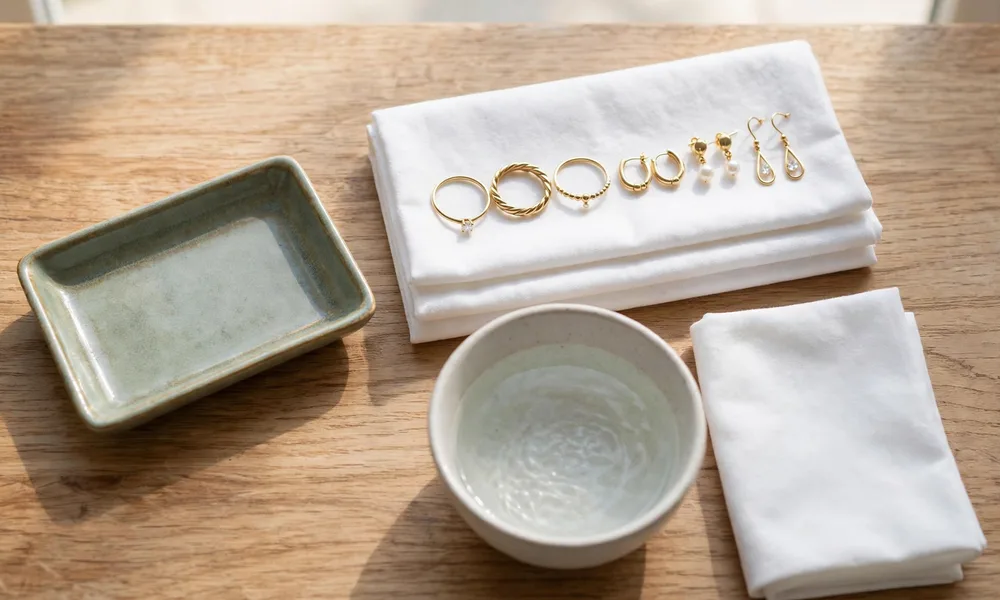
That guide is about cleaning: lukewarm water, a drop of mild soap, a soft cloth, one piece at a time in a bowl. This guide is about the tray the pieces rest on between those washes — the open dish where clean, dry jewellery waits for the morning.
Water and a Memory Box
For keeping things away for later, see the memory box guide.
A memory box shuts with a lid and keeps small objects out of sight for months or years. A trinket tray does the opposite: it stays open, holds one day's pieces in view, and is emptied every night.
Water and a Baking Tray
For a tray that works in the kitchen, see the baking tray guide.
A baking tray is a flat sheet of metal with a low rim that slides into the oven, holding biscuits and roast vegetables while they cook. A trinket tray is a small dish on a dressing table, holding rings and studs while you sleep. Both are trays, and the likeness ends there.

A Trinket Tray and a Jewellery Box: Not the Same Thing
A trinket tray and a jewellery box both hold jewellery, and that is where the likeness ends. Stated plainly: a trinket tray is open and holds one day's pieces in view, while a jewellery box closes and holds many pieces in compartments.
The tray sits out in the open, so one glance in the morning makes the choice. The box shuts with a lid, so its pieces stay hidden in little compartments, safe for weeks. One serves the day you are living; the other stores the collection you own.
Keep the two apart and both stay pleasant: today's pieces on the tray, the rest in the box. Neither replaces the other.
Nine Neighbours in This Batch
Guarding a quiet hour, the keepsake waits on its shelf, and the piggy bank beside it collects coins for another day. Sheltering many pieces behind its lid, the jewellery box keeps the whole collection, while the handbag hangs ready by the door.
Rosasite shows its soft teal, herderite offers a gentle green, the South Sea pearl gleams warm gold, alabaster stands pale and still, and chalcocite sits dark and steady. The trinket tray alone, among all nine, keeps today's pieces where the eye can find them.
Stones That Must Never Touch Water
Stones belong on a dry shelf while you tidy the tray, well away from the glass. Pyrite turns dull and rusty-looking once it has been left wet, so keep it far from every cup. Angelite goes cloudy after a soak and the cloud never lifts.
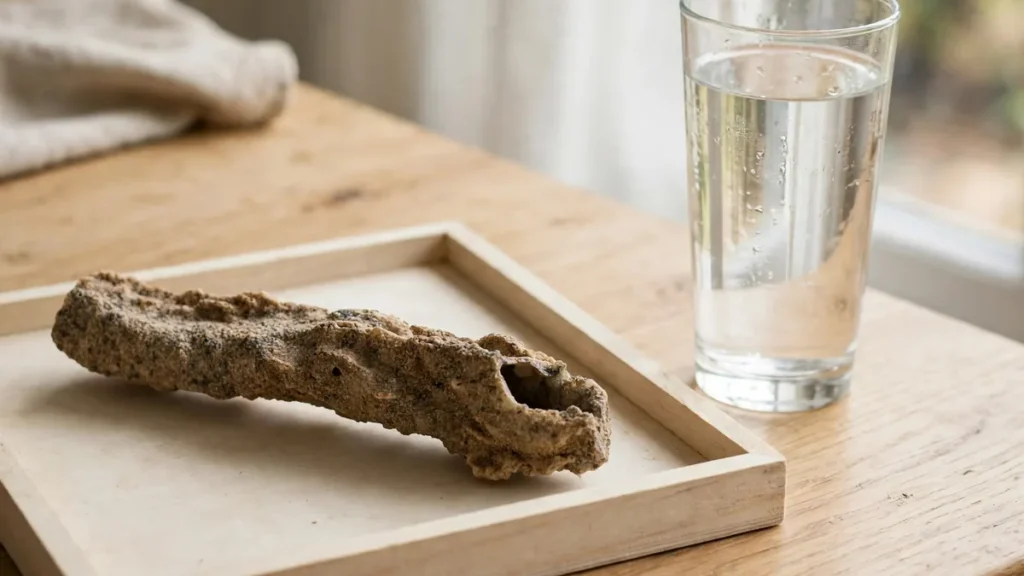
Amber, tree resin grown hard over long years, loses its shine in water and is better admired dry. Desert rose is gypsum, and gypsum melts away in water, so it never comes near the sink. None of these should come near a glass or a jug, and no stone belongs in drinking water.
Your Trinket Tray Checklist
- Pick a plain tray that fits your table and holds one day's pieces.
- Set a steady glass of fresh water a hand-span from the tray.
- Take pieces off one at a time and give each its own space.
- Empty the tray each morning and wipe it once a week.
- Keep the tray dry, and keep the glass beside it, never on it.
- If a piece looks loose, bent or damaged, take it to a jeweller instead of wearing it.
Frequently Asked Questions
How many pieces should a trinket tray hold?
One day's pieces only: a ring or two, a pair of studs, and a chain. More than that crowds the tray, and crowded pieces scratch.
Where should I put my trinket tray?
On a dressing table or bedside table, in the same corner every day, away from the edge and out of direct sun.
Can I wash my trinket tray in the sink?
You can rinse a ceramic or glass tray, but dry it right through before it goes back. Wooden trays should only be wiped with a dry cloth.
Should the glass of water sit on the tray?
No, never. The glass stands beside the tray, a hand-span away, so a knock cannot reach your jewellery.
What if my tray keeps filling up with old pieces?
Empty it every morning and return anything unworn to its proper home. A tray holding a week of pieces has stopped serving today.
Can a trinket tray hold stones as well as jewellery?
It can hold a small dry stone beside the jewellery, as long as the glass stays well away from it. Never put any stone in drinking water.

The Bottom Line
A trinket tray stays pleasant when it stays small: one open dish, one day's pieces, one glass of water beside it, and a quick clear-out each night.
A Note for Tidy Mornings
A glass of water, a tray in its corner, and today's pieces in view — that is the whole habit.