Sunday has its own pace. The morning stretches out, the house stays quiet a little longer, and by midday the kitchen smells of something slow in the oven. A Sunday roast fits that pace: a joint of meat or a whole bird, potatoes crisping in the tray, green vegetables steaming, and a jug of water on the table.
Water is part of the roast from the first minute to the last: it boils the potatoes, steams the greens, loosens the pan juices into gravy, and fills the glass beside each plate. This guide walks through one simple Sunday roast: water first, a roast cooked slowly, and an unhurried afternoon at the table.
Take these notes as gentle general information, not medical advice. A roast is food, not medicine, and it will not cure anything or fix a tired week on its own. If something about your health worries you, speak to your own doctor rather than to a recipe.
Key Takeaways
- A Sunday roast is a slow midday meal, cooked in the oven, with water used at every stage.
- A simple fresh ritual means water first, then cooking, then eating, then rest, in that order.
- A tall glass of cool water is the kindest way to open the meal.
- Roast potatoes, green vegetables, and gravy all begin with fresh water.
- A Sunday roast is not a broth, not a brunch, and not a dinner party.
What a Sunday Roast Is
A Sunday roast is a cooked midday meal, served once a week when the day allows a slow kitchen. The centre is a joint or a bird, roasted until the skin turns golden and the meat rests tender. Around it sit roast potatoes, green vegetables, and a small jug of gravy, served on one table in the afternoon light.
The meal is old and plain, and its charm is in the slowness. Nothing about a roast is hurried: the oven does the work, the cook checks the tray now and then, and the table is set while the meat rests.
Water First, Before the Roast
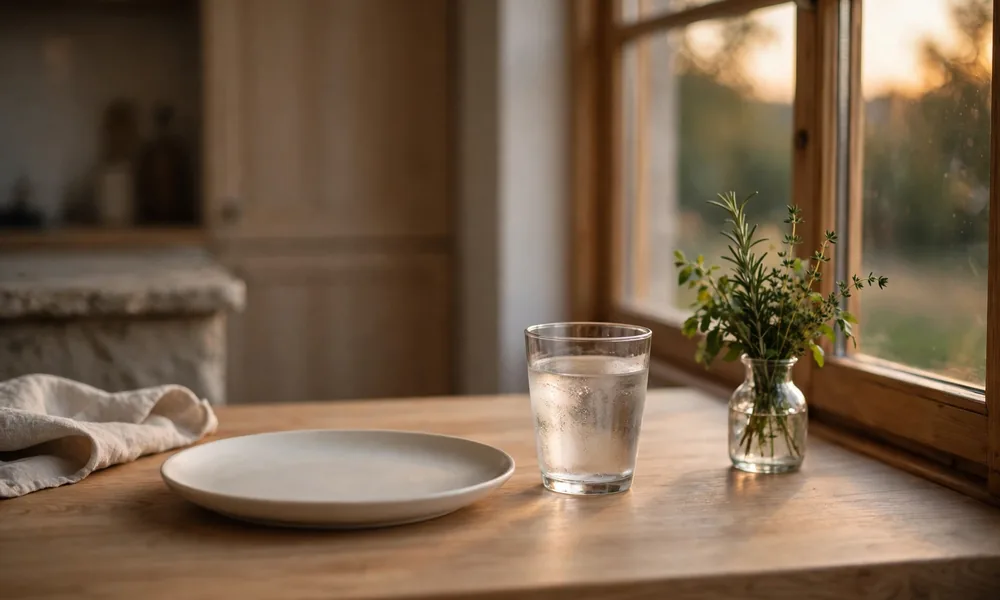
A Sunday roast ritual begins the same way every good meal begins: with a tall glass of cool water, sipped slowly before any food arrives. Fill the glass, sit down for a minute, and drink it without rushing.
Set the table while the water is still in hand: plates out, napkins folded, and the jug of water in the middle where everyone can reach it. A table set early makes the meal feel settled.

Cooking the Roast with Water
Water does quiet work all through a roast, mostly before the oven door opens. Peel the potatoes, cut them into even pieces, and boil them in salted water until the edges soften. Drain them, shake the pot so the edges rough up, and slide them into hot fat, where they turn crisp and golden.
Green vegetables need only a little water and a short steam. Put a finger of water in the pan, add the greens, cover with a lid, and let the steam do the work for a few minutes. The vegetables stay bright and tender, and the pot is easy to wash afterwards.
Gravy, Steam, and the Resting Bird
When the bird comes out of the oven, let it rest on a warm plate for twenty minutes while the gravy is made. Pour a little water into the tray, scrape the browned juices from the base, and let it simmer until rich and smooth. A good gravy is mostly water, carrying the flavour of the roast.
Resting matters as much as roasting: a bird cut too soon loses its juices, while a rested bird stays moist and carves cleanly. Use the time to warm the plates, finish the greens, and pour the water, so everything arrives together.
Setting the Sunday Table
A Sunday table needs very little to feel special: white plates, folded napkins, the roast on its platter in the middle, and a jug of water where every hand can reach it. Put the potatoes in one dish and the greens in another, so people can help themselves and take what they like.
Keep the table clear of clutter: phones in another room, newspapers back on the shelf, and the meal gets the table to itself.
A Sunday Roast at a Glance
| Water first, slow | Roast, potatoes, greens | Rest bird, serve |
|---|---|---|
| Tall glass, cool | Hot oven, crisp tray | Warm plates, jug |
| Boil, then roast | Steam greens, short | Gravy from juices |
| Table set early | One platter, middle | Eat slowly, rest |

A Sunday Roast and Brunch
Water and brunch is the late-morning meal in this journal. Brunch in this journal opens with water, follows with a light plate and a cup of tea, and leaves an unhurried hour by the window. It comes late, after breakfast has been skipped, and it asks for no hurry at all.
A Sunday roast is a different hour and a heavier table. Brunch is light plates in late morning, while a roast is a cooked midday meal with an oven, a resting bird, and gravy from pan juices.
A Sunday Roast and Simple Broths
Water in cooking for skin: simple broths is the cooking post in this journal, and it is about broth: water in a pot, fresh vegetables, a pinch of salt, and a long slow simmer. A broth is mostly water: vegetables simmered gently until the liquid carries their flavour.
A Sunday roast is not a broth. Water helps the roast, but the meal is built in the oven, not in a pot: the bird roasts, the potatoes crisp in the tray, and the water only boils, steams, and loosens the gravy. A broth is sipped from a bowl; a roast is carved from a platter.
A Sunday Roast and Market Mornings
Water and markets is the morning trip in this journal: a glass of water before you leave, a bottle carried along, slow choosing at the stalls, and washing hands when you come back. The market gives the kitchen its fresh food, and the water keeps the morning simple.
A Sunday roast begins where the market morning ends. The shopping comes home, the hands are washed, the vegetables are peeled, and the oven takes over. The market is a trip out to buy food; the roast is the meal that food becomes once it is home.
A Sunday Roast and the Other Water Meals
The water meals in this journal cover every hour of the day, and the roast takes the middle of Sunday. Breakfast is the early fresh start, lunch breaks are short pauses at work, baking is an afternoon habit, and dinner parties are evening meals with friends.
A fresh kitchen is the room itself, kept clean and calm, and none of these meals is a roast. The Sunday roast stands alone as the cooked midday meal of the week.
Keeping the Roast Ritual Simple
A roast stays simple when the cook keeps the list short: one bird, one tray of potatoes, one green vegetable, and gravy. A short list keeps the cook at the table instead of at the stove. Extra dishes add washing up without adding pleasure, and a crowded table leaves no room for the platter. Cook what fits, serve what you cooked, and let the meal end when the plates are empty.
Leftovers go into clean boxes in the fridge once cool, and the bones go into a pot for stock another day. Wash the tray while it is warm, wipe the table, and put the jug back.

Gentle Notes on Food and Health
A Sunday roast is general information only, and it suits most tables as an ordinary meal. Cooks with food allergies should check every ingredient, and anyone unsure should ask before eating. Wash hands before cooking and after handling raw meat, and keep raw and cooked food apart.
If a health question worries you, ask your own doctor, not a recipe and not a glass of water. This guide makes no promises about health, and it never claims that drinking water or eating a roast will cure anything. Take the meal as pleasure, and take health questions to a clinician.
Your Sunday Roast Checklist
- Fill a tall glass of water and sip it before cooking.
- Boil the potatoes first, then roast them until crisp.
- Steam the greens briefly, and keep them bright.
- Rest the bird, make the gravy, and warm the plates.
- Set the table early, with the water jug in reach.
- Wash up while the tray is warm, and rest after.
Frequently Asked Questions
What is a Sunday roast?
A Sunday roast is a slow cooked midday meal, served once a week. A joint or a bird roasts in a hot oven, with roast potatoes, green vegetables, and gravy on the same table.
How is a Sunday roast different from brunch?
Brunch is a light late-morning meal of eggs, toast, and fruit. A Sunday roast is a heavier cooked midday meal, built in the oven with a resting bird and gravy.
How is a Sunday roast different from a broth?
A broth is water simmered with vegetables until the liquid turns clear and golden and carries their flavour. A roast is built in the oven, and water only boils, steams, and loosens the gravy.
What role does water play in a Sunday roast?
Water boils the potatoes before they roast, steams the green vegetables, and loosens the pan juices into gravy. A tall glass of cool water also opens the meal.
How long should the roast rest before carving?
Let the bird rest on a warm plate for about twenty minutes. A rested bird stays moist and carves cleanly, while a bird cut too soon loses its juices.
Can I make a Sunday roast with vegetables only?
Yes, a roast works well with vegetables alone: roast potatoes, carrots, parsnips, and greens, with gravy made from vegetable juices. Keep the same slow pace and the same water-first start.
The Bottom Line
A Sunday roast fits slow Sundays: water first, a roast cooked slowly in the oven, and a calm table shared at home.
A Note for Slow Sundays
Water first, a golden roast, a quiet table — a slow Sunday asks for nothing more.