
A staircase is the part of the house you cross without thinking. You go up in the morning and down again at night, one hand drifting toward the rail, your feet finding each step by habit. It is a small journey you make a dozen times a day, and it asks for almost nothing.
Water has a quiet place in that journey. A glass at the bottom gives you a reason to pause before you climb, and a cloth dampened in plain water keeps the treads clean. Neither job needs soap, spray, or hurry.
This guide gathers the top tips for calm steps: how to wipe the treads, how to hold the rail, and how to keep the whole flight clear and bright. Read what follows as gentle general information only. If a cleaner stings your skin, stop and rinse it off, and ask a doctor before you try anything new on your skin.
Key Takeaways
- A staircase is a set of steps that joins one floor to another.
- Keep the glass at the bottom, never on a step.
- Wipe the treads with a cloth dampened in plain water.
- Hold the rail, wear flat shoes, and keep the steps clear.
- Calm steps are a small comfort, not a cure for anything.
What a Staircase Is
A staircase is a flight of steps that carries you from one level of a house to another. Each step has a flat tread where your foot lands and an upright riser behind it, and a rail runs along one side so your hand has somewhere to rest. At the top there is usually a landing, a small flat space where you can turn, pause, and look back down.
Staircases come in wood, carpet, and stone. A wooden flight shows its grain and wears smooth where feet fall most often. A carpeted flight feels softer and quieter, but it holds dust in its fibres. A stone flight stays cool and hard, and it asks for a dry cloth more often than a wet one.
Whatever it is made of, a staircase is a working part of the house, carrying people and laundry baskets and tired feet. A little care keeps it safe underfoot, and the care takes only a few minutes a week.
Why Water Belongs at the Bottom
Water belongs at the bottom of the stairs, not on them. Set a glass on a small table or stool beside the first step, where you can reach it without stepping onto the flight. Drink it slowly before you climb, and again when you come back down.
Carrying a glass upstairs is a small risk that buys nothing. One missed step and the water is on the treads, the glass is in pieces, and the stairs are wet where your feet need grip. The glass on its table does the same job with none of the danger.
Water has a second job too: the wipe itself. Plain water on a soft cloth lifts dust and light grime from wood and paint without leaving a film behind.
Wiping the Treads
Start at the top and work down, so the dust you lift never falls on a step you have already cleaned. Dampen a soft cotton cloth in plain water and wring it until it barely drips, then wipe each tread from the back edge to the front.
Follow with a dry cloth over the same tread. Wood dislikes standing water, so the dry pass matters as much as the damp one. A wet tread stays slick, and a slick tread is where a slip hurts most.
Spills want speed, not strength. A splash of tea or a muddy footprint should be wiped at once, before it dries into the grain. If you reach for soap, test it first on a hidden corner, such as the back of the bottom riser, and rinse it well. A cleaner that stings your skin has no place on the stairs.

Water and a Staircase at a Glance
| Treads wiped | Rail held | Glass below |
|---|---|---|
| Damp cloth first | Flat shoes on | Sip, then climb |
| Dry cloth after | Steps kept clear | Never carry glass |
| Spills wiped fast | Light left on | Tray holds cloth |
Water and a Stair Climb
For a short climb as exercise, see the stair climb guide.
That guide pairs a glass of water with one slow climb up and down, treating the flight as a small workout. It is about the climb itself: a steady pace, a hand on the rail, and a sip at the bottom.
This guide looks at the staircase from a different side. It is about the steps themselves, not the exercise on them: wiping the treads, keeping the rail clean, and leaving the flight clear and bright. The stair climb guide moves your body through the house; this guide looks after the wood and paint you move across.
Water and a Fresh Entryway
For the hallway inside the front door, see the fresh entryway guide.
That guide keeps the entryway fresh around its console table, coat hooks, and keys bowl. It wipes the door handle, lines the shoes up straight, and opens the front door to let air into the hallway each morning.
A staircase is not an entryway, and its care is different. The entryway is flat ground where you arrive and leave, while the staircase climbs between floors and needs wiped treads, a held rail, and a lit landing.
Water and a Doorstep
For the step at the front door, see the doorstep guide.
That guide tends the doorstep, the single stone or wooden step where the house meets the road. It is about the threshold: wiping it down, keeping it dry, and stepping over it cleanly on the way out.
The staircase inside is a longer job. It has a dozen steps instead of one, a rail instead of a threshold, and a landing window instead of an open sky. The doorstep greets you at the door; the staircase carries you through the house.
A Staircase and a Hallway Are Not the Same
A hallway is flat. It runs between rooms. It stays on one floor. A staircase is different. It climbs. It joins one level to another. A hallway holds shoes and hooks. A staircase holds steps and a rail. The hallway guide freshens a passage. This guide freshens the steps.
Nine Neighbours in This Batch
The hallway waits at the front door. Wurtzite keeps its deep brown on a shelf. Pyrolusite sits dark and dull beside its glass. The attic airs out above. Cinnabar glows red behind glass. The freezer hums in the kitchen. Soapstone rests grey and soft. The oven warms the kitchen wall. Fulgurite holds a lightning mark. The staircase stands between them all.
Stones That Must Never Touch Water
Some stones and water do not mix. Apatite turns dull and flakes when it stays damp for long. Lepidolite carries lithium in its pale flakes, so it never belongs near drinking water. Pyrite loses its bright shine in damp air, and rust marks spread across it. Angelite clouds over after one wetting and stays cloudy. Amber is old tree resin, and a long soak turns it milky. Keep every stone beside the glass. Nothing stony goes into water you drink.
Your Staircase Checklist
- Wipe the treads top down with a damp cloth, then dry them.
- Keep the glass on its table at the bottom, never on a step.
- Hold the rail and wear flat shoes with a firm grip.
- Line shoes up at the bottom and keep the steps clear.
- Leave the landing light on after dark.
- If a cleaner stings your skin or dizziness lasts for days, stop the routine and talk to a doctor; calm steps are a comfort, not a cure.
The Landing Window
The landing window is the staircase's best friend. It throws daylight across the treads in the morning and tells you at a glance whether the steps are dusty. A glass of water on the sill and a small plant beside it turn the landing into a pause, not just a turn.
Wipe the sill with the same damp cloth when you wipe the treads. Dust gathers there fast, and a clean sill keeps the light clear. A window that opens easily airs the whole flight.

Shoes at the Bottom of the Stairs
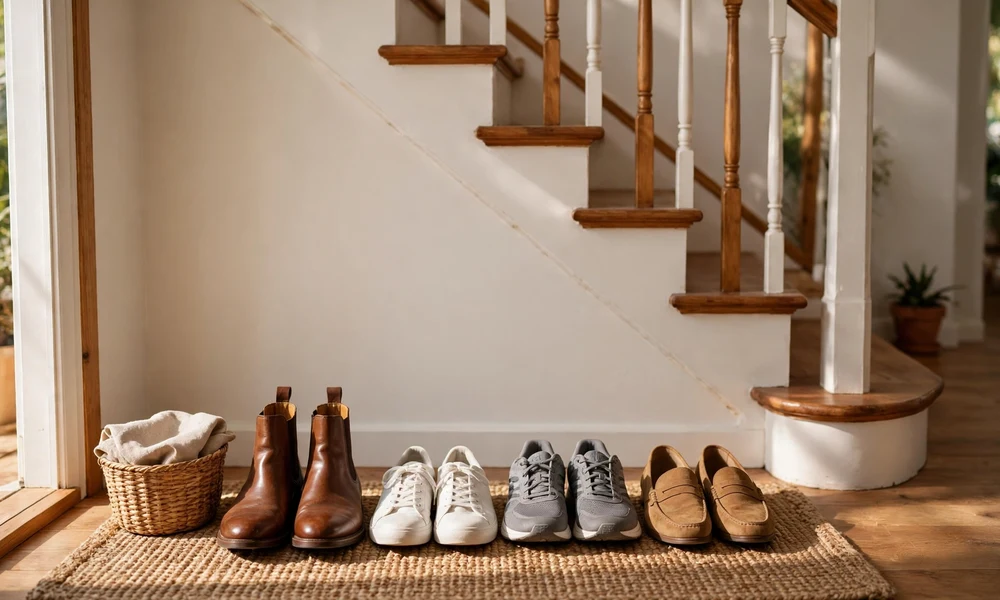
Shoes belong at the bottom of the stairs, never on them. Line each pair up on a woven mat, facing the same way, with the pair you wear today at the front. A basket beside the mat holds slippers and cloths, and the steps stay empty for feet alone.
Brush mud off outside before shoes come in, and shake the mat out each morning. A shoe left on a tread is a trip waiting to happen, and grit on the mat scratches the floor.
Frequently Asked Questions
How often should I wipe the stairs?
Wipe the treads once a week with a damp cloth, and wipe up spills the moment they happen. A weekly wipe keeps dust out of the grain, and a fast wipe stops a spill drying into a stain.
Can I carry a glass of water upstairs?
Better not to, because a glass in one hand leaves only one hand for the rail. Drink at the bottom before you climb, and keep a second glass waiting on the landing if the flight is long.
What cloth works best on wooden steps?
A soft cotton cloth works best, dampened in plain water and wrung until it barely drips. Avoid rough pads and dripping cloths, since wood dislikes standing water and scratches show on a tread for years.
Is it safe to wipe the rail with water?
Yes, a damp cloth is fine for a wooden or painted rail, as long as you dry it with a second cloth straight after. Wipe the spindles too, since dust settles on their tops and a clean rail feels better under your hand.
How do I keep the landing bright?
Open the landing window on dry mornings, keep the bulb fresh, and choose pale paint for the flight. A bright landing shows dust early, so you catch it before it settles deep.
Can calm steps help me feel steadier?
Slow steps with a hand on the rail can make a climb feel steadier, because you never rush the flight. If dizziness keeps coming back for days, rest the routine and ask a doctor, since steady steps are a habit and not a treatment.

The Bottom Line
Wipe the treads, hold the rail, and keep the glass at the bottom: calm steps begin with a clear staircase.
A Note for Calm Steps
A damp cloth, a glass of water, and a rail under your hand — that is all a staircase needs to feel calm.


