Shiny hair looks like a luxury, but most of what makes hair shine is simple: water, a gentle wash, and a little oil in the right places. Water and hair oil belong together: water cleans the hair, and oil helps the surface stay smooth while it dries. Oil before washing, wash lukewarm, and finish with a little oil on damp ends. Nothing here is heavy, and nothing here is a treatment. This guide explains what water and hair oil means, how to choose a light oil, how to oil before washing, and how to finish with a little oil for shine. Everything here is gentle general information only.
Hair shines when its surface is smooth, because smooth hair reflects light in one clean direction. Water controls the surface: warm water opens it slightly, and cooler water helps it lie flat again. A little oil on damp ends helps it stay smooth while the hair dries.
Oil first, water second, and a little oil last: that is the whole routine.
Key Takeaways
- Water and hair oil means oiling before washing and a little oil on damp ends.
- Hair shines when its surface is smooth: smooth hair reflects light in one direction.
- Lukewarm water is kindest; a cooler final rinse helps it lie flat.
- Use only a little oil: a few drops on the lengths and ends.
- Patch-test any new oil first; this is general information only.
What Water and Hair Oil Means
Water and hair oil means a shine routine built from two simple things: plain water and a light hair oil. The water does the cleaning, and the oil does the softening and the finishing. Before washing, a little oil on the lengths and ends softens dry hair. After washing, a little oil on damp ends helps the hair dry smooth. It is not a styling routine, and it is not a treatment. It is simply oiling, washing, and finishing in the right order, with a light hand.
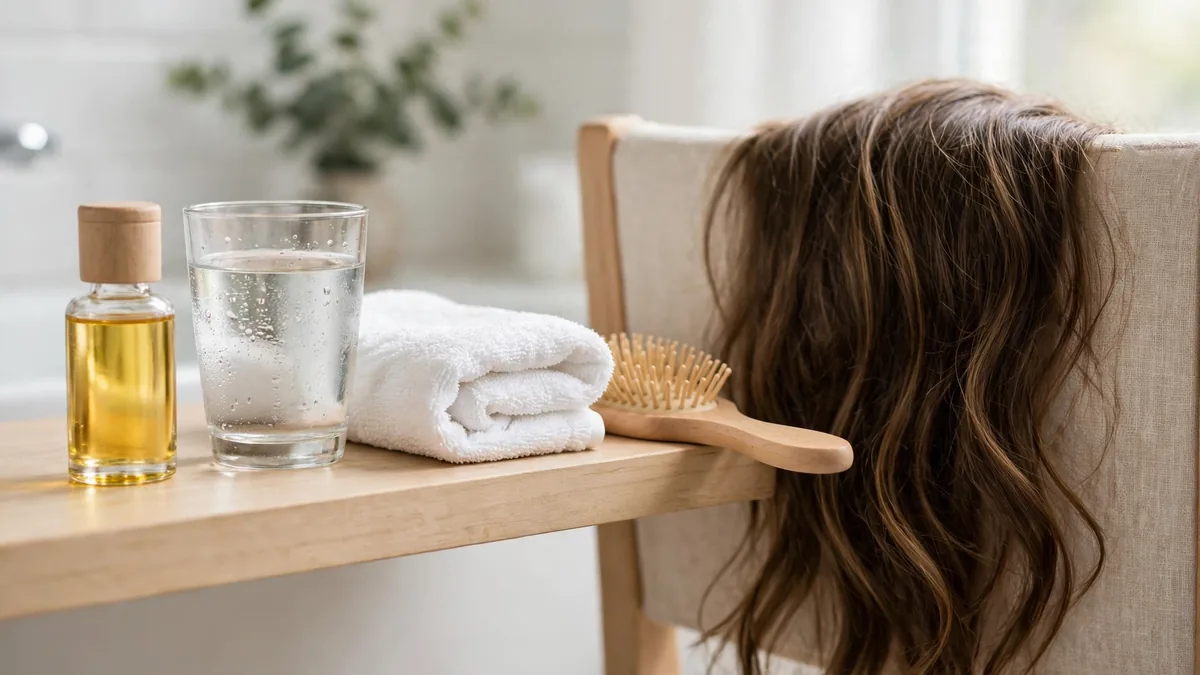
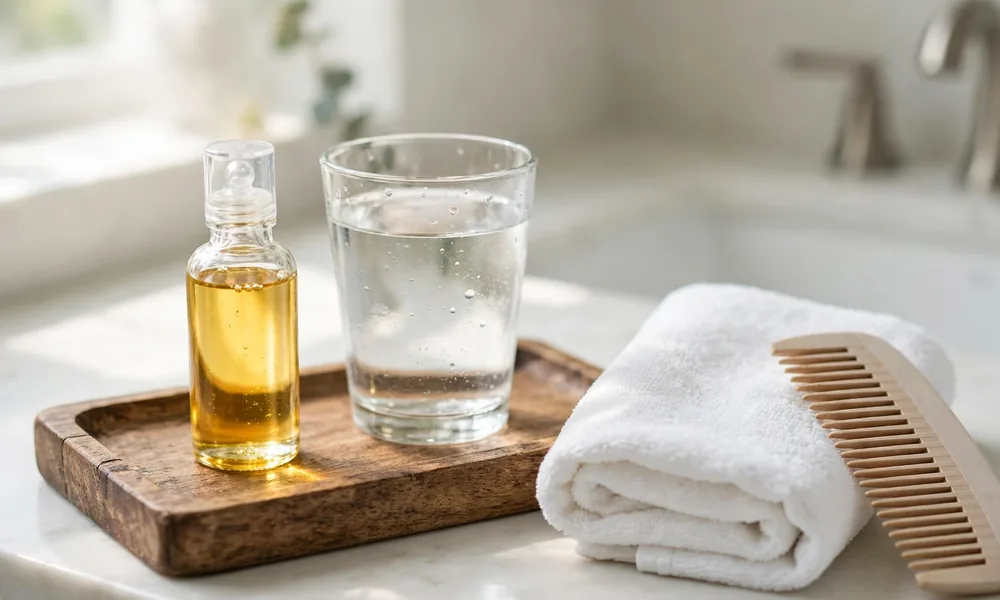
The routine is light: plain water, a little mild shampoo, a little oil, and a soft towel.
Why Hair Oil Helps Shine
Hair oil helps shine because it smooths the surface of each strand. Each strand is covered in tiny overlapping scales called the cuticle, like tiles on a roof. When those scales lie flat, light bounces off in one clean direction, and the eye reads that as shine. When they are lifted, light scatters, and the hair looks dull. Oil helps the scales lie flat while the hair dries.
Oil also softens dry ends: the ends are the oldest part of every strand, and a little oil on them makes them feel smoother and catch the light better. The same gentle logic runs through water and volume a light hair routine, where washing light keeps hair airy and full.
The Patch Test First
The patch test comes before everything else, and it must never be skipped, even if you have used the oil before. Put a drop on a small patch of skin on the inside of your arm, and wait a full day. If the skin stays calm, with no redness, itching, swelling or rash, you can go ahead. If it reacts at all, stop: do not use the oil, and do not try a different oil the same day.
If you have a skin condition or a sensitive scalp, ask a doctor or dermatologist first. If your hair or scalp troubles you and does not settle, see a doctor or dermatologist.
Choosing a Hair Oil and Water
Choose a light oil that suits your hair. A light oil feels thin, spreads easily, and leaves no heavy or sticky feeling. Coconut oil, argan oil, jojoba oil, and sweet almond oil are all common choices, and any one of them can work well. Pick one oil and use it for a few weeks. The water should be plain and clean, from the tap or a jug, and it should be lukewarm, not hot.
Lukewarm First, Cooler Last
The most useful water habit for shine is also the simplest: wash lukewarm, rinse cooler. Lukewarm means water around body temperature, comfortable on the inside of your wrist. If it makes your skin pink, it is too hot. Wet the hair fully with lukewarm water, wash as usual, and rinse until the water runs clear. For the final rinse, turn the temperature down a notch, to cool rather than cold, and run it over the lengths for thirty seconds. Cool water helps the hair lie flat, and flat hair reflects light.
The same water habits calm a rough, lifted surface, as water and frizz a simple smooth routine shows.
Oiling Before Washing
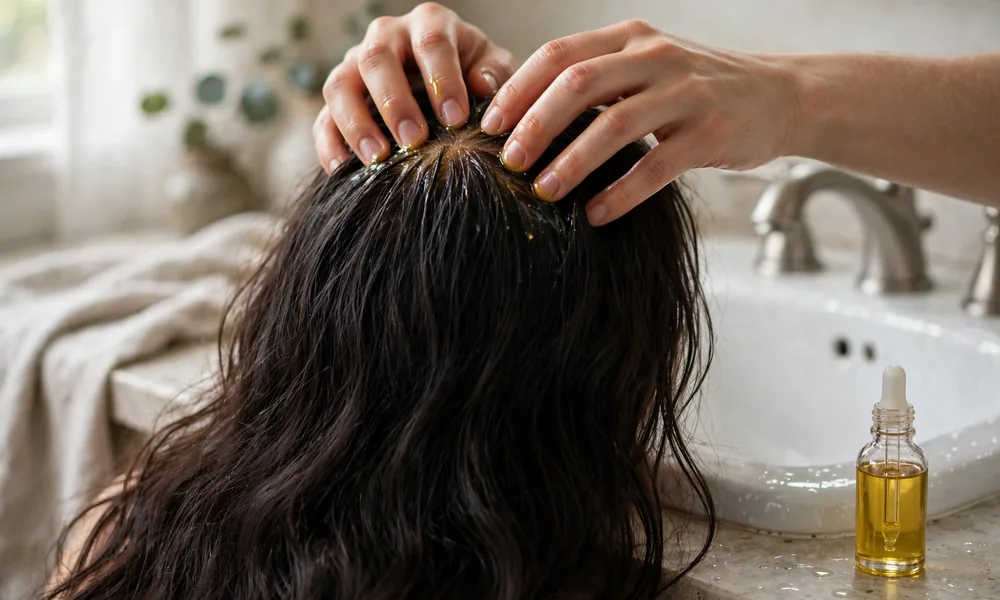
Oiling before washing is the heart of this routine, and it takes about ten minutes. Start with dry hair, combed through with a wide-tooth comb, from the ends upward. Put a few drops of oil into one palm, rub your palms together to warm it, and smooth your hands over the lengths and ends. Start at the ends and work upward, stopping well below the roots. Do not put oil on the scalp before washing: it feels heavy and needs a longer wash to remove.
Leave the oil on for ten to thirty minutes; the wash afterwards is gentler. If the hair feels sticky after oiling, you used too much.
The Gentle Wash, Step by Step
A gentle wash is a slow wash with lukewarm water, a small amount of mild shampoo, and soft fingertips. Pour a little mild shampoo into your palms, and work the lather into the scalp with soft fingertips, in small slow circles. Use the pads of your fingers, never your nails. Then let the suds run down the lengths as you rinse. The lengths do not need scrubbing.
Rinse longer than you think: leftover shampoo leaves a dull film, and no oil can shine through a film. Rinse until the water runs clear and the hair feels clean but not squeaky.
A Little Oil on Damp Ends
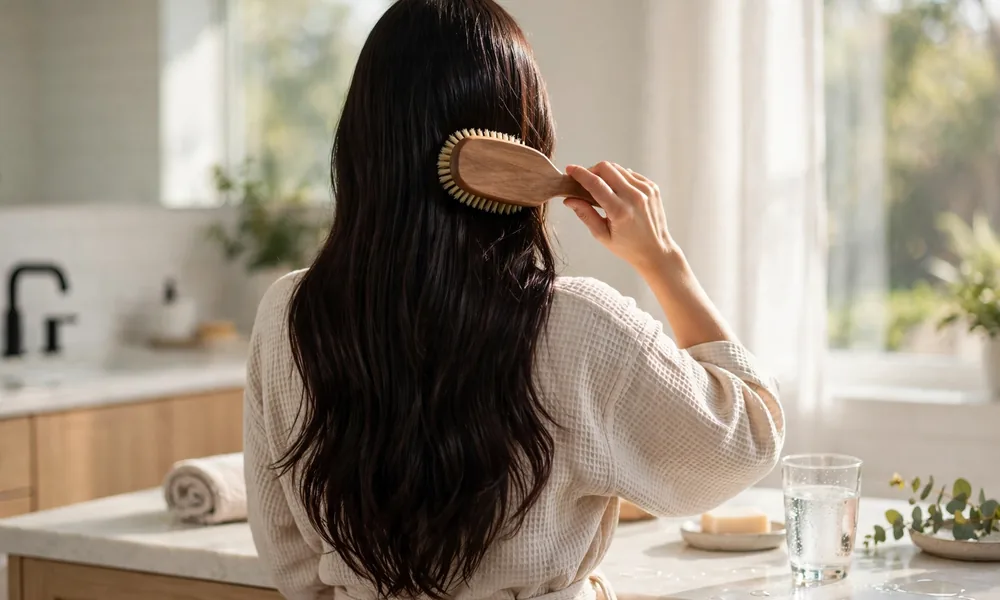
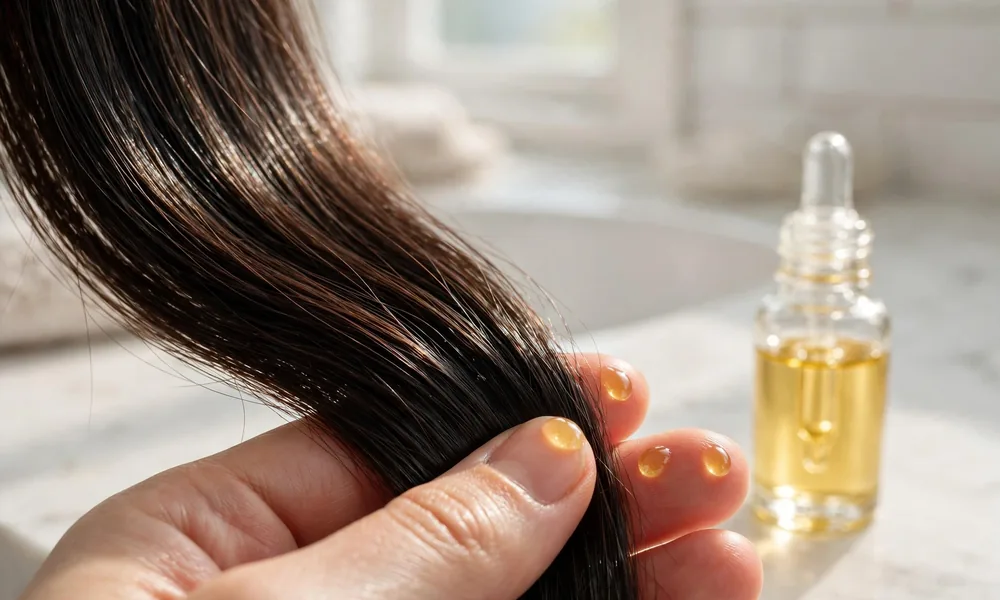
Using the finishing oil takes less than a minute, and the order matters. Wash and rinse as above, then squeeze the lengths gently so the hair is damp, not dripping. Put two or three drops into one palm, rub your palms together, and smooth your hands over the lengths and ends. Start at the ends and work upward, stopping well below the roots. Do not put oil on the scalp or near the roots, because that is where it turns heavy and flat, and flat roots hide the shine.
Two drops suit fine hair, three drops suit thick hair. A water-based serum works the same way, and water hair serum a simple shine guide shows how a few drops help the hair dry smooth.
Water and Hair Oil at a Glance
| Light oil first | Lukewarm wash | Damp ends last |
|---|---|---|
| Few drops only | Rinse till clear | Two drops fine |
| Ends and lengths | Cooler final rinse | Three drops thick |
| Ten minutes wait | Soft fingertips wash | Never near roots |
| Patch test first | Pat dry softly | Comb wide tooth |
Drying Softly for Shine
How you dry your hair matters as much as how you wash it. Rubbing wet hair hard with a towel lifts the cuticle and sets dullness in place, and the ends suffer first. After the final rinse, press the water out gently with a soft towel, never rub. Air-dry when you can: it is the gentlest option. If you use a hairdryer, keep it on low or medium heat, at least fifteen centimetres away, and keep it moving, finishing with a few seconds of cool air.
Never brush wet hair: a brush pulls and snaps strands. Wait until the hair is mostly dry, then detangle with a wide-tooth comb, from the ends upward.
What Oil Will Not Do
Hair oil will not repair damage: it will not mend a split end, regrow hair, or fix a scalp problem. Only a trim removes a split end, and only a doctor or dermatologist can help with a real scalp problem. Oil softens the ends and helps the hair catch the light, and that is a real, modest pleasure, not a treatment.
If your hair or scalp troubles you week after week, the answer is a doctor or dermatologist, not a new bottle.
Your Water and Hair Oil Shine Checklist
- Patch-test any new oil and wait a full day before using it.
- Oil the lengths and ends before washing, a few drops only.
- Wash lukewarm with a little mild shampoo and soft fingertips.
- Rinse until the water runs clear, then finish cooler.
- Smooth two or three drops of oil on damp ends, then pat dry softly, never rub.
- Air-dry when you can, and detangle with a wide-tooth comb.
Frequently Asked Questions
How much hair oil should I use?
A few drops is enough: two drops suit fine hair, three drops suit thick hair. If the hair feels sticky or heavy, you used too much.
Should I oil my hair before or after washing?
Both, in small amounts: oil the lengths and ends before washing, then use two or three drops on damp ends after washing. Never oil the scalp after washing.
Can I use hair oil on dry hair?
Yes, but use even less: one drop warmed between the palms, smoothed over the very ends only. Damp hair is better, because the water helps the oil spread evenly.
Will hair oil make my hair look greasy?
It will if you use too much, or if you put it near the roots. Keep the oil on the lengths and ends, and use only a few drops.
Which oil is best for shine?
A light oil suits most hair: argan, jojoba, sweet almond, or coconut oil are all common choices. Pick one, patch-test it first, and use it for a few weeks.
Can hair oil fix split ends?
No. Hair oil can soften the ends and make them look smoother, but only a trim removes a split end. If your hair or scalp troubles you, see a doctor or dermatologist.
The Bottom Line
Water and hair oil is a simple shine routine: oil before washing, wash lukewarm, and finish with a little oil on damp ends.
A Note for Shiny Hair
Keep it light, keep it lukewarm, keep it gentle. The shine belongs to you.