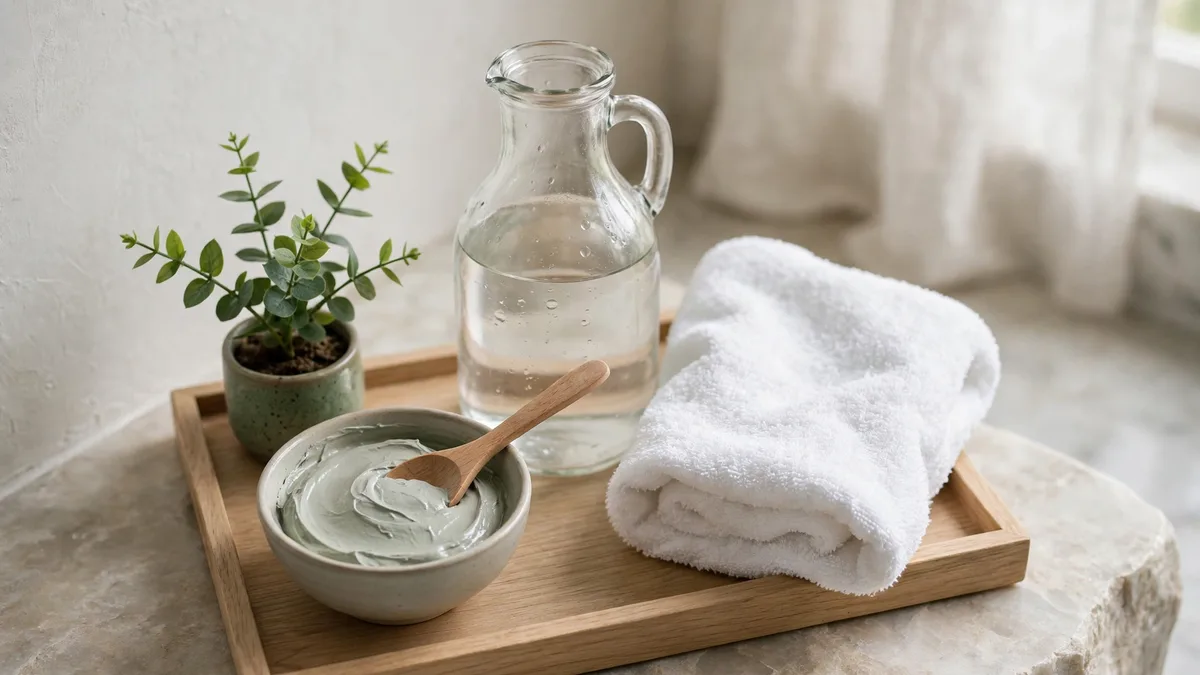
Some weeks ask for very little, and give back a lot. A quiet evening, a clean bowl, a spoonful of pale clay and a jug of clear water: that is all a clay mask needs. You mix it fresh, smooth it on, rest for a little while, and rinse it away. The skin feels soft and calm after.
Water and clay masks are one of the oldest, simplest kinds of skin care. Clay is fine earth, dried to a soft powder, and water is what wakes it up. Mixed together they make a smooth, cool paste that spreads easily, dries slowly, and rinses off cleanly with lukewarm water.
This guide explains what water and clay masks are, how to choose a clay, how to mix it with water, how to build a gentle weekly ritual around it, and how to rinse it off safely. It is gentle general information only, never a treatment. Patch-test first, and see a doctor or dermatologist for real skin problems.
Key Takeaways
- Water and clay masks are a simple weekly ritual: clay powder mixed fresh with plain water, rested, and rinsed off.
- A gentle clay, lukewarm water and a thin layer are enough.
- Always patch-test a new clay first, and stop if the skin stings or turns red.
- Rinse before it dries hard, then moisturise while the skin is damp.
- Clay masks are gentle general care only; they will not cure any skin condition.
What Water and Clay Masks Are
A water and clay mask is a face mask made from just two things: fine clay powder and plain water. The clay is natural earth, ground to a soft, pale powder, usually grey-green, white or pale pink. Stirred together, they make a smooth, cool paste that spreads in a thin layer, rests for a few minutes, and rinses away with lukewarm water. Clay masks are not sheet masks, which come ready-made on cloth. A clay mask is mixed fresh each time, in your own bowl, in the amount you need for one face.
Why Water and Clay Suit a Weekly Ritual
Water and clay suit a weekly ritual because they ask for so little and fit so neatly into one evening. Once a week is enough: the skin gets a slow, gentle pause, and the rest of the week stays simple. A daily mask would be too much. One evening a week, the same bowl, the same spoon, the same ten quiet minutes. The ritual is gentle because the ingredients are plain: no strong scent, no sting, and no long list to remember. You mix, you rest, you rinse, and you moisturise.
Choosing Your Clay
Choose a clay that is sold plainly, as a single fine powder, with nothing added. White kaolin clay is the gentlest choice, soft and pale, and a good place to start. Green clay is a little stronger and suits skin that feels oily by midday. Pink clay sits between the two, soft and calm. Buy a small jar first, and check that the label names one clay only. Avoid clays sold with big promises, and avoid any powder that looks gritty or smells sharp.
Mixing Clay with Water
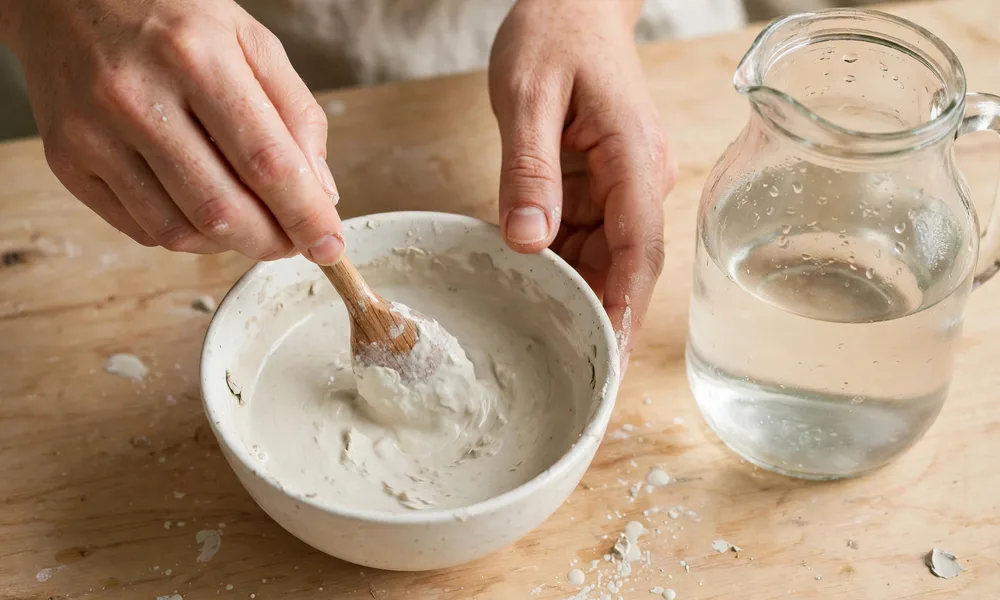
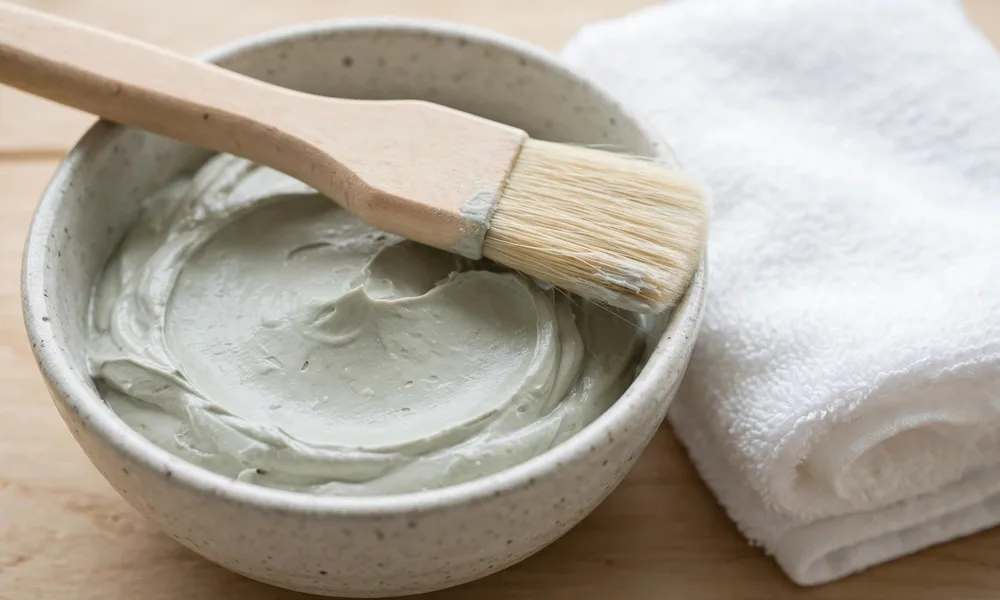
Mixing is the quietest part of the ritual, and it takes less than a minute. Put one small spoonful of clay powder into a clean ceramic or glass bowl, and add plain lukewarm water a little at a time, stirring with a wooden spoon until the paste is smooth and soft, like thick cream. It should spread easily and hold its shape. If it feels too thick, add a few drops of water; if too thin, add a pinch more clay. Mix only what you need for one face, with fresh water. Plain water is the kindest choice for mixing, as in distilled water skin clear look. Never mix clay in a metal bowl.
The Weekly Ritual in Small Steps
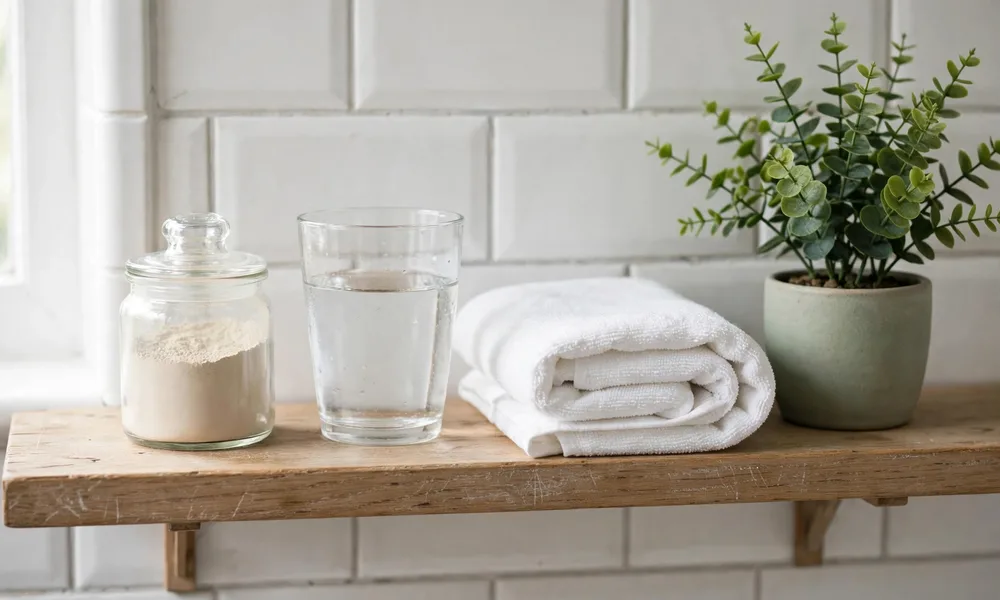
A weekly ritual works best when it repeats, and a week is the right length to learn it. Pick one evening, and keep it the same each week, so the ritual becomes a habit. Set out the tray first: the clay jar, a clean bowl, a wooden spoon, a soft brush, a towel, a glass of water, and your moisturiser. Wash your hands, tie your hair back, and wash your face with lukewarm water and your usual gentle cleanser. Then mix, smooth it on, rest, rinse, and moisturise. The whole ritual takes about twenty minutes, and most of that is resting. The same slow rhythm runs through kunzite gentle pink for tender skin rituals.
Applying the Mask Gently
Apply the mask with a soft flat brush or clean fingers, in a thin, even layer, and keep it away from the eyes and the lips. Start at the forehead, sweep over the cheeks, and finish at the chin and jaw, with gentle strokes and no pressure. A thin layer is enough: a thick layer dries slowly and is harder to rinse off. Never spread the mask over broken skin, sore patches or sunburn. If the mask stings, rinse it off at once and do not try again that week. Then rest for about ten minutes, until the paste feels dry to the touch but not tight or cracked. Do not let the mask dry hard: it is harder to rinse off and leaves the skin feeling tight.
Rinsing Off with Water
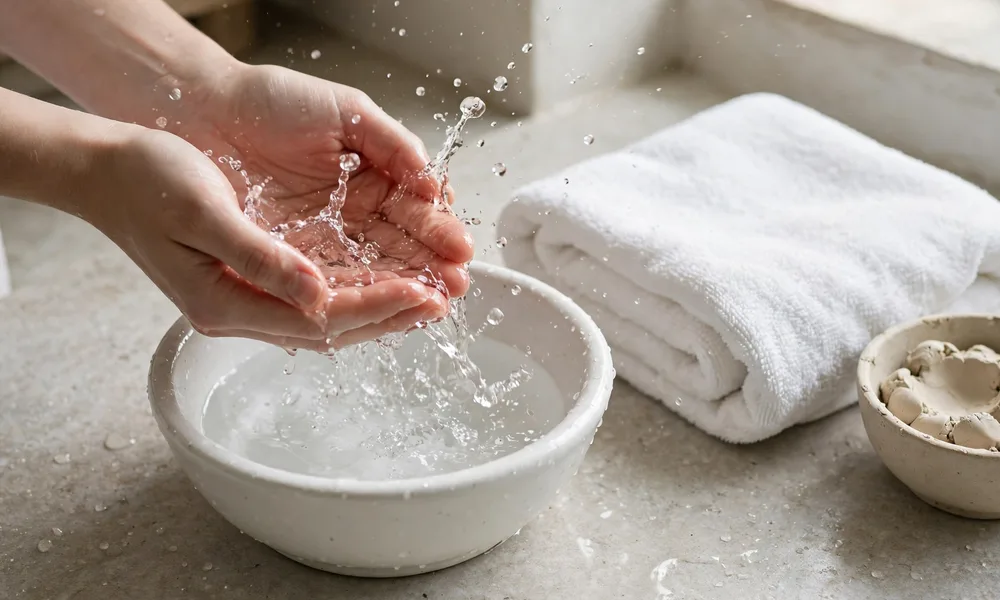
Rinsing is the gentlest part of the ritual, and it takes a little patience. Splash lukewarm water over the face with cupped hands, and soften the mask with a damp, soft cloth, wiping in slow, gentle circles until the clay is gone. Rinse the cloth often, until the skin feels clean and smooth. Never scrub, and never use hot water, which leaves the skin feeling tight and flushed. Pat the skin dry, leaving a little moisture behind, and smooth on a plain moisturiser while the skin is still slightly damp. After a clay mask, the skin usually feels soft, smooth and calm, and a little fresher than before. That soft, calm feeling is the whole reward of the ritual. If the skin feels tight after rinsing, the mask was left on too long; next week, use a thinner layer and rinse sooner.
Water and Clay Masks at a Glance
| Ritual step | Water to use | Mask care |
|---|---|---|
| Mix clay fresh | Lukewarm plain water | Small batch only |
| Apply thin layer | Dampen brush first | Clean bowl after |
| Rest ten minutes | Sip water slowly | Pat skin dry |
| Rinse gently off | Lukewarm rinse water | Moisturise while damp |
Patch Testing First
Patch-testing is the most important step in this whole guide, and it takes only a minute. Before you use a new clay on your face, mix a tiny amount and smooth it onto the inside of your wrist or behind your ear. Wait a full day, and watch for redness, itching, stinging or swelling. If the skin stays calm, the clay is safe to try on the face. Patch-test again if you change clays, or open a new jar. A minute of testing saves a week of sore skin.
What Clay Masks Will Not Do
Be honest about what a clay mask can and cannot do. A clay mask will not cure acne, eczema, dryness, or any other skin condition. It will not detox the body, shrink pores for good, or replace any medicine. It is a gentle weekly pause, and its value is soft, calm skin for an evening, not a cure. The same honesty applies to every gentle skin habit: a classic pairing can comfort the skin, as in pearl powder in skincare, but comfort is not a cure. If a skin problem lasts week after week, or the skin is sore, cracked or painful, see a doctor or dermatologist, not a different mask.
Your Weekly Ritual Checklist
- Choose one plain clay, white kaolin for the gentlest start, and buy a small jar first.
- Patch-test every new clay on the inside of your wrist, and wait a full day.
- Mix one spoonful of clay with lukewarm water, fresh each week.
- Apply a thin, even layer with a soft brush, keeping it away from the eyes and lips.
- Rest for ten minutes, rinse off with lukewarm water, and moisturise while the skin is damp.
- Wash the bowl and brush after, and store the clay jar closed and dry.
Frequently Asked Questions
What are water and clay masks?
Water and clay masks are face masks made from just two things: fine clay powder and plain water. Mixed fresh, they make a smooth paste that rests for about ten minutes and rinses off with lukewarm water.
How often should I use a clay mask?
Once a week is enough for most skin. A weekly ritual gives the skin a slow, gentle pause without overdoing it. A daily mask would be too much.
Which clay is gentlest for sensitive skin?
White kaolin clay is the gentlest choice, soft and pale. Pink clay is also soft and calm. Always patch-test first on the inside of your wrist, and wait a full day.
How long should I leave a clay mask on?
About ten minutes, until the paste feels dry but not tight or cracked. Do not let the mask dry hard: it is harder to rinse off and leaves the skin feeling tight. Set a small timer and rinse when it rings.
Can I mix clay with anything other than water?
Plain water is the kindest choice, and this guide uses water only. Do not mix clay with vinegar, lemon juice, strong toners or essential oils, which can sting the skin. If you want to try anything else, ask a dermatologist first.
Will a clay mask cure my skin problems?
No. A clay mask will not cure acne, eczema, dryness, or any other skin condition. It is a gentle pause, not a treatment. If a skin problem lasts week after week, see a doctor or dermatologist.
The Bottom Line
Water and clay masks are a bowl, a spoon, a glass of water, and ten quiet minutes once a week. Mix it fresh, rest, rinse, and let the week slow down.
A Note for Gentle Weeks
Keep it plain, keep it weekly, keep it gentle. The quiet evening is enough.