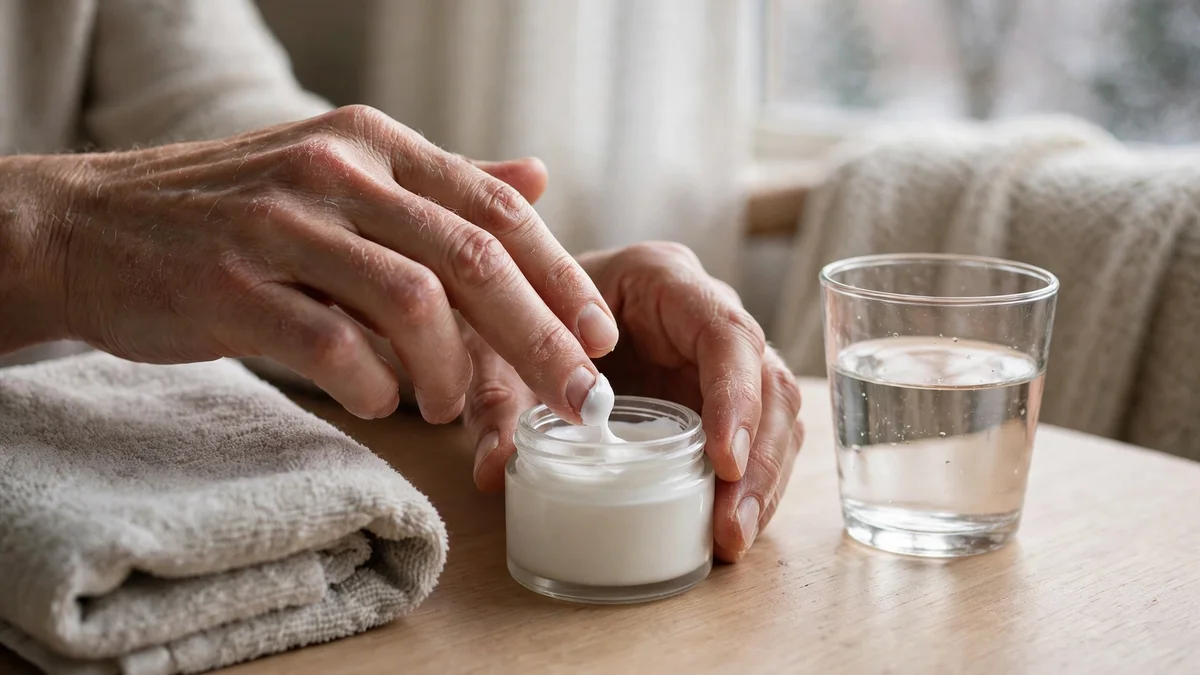
Winter reaches your hands before it reaches anywhere else. The first cold morning leaves the knuckles a little tight after washing, and by the afternoon the skin feels rough and papery, catching on woollen sleeves.
Water for dry hands is a small, steady kind of care. It is not a grand routine or an expensive shelf: it is lukewarm water instead of hot, a soft towel instead of rubbing, and moisturiser on skin that is still slightly damp.
This guide explains what winter does to your hands, how to wash and dry them gently, and how to build a simple morning and evening routine that fits an ordinary life. The goal is simple: hands that feel comfortable, look cared for, and carry you through the cold months with ease.
Key Takeaways
- Water for dry hands means lukewarm washing, gentle drying, and moisturiser after every wash.
- Cold air holds little moisture, and indoor heating dries the air further, so hands lose water all day.
- Hot water strips the natural oils that protect hands; lukewarm water is always kinder.
- Moisturiser works best on skin that is still slightly damp, morning and evening.
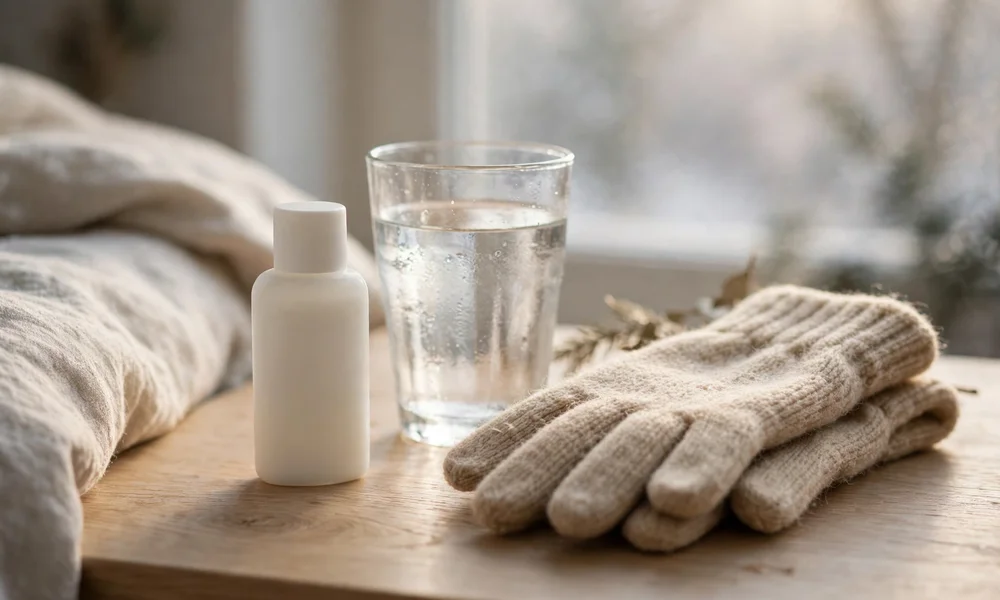
- Gloves, a soft towel and a small tube of cream are the whole winter kit for hands.
Why Winter Dries Hands
Hands dry out in winter because they are always out in the open. The face gets a scarf and the body gets layers, but the hands are bare for most of the day, touching cold air, cold water and cold door handles.
Winter air is dry air. Cold air holds very little moisture, and when that cold air comes indoors and is warmed, its dryness grows sharper still. The result is air that quietly draws moisture away from every surface it touches, and the hands, with their thin skin and many small creases, feel it first.
How Cold Air and Heating Work
Cold air outside and warm air inside work together against your hands. Outside, the wind strips away the thin layer of warm, slightly humid air that sits next to the skin, and the skin loses moisture faster still. The knuckles and the backs of the hands feel it first, because they face the wind directly.
Inside, heating warms the air without adding any moisture, so a warm room can be just as drying as a cold street. The skin also makes a little less of its natural oil in the cold, so it holds moisture less well. Less oil, drier air and a cold wind together explain almost everything winter does to hands.
Washing Hands with Lukewarm Water
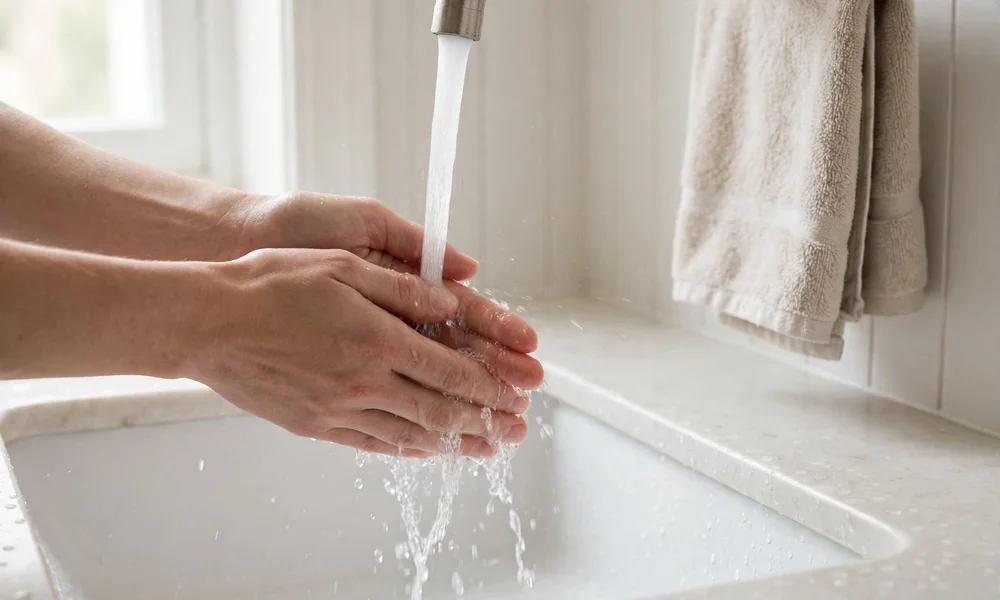
Washing is where hand care is won or lost, because winter hands are washed many times a day. Use lukewarm water, never hot: hot water washes away the natural oils that help the skin hold water in, and it leaves hands tighter and rougher after every wash.
Use a little mild cleanser, enough to clean the hands without stripping them, and rinse well. Keep the wash short and gentle, and do not scrub the knuckles. The same gentle idea runs through a simple guide to glowing skin in winter, where lukewarm water and moisturiser on damp skin protect the whole face through the cold months.
Drying Hands Gently
Drying matters as much as washing, and it is the step most people rush. Pat the hands dry with a soft towel instead of rubbing: rubbing pulls at skin that is already dry and can leave it sore around the knuckles.
Dry between the fingers too, where water lingers and chills the skin. Keep a soft towel by every sink, and replace it often so it stays clean and fluffy. A gentle pat takes only a few seconds, and it leaves the skin calm instead of raw.
Moisturising After Every Wash
Moisturiser works best on skin that is still slightly damp, so apply it straight after drying, while the hands are still a little moist. A small amount is enough: warm it between your palms, then smooth it over the backs of the hands, the knuckles and around the nails.
Keep a small tube by the sink, one in your bag and one by the bed, so the habit is never far away. A plain, fragrance-free cream suits most hands, and a richer balm at night gives dry skin longer to drink it in. If your hands sting after cream, choose a plainer one and keep the routine gentle.

Gloves Against the Cold
Gloves are the simplest protection winter hands have, and they work the moment you put them on. Wear warm gloves every time you step outside, even for a short walk: a few cold minutes without them can undo a whole morning of care.
Choose gloves that fit well and keep the wind out, and keep a spare pair by the door so you are never caught without them. Indoors, thin cotton gloves over cream at night can help very dry hands, but only if they feel comfortable. The same practical warmth is in how to keep skin hydrated in dry weather, where a scarf, gloves and lip care protect the parts winter reaches first.

Hands at Work and at Home
Work asks a lot of winter hands. Washing up, cleaning and handling paper all pull moisture out of the skin, and each small task adds up by the end of the day. Wear rubber gloves for washing up and cleaning, and keep a tube of cream on the desk for the hours between washes.
At home, keep the routine visible: a towel, a tube of cream and a glass of water by the sink. When the tools are in sight, the habit happens on its own. Short, gentle habits through the day are worth far more than one grand routine at night.
A Simple Morning Routine
A winter morning for hands takes two minutes. Wash with lukewarm water and a little mild cleanser, pat dry with a soft towel, and smooth cream over the hands while they are still slightly damp. Drink a glass of fresh water slowly, and put your gloves on before you step out.
Keep the morning kit together: towel, cream and gloves in one place, so nothing is searched for in a hurry. A calm morning sets the hands up for the whole day, and the habit soon feels as natural as the kettle.
A Simple Evening Routine
Evenings are for repair, and hands do their best healing overnight. Wash gently with lukewarm water, pat dry, and smooth on a richer cream or balm before bed. If the hands are very dry, a thin layer of balm and soft cotton gloves can help, but stop if they feel hot or itchy.
Keep the cream by the bed, not in another room, so the habit survives tired evenings. The same steady rhythm is in lukewarm water for morning skin, where gentle water and a calm start protect the skin for the day ahead.
What to Avoid in Winter
Some habits make dry hands worse, and they are easy to drop. Avoid very hot water, harsh soaps and strong cleaning products on bare skin, and do not scrub with rough cloths or brushes. Avoid biting or picking at dry skin around the nails, which only opens small cracks.
Avoid washing more often than needed, and skip strong scented creams if they sting. None of this needs willpower: it needs a gentler shelf, a softer towel and gloves by the door.
When Hands Need Extra Care
Most winter hands improve with gentle habits in a week or two, but some need more help. If the skin cracks, bleeds, blisters or stays sore despite gentle care, or if the hands itch badly at night, please see a health professional rather than trying stronger products on your own.
The same is true of any rash that spreads or any patch that does not heal. Gentle care is for ordinary winter dryness, not for a skin problem. A professional can tell the difference in one visit, and that visit is worth it.
| Hand care step | Water beside | Winter habit |
|---|---|---|
| Wash lukewarm water | Glass beside sink | Wear warm gloves |
| Pat dry gently | Sip water slowly | Cream after wash |
| Cream on damp skin | Plan on paper | Keep towel soft |
| Rest hands nightly | Lukewarm wash first | Store cream handy |
Your Water for Dry Hands Checklist
- Wash with lukewarm water and a little mild cleanser, never hot water.
- Pat hands dry with a soft towel, including between the fingers, never rub.
- Smooth moisturiser over hands while they are still slightly damp, after every wash.
- Wear warm gloves every time you step outside, even for a short walk.
- Keep a tube of cream by the sink, one in your bag and one by the bed.
- Drink water steadily through the day and keep the evening routine short and gentle.
Frequently Asked Questions
Why do my hands get so dry in winter?
Cold air holds little moisture, indoor heating dries the air further, and wind strips moisture from bare skin. Hands are out in the open all day, so they lose water faster than skin that is covered.
Should I wash my hands with hot water in winter?
No. Hot water washes away the natural oils that help hands hold moisture, and it leaves them tighter and rougher. Lukewarm water cleans just as well and is always kinder to winter hands.
How often should I moisturise my hands?
After every wash, while the skin is still slightly damp, and once more before bed. Keeping a small tube by the sink, in your bag and by the bed makes the habit easy to keep.
Do gloves really help dry hands?
Yes. Gloves keep cold wind off the skin and stop moisture escaping, and they work the moment you put them on. A few cold minutes without gloves can undo a whole morning of care.
Can drinking water fix dry hands?
Drinking water steadily through the day supports the whole body, and hands are part of it. But water alone will not fix dry hands: lukewarm washing, gentle drying and moisturiser do the real work.
When should I see a professional about dry hands?
If the skin cracks, bleeds, blisters or stays sore despite gentle care, or if it itches badly at night, please see a health professional. Gentle care is for ordinary winter dryness, not for a skin problem.
The Bottom Line
Water for dry hands is lukewarm water, a soft towel, cream on damp skin, and gloves by the door.
Start tonight, and let your hands feel the difference by morning.
A Note for Cold Hands
Keep it lukewarm, keep it gentle, keep it steady. Winter hands can still feel soft.