A pantry is a small room with a big job. Behind its door sit the jars, the rice, the lentils, the oats and the flour, everything the kitchen reaches for first. When the pantry is tidy, cooking feels easy.
A fresh pantry rarely needs new shelves or fancy containers. What it needs is simpler: a bowl of fresh water, a clean cloth, a few calm minutes, and a habit of putting things back where they belong.
This guide explains simple water rituals for one place only — the pantry: plain water for the shelves, the jars, the dry goods and the fridge corner. It is gentle general information only, with no harsh chemicals and no health or cure promises.
Key Takeaways
- A bowl of water, a clean cloth and a few calm minutes keep a pantry fresh.
- This guide covers one place only: the pantry, not the whole kitchen or home.
- Use plain water for the shelves, jars, dry goods and fridge corner.
- Dry goods stay dry: water is for wiping shelves, never for the food inside jars.
- A morning check and a weekly round keep the pantry calm.
What a Fresh Pantry Ritual Is
A fresh pantry ritual is a short, calm cleaning habit built around plain water, for one small place only. It is no deep clean, and there is no hurry at all. Take a small bowl of fresh water and a clean cloth, and wipe one shelf slowly, edge to edge. Then rinse the cloth, squeeze it out, and take the next shelf.
Small is why it works. Ten calm morning minutes can keep the shelves, the jars and the floor clean all week, and the jars stand in neat rows instead of hiding behind each other.
Why Plain Water Suits a Pantry
Plain water suits a pantry because food lives here, and food deserves a gentle touch. Strong smells from cleaners can drift into open jars and dry goods, so a damp cloth and fresh water are the safer choice for shelves that hold rice, lentils and oats.
Water also suits the pantry because the job is mostly dust and small spills, not grease. A little flour, a few grains of rice, a sticky ring under a jar: all of it lifts away with a damp cloth, rinsed often.
A pantry cleaned with plain water smells of nothing at all, and that is exactly right: dry goods and clean wood, not a bottle. Fresh air from a nearby window helps too, keeping the shelves dry between wipes.
Starting with the Shelves
Start with the shelves, one at a time, from the top down. Take everything off a single shelf and set it on the counter. Fill a small bowl with fresh water, dampen a clean cloth, and wipe the empty shelf slowly, corner to corner, then rinse the cloth and wipe again.
Look at the shelf while it is empty. Check for damp spots, crumbs and sticky rings, and let the wood dry before anything goes back. A dry shelf protects the jars on it.
Put things back in neat rows, labels facing out, the jars you reach for most often at the front. One shelf a day keeps the whole pantry fresh.

Jars, Dry Goods and Labels
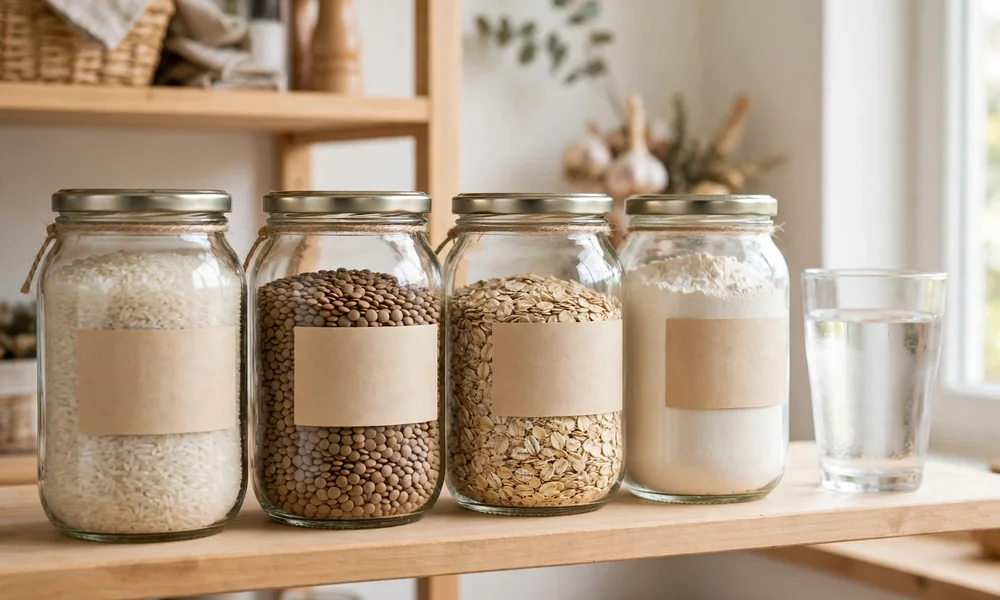
Jars are the heart of a fresh pantry. Glass jars keep rice, lentils, oats and flour visible, dry and easy to reach. Wipe the outside of each jar with a damp cloth as you put it back, and dry it first.
Labels matter more than they seem. A small label on each jar tells you what is inside and when it was filled, so nothing sits forgotten at the back. Write the date on the label when you refill a jar, and use the oldest jar first.
Keep dry goods dry. Water is for wiping shelves and jar lids, never for the food inside. If a jar spills, sweep it up, wipe the shelf, and let it dry fully before the jar returns.
The Fridge Corner
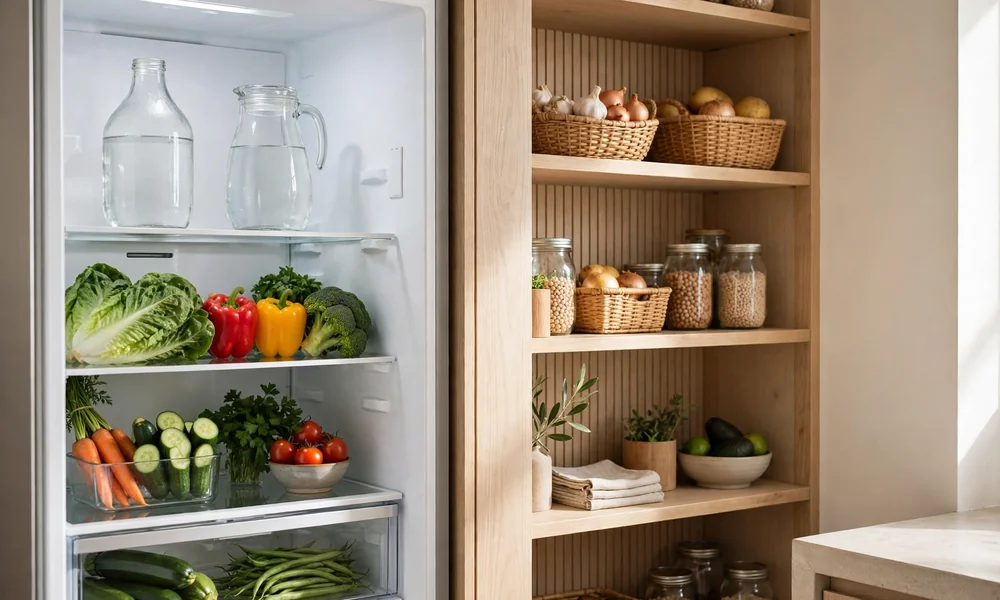
The fridge stands beside many pantries, and its corner deserves the same calm care. Wipe the top of the fridge and the shelf beside it with a damp cloth, and keep a jug of fresh water on the top shelf, where you can see it and reach it easily.
Inside, keep things simple: fresh vegetables in one drawer, the water jug on a bright shelf, and nothing pushed so far back that it is forgotten. A quick wipe of the door handle each morning keeps the busiest spot clean.
The fridge corner is part of the pantry's world, not a separate job. When the shelves are tidy and the corner is wiped, the whole food corner feels fresh.
A Fresh Pantry at a Glance
| Tidy shelves | Plain water | Food storage |
|---|---|---|
| Jars, labels, rows | Damp cloth, rinse | Rice, lentils, oats |
| Dry goods stay dry | Wipe, dry, restock | Fridge corner, jug |
| Morning check, weekly | No harsh chemicals | Pantry only, calm |
A Fresh Pantry and a Fresh Kitchen
A fresh pantry and a fresh kitchen are neighbours, but they are not the same job. The kitchen guide covers the sink, the counters, the fridge and the bins, the places where cooking happens and mess is made. The pantry guide covers the shelves behind the door, where food is stored before cooking begins.
The kitchen is where food is prepared, and the pantry is where food waits. One needs a wiped counter and a clean sink; the other needs tidy jars, dry shelves and labels you can read.
Water and a fresh kitchen keeps the cooking room fresh with plain water; this guide keeps the food store fresh with plain water. Same water, same cloth, two different rooms.
A Fresh Pantry and a Fresh Bathroom
A fresh pantry and a fresh bathroom both use plain water and a clean cloth, yet the rooms could hardly be more different. The bathroom guide covers the sink, the shower, the mirror and the towels, a small wet room that starts the morning.
The pantry is a dry room, and keeping it dry is the whole point. Water wipes the shelves and jar lids, then the shelves must dry fully before the dry goods go back. A bathroom welcomes water; a pantry borrows it for a few minutes.
Water and a fresh bathroom keeps a wet room fresh with plain water; this guide keeps a dry food store fresh with plain water. Same gentle method, opposite rooms.
A Fresh Pantry and a Clean Home
A fresh pantry and a clean home differ in size, not in spirit. The clean home guide walks through the whole home, room by room, with plain water for surfaces, glass and floors, and a small weekly rhythm for every room.
The pantry guide stays in one small place and goes deeper there: the shelves, the jars, the dry goods, the labels, the stock rotation and the fridge corner.
Water and a clean home keeps the whole home fresh, room by room; this guide keeps one food store fresh, shelf by shelf. One is wide, the other is deep, and both use only plain water.
Keeping Dry Goods Dry
Dry goods are the pantry's treasure, and dryness is what keeps them good. Rice, lentils, oats and flour all hate damp, so the shelves beneath them must be fully dry before jars go back, and the jars themselves must be dry outside as well as in.
Store jars with their lids on tight, away from the dampest corner, and never stack a wet jar on a dry shelf. If a shelf feels damp, leave the door open and let the air dry it.
Check the oldest jars first each week. If anything smells stale or looks damp, throw it away, wipe the shelf, and let it dry before a fresh jar takes its place.
A Weekly Pantry Round
A weekly pantry round takes about twenty calm minutes, and it keeps the small daily checks honest. Once a week, open the pantry door, take a bowl of fresh water and a clean cloth, and work from the top shelf down, wiping each shelf and the outside of each jar.
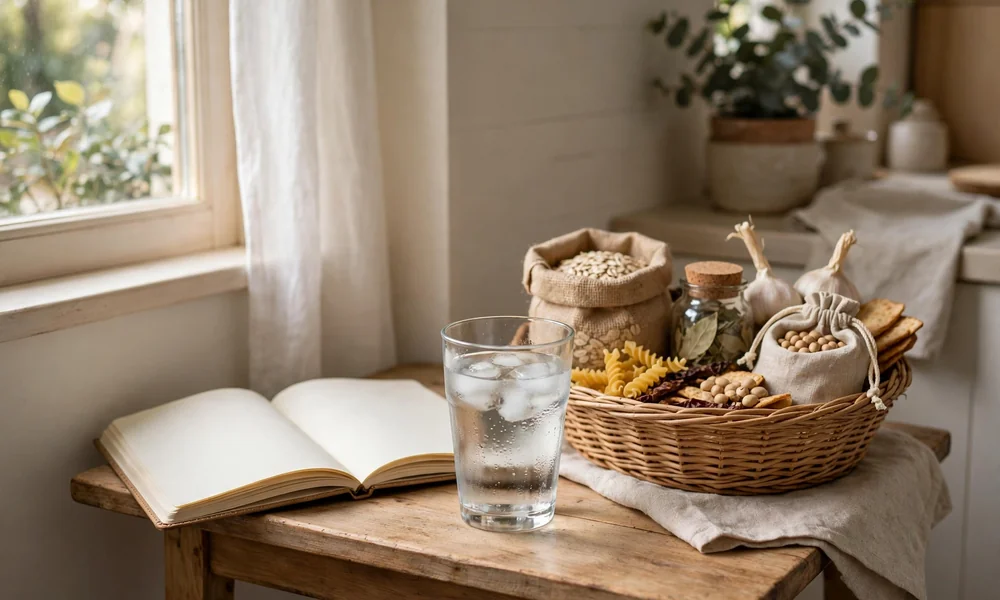
While you wipe, check the labels and dates. Move the oldest jars to the front, note what is running low in a small notebook, and throw away anything stale or damp. Rinse the cloth often.
Finish by wiping the pantry floor and the door handle, then leave the door open so the air can dry every shelf. Drink a glass of fresh water when you are done.
Your Fresh Pantry Checklist
- Wipe one pantry shelf with a damp cloth, then let it dry.
- Drink a glass of fresh water slowly as the pantry check begins.
- Keep jars labelled with the contents and the filling date.
- Keep dry goods dry: water is for shelves, never for food in jars.
- Move the oldest jars to the front and use first.
- Remember this is general advice only; see a doctor for health problems.
Frequently Asked Questions
What is a fresh pantry ritual?
A fresh pantry ritual is a short, calm cleaning habit for the pantry only, built around plain water, a clean cloth and a few minutes a day.
How is a pantry different from a kitchen?
A kitchen is where food is prepared, with a sink, counters and bins. A pantry is where food is stored, with shelves, jars and dry goods.
Is plain water enough for pantry shelves?
Yes, for dust and small spills, which are most of what a pantry collects. Wipe with a damp cloth, rinse often, and let the shelf dry fully.
Should water ever touch dry goods?
No. Water is for wiping shelves and jar lids only. Dry goods must stay dry, and a wet shelf must dry before jars return.
How often should I check the pantry?
A short check each morning and a fuller round once a week keep the pantry fresh.
Can I use strong cleaners in the pantry?
No harsh chemicals. Food lives in the pantry, so plain water and a clean cloth are the gentle choice, with fresh air to keep shelves dry.
The Bottom Line
A fresh pantry is a tidy food store: clean shelves, labelled jars, dry goods kept dry, and plain water doing the gentle work. Keep the shelves dry, the jars in neat rows, and the water in the bowl, never in the food.
A Note for Fresh Days
Keep it tidy, keep it dry, keep it calm. A clean shelf, a labelled jar and a glass of water can carry a fresh pantry all week.