
A fridge works hardest when nobody is watching it. It hums through the night, keeps the milk cold and the vegetables crisp. Yet open its door on a busy morning and you can tell at once whether it has been cared for: clear shelves, a jug of cold water within reach, and nothing forgotten at the back.
Water and a fresh fridge go together because both are about cold freshness: a glass of cold water wakes the morning, and a wiped shelf keeps the food fresh.
This guide explains a simple fresh ritual for one place only — the fridge: plain cold water for the shelves, the drawers and the door, a jug of drinking water kept where you can see it, and a short morning round. It is gentle general information only, with no medical claims.
Key Takeaways
- A bowl of cold water, a clean cloth and a few calm minutes keep a fridge fresh.
- This guide covers one place only: the fridge, not the whole kitchen or home.
- Use plain water for the shelves, drawers, door and handles, one shelf at a time.
- Keep a jug of fresh drinking water on a bright shelf where you can see it.
- A short morning check and a short evening close keep the fridge calm.
What a Fresh Fridge Ritual Is
A fresh fridge ritual is a short, calm cleaning habit built around plain cold water, for one cold box only. It is not a deep clean, and it is not a race. Start with a bowl of cold water and a clean cloth, wipe one shelf from edge to edge, then wash the cloth in the bowl, wring it hard, and move to the next shelf.
Small is what makes it work. A short morning round keeps the shelves, the drawers and the door clean through the day. The kitchen guide looks after the cooking room; this one never leaves the cold box.
Why Cold Water Suits a Fridge
A fridge is already cold, so cold water suits it. A damp cloth picks up crumbs, drips and sticky rings from a shelf without a fight, since most of what lands on a fridge shelf dissolves in water, and a cloth wrung hard leaves the glass dry behind it.
A cold cloth also suits the shelves themselves. Glass stays clear when it is wiped cold, and plastic drawers do not fog or warm up. Wash the cloth in the bowl often, wring it until it barely drips, and swap the bowl water as soon as it looks cloudy.
The Gentle Kit You Need
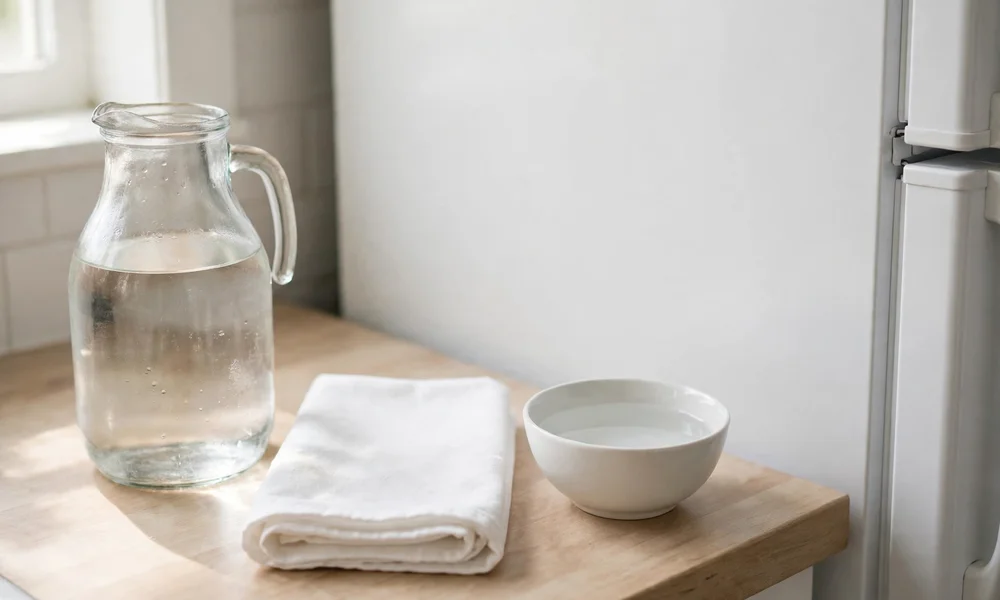
The kit for this ritual is tiny, and most of it is already in your cupboards. You need a small bowl for fresh cold water, two or three clean cotton cloths, a dry cloth for the shelves, and a glass jug for drinking water.
Keep everything in a small basket by the fridge, so the round starts without hunting for cloths. Rinse the cloths after each round, hang them where air can reach them, and swap the bowl water the moment it turns grey.
A Fresh Fridge Morning Round
The morning round takes about ten minutes and runs the same way each day. Open the door, wipe the top shelf, then the middle shelf, then the drawers, using a bowl of fresh cold water. Set the drinking jug back on its bright shelf and close the door.
When the round is done, pour a glass from the jug and drink it standing in the kitchen, then rinse the cloth and hang it on its hook. The fridge is fresh, the water is cold, and the morning can begin.
Wiping the Shelves
Work one shelf at a time, so the food is never out for long. Take everything off a single shelf and set it on the counter. Dampen the cloth, wring it out well, and wipe the empty shelf slowly, corner to corner, then dry it with the dry cloth before anything goes back.
While the shelf is bare, look for rings left by jars and drips that ran toward the back. Wipe them away, dry the glass with the second cloth, and only then set the food back, jars at the front, the tallest things at the back where they cannot topple.
A Fresh Fridge at a Glance
| Cold water, bowl | Fridge only | Dry before restock |
|---|---|---|
| Damp cloth, wrung | Shelves, drawers, door | One shelf, in turn |
| Jug, bright shelf | Fresh food, visible | Change cloudy water |
| Dry cloth, finish | Morning check, evening | No harsh chemicals |

A Fresh Fridge and a Fresh Kitchen
A fresh fridge and a fresh kitchen are neighbours, but they are not the same job. Water and a fresh kitchen covers the sink, the counters, the fridge and the bins, the room where meals are made and mess appears. It visits the fridge as one stop among many, with one shelf wiped among the sink and the counters.
This guide stays inside the cold box and goes deeper there: every shelf, every drawer, the door, the handles and the water jug. The kitchen is where food is prepared, and the fridge is where food waits in the cold.
A Fresh Fridge and a Fresh Pantry
A fresh fridge and a fresh pantry both store food, yet the rooms could hardly be more different. Water and a fresh pantry covers the shelves behind the door, where dry goods wait: rice, lentils, oats and flour in labelled jars, kept dry above all else. Water wipes the pantry shelves, then the shelves must dry fully before the dry goods go back.
The fridge is the opposite kind of store. It is cold and damp by nature, and keeping it fresh means wiping often, not keeping it dry. The pantry keeps food dry and still; the fridge keeps food cold and visible.
A Fresh Fridge and Spring Cleaning
A fresh fridge and spring cleaning differ in size and in season, not in spirit. Water and spring cleaning is the yearly reset that covers the whole home, room by room, with sorting, airing and fresh linen added, done over a few calm days when the light grows longer.
This guide is the everyday version of a small slice of that seasonal habit, repeated all year: a few calm minutes each morning, cold water, clean cloths, one shelf at a time. The spring clean covers the whole house once a year; the fridge round keeps one cold box fresh in between.
Keeping Fresh Food Fresh
A tidy fridge lets you see what needs eating first. Put vegetables in the drawer, keep the jug where your eye lands when the door opens, and leave a gap at the back so cold air can move around the food.
Once a week, pull the oldest items forward and check them. Anything that smells off or looks past its best goes in the bin, the shelf gets a wipe, and a fresh item takes its place. This is general guidance only; for questions about stored food, read the label on the pack.
What Plain Water Cannot Do
Plain water has its limits, and it is honest to name them. A grease mark baked onto a shelf will not lift with a damp cloth, a stain sunk deep into plastic will not fade, and a cracked shelf or a worn seal is a job for a repair, not a wipe.
When water and patience have done all they can, a drop of mild soap is the next step, and a damaged or precious item belongs with a professional. Never mix cleaning products, and keep anything strong away from food and the drinking jug.
A Weekly Fridge Rhythm
Give the bigger jobs their own days so the morning round stays short. Monday can be the top shelf, Wednesday the drawers, Friday the door and handles, and the daily round is then one shelf, the jug and a glass of water.
On the full-wipe day, work from the top down with a fresh bowl of cold water, drying each shelf before the food returns. Check dates as you go, make a note of what is running low, and bin anything that has turned.

Your Fresh Fridge Checklist
- Fill a bowl with fresh cold water and take two clean cotton cloths.
- Wipe one fridge shelf, dry it, and put the food back in neat rows.
- Keep the water jug on a bright shelf where you can see it.
- Drink a glass of cold water slowly as the fridge check begins.
- Move the oldest food to the front and use it first.
- Remember this is general guidance only; a doctor is the right person for health worries.

Frequently Asked Questions
Is plain water enough to clean a fridge?
For everyday marks, yes. Crumbs, drips and light smudges come away with a cold damp cloth, and water leaves no smell behind. Glass shelves and plastic drawers both suit a well-wrung cloth.
How often should I wipe the fridge shelves?
A quick round each morning keeps the fridge fresh, and a full shelf-by-shelf wipe once a week handles the rest. The morning round takes about ten minutes.
Can I use plain water on the fridge drawers?
Yes, with a cloth wrung out until it barely drips. Take one drawer at a time, wipe it, dry it, and put the food back before you start the next one.
What is the best water for cleaning the fridge?
Plain cold water, on a clean cloth. It matches the cold box, leaves the glass clear, and will not warm the food the way hot water would.
How is a fresh fridge different from a fresh kitchen?
The kitchen guide covers the sink, the counters, the bins and the fridge as one stop among many. The fridge guide never leaves the cold box: shelves, drawers, door, handles and the water jug.
When should I ask a professional cleaner?
When a mark will not shift after water and patience, or when a shelf is cracked or a seal is worn. A deep stain is also a job for a professional cleaner.
The Bottom Line
That is the whole ritual: cold water in a bowl, a clean cloth, a jug on a bright shelf, and a short round each morning. Wipe, dry, and let the fridge stay cold.
A Note for Fresh Days
Cold, clear and fresh, every day. A bowl of cold water and ten calm minutes keep the fridge right.


