Some evenings ask for nothing more than a sofa, a screen, and a good story. The day is done, the dishes are washed, the messages have slowed, and the house has settled into its quiet evening shape. Outside the window the light is fading, and inside, the lamp is low and the room feels warm.
A film night fits an evening like that perfectly. One film, chosen with care, watched from start to finish without rushing, with a glass of fresh water close by and a blanket folded over the arm of the sofa.
Below, a film night gets a close look: picking the film, setting up the corner, keeping water close, and closing the evening. Treat it as gentle general information only, never medical advice; ask a doctor about anything that truly keeps worrying you.
Key Takeaways
- A film night means one film at home in the evening, watched from start to finish on the sofa.
- Keep a tall glass of fresh water within reach on the coffee table.
- Pick the film before the evening starts, so the night is not spent scrolling.
- A film night is watching; it is not a game, a book, or a bath.
- End gently: finish the water, switch the screen off, and let the night rest.
What a Film Night Is
A film night is an evening spent watching one film at home, on purpose, from the first scene to the last. The television or the laptop is set up before the film starts, the sofa is made comfortable with cushions and a blanket, and the phone is put face down and out of reach.
The evening has a shape of its own. First the room is set up and the water is poured. Then the film plays, with sips of water between scenes and a short pause halfway if the film is long. Then the credits roll, the screen goes dark, and the evening winds down quietly.
Why a Film Night Feels Fresh
A film night feels fresh because it has a clear beginning and a clear end. The day may have been scattered, full of small tasks and half-finished jobs, but the evening is one whole thing: one story, one sofa, one glass of water. That wholeness is restful, and it lets the mind settle instead of jumping from one thing to the next.
A cool glass sipped slowly keeps the evening light and fresh. The film gives the mind somewhere pleasant to go, and the water keeps the body comfortable while it goes there.
Choosing Tonight's Film
Pick the film in the afternoon, not at the moment the sofa calls. A short list of two or three titles is enough; anything longer turns choosing into its own chore. Think about the mood of the evening: something warm and funny after a long day, something gentle and slow when the house is quiet, something bright and stirring when the week has felt flat.
Keep the film to a comfortable length, under two hours if the evening is short.
Setting Up the Sofa Corner
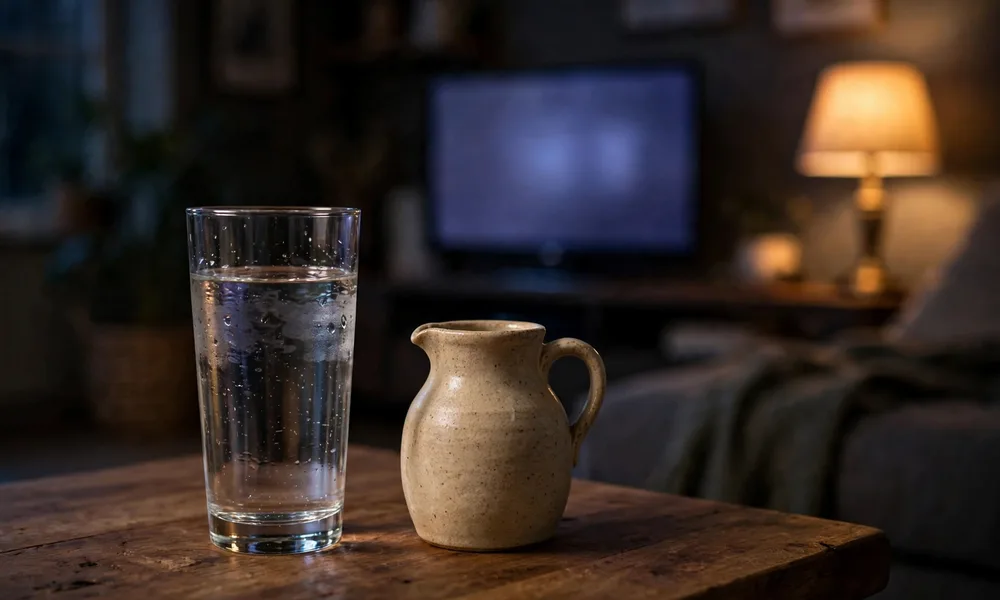
Start with the sofa. Shake out the cushions, fold a blanket over one arm, and clear the coffee table so there is room for a glass and a small jug. Dim the main light and switch on one warm lamp, low enough that the screen stays clear and bright. Draw the curtains if the streetlights glare through the glass.
A tidy corner makes the whole evening feel calm, and the film can begin the moment everyone sits down.
Water Through the Film
Fill a small jug with fresh tap water and set it on the coffee table with a tall glass for each person watching. Sip slowly through the film, a little at a time, rather than finishing the glass in the first ten minutes.
Keep the glass on a steady spot, away from the edge of the table and away from the remote, so a knock in the dark does not spill water over the cushions. When the film ends, finish the water slowly and carry the glass to the kitchen. The evening stays fresh when the water stays close.
A Film Night at a Glance
| One film, sofa | Water close | Lights low |
|---|---|---|
| Pick film early | Jug, tall glass | Lamp, curtains drawn |
| Watch start to end | Sip slowly | Phone face down |
| Credits, screen off | Finish the water | Rest, sleep well |

Film Night and Board Games
A board games evening is the nearest cousin a film night has, and the two share the same sofa and the same hour. Water and board games for a fresh evening covers a night playing table games at home: a board on the table, pieces shifted by hand, cards handed out, and dice thrown, round after round, with a jug of water in the middle.
Board games are hands-on and social: you take turns, you talk, you laugh, you think about the next move. A film night is watching: you sit back, you follow one story, and the screen does the work.
Film Night and Reading
Reading is the quiet rival of a film night, and the two suit different moods of the same hour. Water and reading for a quiet night covers a glass of fresh water and a book, enjoyed slowly in the quiet evening, a few unhurried pages before bed.
A book asks you to build the pictures yourself, page by page, in your own time. A film gives you the pictures ready-made, with light and sound carrying the story forward.
Film Night, Puzzles and Candles
Two more evenings join the family in this same batch and around the same hour. Puzzles, the sibling evening numbered 755, is a hands-on quiet evening: pieces spread on the table, sorted and fitted together one by one, with no screen at all. A film night is watching, while puzzles are hands-on quiet solving.
Candles for a calm evening covers a different pair again: one glass of fresh water and one small lit candle, with the flame kept in its holder on a safe surface. A candle evening is about warm low light and doing very little.
Film Night and the Other Evenings
Beyond the nearest cousins, the evening shelf holds more still. A music bath pairs warm bath water with soft quiet music, and the evening happens in the bathroom, not on the sofa. A cosy evening is the general warm quiet hour indoors, with a blanket and a mug and no screen required.
The seasonal evenings each carry their own weather: rainy evenings with rain ticking on the glass, winter evenings with frost on the window, autumn evenings with gold low light, and summer evenings with cool water for warm skin. None of these is a film night.

After the Credits End
When the credits roll, let the film finish properly. Sit through the last names, let the music play out, and give the story a moment to settle before anyone reaches for the remote. Then switch the screen off, and let the room go quiet for a minute or two.
Carry the glasses to the kitchen, fold the blanket over the sofa arm, and switch the lamp low. When the room is tidy again, sit for one last quiet minute with the lamp low and the glass empty, letting the story fade before the night begins. That short pause is the kindest way to close a film night every single time. A film night ends best when it ends slowly, with the evening closing the way it opened: plain, quiet, and unhurried.
A Gentle Note on Evenings
A film night is a simple pleasure, and it should stay simple. If the evening leaves you wide awake night after night, or if tiredness, headaches, or low mood keep coming back, the answer is not a different film. A doctor is the right person to ask about anything that keeps troubling you, and a screen is never a treatment for a health worry.
The ritual is gentle general information only, and it will not fix a hard week or cure anything at all.
Your Film Night Checklist
- Pick one film in the afternoon, before the evening starts.
- Fill a small jug and set a tall glass of water on the coffee table.
- Dim the lights and put the phone face down.
- Sip the water slowly through the film.
- Switch the screen off when the credits end, and finish the water.
- If a health worry keeps coming back, ask a doctor.

Frequently Asked Questions
What is a film night?
A film night is an evening spent watching one film at home, from the first scene to the last, on the sofa with a glass of fresh water close by.
How is a film night different from a board games evening?
A board games evening is hands-on and social: you take turns, move pieces, and talk through every move. A film night is watching: you sit back together and follow one story on the screen, with no turns to take and no pieces to move.
How is a film night different from reading?
Reading asks you to build the pictures yourself, page by page, in your own time. A film gives you the pictures ready-made, with light and sound carrying the story. Reading is slower and more private, while a film night is easier to share on one sofa.
What should I drink during a film night?
Plain fresh water is the simplest choice: a tall glass and a small jug on the coffee table, sipped slowly through the film. Late coffee can leave the night feeling restless.
How late should a film night run?
Pick a film that ends in good time, and keep the evening short enough that bedtime does not slip later every night.
Can a film night be enjoyed alone?
Yes, and it suits a quiet evening alone very well. The same steps apply: pick the film early and pour the water. The sofa, the blanket, and the story are all yours.
The Bottom Line
A film night gives the evening one good story: one film, one sofa, one glass of water, and a quiet close when the credits end.
A Note for Film Nights
Pick the film early, pour the water, and let the story carry the evening. One screen, one sofa, and a fresh glass are all you need.