Of all the small kindnesses we do for ourselves each day, washing the face is the one we rush. A splash, a scrub, a rinse, all over in twenty seconds, often in water far too hot. The face stays quiet about it, and only shows it later: a touch duller, a touch tighter, by the afternoon.
A good wash asks for very little: clean hands, lukewarm water, gentle fingertips, a rinse that runs clear, and a towel that pats. Take it slowly and it lasts about two minutes, leaving the skin clean and at ease, and giving the morning a quiet pause.
This guide walks through the whole hand wash and sets it beside the habits around it, so each one is easy to tell from the next. Nothing here is medical advice: it is an everyday habit, plain and simple, and skin troubles that do not go away are for a doctor.
Key Takeaways
- Face washing asks for clean hands, lukewarm water, a light touch, and a soft pat dry.
- Lukewarm water cleans without stripping; very hot water can leave skin dry and tight.
- A pea-sized drop of gentle cleanser is plenty, rinsed off in full.
- Pat the skin dry with a clean towel, never rub it, then moisturise while it is still damp.
- The plain hand wash needs nothing at all beyond water and your own hands.
What Water and Face Washing Means
To wash well is to lift the day off the skin while leaving its ease alone. Dust, sweat, oil, and makeup gather as the hours pass, and a kind wash carries them away. A rough wash does the same work with too much strength, and the skin answers with tightness and soreness.
What makes the difference is not what sits in the bottle. It is how the hands move. Soft hands, water at a kind warmth, and a towel that pats instead of rubbing will beat the dearest cleanser used roughly. A face is not a floor to be scrubbed; it is living skin, and it wants a light hand.
Washing well also means washing right through. A wash that leaves cleanser sitting on the skin is half done, and so is one that misses the hairline and the jaw. Take your time, cover every part of the face, and keep rinsing till the skin feels clean.
Why Lukewarm Water Suits It
Lukewarm water suits face washing because it is close to your own skin's warmth. Test the water on your wrist first, and trust that test over the tap. If it feels neither warm nor cool there, it is probably right, and if it stings, it is wrong.
Very hot water can leave skin feeling dry and tight, and ice-cold water is no kinder: it shocks the skin, so it is never part of this habit. Lukewarm water cleans without stripping, and skin keeps its moisture and calm.
Keep the water plain: no oils, no leaves, no scented drops. Clean, lukewarm tap water is the whole recipe.
A Glass of Water First
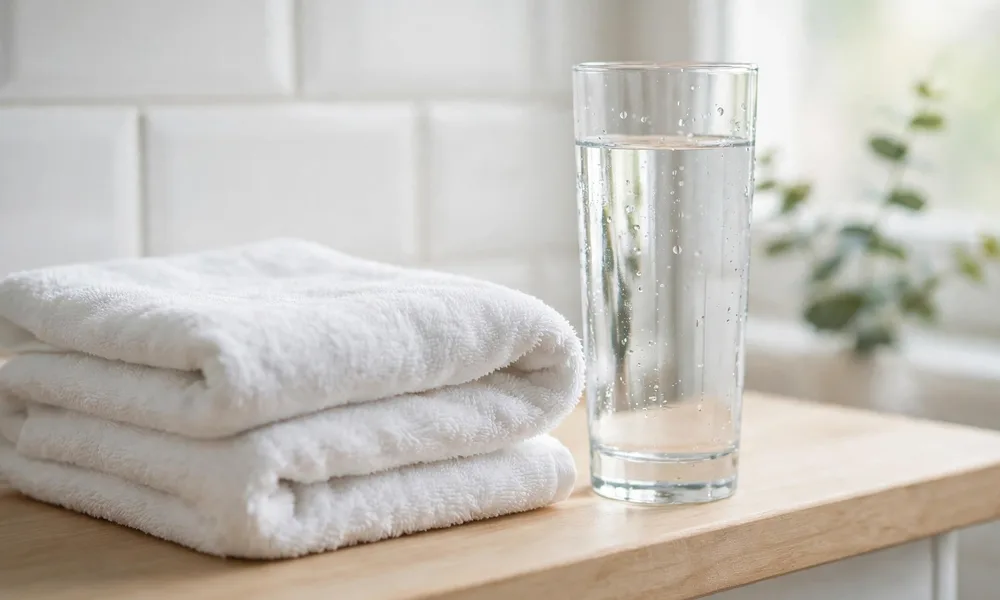
Drink first, while the basin is still empty. Put a glass beside the bed the night before, and sip it slowly when you wake, by the window. One unhurried glass sets a calm tone for the minutes that follow.
That glass has nothing to do with the wash, and its water never meets the wash water. Drink, then walk to the sink with a clear head.
The Wash, Step by Step
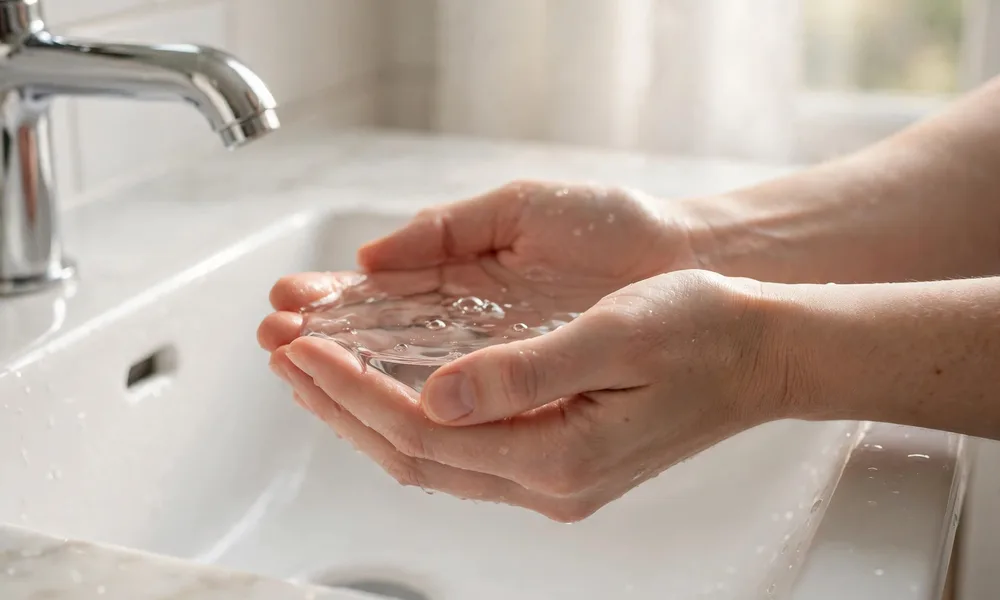
A good wash lasts around two minutes, and follows the same order each time. Start with the hands, soap and lukewarm water: hands pick up the day's dirt, and a face washed with dirty hands only gains that dirt.
Then wet the face, lifting lukewarm water in cupped hands. If you use a cleanser, take a pea-sized drop and spread it in small, slow rounds: forehead, cheeks, nose, chin, and jaw. Keep the touch feather-light, and never press hard or scrub.
Rinse till the skin feels clean, never slippery, and the water comes away clear. Look to the hairline and the jaw, where cleanser loves to linger. Press a clean, soft towel to the face, never rubbing, and moisturise while the skin is still a little damp.
Face Washing at a Glance
| Lukewarm water first | Clean hands first | Pat dry softly |
|---|---|---|
| Fingertips, small circles | Two minutes, slow | Rinse fully clean |
| Plain water only | No scrubbing ever | Moisturise while damp |
Face Washing and Face Steaming
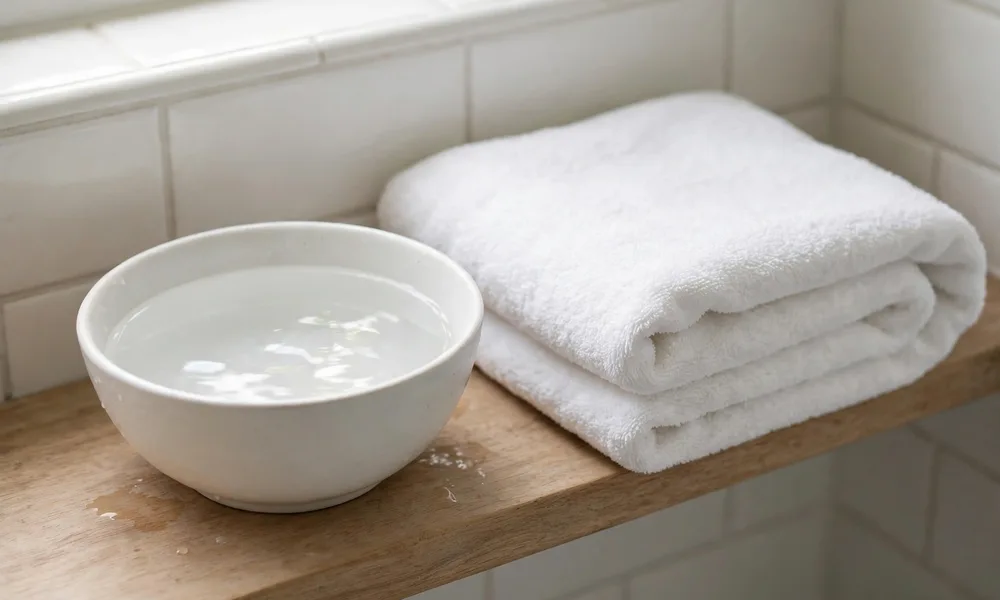
Face steaming for a fresh ritual is a morning habit built on heat rising from a bowl of plain hot water, a towel draped over the head, and the face kept well clear of the steam. Five to ten minutes will do.
Face washing is the plainer cousin of face steaming. Steaming leans on heat rising from a bowl and wants five to ten minutes, while washing leans on lukewarm water in the hands and wants about two. Steaming fits a slow morning with time to sit; washing fits every morning, even a hurried one.
Face Washing and a Warm Flannel
A warm flannel for a fresh ritual is a small square of soft cotton, soaked in lukewarm water and folded into a thick pad, then held to the cheeks, the forehead, and the chin. The warmth is gentle, the cloth is soft, and the whole thing takes about five minutes.
A warm flannel is the cloth cousin of the hand wash. The hand wash works with fingertips and running water in small rounds, while the flannel works with a warm, damp pad resting on the face, lending its warmth for a few slow breaths instead of moving. Washing your face is the simplest of the two, needing nothing but water and your own hands. The flannel brings soft warmth when the face wants comfort more than cleaning.
Face Washing and a Konjac Sponge
A konjac sponge for a fresh ritual is a small round sponge of konjac plant fibre, soft as a cloud once it has soaked, that washes the face with plain water. Soak it till it is soft all the way through before it meets the face, and move it in slow, gentle rounds.
Think of the sponge as a gentle extra beside the hand wash, not a stand-in for it. Washing your face with your hands is the simplest way there is, needing nothing but water. The sponge gives a little more sweep when the face feels dusty or dull, and it wants rinsing, air-drying, and fresh replacing now and then.
Face Washing and the Rest of the Family
The washing family in this journal is a small one, and each member is easy to tell apart. A calm guide to washing your face well walks through the same hand wash in longer form: hands cleaned first, lukewarm water, small circles, and a gentle pat dry. This article is the short, plain version of that habit, kept to the essentials.
Two more members of the family arrive in this very batch. Water and hand washing, topic 889, is the hand wash for the hands themselves, and it belongs before the face wash. Water and a morning cleanse, topic 897, is the wider morning routine that holds the face wash inside it. The warm flannel of topic 851 presses a warm cloth on the face, and the konjac sponge of topic 843 sweeps it gently. A hair towel, topic 849, dries wet hair, and a muslin cloth, topic 927, wipes the face.
Choosing What Touches Your Face
Very little needs to touch your face, and that is the point. Your hands, clean and warm, do most of the work, and a small amount of gentle cleanser is enough. Pick a cleanser that is mild and unscented, and use a pea-sized amount. If your skin is easily bothered, plain lukewarm water alone is a fine wash on many mornings.
The towel matters as much as the wash: soft, clean, kept only for the face, and replaced often. If a small stone sits on the shelf beside the sink, let it stay dry there; no stone belongs in the basin or the glass.
Gentle Care Around Your Skin
A plain wash is one of the kindest things a face can meet, yet a new habit still wants a little care. Patch-test a new cleanser on one small spot first, the inner arm, say, and wait a whole day before using it over the whole face. Stop at once if redness, sting, or itch shows up.
Keep the routine short and the bottles few. Skin that frets easily does best with the same small steps done again and again, and a wash that stings is a wash to drop. If a skin worry hangs on for days, see a doctor instead of reaching for another bottle. A wash is a habit, not a cure, and it cannot mend what wants a doctor's eye.
Your Fresh Habit Checklist
- Wash your hands with soap before they touch your face.
- Wet your face with lukewarm water, never ice-cold.
- Move fingertips in small slow circles, then rinse fully.
- Pat dry with a clean soft towel, never rub.
- Moisturise while the skin is still slightly damp.
- If a skin worry lingers, ask a doctor.

Frequently Asked Questions
How long should washing my face take?
Around two minutes will do: hands made clean, a gentle wetting, small slow rounds with the fingertips, a rinse that runs clear, and a soft pat dry. Longer brings no gain.
Do I need a cleanser every time?
No, a pea-sized drop of gentle cleanser is plenty on the days you use one, and plain lukewarm water on its own makes a fine wash on many mornings.
Is cold water better for my face?
No, ice-cold water startles the skin and turns the wash unpleasant, and it has no place in this habit. Lukewarm water cleans without stripping.
How is face washing different from a warm flannel?
Face washing works with hands, fingertips, and running water in small rounds. A warm flannel works with a warm, damp pad resting on the face, lending its warmth for a few slow breaths.
How is face washing different from face steaming?
Face steaming keeps the face well clear of a bowl of hot water, letting the rising steam warm the skin for five to ten minutes. Face washing leans on lukewarm water in the hands and lasts about two minutes.
What should I do if my skin stays sore or irritated?
Drop the new habit, rinse with plain lukewarm water, and see a doctor if the soreness hangs on for days. Skin worries that last belong with a doctor.
The Bottom Line
Face washing fits every morning: clean hands, lukewarm water, gentle fingertips, a full rinse, and a soft pat dry.
A Note for Fresh Mornings
One glass, one wash, one soft towel — a fresh morning asks for nothing more.