
The morning starts grey and slow, the mirror is fogged from the shower, and the face in it looks tired before the day has even begun. A little warmth is all it wants: not a long routine, not a shelf of bottles, just a few quiet minutes with steam rising from a bowl of plain water.
Face steaming is that small ritual. A wide bowl, hot water, a clean towel tented over the head, and the face held a safe distance above the steam, breathing slowly while the warmth softens the skin.
What follows gathers the plain-water ritual from start to finish: the morning glass, the bowl, the towel tent, the short steam, and the cool rinse that closes it. These are gentle general ideas for everyday skin, not medical advice, and any skin problem that stays with you belongs with a doctor.
Key Takeaways
- Face steaming is a short ritual: a bowl of plain hot water, a towel, and a few minutes of steam.
- Plain water is the whole recipe — no oils, no leaves, and no extra products.
- Face steaming differs from eucalyptus steam, a steam facial, and a steam room.
- Keep the face a safe distance from the steam and keep each session short.
- If a skin worry lingers, speak to a doctor, not a ritual.
What Face Steaming Is
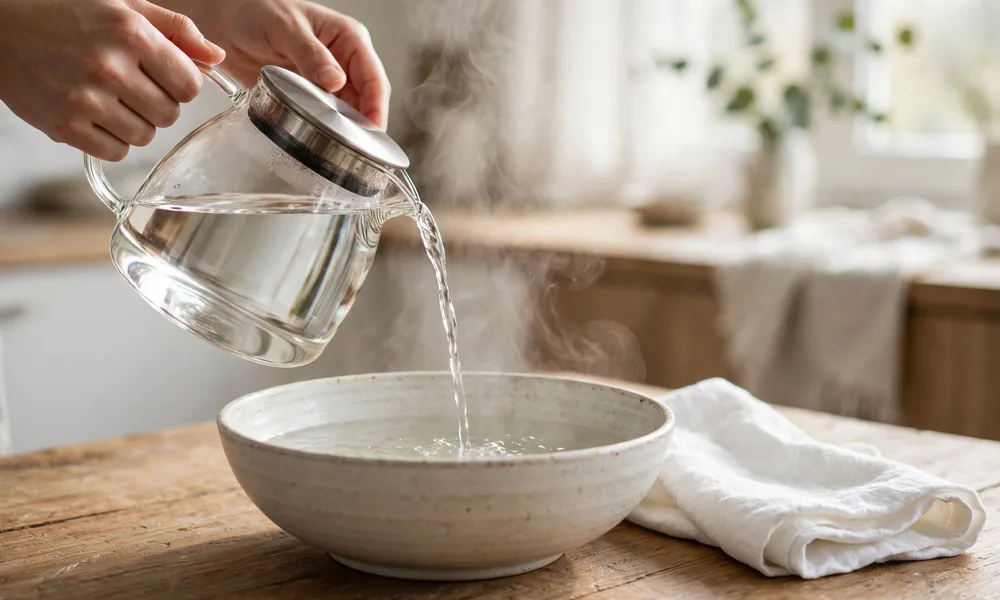
Face steaming means leaning over a bowl of hot water with a towel draped over the head, so the rising steam warms the face for a few minutes. The bowl sits on a steady table, the water is plain and freshly boiled, and the towel forms a loose tent that holds the warmth close without trapping it too tightly.
The face stays well above the water, never touching it, and the steam does its work from a distance. Five to ten minutes is enough, and the ritual ends with a splash of cool water and a soft towel pat.
Why Plain Water Suits a Fresh Ritual
Plain water suits this ritual because there is nothing in it to argue with the skin. No scent, no oil, no leaf, no lotion — just warm water turning to steam, and a face that can meet it without any extra ingredient getting in the way. For skin that is easily bothered, that simplicity is the point.
A plain bowl is also the easiest to repeat, with nothing to buy or measure. The kettle, the bowl, and the towel are already in the house, waiting.
A Glass of Water First
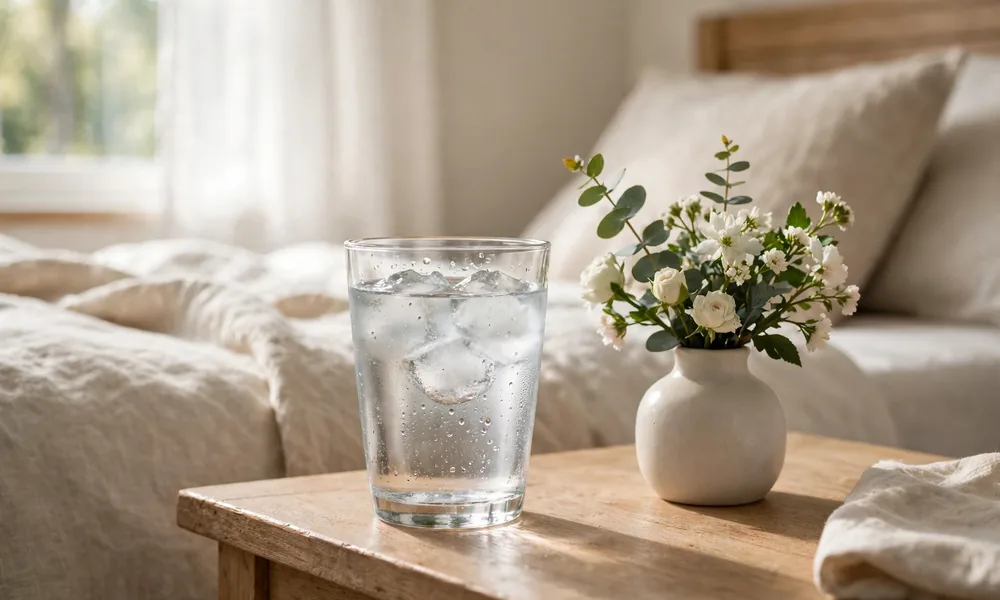
Start with a glass of water before the bowl is even filled. Set a full glass on the bedside table before bed, and sip it slowly on waking, before the kettle, the towel, and the steam. One quiet glass wakes the body gently and sets a calm tone for the minutes ahead.
Open a window for fresh air while you drink.
Setting Up the Bowl
Choose a wide, steady bowl that will not tip, and set it on a flat table where you can sit comfortably. Pour in freshly boiled water, then wait a minute or two until the fiercest heat has eased and the steam rises in a soft, steady column rather than a sharp blast.
Drape a large clean towel over the back of your head, lean forward, and let the towel fall around the bowl to form a loose tent. Keep your face at least a forearm's length above the water, close your eyes, and breathe slowly through your nose.
Face Steaming at a Glance
| Plain hot water | Short steam | Cool rinse |
|---|---|---|
| Wide bowl, clean towel | Five to ten minutes | Splash, pat dry |
| Face well above water | Eyes closed, slow breaths | Glass of cool water |
| No oils, no leaves | Stop if dizzy | Doctor for skin worries |
Face Steaming and Eucalyptus Steam
Eucalyptus steam is the scented cousin of this plain ritual, and the two share a bowl and a towel. Water and eucalyptus steam gathers a morning ritual built around fresh eucalyptus leaves and a strong clean scent rising under the towel.
Face steaming with plain water uses none of that. There are no leaves in the bowl, no scented oil, and nothing added to the water at all, so the steam is only water and warmth. A scented bowl suits a morning that wants freshness in the air; a plain bowl suits skin that wants nothing extra near it.
Face Steaming and a Steam Facial at Home
A steam facial at home is the fuller routine that face steaming can lead into, and the two are easy to mix up. A steam facial at home gathers a fifteen-minute facial: hot water in a bowl, a towel tent, and then a cool rinse and a little moisturiser to finish.
Face steaming on its own is the shorter, simpler half of that routine. It stops at the steam and the cool rinse, with no moisturiser step, no facial sequence, and no products at all. A full facial is a small beauty session; face steaming is a brief fresh ritual, done and finished in a few quiet minutes.
Face Steaming and Steam Rooms
A steam room is a whole warm room, and face steaming is a bowl on a table, so the two could hardly be more different in scale. Water and steam rooms gathers a guide to tiled rooms filled with soft clouds of steam, where the whole body warms slowly and cool water waits afterwards.
A hammam is the same idea in a traditional form, a warm tiled bath with marble benches and long, slow heat. Face steaming needs no building and no journey: it is one bowl, one towel, and one face, at home, in ten minutes. A steam room is an evening out; face steaming is a morning at home.
A Short Evening Steam
An evening steam works just as well as a morning one, and it asks for the same short, gentle shape. After the day's dust has been washed away, fill the bowl, tent the towel, and sit with the steam for five minutes while the house quiets down around you.
Keep the evening session even shorter than the morning one, and finish with cool water and rest.

Keeping the Ritual Simple
The best face steaming is the simple kind. Steam once or twice a week, never every day, and keep each session to five or ten minutes, with the face well above the water. Use a fresh towel each time, wash the bowl after use, and let the water cool before you tip it away.
Watch the clock kindly, and stop early if the warmth feels too strong. A ritual that stays short and plain is one you will come back to; a ritual that drags on and overheats is one you will quietly drop.
Gentle Care Around Hot Water
Hot water asks for respect, and a little care belongs in every steam. Keep the bowl steady on a flat table, never on your lap, and keep the water well below the rim so it cannot splash. Test the heat with a hand held above the bowl before you lean in, and lift your head the moment the steam feels sharp.
Remember too that steam is comfort, not medicine. It will not fix a skin worry, ease a lasting problem, or take the place of a doctor's advice, and it should never be called a cure. If your skin stays sore, red, or troubled, the kindest ritual is a cool rinse, a rest, and a call to your doctor. Patch-test any new habit on a small area first, and stop at once if anything stings or feels wrong.
Your Fresh Ritual Checklist
- Drink a full glass of water before you fill the bowl.
- Use plain hot water in a wide, steady bowl.
- Tent a clean towel loosely and keep your face well above the steam.
- Steam for five to ten minutes, once or twice a week.
- Finish with a cool rinse and a soft towel pat.
- If a skin worry stays with you, ask a doctor; steam cannot answer it.
Frequently Asked Questions
What is face steaming?
Face steaming is leaning over a bowl of plain hot water with a towel tented over the head, so the rising steam warms the face for a few minutes. The face stays well above the water, the session lasts five to ten minutes, and it ends with a cool rinse.
How is face steaming different from eucalyptus steam?
Eucalyptus steam adds fresh leaves and a strong clean scent to the bowl, while face steaming uses plain water only, with nothing added at all. A scented bowl suits a morning that wants freshness in the air; a plain bowl suits skin that wants nothing extra near it.
How is face steaming different from a steam facial?
A steam facial is a fuller at-home routine of about fifteen minutes, with a cool rinse and a little moisturiser to finish, while face steaming is the shorter plain half of it: steam and a cool rinse, with no products and no facial sequence at all.
How far should my face be from the steam?
Keep your face at least a forearm's length above the water, with your eyes closed and your breathing slow. If the heat feels sharp at any point, lift your head at once and let the steam escape before you lean in again.
How often should I steam my face?
Once or twice a week is plenty, with each session lasting five to ten minutes. Steaming every day can leave the skin feeling dry and bothered, so a short, plain ritual done twice a week is kinder than a long one done daily.
When should I see a doctor about my skin?
See a doctor when a skin problem stays, spreads, or keeps coming back, or when anything stings, burns, or worries you after steaming. Steam is a gentle general ritual, not a treatment, and a lasting problem belongs with a doctor.
The Bottom Line
Water and face steaming make a fresh pair: a morning glass, a bowl of plain hot water, a towel tent for a few short minutes, and a cool rinse to close it.
A Note for Fresh Skin
Let the bowl stay plain and the steam stay gentle. One bowl of water, one clean towel, and a few quiet minutes are all a fresh ritual needs.


