A loaf that comes warm from the oven has a short, honest life. Leave it bare on the counter and the crust turns hard by evening. Seal it in plastic and the opposite happens: the crust goes soft and damp. A bread box sits between those two mistakes, holding a little of the loaf's own moisture in the air around it.
The box asks for almost nothing: a cool loaf, a clean cloth, a dry shelf away from the kettle, and a lid that closes properly. Give it those four things and a morning loaf can still be worth slicing two or three days later. Water belongs in the same picture: a tall glass drunk slowly, standing well away from the box.
This guide walks through the box itself and the five habits that keep bread fresh inside it: cooling the loaf, wrapping it in cloth, slicing only what you need, keeping the box clean and dry, and choosing its spot. It also looks at wood, metal and enamel boxes, and at the other water rituals in this batch.
Key Takeaways
- A bread box keeps a loaf fresh by holding some of its own moisture in.
- Let the loaf cool fully before it goes in, or trapped steam will soften the crust.
- Wrap the loaf in a clean cloth, and slice only what you need for each meal.
- Wipe the box dry often, and keep it away from steam, sinks and strong sun.
- Bread and water are simple pleasures, not treatments, and they heal nothing.
What a Bread Box Is
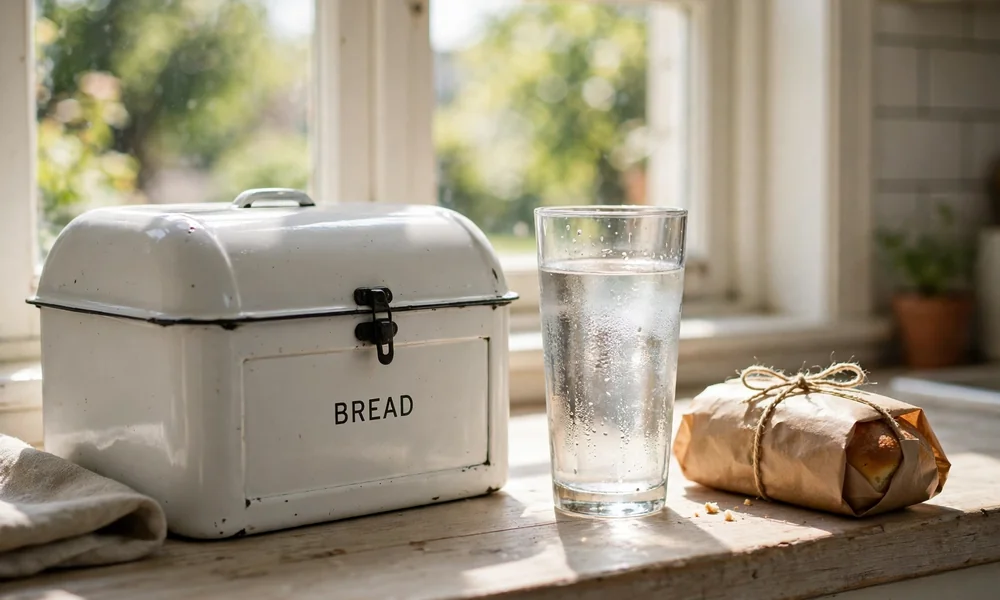
A bread box is a lidded box for holding bread at room temperature. Most are wood, metal or enamel, and all work the same way: the lid slows the air past the loaf, so the crumb dries more slowly, while small gaps stop the air inside from turning damp.
A good box fits one or two loaves with room to spare, and the lid closes without a visible gap. It stands on the counter, not in the fridge, because cold air dries bread faster.
The Five Ways, in Short
| Cool loaf first | Cloth wrap inside | Lid shut tight |
|---|---|---|
| Slice as needed | Wipe box dry | Shady cool spot |
| One loaf only | Clean hands first | Glass kept apart |
| Morning water first | Fresh bread daily | Tidy kitchen shelf |
Way One: Let the Loaf Cool First
A loaf straight from the oven is still breathing out steam, and steam trapped under a lid ruins a crust fast. If the loaf goes in warm, the steam settles on the crust, the crust turns soft and leathery, and the lid beads with damp.
Set the loaf on a rack or board until it feels cool all the way through. Only then does it belong in the box.
Way Two: Wrap the Loaf in Cloth
A clean cotton cloth wrapped loosely around the loaf does quiet work inside the box, taking up a little of the moisture the bread gives off, so the crust does not soften, and keeping crumbs off the bottom.
Use a plain cotton or linen cloth, washed without strong scent, and change it every few days or whenever it feels damp. A muslin cloth suits the job well: thin, breathable, quick to dry. Water and a muslin cloth follows that small square of cotton through its own gentle morning wash.

Way Three: Cut Only What You Eat
Every slice opens a fresh face of crumb to the air, and that face dries faster than the crust ever will. Slice only what you need for the meal in front of you, and put the rest back with the cut end pressed down.
A sharp knife matters: a blunt blade tears the crumb and leaves a ragged face that dries unevenly. Wash your hands before you handle the loaf. A loaf sliced a little at a time can last three days in the box.
Way Four: Keep the Box Clean and Dry
A bread box that is never cleaned turns against the bread it holds. Crumbs gather in the corners, damp settles under the cloth, and sooner or later the box smells stale even when the bread is fresh. Shake the crumbs out every few days, wipe the inside dry, and leave the lid open for an hour.
If the box ever smells damp, wipe it with a cloth wrung out in plain warm water, then dry it at once. Never put a wet cloth or a damp loaf back inside. A dry box is a fresh box.
Way Five: Mind Where the Box Stands
Where the box stands matters as much as what goes inside it. A box beside the kettle sits in steam all day, and steam is the enemy of a crisp crust. A box on a sunny sill bakes in the afternoon heat, and heat hurries bread stale.
Give the box a cool, shaded stretch of counter, away from the sink, the kettle and the cooker. A sideboard or dry shelf works just as well. Keep the glass on the far side of the counter.
Wood, Metal or Enamel: Choosing a Box
Wood is the old choice, and it still earns its place. A wooden box breathes a little through its grain. Wipe it dry after cleaning and never soak it, because wood swells and the lid sticks.
Metal boxes are light, easy to wipe, and they shut tight, which suits a damp kitchen. Look for one with small air holes or a loose-fitting lid, because a box that seals completely can trap damp. Enamel boxes are the easiest to clean, with a smooth inside that wipes clean in seconds, though a chipped rim can rust if it stays wet. Any of the three keeps bread well, so pick the one that fits your counter.
Bread Box and the Bakery Visit
Water and a bakery visit follows a morning walk to one small shop for bread still warm from the oven, with water drunk before the walk. The visit ends where this guide begins: hands washed, the loaf unwrapped, and the bread put away in a bread box before anyone sits down.
The two guides meet at the kitchen door. The bakery visit is the walk that brings the bread home, and the bread box is the place that keeps it worth eating. Buy only what the box can hold, and the walk and the box stay in balance.

Bread Box and the Cast Iron Pan
Water and a cast iron pan follows a heavy pan through slow cooking at the stove, where water, a few vegetables and time on a low flame turn into a clear broth. The pan lives by the heat, wiped dry while still warm and hung on its hook when the meal is done.
A bread box is the pan's opposite in the same kitchen. The pan wants heat and oil and a flame beneath it; the box wants cool shade and dry air. Both ask to be wiped dry, but the pan cooks the food while the box simply keeps it. Bread from the box and broth from the pan meet only at the table.
The Other Water Rituals in This Batch
Four more water habits sit beside the bread box in this batch. A cake stand belongs to the table at teatime, where a sliced loaf or a cake is shown off and eaten the same day, while a bread box belongs to the days between, keeping the loaf fresh until it is needed. The stand displays and the box preserves.
Five stone guides share this batch with it as well: stibnite behind glass, cymophane with its moving eye, trilobite the fossil, hydrozincite the white crust, and sard the deep red stone, each one kept dry beside its own glass of water, far from damp. Lemon slice, a trowel and a wheelbarrow work outside, while the bread box stays indoors holding the loaf.
A Fresh Morning with the Bread Box
Set the scene before the morning gets going. Fill a tall glass and set it at the far end of the counter, away from the box. Open the bread box, lift the cloth, and slice what you need for breakfast. Close the lid, fold the cloth back over the loaf, and wash your hands before you sit down.
Drink the water slowly while the morning light comes through the window, and eat the bread while the crust is still crisp. When the glass is empty, wipe the board and leave the box shut until the next meal. This guide is general information only. If a new bread ever disagrees with your skin, stop eating it and try a tiny amount another day, or leave it alone; and if a health question stays with you, see a doctor, who can weigh the whole picture in a way no loaf can.
Your Bread Box Checklist
- Cool the loaf fully before it goes into the box.
- Wrap the loaf in a clean cloth and change it often.
- Slice only what you need, and press the cut end down.
- Shake the crumbs out and wipe the box dry.
- Keep the box in cool shade, away from steam, sinks and sun.
- If a health worry lingers, talk to a doctor.
Frequently Asked Questions
How long does bread stay fresh in a bread box?
A morning loaf usually stays worth slicing for two or three days in a clean, dry box, as long as it goes in cool and whole.
Should bread go in the box warm or cool?
Cool, always. A warm loaf gives off steam under the lid, and the steam softens the crust and leaves the inside of the box damp.
Is a wooden bread box better than a metal one?
Both keep bread well. Wood breathes a little, metal wipes clean in seconds, and enamel is the easiest to wash, so pick the one that closes properly.
Can I store bread in the fridge instead?
The fridge dries bread out faster than a bread box does, so the box is the better home for a loaf you plan to eat within a few days.
How often should I clean the bread box?
Shake the crumbs out every few days, wipe the inside dry, and leave the lid open for an hour so the box airs fully.
Does a bread box keep bread safe from mould?
It helps, because a dry box and a cool loaf slow mould down, but no box makes bread last forever, so eat the loaf within a few days.

The Bottom Line
A bread box is a small, quiet habit: a cool loaf, a clean cloth, a dry box in cool shade, and a glass of water standing apart.
A Note for Fresh Mornings
Cool bread, a dry box, and a full glass — that is all a fresh morning needs.