Combination skin can feel like two skins at once. By midday the forehead and nose shine, while the cheeks feel comfortable, or even a little tight. One cream feels too rich for the shiny parts and too light for the dry parts, and the shelf fills up with half-used jars that never quite fit.
Water is the simplest place to start. Plain water, used gently, suits both zones at once, and a short routine built around it keeps the whole face comfortable without a long list of products. This guide is general information only, never medical advice.
This guide explains what combination skin is, how water helps it, how to wash it morning and evening, how to care for two zones differently, and when to ask a doctor or dermatologist. It makes no medical claims and promises no cures.
Key Takeaways
- Combination skin means an oily T-zone, forehead, nose and chin, with drier cheeks.
- Lukewarm water is the gentlest daily wash for both zones at once.
- Wash briefly, pat dry gently, and care for skin while it is still slightly damp.
- Treat the two zones differently: light care on the T-zone, richer care on the cheeks.
- Patch test every new product, and see a doctor for real skin problems.
What Combination Skin Means
Combination skin means the face has two characters at once. The T-zone, the forehead, the nose, and the chin, makes more oil, so it shines by midday and can feel slick to the touch. The cheeks make less oil, so they stay comfortable, or feel a little tight and dry, especially in cold wind or heated rooms.
You can check it simply: wash with a gentle cleanser, pat dry, and use nothing for an hour. Then notice how it feels. Shine on the forehead and nose while the cheeks stay comfortable means combination skin.
Why Water Matters Most
Water matters most because it is the one thing both zones need. Skin loses water all day, faster in dry air, heated rooms, and cold wind, and a gentle wash replaces what the day takes away. Lukewarm water rinses away sweat, dust, and the night's oils without stripping the skin bare.
A harsh wash does the opposite. Hot water and strong cleansers strip the natural oils quickly, and after the warmth fades the cheeks can feel tight and dry, while the T-zone may feel oilier than before.
Lukewarm Water First
Lukewarm water feels neither hot nor cold on the inside of your wrist, close to body temperature and comfortable. It rinses away sweat, dust, and the night's oils without shocking the skin or stripping it bare. Most skin feels calm after a lukewarm wash: clean, soft, and neither tight nor flushed.
If you remember only one thing, remember this: when in doubt, choose lukewarm. The same calm habit sits at the heart of a water temperature skin guide, where hot, warm, and cold water are compared, and lukewarm wins most days.
A Simple Morning Wash
A simple morning wash takes about two minutes, and it needs very little. Wet your face with lukewarm water, using your hands to splash it gently, not a rough cloth. If you use a cleanser, choose a mild one, use a small amount, and spread it with soft fingertips, giving the T-zone a little more attention and the cheeks a lighter touch.
Rinse with lukewarm water until the skin feels clean, then pat dry gently with a soft towel. Do not rub, because rubbing can irritate the cheeks and leave the whole face feeling rough. While the skin is still slightly damp, apply your light care, and the day is ready to begin.

A Simple Evening Wash
The evening wash is the same as the morning wash, with one difference: the day has left more on the skin. Sunscreen, dust, and the day's oil need a careful rinse, but the same gentle rules apply. Wet the face with lukewarm water, cleanse softly with mild hands, and rinse well, taking a little extra time over the T-zone.
After heavy makeup, a gentle first step helps before the wash, and a plain micellar water suits the job.
Micellar Water for Light Days
Some days call for a lighter cleanse, and micellar water suits those days well. It is a gentle cleansing liquid of purified water with tiny clusters of cleansing molecules, called micelles, that lift away dirt, oil, and light makeup onto a soft cotton pad. You do not scrub, and you do not rinse.
Pour a little onto a fresh, soft cotton pad, hold it briefly on the skin, then sweep gently, once, and check the pad. A fresh pad tells you when the face is clean. The full method is explained in a micellar water simple guide, where the pad, the bottle, and the steps are covered in detail.
Moisturising Two Zones Differently
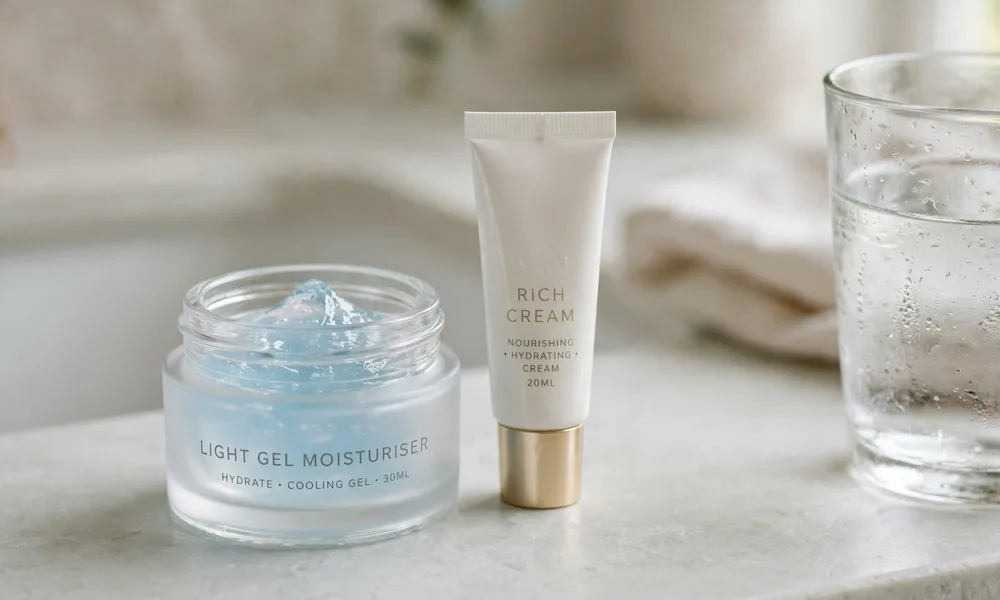
Combination skin asks for two kinds of care, and that is the part most routines miss. The T-zone likes light care: a gel or a very light lotion that sinks in fast and leaves no shine. The cheeks like richer care: a lotion or a light cream that helps the skin hold on to water through the day.
Start with a light lotion over the whole face, then add a little more cream on the cheeks only, where the skin feels drier. Apply while the skin is still slightly damp, because damp skin holds the moisture better. Choosing the right texture is covered in how to choose a moisturiser that suits your skin, where gels, lotions, and creams are matched to each skin type.

Patch Testing First
Every new product deserves a patch test, however gentle it claims to be. Put a small amount on the inside of your wrist or behind your ear, once a day, for two or three days, and watch for redness, itching, or stinging. If the skin stays calm, the product is probably fine to use on the face.
If the skin reacts, stop using it at once, wash the area with lukewarm water, and do not try it again. A short ingredient list and a patch test matter more than price or packaging, and a product that suits a friend may not suit you.
Combination Skin at a Glance
| Oily T-zone | Drier cheeks | Gentle water care |
|---|---|---|
| Forehead nose chin | Comfortable or tight | Lukewarm water only |
| Shines by midday | Richer cream here | Wash briefly daily |
| Light gel care | Extra lotion layer | Pat dry gently |
| Notice each week | Patch test first | Doctor for problems |
Seasons and Simple Changes
Combination skin changes with the seasons, and the routine should change with it. In warm, humid months, the T-zone may shine more, so a lighter gel and a shorter routine feel best. In cold, dry months, the cheeks may feel tighter, so a richer cream on the cheeks and a shorter, lukewarm wash help the skin stay comfortable.
Keep the changes small: one lighter product for summer, one richer product for winter, and the same gentle wash all year.
What It Will Not Do
Be honest about what gentle water care will not do. It will not cure spots, dryness, or any skin problem, and it will not erase marks, clear breakouts, or change your skin type. It is a simple, gentle routine, and a simple routine is all it is, and no honest seller should claim otherwise.
The quiet is the part that helps, in an ordinary way: a gentle wash can keep ordinary skin feeling comfortable, day after day. If your skin is painful, blistered, badly cracked, or keeps getting worse, see a doctor or dermatologist, and do not try to treat it yourself.
Keeping It Simple
Keep the routine short, because a short routine is one you will actually do. A gentle wash, light care on the T-zone, richer care on the cheeks, and a patch test for anything new: that is the whole guide. Two or three products, used every day, beat ten products used once and forgotten.
Write down what you use, and when, in a small notebook, so you can see what suits your skin over a few weeks.
Your Combination Skin Checklist
- Wash morning and evening with lukewarm water, briefly, and pat dry gently.
- Use a mild cleanser, light on the cheeks, with a little more attention to the T-zone.
- Apply a light gel or lotion on the T-zone and a richer cream on the cheeks.
- Care for skin while it is still slightly damp, so it holds water better.
- Patch test every new product for two or three days before using it on your face.
- See a doctor or dermatologist for real skin problems, and never try to cure them yourself.

Frequently Asked Questions
What is combination skin?
Combination skin means an oily T-zone, the forehead, nose, and chin, with drier cheeks. The T-zone shines by midday, while the cheeks stay comfortable or feel a little tight, and each zone needs slightly different care.
What water temperature should I use?
Use lukewarm water, close to body temperature, for washing your face. Very hot water strips natural oils and can leave skin tight and dry, while ice-cold water is a shock, not a daily wash.
Can I use the same moisturiser everywhere?
You can, if a light lotion suits both zones, but most combination skin does better with two kinds of care: a light gel or lotion on the T-zone, and a richer cream on the cheeks only.
Is micellar water enough for washing?
Micellar water suits light days, mornings, and travel, when the face only needs a light refresh. After heavy makeup or a dusty day, a gentle water wash suits the skin better.
How do I patch test a new product?
Put a small amount on the inside of your wrist or behind your ear, once a day, for two or three days. If the skin stays calm, it is probably fine to use on the face; if it reacts, stop using it at once.
When should I see a doctor?
See a doctor or dermatologist if your skin is painful, blistered, badly cracked, swollen, or keeps getting worse, or if a problem does not improve in a few weeks. This guide is general information only, never medical advice.
The Bottom Line
Water and combination skin means lukewarm water, a gentle wash, and two kinds of care for two zones. Keep it simple, keep it gentle, and let the skin answer over a few weeks.
A Note for Combination Skin
Keep it lukewarm, keep it light on the T-zone, keep it richer on the cheeks. The calm skin can still belong to you.