
Some evenings ask for less, not more: the day has been long, the light is going soft, and ten quiet minutes with something gentle is all you want.
A chamomile rinse is that kind of quiet: pale golden water, steeped with small chamomile flowers, poured slowly over the skin or scalp and patted dry. Its soft, apple-like scent has calmed evenings for centuries.
This guide shows how to brew a chamomile rinse, use it well, and keep the habit fresh and safe. It is a calm ritual, never a treatment.
Key Takeaways
- A chamomile rinse is pale golden water steeped with chamomile flowers alone, poured over skin or scalp.
- It is a rinse only — never a drink, never a cloth on the eyes, and never a treatment.
- Chamomile rinses differ from the chamomile compress, herbal, lemon, coffee, aloe, mint, green tea and rice water rinses.
- Brew the rinse fresh for every use, and tip leftovers down the sink the same day.
- Patch-test first, skip it with a daisy-family allergy, and see a doctor for skin problems.
What a Chamomile Rinse Is
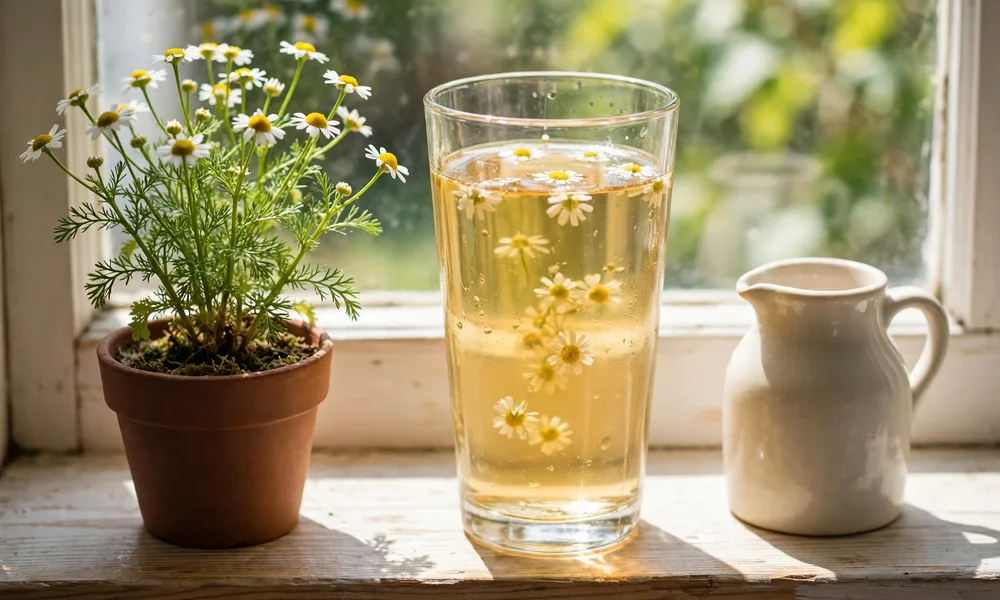
A chamomile rinse is simple: dried chamomile flowers steeped in hot water, then strained and cooled, so the water turns pale gold and carries a soft, apple-like scent.
The rinse is tipped over the skin, never sipped and never dabbed on. Let the golden water flow over your face, neck, arms or scalp, then blot dry with a clean towel.
A chamomile rinse is a small comfort, never a cure. It cannot clear your skin, mend a scalp problem, or stand in for sleep, shade or a doctor.
Choosing Chamomile
Choosing chamomile for a rinse is simple, and dried flowers are best. Look for whole dried flower heads in a sealed bag from a shop you trust, smelling fresh and sweet, like apples.
A plain, unflavoured chamomile tea bag works the same way, as long as the bag holds only chamomile and nothing else. Check the label before you buy, and skip any bag with added flavours, mint or other herbs.
Fresh chamomile flowers from a garden can work too, if you are sure they are chamomile and have not been sprayed. Rinse them gently first. When in doubt, dried flowers from a trusted shop are safer.
Making a Chamomile Rinse
Making a chamomile rinse takes about fifteen minutes, most of it waiting for the water to cool. Start with one teaspoon of dried flowers, or one plain tea bag, in a clean glass jug or bowl.
Pour in two cups of freshly boiled water, cover the jug, and leave it for five minutes, no longer. Stronger is not better here. Then strain the water through a fine sieve, and again through a clean cotton cloth, so no tiny flower pieces remain.
Leave the rinse until it is fully cool — a drop on the inside of your wrist must feel cool, never warm — then use it at once and throw away anything left over.

A Calm Day with Chamomile Rinses
A calm day with chamomile rinses begins in the evening, when the day starts to slow down. Make the rinse, keep the jug cool, and use it when the house grows quiet. Pour it slowly over your face and neck, and pat dry.
After the rinse, sit quietly for a few minutes, and let the day close without hurry.
How to Use the Rinse
Gentleness is the whole method. Lean over the sink, tip the bowl slowly, and let the golden water run over your face and down your neck and arms. For the scalp, wash first, pour the rinse through the hair, and finish with one more plain-water rinse.
Blot the skin dry with a clean, soft towel instead of rubbing, and keep the habit to once a day at most, in the evening.
Keep the rinse off broken skin, and keep it out of your eyes. If it stings, wash it away with plain water and ask a doctor before trying it again.

Chamomile Rinses at a Glance
| Pale gold water | Poured rinse | Fresh daily |
|---|---|---|
| Flowers, hot water | Face, neck, scalp | Make, use, throw away |
| Steep five minutes | Pour slowly, pat dry | Cool fully, never warm |
| Soft apple scent | Rinse only, never drink | Patch-test first |
Chamomile Rinses and the Chamomile Compress
Chamomile rinses and the chamomile compress share one flower, yet they are different rituals. A chamomile water compress is a chilled, wet cloth resting on shut eyelids for a few minutes, to rest eyes worn out by a long day.
A chamomile rinse is poured, not laid on with a cloth. It uses a bowl of cooled chamomile water, poured slowly over the face, neck or scalp, made fresh and thrown away. Chamomile compresses for tired eyes keeps a cool cloth for tired eyelids; this guide keeps a poured rinse for calm skin and scalp.
Chamomile Rinses and Herbal Rinses
Chamomile rinses and herbal rinses share a kettle and a jug, yet they are made in different ways. A herbal rinse mixes several gentle herbs in one pot — rosemary for hair, mint for freshness, chamomile for calm skin — steeped together in hot water and poured over hair or skin.
A chamomile rinse uses one flower only: chamomile, alone, steeped briefly and strained twice. The herbal rinse is a blend with a choice of herbs; the chamomile rinse is a single flower, kept simple. Herbal rinses for a fresh ritual keeps mixed herbs for hair and skin; this guide keeps chamomile alone for calm evenings.

Chamomile Rinses and Lemon, Coffee and Aloe Rinses
Chamomile rinses have three more rinse sisters, and each one is different. A lemon rinse is cool water with a thin slice of lemon, bright and sharp, with a citrus scent. Lemon is strong and acidic, so a lemon rinse needs care, plenty of plain water, and no sun afterwards.
A coffee rinse is cooled brewed coffee poured over the hair only, dark and rich, with a warm scent. An aloe rinse is cool water with a little fresh aloe gel stirred in, splashed over the skin and rinsed off. A chamomile rinse is none of these: not citrus, not coffee, not aloe, but pale golden flower water for calm skin and scalp. Aloe rinses for gentle skin keeps a gel-water rinse for skin; this guide keeps a flower-water rinse for calm evenings.
Chamomile Rinses and Mint, Green Tea and Rice Water Rinses
Chamomile rinses sit in a wider family of poured rinses, and the rest of the family is easy to tell apart. A mint rinse is fresh mint leaves left in cool water, tipped over the skin or scalp on warm days, with a green, leafy scent that feels cool rather than calm.
A green tea rinse is tea leaves brewed in water, left to cool, and tipped over the hair only, pale green with a faint grassy smell. A rice water rinse is the milky water saved from washed rice, used on skin and hair, cloudy with a little starch. A chamomile rinse is none of these: not mint, not tea, not rice water, but pale golden flower water for calm evenings.
Keeping the Rinse Fresh
Freshness is the whole secret of a good rinse, because a made rinse does not keep. Brew a new jug for every use, and tip anything unused down the sink the same evening.
Scrub the jug, bowl and sieve in hot soapy water after each use, then dry them fully. Store the dried flowers in a sealed jar somewhere cool and dark. A rinse that smells sour or odd goes straight down the sink.
When to Skip the Rinse
A chamomile rinse suits most people, yet some days are not rinse days. Leave it out when your skin is broken, sunburned or itchy, or when chamomile has stung you before.
Chamomile belongs to the daisy family, so skip it entirely if you are allergic to ragweed, daisies, chrysanthemums or marigolds. Test it on your wrist first: dab a little cooled rinse there, wait a full day, and use it only when the skin looks and feels untroubled. A rinse that leaves the wrist red, itchy or tight should be washed off at once and never used again. Skin or scalp trouble that is cracked, bleeding, very painful, or still there after a few weeks belongs with a doctor.
Your Calm Ritual Checklist
- Pick dried chamomile flowers, steep them briefly, and strain the water twice.
- Cool the rinse fully, use it straight away, and tip leftovers down the sink.
- Tip the rinse gently over face, neck or scalp, then blot dry with a soft towel.
- For rinsing only — never drink it, and keep it out of your eyes.
- Patch-test on your wrist first, and skip it with a daisy-family allergy.
- Skin or scalp problems belong with a doctor; the rinse cures nothing.
Frequently Asked Questions
What is a chamomile rinse?
A chamomile rinse is dried chamomile flowers steeped for five minutes, strained twice, cooled, and tipped over the face, neck or scalp. It is never drunk.
Can I drink a chamomile rinse?
No. A chamomile rinse is for rinsing only, never for drinking. If you want a chamomile drink, brew a fresh cup of chamomile tea separately.
Is a chamomile rinse the same as a chamomile compress?
No. A compress is a damp cloth resting on shut eyelids to rest tired eyes. A rinse is a bowl of chamomile water tipped slowly over the skin or scalp, and it stays well away from the eyes.
How often can I use a chamomile rinse?
Once a day at most, in the evening, and only while your skin stays settled. If it turns itchy, tight or sore, stop straight away.
How do I keep a chamomile rinse fresh?
Brew it fresh for every use, tip leftovers down the sink the same day, and scrub the jug, bowl and sieve in hot soapy water afterwards.
Can a chamomile rinse cure a skin or scalp problem?
No. A chamomile rinse cannot cure any skin or scalp problem. It is a gentle calm refresh and nothing else. Skin or scalp problems belong with a doctor.
The Bottom Line
Water and chamomile rinses bring a simple calm ritual to quiet evenings: dried chamomile flowers in hot water, strained, cooled, and poured slowly over the skin. Make it fresh, rinse only, and never drink it.
A Note for Calm Days
Keep it fresh, keep it cool, keep it calm. A small bowl of golden flower water can carry a quiet evening.


