Some days the body asks for movement, and the floor does not feel like the right place for it. The knees are stiff, the back is tired, or the morning simply feels too unsteady for getting down onto a mat and back up again.
Water and chair yoga is a gentle flow done sitting down. You sit on an ordinary chair, tall and steady, with a glass of fresh water on a small table beside you, and you move slowly through a few seated stretches, breathing calmly as you go.
This guide follows one simple seated flow from start to finish: how to set up your chair, how to drink your water, which moves to try, and how to rest afterwards. Take it as plain everyday guidance, not medical advice, and ask a doctor if anything about your own health worries you.
Key Takeaways
- Water and chair yoga means fresh water in small sips, then gentle seated moves.
- Every move is done sitting on an ordinary chair, holding it for support.
- Move slowly, hold each stretch briefly, and never push past comfort.
- A simple flow needs very little: water, a chair, daylight, and ten minutes.
- Stop if anything hurts, and ask a doctor about pain or a problem that lingers.
What Water and Chair Yoga Means
Water and chair yoga joins two easy habits, one after the other, and you stay seated for both of them. You begin by drinking a glass of fresh water at an unhurried pace, taking it a mouthful at a time. After that comes a short series of soft yoga movements on the chair, each one held for a little while as you breathe in a calm, even way.
The chair comes next because it holds you steady: your feet stay on the floor, your hands can rest on the armrests, and you never have to get down onto the floor or back up again. All told, the two habits fill around ten minutes, and beyond a chair, a glass and a folded blanket they ask for nothing else.
This flow is not yoga nidra, and it is not restorative yoga either. Chair yoga is its own thing: short, seated, and gently moving, with the chair doing the holding while you breathe and stretch.
Why a Chair Suits a Gentle Flow
A chair suits a gentle flow because it takes the worry out of moving. On a mat, part of your attention goes to balance and to getting up and down; on a chair, that attention is free, and you can give it to the breath and the stretch instead. The seat holds your weight, the back holds your spine, and your feet rest flat on the floor.
A chair also fits an ordinary room. It needs no mat rolled out, no special clothes, and no clearing of the floor.
Setting Up Your Chair and Glass
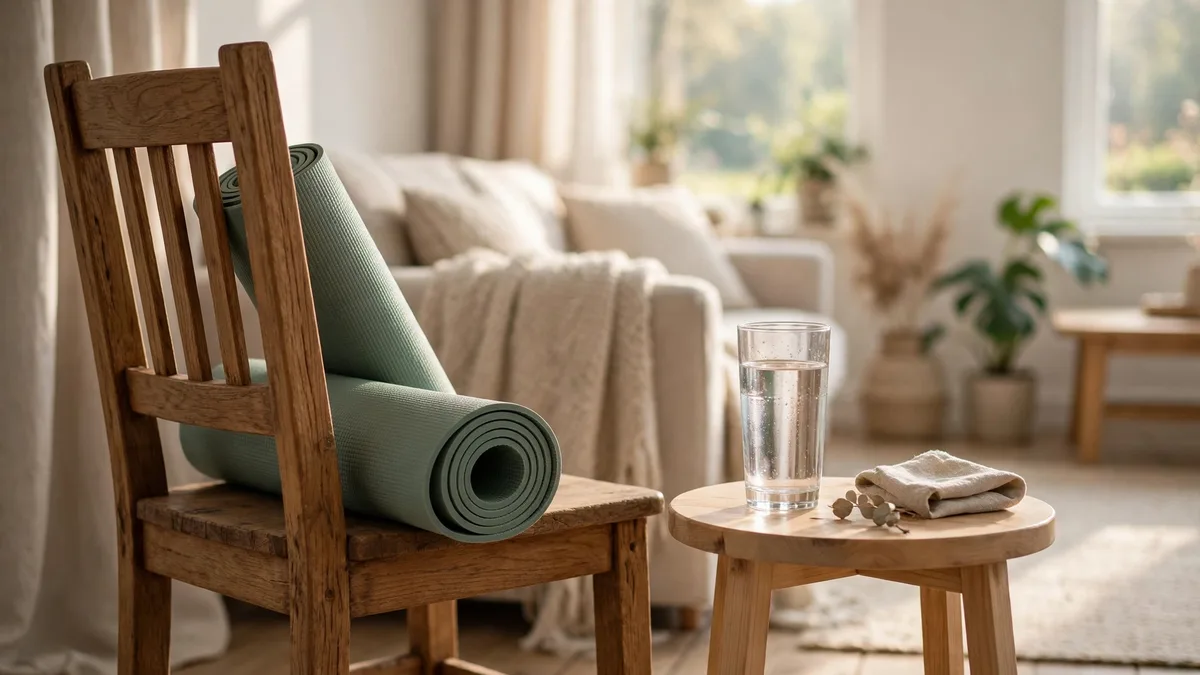
Choose a sturdy chair with a flat seat and no wheels, the kind that stays exactly where you put it. Push it back from the table so your knees have room, and set a small table or stool beside it for the glass of water. A folded blanket on the seat softens the chair, and a cushion behind your back helps you sit tall without strain.
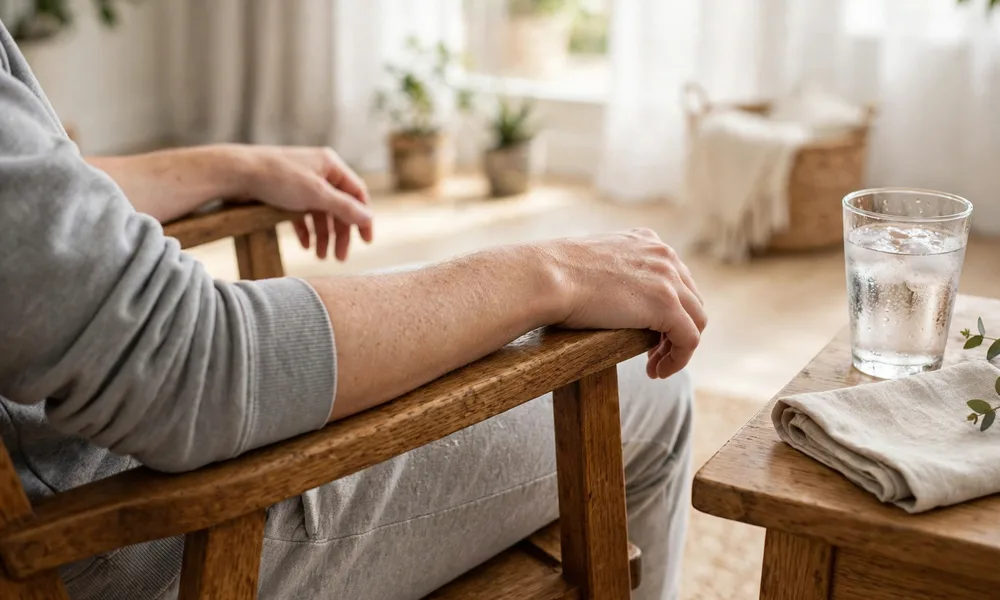
Sit down and check the fit before you begin: both feet flat on the floor, knees bent at an easy angle, hands resting lightly on your thighs. The chair should feel steady and kind, never wobbly or slippery.

Drinking Water Before You Begin
Start the flow with a glass of fresh water, poured just before you sit down. Water near room temperature feels gentlest first thing, while a very cold glass can jolt a stomach that is still half asleep, so give a chilled glass a minute to lose its edge before you drink.
Drink the water slowly, in small sips, rather than all at once, and keep the glass beside the chair for the flow itself, so you can sip again between the moves.
A Simple Gentle Flow in Small Steps
A simple gentle flow takes no planning at all, and it starts with sitting tall. Sit on the chair, feet flat on the floor, hands resting on your thighs, and take three slow breaths. Let your shoulders drop, let your jaw soften, and let the morning arrive at its own pace.
Ten minutes is enough, and the flow runs in one order: neck and shoulders first, then arms and hands, then a gentle twist, then breath, then a quiet finish.
Gentle Seated Moves
Every movement here is soft by design, and you stay with each one for several calm breaths. Sit upright, let your head tip slowly toward one shoulder until you feel a mild stretch, and stay there. Return to centre, then tip toward the other side, easing into it rather than tugging with a hand.
After that, circle the shoulders slowly backward three times, then forward three times. Raise both arms above your head once, palms open, and breathe out slowly. Then rest one hand on the far knee, turn your upper body gently toward that side while the other hand steadies you on the chair, and do the same on the other side.
Water and Chair Yoga at a Glance
| Water first | Seated moves | Calm finish |
|---|---|---|
| Lukewarm glass slowly | Neck, shoulders, twist | Five slow breaths |
| Small sips only | Hold each briefly | Sip water again |
| Glass beside chair | Never force body | Rest, light breakfast |
Chair Yoga and Morning Yoga
Morning yoga and chair yoga share the same gentle start, yet they ask for different things from the body. Water and yoga for a simple morning flow is a flow on a mat at the start of the day, with seated poses first, then standing poses, then breath, then a light finish, moving between the floor and standing.
Chair yoga never leaves the chair. Every move here is done sitting down, feet on the floor, hands on the chair, with no standing and no getting down onto a mat.
Chair Yoga and Stretching
Stretching and chair yoga are close cousins, and the two share the same slow, unhurried pace. Water and stretching for a gentle morning pair is a set of slow stretches on a mat in the morning, with the body waking up through easy reaches and long, easy holds.
Chair yoga borrows that slowness and puts it on a seat. The stretches are shorter and smaller, the chair holds your weight through every one of them, and you never have to lower yourself to the floor.
Chair Yoga and Breathing
Breathing and chair yoga belong together, and the breath is the quiet heart of this flow. Water and breathing for a two minute calm is a short pause with no movement at all: a glass of water, drunk slowly, and two minutes of slow, easy breathing, sitting still wherever you happen to be.
Chair yoga adds gentle movement to that same calm breathing. Breathing alone is a still pause; chair yoga is that pause with the body moving softly inside it.
After the Flow: Resting Well
Once the moves are done, give yourself a slow few minutes before the day begins. Drink a tall glass of cool water, unhurried, and sit quietly in the chair a little longer, hands resting on your thighs, breathing slowly. A folded towel, damp and cool, on the back of the neck is a small comfort after moving.
Stand up slowly, holding the chair until your feet feel steady, and then carry on with the morning at your own pace.
When to Talk to a Doctor
This guide is gentle general information, and it cannot tell you what your own body needs. If a move causes sharp pain, dizziness, or breathlessness, stop at once and sit quietly until the feeling passes. If the same trouble keeps returning, or a pain will not go away, speak to a doctor and describe exactly what happened and when.
A chair flow is a small, kind habit for ordinary days, and anything beyond ordinary days belongs with a professional.
Your Gentle Flow Checklist
- Fill a glass with lukewarm water before you sit down.
- Choose a sturdy chair with no wheels, feet flat on the floor.
- Sip water slowly, then move gently through the seated flow.
- Hold each stretch briefly and never push past comfort.
- Rest quietly in the chair for a few minutes afterwards.
- Stop if anything hurts, and ask a doctor about lasting pain.
Frequently Asked Questions
What is water and chair yoga?
Water and chair yoga is a gentle seated flow: a glass of fresh water drunk slowly, followed by a few slow yoga moves done sitting on an ordinary chair. Every move is done seated, with the chair holding you steady, and the whole flow takes about ten minutes.
Do I need a yoga mat for chair yoga?
No. The chair replaces the mat entirely, and your feet stay on the floor throughout. A folded blanket on the seat and a cushion behind your back are all the extras you need.
Which chair should I use for chair yoga?
Use a sturdy chair with a flat seat and no wheels, the kind that stays exactly where you put it. Your feet should rest flat on the floor, and if they dangle, slip a folded towel or a thick book under them.
How much water should I drink during chair yoga?
Sip a glass of lukewarm water slowly before you begin, and keep the glass beside the chair so you can sip again between the moves.
Is chair yoga different from morning yoga?
Yes. Morning yoga is a flow on a mat, with seated poses first and then standing poses, moving between the floor and standing. Chair yoga never leaves the chair: every move is done sitting down, which suits days when standing and getting down to the floor feel too much.
When should I see a doctor about my health?
Reach out to a doctor if a health concern lingers, or if the same difficulty shows up again and again, whether that is pain, light-headedness, or trouble catching your breath while you move. What you read here is everyday guidance, and it cannot stand in for a clinician's advice.
The Bottom Line
Water and chair yoga go together simply: sit tall on a steady chair, sip water slowly, move gently through a few seated stretches, and rest well afterwards.
A Note for Gentle Days
Keep it slow, keep it seated, keep it simple. A steady chair, a full glass, and a few quiet minutes can carry a whole gentle day.