Some days feel tight before they have properly begun. The shoulders rise, the breath grows shallow, and the list of things to do crowds into a chest that already feels full. There is no time for a long break and no quiet room to escape to, only a few minutes between one task and the next.
Water and breathing is a small answer to that tight feeling. A glass of fresh water, drunk slowly, and two minutes of slow, easy breathing can loosen the day without asking for anything special. It needs no mat, no app and no skill, only a glass, a chair and two minutes.
This article is a gentle guide to a two-minute calm: what it is, how to do it, and how to fit it into a busy day. It is general information only, never a treatment, and it will not cure anxiety or any condition. Stop if you feel dizzy, and real breathing problems belong with a doctor.
Key Takeaways
- Water and breathing means a glass of water, drunk slowly, and two minutes of slow, easy breathing.
- Breathe in gently through the nose and out slowly through the mouth, without forcing anything.
- The glass of water is the anchor: it marks the start of the pause and slows the whole habit down.
- Two minutes fits anywhere: before a meeting, after a hard call, or in the middle of a long afternoon.
- This is gentle general information, not a cure; stop if dizzy and see a doctor for real breathing problems.
What Water and Breathing Means
Water and breathing means pairing two simple things: a glass of fresh water and slow, easy breathing, kept together in one short pause. The water comes first, drunk slowly in small sips, and then come the breaths, slow and unhurried, for two minutes. There is nothing else to it, and that is the point.
The glass of water is the anchor of the habit. It gives your hands something to hold, it marks the beginning of the pause, and it slows everything down, because a glass drunk slowly cannot be rushed. The breathing follows naturally from that slowness, and the two minutes pass more gently than two minutes spent staring at a screen.
Why Two Minutes Is Enough
Two minutes is enough because it is short enough to happen. A long practice sounds lovely and then never happens, but two minutes fits between tasks, before a meeting, or while the kettle boils. It asks for almost nothing, and that is why it works on real days.
Two minutes can also feel longer than it sounds. When you sit still and breathe slowly, the minutes stretch out, and the body has time to loosen. The day does not stop, but for two minutes you stop chasing it, and that small pause is enough to change the feel of the next hour. A pause this short is easy to repeat, and repeating it is what turns it into a habit.
Starting with a Glass of Water
Pour a glass of fresh water and drink it slowly, in small sips, before the breathing begins. Lukewarm water is kindest, because ice-cold water can feel like a shock to a tense stomach, and slow sips are kinder than large gulps. Stand or sit by a window while you drink, and look outside for a moment if you can.
This one glass is the whole of the water part of the pause, and it takes less than a minute. The same gentle idea runs through how to build a water-first morning routine, where a glass of water starts the day before anything else does, and the habit is the same here: water first, then the calm.
The Two-Minute Breath
Sit down somewhere comfortable, put the empty glass aside, and let your shoulders drop. Breathe in gently through your nose, letting the air fill your chest without forcing it, and breathe out slowly through your mouth, as if you were cooling a warm drink. There is no counting to get right and no rhythm to perfect; the breath should feel easy, never strained.
Keep going for two minutes, or about ten slow breaths, and let thoughts come and go without chasing them. If the mind wanders to the next task, that is ordinary; notice it, and return to the next breath. When the two minutes are done, sit for a moment longer, take one last slow breath, and then carry on with the day.
A Calm Corner Anywhere
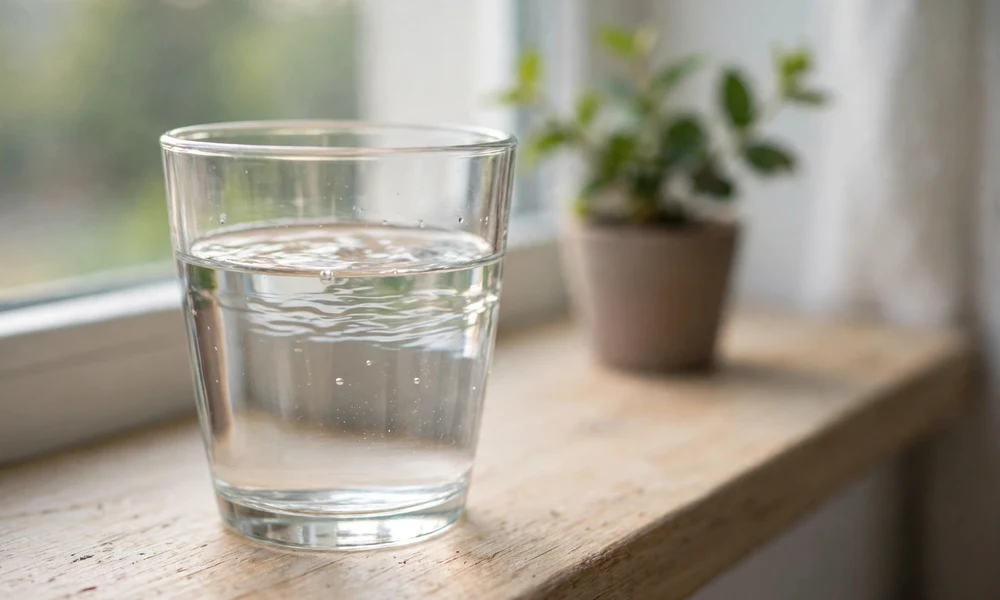
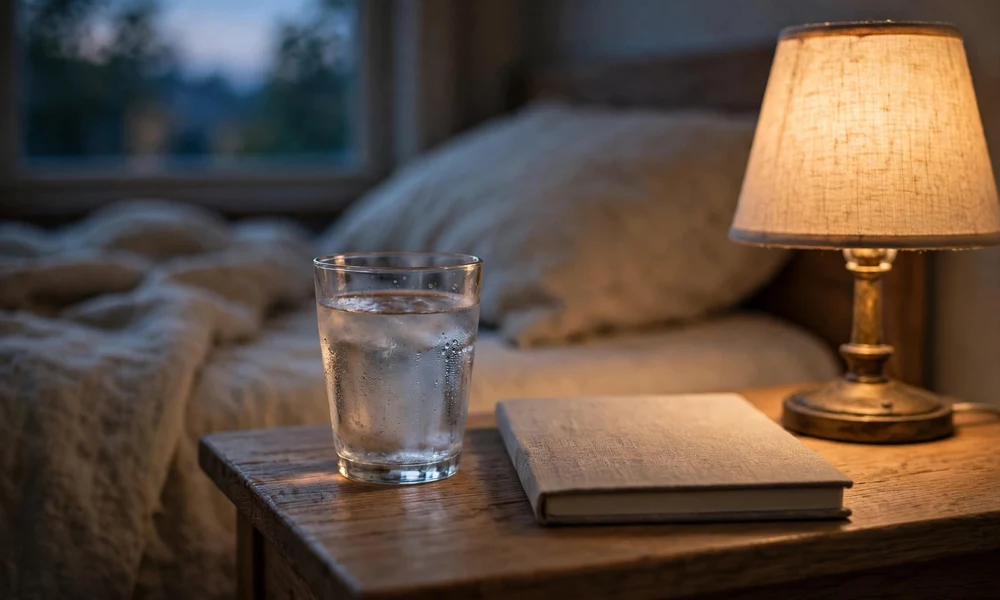
A calm corner needs very little: a chair, a small table, and a glass of fresh water. It can be the kitchen chair, a bench by the window, or the quiet end of the office, and it does not need to look special. What matters is that it is yours for two minutes, and that everything you need is already there.
Keep the corner simple and keep it ready. Leave a clean glass by the tap, and choose the chair before you need it, so the pause can start at once when the day grows tight. A pause that needs setting up is a pause that never happens, and a corner that is always ready is a corner you will actually use.
Using the Pause Through the Day
The pause fits anywhere in the day, and each time of day suits it a little differently. In the morning, it steadies the hours ahead; in the middle of the afternoon, it breaks up a long stretch of sitting; and in the evening, it marks the end of the working day, a small doorway between work and rest.
Use it before the moments that usually feel hardest: a difficult call, a busy meeting, or the school run. Two minutes of water and breathing will not change what is coming, but it can change how you meet it, and that is enough. A longer, quieter version of the same idea is water and meditation: a five minute reset, for days when five minutes are available instead of two.

When Breathing Feels Hard
Breathing should always feel easy. If you feel dizzy, light-headed or short of breath at any point, stop at once, sit down, and breathe normally until the feeling passes. Never force a deep breath, never hold your breath for a long time, and never push through discomfort in the hope that it will pass.
If breathing problems keep coming back, or if breathlessness, chest pain or wheezing worry you, see a doctor promptly. This guide is general information only, and it cannot diagnose or treat any breathing problem. The same care applies to movement: gentle stretching can loosen a tight body, as in water and stretching: a gentle morning pair, but pain or dizziness always mean stop and seek help.
What This Pause Will Not Do
Be honest about what two minutes cannot do. Water and breathing will not cure anxiety, stress or any health condition, and no breathing habit can. It will not fix a difficult day or a heavy week, and it should never replace medical care, rest or a conversation with someone who can help.
What it can do is smaller and more honest: it can give a tight day a two-minute loosening, and it can turn a glass of water into a small ritual of care. That is a real comfort, and it is enough, as long as it is never asked to be more than it is. A small habit, kept honestly, is worth more than a big promise.

| Pause moment | Water use | Breath use |
|---|---|---|
| Before a meeting | Sip water slowly | Breathe out slowly |
| Mid-afternoon slump | Refill the glass | Ten slow breaths |
| After a hard call | Small sips only | Shoulders down first |
| Evening wind down | Lukewarm water first | Last slow breath |
Your Two-Minute Calm Checklist
- Pour a glass of fresh water and drink it slowly, in small sips.
- Sit somewhere comfortable and let your shoulders drop.
- Breathe in gently through the nose and out slowly through the mouth.
- Keep going for two minutes, or about ten slow breaths, without forcing anything.
- Stop at once if you feel dizzy, and breathe normally until it passes.
- See a doctor promptly for breathing problems that keep coming back.
Frequently Asked Questions
What is water and breathing?
Water and breathing is a two-minute pause that pairs a glass of fresh water, drunk slowly, with slow, easy breathing. The water comes first, then about ten slow breaths, and the whole habit takes two minutes.
How is this different from meditation?
Meditation is usually a longer, quieter practice with its own guidance and stillness. Water and breathing is shorter and simpler: two minutes, a glass of water and easy breaths, with no technique to learn and no stillness to master.
Should the water be cold or lukewarm?
Lukewarm water is kindest, especially when the day already feels tense. Ice-cold water can feel like a shock to a tight stomach, so let the water sit a few minutes or add a little warm water first.
What if I feel dizzy while breathing slowly?
Stop at once, sit down, and breathe normally until the feeling passes. Never force a deep breath or hold your breath, and if dizziness or breathing problems keep coming back, see a doctor promptly.
Can I do this more than once a day?
Yes. Two minutes fits anywhere, so use the pause whenever the day grows tight: before a meeting, in the middle of the afternoon, or in the evening. There is no limit, as long as the breathing always stays easy, and each pause is a fresh start rather than a chore to tick off.
Will this cure my anxiety?
No. Water and breathing will not cure anxiety or any condition, and it is not a treatment. It is a gentle habit that can loosen a tight moment, but real anxiety needs proper support, rest and professional care.
The Bottom Line
A glass of water and two minutes of slow breathing will not change the day, but they can change how you meet it.
Sip slowly, breathe slowly, and carry on.
A Note for Two-Minute Calms
Two minutes is small, and small is enough. The calm hours can still belong to your day.