
Some weeks the skin feels a little dull. An ordinary wash leaves everything clean but not quite fresh. Nothing is wrong, exactly, but the skin seems to ask for a little more than soap and water alone. A body scrub is the simplest answer to that feeling.
A body scrub is a soft, grainy paste, smoothed over damp skin in slow circles, then rinsed away with lukewarm water. It lifts the loose, dry surface that builds up through the week, leaving the skin smooth and ready for a plain moisturiser. The whole ritual takes ten minutes, and asks for nothing more than a jar, a towel and a gentle hand.
This guide explains body scrubs in plain terms: what they are, how to choose one, how to use one gently from shoulders to feet, and when to leave it on the shelf. It is gentle general information only, never a treatment. Patch-test anything new first, and see a doctor for skin that stays sore.
Key Takeaways
- A body scrub is a soft grainy paste for the whole body, used in slow circles.
- Use gentle pressure only, and rinse with lukewarm water.
- A scrub is a weekly step, not a daily one.
- Always moisturise after scrubbing, while the skin is still damp.
- Patch-test any new scrub first, and skip it on broken, sunburnt or sore skin.
What a Body Scrub Is
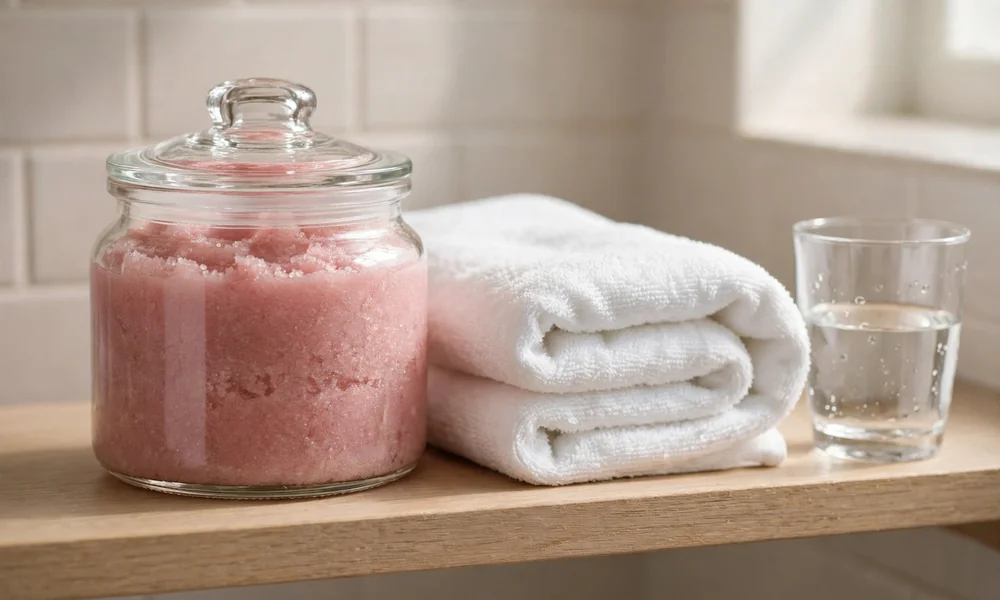
A body scrub is a thick paste with fine grains in it, made to be smoothed over the skin of the body and then rinsed off. The grains are small and soft, often sugar or salt held in oil or cream, and they loosen the dry surface cells that sit on the skin. The paste keeps the grains moving smoothly.
Use it on damp skin, never on dry skin, working in slow circles with the flat of your hand. Arms, legs, shoulders, back and feet all suit a scrub. If the skin stings, the pressure is too hard.
Why a Gentle Scrub Suits Fresh Days
Fresh days start with skin that feels clean and smooth. An ordinary wash takes away dirt and sweat, but it leaves the loose dry layer where it is, and that layer makes the skin look dull. A gentle scrub lifts that layer away, so the skin underneath shows through.
The ritual itself is part of the freshness. Ten quiet minutes in a warm bathroom make the rest of the day feel more cared for. A scrub does not need to be strong to work.
Choosing a Body Scrub
Choose a scrub with fine, even grains that feel soft between your fingers. Sugar scrubs feel mild, while salt scrubs feel firmer and suit tougher spots like heels and elbows. The grains should never feel sharp or gritty like sandpaper.
Read the jar before you buy it: a short list of plain ingredients is a good sign, and a strong perfume or a long list of extras is not. Pick a plain, fragrance-free scrub if your skin is easily irritated, and buy the smallest jar first.

Your First Simple Scrub Ritual
Your first scrub ritual takes ten minutes, and it starts before you step into the water. Lay out the jar, a clean towel and your moisturiser. Step into a warm shower or bath first, and let the water run over your skin for a minute.
Take a small scoop of scrub, about the size of a walnut, and smooth it over one leg in slow circles, moving up toward the knee. Use the flat of your hand and work one area at a time, arms and legs first, then shoulders and back as far as you can reach. Keep the scrubbing under five minutes, and never go over the same spot twice.
Water After Scrubbing
Water after scrubbing should be lukewarm, brief and kind. Rinse for a few minutes under a gentle shower, or with scoops of warm water in the bath, until every trace of grain is gone. Use plain water, or a mild wash with no strong fragrance, and keep it warm rather than hot.
Step out and pat dry with a soft towel, never rub, since rubbing can irritate freshly scrubbed skin. While the skin is still damp, press a plain moisturiser into it, starting at the legs and working up. Water and moisturisers sets out that plain step in full: water first, cream second.
Body Scrubs at a Glance
| Soft grainy paste | Weekly, ten minutes | Gentle pressure only |
|---|---|---|
| Damp skin, circles | Arms, legs, shoulders | Lukewarm rinse after |
| Walnut-sized scoop | Rinse, pat, moisturise | Patch-test it first |
| Whole body, not face | Skip sore skin | Never scrub hard |
Body Scrubs and Lip Scrubs
Lip scrubs are the small, gentle cousin of this ritual, and the two are easy to confuse until you see how differently they work. A lip scrub is made for the lips only, a tiny dab of very fine grains rubbed in with one fingertip. A body scrub is made for the whole body, a walnut-sized scoop spread over arms and legs with the flat of the hand.
The difference is scale and softness. Lips need the mildest touch of all, with grains so fine they barely feel rough, while arms and legs can take a firmer grain and a longer pass. Never use a body scrub on your lips, and never use a lip scrub on a whole leg.
Body Scrubs and Dry Brushing
Water and dry brushing is the nearest ritual to this one, and the two share the same gentle thinking, but they work in opposite ways. Dry brushing uses a soft brush on dry skin before any water, in light strokes toward the heart, and the water comes after. A body scrub uses a grainy paste on damp skin, in slow circles, and the water rinses the paste away.
The difference is the tool and the timing: a brush sweeps loose flakes off dry skin, while a scrub paste polishes damp skin with its grains. If you already dry brush, a scrub is a different weekly step, not a replacement.
Body Scrubs and Warm Showers
Water and warm showers is the plain wash a scrub builds on, and knowing the difference keeps both rituals simple. A warm shower is just lukewarm water, a slow wash with mild soap, and a gentle dry-off, with no scrubbing at all. A body scrub adds one grainy step in the middle of that wash.
You shower often, and you scrub once a week at most, inside a shower you were already taking. The shower stays gentle on its own, and the scrub never turns it into a hard workout.

The Gentle Rule: Patch-Test First
The first rule of body scrubs is to try before you trust. Dab a little on the inside of your wrist each day for three days, and watch for redness, itching or soreness. If it reacts, wash it off and set the jar aside.
The second rule is pressure. Keep the touch light, and let the grains do the work instead of your strength. Never press hard, never scrub the same spot twice, and never work over skin that is broken, sunburnt, irritated or sore. If it stings, ease off at once and stop for the day.
When to Skip a Scrub
Some days the scrub should stay on the shelf, and knowing which days those are keeps the ritual safe. Skip it whenever the skin is broken, cut, sunburnt, blistered or sore, and after waxing or shaving, when the skin is already tender. Skip it too with a rash or a flare-up.
Skip it as well when you are in a hurry: a scrub needs ten slow minutes, and rushing it is how people press too hard and irritate their skin. If a week passes without a scrub, nothing is lost.
Keeping Your Scrub Fresh
A jar of scrub lasts well if you keep it clean and dry between uses. Always scoop it out with a clean, dry spoon, never with wet fingers. Close the lid tightly after every use, and keep the jar on a dry shelf, away from shower spray and steam.
Check the jar now and then for changes in smell, colour or texture. If it smells sharp or odd, if the oil has gone stale, or if the grains have clumped into hard lumps, throw it away and open a fresh one. A small jar used up in a few months is better than a large one kept for a year.
Your Fresh Ritual Checklist
- Patch-test the scrub on your wrist for three days before the first use.
- Dampen the skin with warm water, then scrub in slow circles with a light hand.
- Keep the scrubbing under five minutes, and never go over one spot twice.
- Rinse with lukewarm water, pat dry with a soft towel, and moisturise while damp.
- Skip the scrub on broken, sunburnt or sore skin, and after shaving or waxing.
- A scrub is general care only; see a doctor for skin that stays sore.

Frequently Asked Questions
What is a body scrub?
A body scrub is a soft, grainy paste smoothed over damp skin in slow circles, then rinsed away with lukewarm water. It lifts loose, dry surface cells, leaving the skin smooth.
How often should I use a body scrub?
Once a week is plenty for most people, and less is fine too. A scrub is a weekly step, not a daily one, and using it more often can irritate the skin.
Can I use a body scrub on my face?
No. Facial skin is far more tender than the skin on arms and legs, and body scrub grains are too rough for it. Keep the scrub on the body.
Is a body scrub the same as dry brushing?
No. Dry brushing uses a soft brush on dry skin before water, in light strokes toward the heart. A body scrub uses a grainy paste on damp skin, and the water rinses it away.
What should I do after scrubbing?
Rinse with lukewarm water until every trace of grain is gone, pat dry with a soft towel, and press a plain moisturiser into damp skin.
When should I skip a body scrub?
Skip it on broken, cut, sunburnt, blistered or sore skin, after waxing or shaving, and whenever a doctor is looking after a skin problem. Skip it too when you are in a hurry.
The Bottom Line
Water and body scrubs make a simple fresh ritual: a soft grainy paste in slow circles, a lukewarm rinse, a gentle pat dry, and plain moisturiser on damp skin, never hard.
A Note for Fresh Days
Let the water stay lukewarm, the hand stay light, and the ritual stay slow. One jar, one towel, and ten quiet minutes are plenty.


