Some mornings arrive already bright. The sun is up early, the windows are open, and the house feels washed in warm light. On a morning like that, a pale stone can look washed out and a dark one can look heavy.
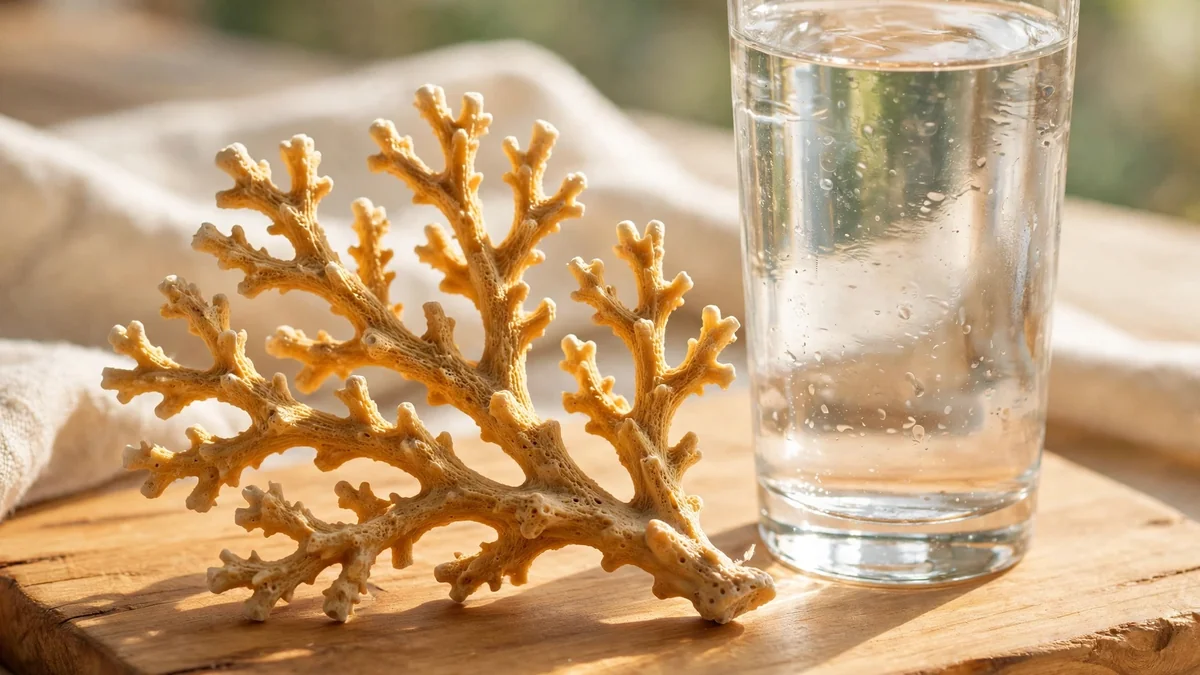
Gold coral is warm gold, the colour of late morning sun on a wooden floor, of honey held up to a window. It is a marine material, grown slowly in the sea and polished by hand into branches, beads and jewellery, carrying the warmth of the sun indoors.
This guide looks at gold coral on its own terms: what it is, why its warm gold suits bright days, how to pick a good piece, and how to keep it safe beside a glass of water. Coral is protected, so take it only from reputable legal sources, keep it for display or wearing, never as a cure, and keep it dry.
Key Takeaways
- Gold coral is a warm gold marine material, polished by hand into branches, beads and jewellery.
- Its warm gold suits bright days, sunny rooms and slow mornings in good light.
- Gold coral is the only gold coral in this journal; no other live coral is gold.
- Coral is protected: buy only from reputable legal sources; it is for display and jewellery only.
- The coral rests beside the glass, never inside it, and stays dry at all times.
What Gold Coral Is
Gold coral forms beneath the waves as a branching skeleton, shaped over many years by tiny sea creatures laying down hard, golden material cup by cup. Once a piece has been cut and polished by hand, its branches hold the forked shape the sea gave them, with small ridges along the stems. The colour is a warm gold all the way through.
Look closely and the gold is not flat or painted. It has a soft satin glow rather than a sharp shine, and it warms further in sunlight, the way honey warms when it catches the light. Beads are made round and even, each the same warm shade, so a necklace looks neat while a branch looks wild.
Why Warm Gold Suits Bright Days
Warm gold is the colour of sunshine kept indoors. On a bright day the light is already generous, and a gold branch on a sunny shelf seems to gather that light and hold it. A pale piece would fade, and a dark piece would fight the light, but gold works with the sun.
A bright day also moves at an easy pace, and the hours feel full without feeling rushed. Gold coral matches that pace: it asks for nothing, needs no ceremony, and sits in the light while the day goes on around it.
Choosing a Gold Coral Piece
Choose gold coral in daylight, with the piece in your own hand. Turn it slowly and watch the colour: a good piece holds one warm gold all the way round, with no pale washed-out patches and no dull brown streaks near the forks. The tips should feel rounded, and the polish even all over.
Start with one small branch or a short strand of beads, since one piece is plenty for a bright day. Ask the seller, in plain words, where the coral came from, and ask for the answer in writing. Walk away from painted-looking gold and from anyone who promises the piece will improve your health.

A Bright Day with Gold Coral
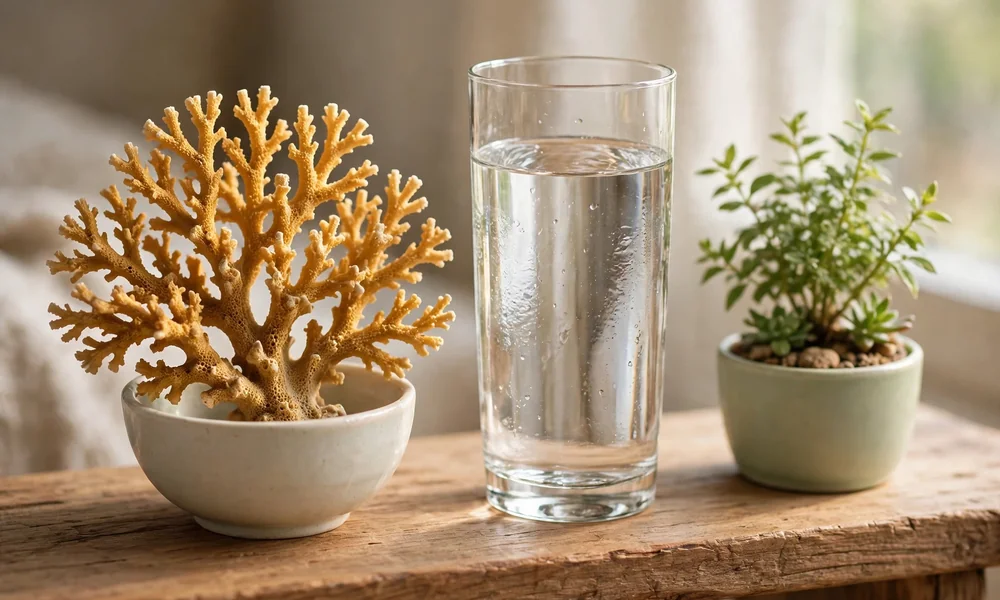
Begin a bright day by setting a wooden board on a sunny table, the gold coral on a small dish at one end and a tall glass of fresh water at the other. Drink the water slowly while the house wakes, and lift the branch to feel how cool it stays in warm sun.
Leave the board out through the day. A bright day needs no ceremony beyond that: water, light, one warm gold piece, and a few unhurried hours.
Gold Coral Beside Water
Keep one rule in mind: glass and coral share a board, and they never share water. Pour a fresh glass and set it beside the coral's dish, sunlight falling on both. A soak would take the shine off the polish and leave grit in your drink, so the coral stays out.
If the glass tips over, lift the coral clear first, dab it with a soft dry cloth, and leave it in open air until the board feels dry right through. A weekly wipe with a dry cloth is all the cleaning it needs.
Gold Coral at a Glance
| Warm gold coral | Bright days | Display only |
|---|---|---|
| Even, sunny gold | Sunny shelf, desk | Glass apart always |
| Cool satin finish | Mornings, midday light | Soft dry dusting |
| Branch or beads | Water beside it | Never soak it |

Gold Coral and Orange Coral
Orange coral is the closest sibling to this piece, and the two are easy to mix up until you see them side by side. Orange coral is warm orange, the colour of a ripe orange in strong sun, and its mood is livelier and fruitier. Gold coral is warm gold, deeper and more mellow, the colour of honey rather than fruit.
The difference is a matter of warmth and depth. Orange coral sparks like a bright citrus morning, while gold coral glows like late morning sun on wood. If you love a vivid, cheerful piece, reach for orange; for a warm, steady glow, choose gold.
Gold Coral and Blue Coral
Blue coral for calm days is the cool opposite of this piece: a pale sky-blue branch for calm days in soft light. Gold coral is its warm mirror, for bright days in strong sun. Where blue cools a room, gold warms it.
The two never clash, but they never speak the same language. Blue suits a quiet room with pale wood and white cloth, while gold suits a sunny room with honey wood and warm linen. Pick blue if you want the room to feel fresher, and pick gold if you want it to feel sunnier.
Gold Coral and the Other Corals
Beyond blue and orange, the coral family keeps several more colours, and none of them is this warm gold. Red coral for bold days is deep warm red, vivid and brave, for days when you mean to speak up. White coral for classic days is soft creamy white, plain and orderly, for days done properly.
Black coral is deep black and glossy, for quiet evenings in lamplight. Pink coral is soft rose pink, gentle and kind, for tender days. Fossil coral is different again: an ancient stone in warm honey, rust and cream, patterned with honeycomb cups and flower rings from creatures long gone. Gold coral stands apart by being simply gold, with no red, no pink and no pattern, only a warm even glow.
Where Gold Coral Sits at Home
Give the piece one sunny place and leave it there, so it is always waiting in the same spot when the day brightens. A bright sill, a shelf by a lit window, or a desk edge in clear daylight all suit it well, provided the place always stays dry.
Choose somewhere steady, away from splashes, steam and small hands. A lined tray or a small dish keeps it from rolling, and apart from keys and harder stones.
Caring for Gold Coral
Gold coral is softer than most stones, so it deserves a spot of its own. A lined box or a soft pouch keeps it clear of harder gems that might scratch it. Keep it away from steam, perfume and cleaning sprays, and pick it up only with clean, dry hands.
If it is ever splashed, dry it at once with a soft cloth and let it air before putting it back. Treated this way, a branch holds its soft shine for years.
Stones That Must Never Touch Water
A few stones should always stay dry, and knowing their names helps before you set any of them near a glass. Malachite is the one to remember first: never let it sit in water or in any brew made with water, because it can give off something harmful. Hematite stays out of drinking water too, and so does pyrite, which water can tarnish and rust-mark.
Other stones carry something inside them that should never reach a drink. Lepidolite holds lithium in its pale layers, so never steep it. Apatite is soft and easily damaged by a soak, angelite is soft enough to be spoiled by water, and amber is a fossil resin that soaking can cloud. Gold coral follows the same dry rule: next to the glass, never in it.
Your Bright Days Checklist
- Set the gold coral on a sunny board, a full glass beside it.
- Sip the water slowly while the morning light is fresh.
- Hold the branch a minute and feel how cool it stays.
- Buy only from a reputable legal source and keep the receipt.
- Keep the coral dry, beside the glass, never inside a drink.
- A coral heals nothing; health worries belong with a doctor.

Frequently Asked Questions
What is gold coral?
Gold coral is the warm gold skeleton of a small sea animal, shaped by hand into branches, beads and jewellery. It is protected marine material, not a stone.
How is gold coral different from orange coral?
Orange coral is warm orange, vivid and fruity, like a ripe orange in strong sun. Gold coral is warm gold, deeper and more mellow, like honey in morning light.
How is gold coral different from blue coral?
Blue coral is pale sky-blue and cool, for calm days in soft light. Gold coral is warm gold and sunny, for bright days in strong light, warming a room where blue would cool it.
How is gold coral different from red coral?
Red coral is deep warm red, vivid and brave, for bold days when you want to speak up. Gold coral is softer warm gold, sunny rather than fiery, for bright days that feel easy.
Is gold coral safe beside water?
Yes, as long as the two stay apart. Put the glass next to the dish the coral rests in, and keep the coral out of the glass and out of any soak.
Where should I buy gold coral?
Buy only from a reputable legal source who can say in writing where the piece came from. Avoid sellers who cannot name the origin, and anyone who promises health benefits.
The Bottom Line
Gold coral gives bright days a warm gold companion: one sunny branch or bead strand in strong light, on a wooden board beside a glass of water, admired only.
A Note for Bright Days
Let the gold stay warm, the coral stay dry, and the day stay bright. One gold branch, one glass of water, and a sunny windowsill are plenty.