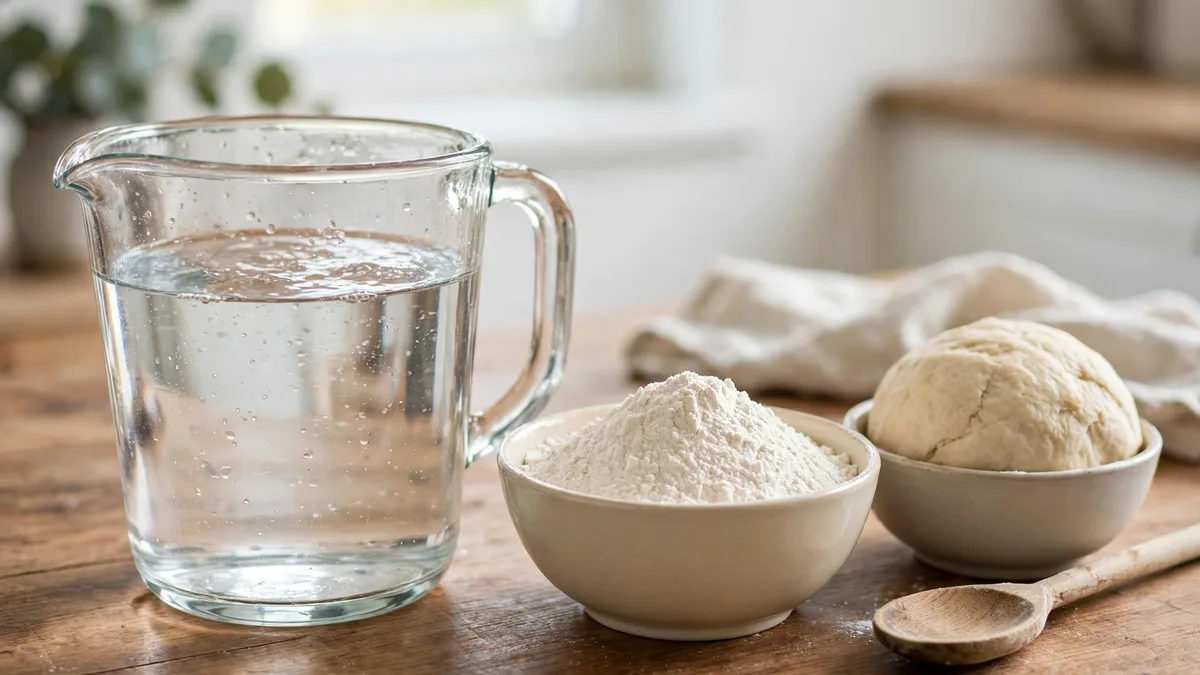
Some kitchens feel calm the moment you step into them. The counter is clear, a jug of fresh water stands ready, and the flour is already measured out in a bowl. Nothing is rushed, nothing is fancy, and the baking ahead feels simple, like a quiet hour set aside for the hands.
Water and baking belong together in that calm kitchen. Water is the quiet ingredient in almost every bake: it wakes the flour, softens the dough, and steams the oven so the crust turns golden. This guide is about those simple habits, one small step at a time.
This guide explains how to use plain water well when you bake: measuring it, mixing dough, resting it, using steam, and cleaning up after. These are food habits only, plain and practical, with no claims beyond a calmer kitchen.
Key Takeaways
- Water is the quiet ingredient in baking: it wakes flour and softens dough.
- Measure water in a clear jug, at eye level, before you start mixing.
- Add water slowly to flour, and let the dough rest before kneading.
- A small dish of water in the oven gives steam for a golden crust.
- Clean up with fresh water and soap, and dry bowls well before storing.
What Water and Baking Means
Water and baking means using fresh, clean water as a working ingredient when you bake, rather than as an afterthought. In a loaf, water joins flour to make dough, and the dough then rests, rises and bakes into bread. In cakes and biscuits, water loosens the mix and helps it bake evenly.
A simple bake needs very little: flour, water, a pinch of salt, and time. The water does most of the quiet work, and the baker mostly watches, waits and keeps the counter clean. That is the whole habit, and it is enough.
Why Water Matters in Baking
Water matters in baking because flour on its own cannot become dough. Dry flour is only powder, and it needs water to bind, stretch and hold together. Too little water makes a stiff, dry dough that tears, while too much water makes a sticky dough that will not hold its shape.
Water also carries heat through the bake, so the inside cooks as well as the crust. A loaf baked with the right amount of water stays soft inside and golden outside, and it slices cleanly once it has cooled.
Measuring Water for Baking
Measuring water well starts before the flour is touched. Fill a clear glass jug with fresh, cool water, and set it on the counter where you can see it. Read the level at eye level, with the jug on a flat surface, so the amount is true and not guessed.
Measure a little less than the recipe asks for, and keep the rest in the jug. Flour varies from bag to bag, and some flour drinks more water than others, so it is easier to add a spoonful later than to take water away. Keep the jug beside the bowl while you mix.
Mixing Dough with Water
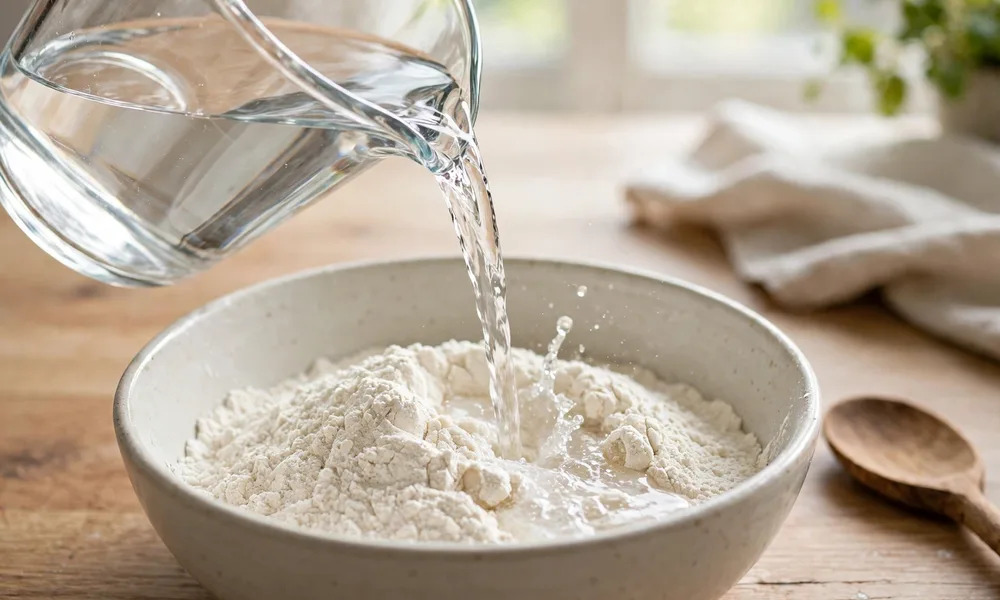
Mixing dough with water is a slow, simple job. Pour most of the measured water into the flour a little at a time, stirring with a wooden spoon as you go. The flour will clump, then soften, then gather into a rough, shaggy dough that pulls away from the sides of the bowl.
Stop when the dough holds together and no dry flour is left at the bottom. If a few dry patches remain, add water one spoonful at a time, and stir again. Wash your hands before you touch the dough, and keep the counter clean as you work.
Letting Dough Rest and Rise
Letting dough rest is the easiest habit in baking, and the most often skipped. Cover the bowl with a clean cloth, set it in a warm corner of the kitchen, and leave it alone. The dough will relax, soften and slowly grow, and the wait does the work for you.
Resting gives the flour time to drink the water fully, so the dough becomes smoother and easier to shape. Do not rush it, and do not keep lifting the cloth to check. A quiet hour of rest makes a kinder loaf, and the kitchen stays calm while it happens.

Steam in the Oven
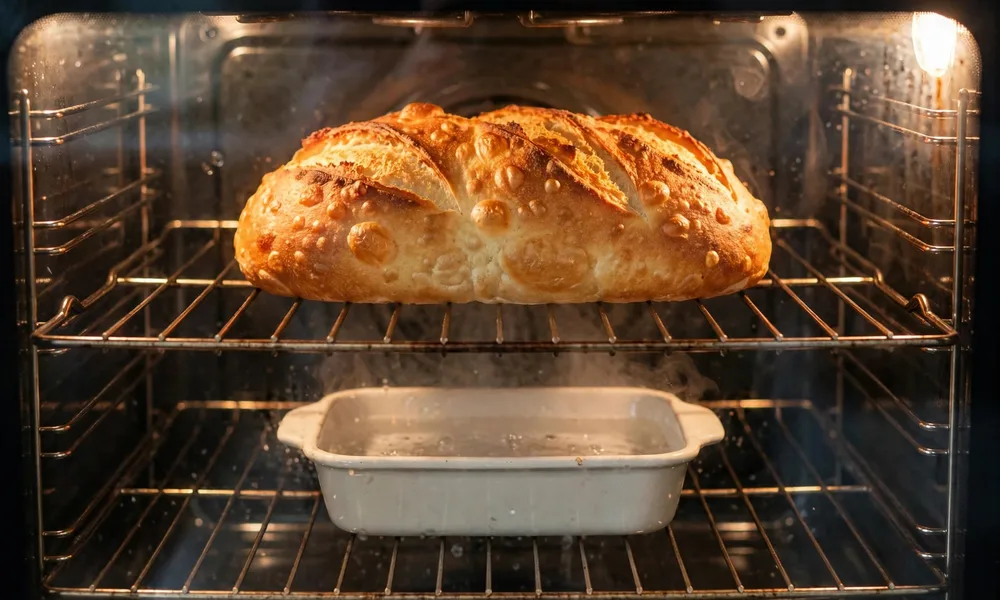
Steam in the oven is a small trick with a plain ingredient: water. Before the loaf goes in, set a small oven-safe dish of hot water on a low rack, or place a tray of water at the bottom of the oven. The water turns to steam as the oven heats, and the steam keeps the crust soft while the loaf rises.
A soft crust can stretch, so the loaf rises taller before the crust sets and turns golden. Take care with the hot dish, use oven gloves, and keep your face away from the steam when you open the door. Let the loaf cool on a rack before slicing.
Cooling and Storing Bakes
Cooling and storing bakes is the last quiet habit, and it matters as much as the mixing. Take the loaf out, set it on a wire rack, and let it cool fully before you slice it. A warm loaf cut too soon will squash, and the inside will look damp and torn.
Once cool, wrap the loaf in a clean cloth or keep it in a covered tin in a cool, dry place. Eat it within a few days, and throw away any bake that smells sour or shows mould. Fresh water and a clean tin keep the next bake simple too.
Water and Baking at a Glance
| Measure first | Mix slowly | Steam gently |
|---|---|---|
| Clear glass jug | Add water slowly | Small dish, low rack |
| Eye level reading | Rest the dough | Oven gloves on |
| Keep some back | Wash hands first | Cool on rack |
Water and Baking and Simple Broths
Water and baking and simple broths share one ingredient, but they use it in different ways. A broth simmers vegetables in water on a low flame until the water tastes of them, and the result is a clear, warm liquid to sip. Baking uses water to bind flour into dough, and the dough then rests, rises and bakes into bread.
Where water cooking skin simple broths keeps a pot of vegetables simmering into a clear broth, this guide keeps a jug of water beside a bowl of flour for baking.
Water and Baking and Tea Blends
Water and baking and tea blends both start with fresh water, but they end in different places. A tea blend steeps dried leaves and herbs in hot water, and the water takes on their gentle flavour for a calm afternoon cup. Baking mixes water into flour, and the water disappears into the dough, leaving bread behind.
Where water tea blends calm afternoons keeps hot water steeping herbs for a calm afternoon, this guide keeps cool water mixing flour for a simple bake.
Water and Baking and Afternoon Tea
Water and baking and afternoon tea are neighbours in the kitchen, and they suit each other well. Afternoon tea is a simple ritual: one plain pot, a glass of fresh water, and a slow pause in the middle of the afternoon. A home bake made earlier in the day can sit beside the pot, sliced and ready, and the two habits share the same calm hour.
Where water afternoon tea simple fresh ritual keeps a plain pot and a glass of water for a fresh mid-afternoon ritual, this guide keeps a jug of water and a bowl of flour for a simple morning bake.
Keeping the Kitchen Safe and Clean
Keeping the kitchen safe and clean is part of baking, not an afterthought. Wash your hands with soap and water before you start, and wash them again after touching raw dough. Keep raw dough away from foods that are ready to eat, and use clean bowls, spoons and cloths for every bake.
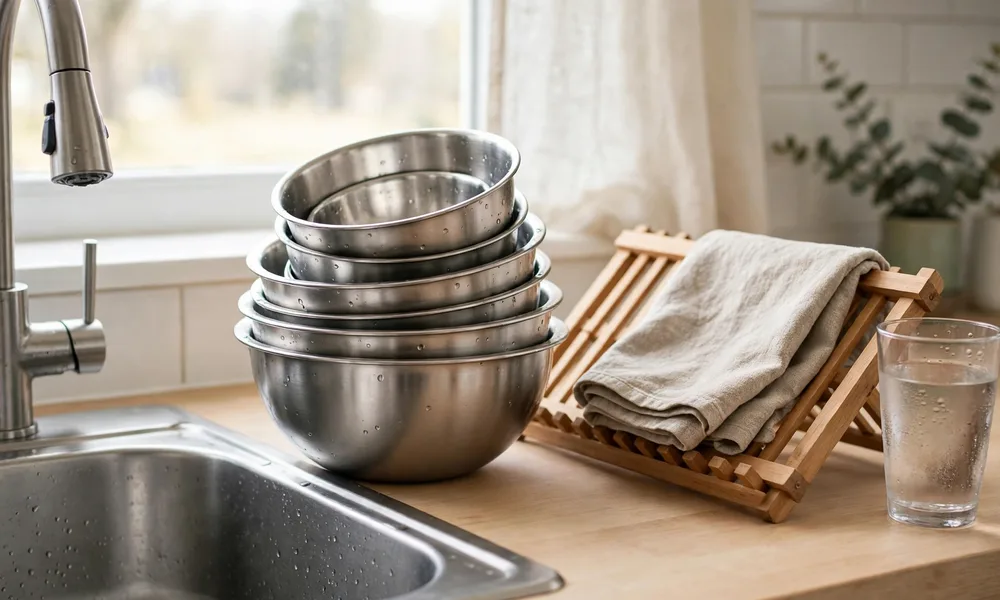
Wash bowls and tools in hot water with soap, rinse them well, and dry them before you put them away. Wipe the counter clean, sweep up spilled flour, and store flour in a covered tin in a cool, dry place. A clean kitchen makes the next bake easier, and it keeps the food safe to eat.
Your Simple Baking Checklist
- Fill a clear jug with fresh water and measure at eye level.
- Add water to flour slowly, a little at a time, and stir well.
- Cover the dough with a clean cloth and let it rest and rise.
- Use a small dish of water for steam, with oven gloves on.
- Cool bakes fully on a rack before slicing or storing.
- Wash up with hot water and soap, and dry bowls before storing.
Frequently Asked Questions
How much water does bread dough need?
It depends on the flour and the recipe, so measure a little less than asked and add water one spoonful at a time. The dough should hold together with no dry flour left at the bottom of the bowl.
Should the water be warm or cool?
Cool or lukewarm water suits most simple bakes. Very hot water can make the dough sticky and hard to handle, so keep the water plain and comfortable to touch.
Can I use tap water for baking?
Yes, fresh clean tap water is fine for baking, as long as it is safe to drink in your home. If your tap water is not safe to drink, use the water you normally drink with.
Why does my dough feel sticky?
Sticky dough usually means a little too much water, or flour that drinks slowly. Let it rest for ten minutes, dust the counter lightly with flour, and knead gently rather than adding a lot more flour.
What does steam do in the oven?
Steam keeps the crust soft while the loaf rises, so it can grow taller before the crust sets and turns golden. A small oven-safe dish of water on a low rack is enough.
How do I clean up after baking?
Wash bowls and tools in hot water with soap, rinse them well, and dry them before storing. Wipe the counter, sweep up flour, and store flour in a covered tin.
The Bottom Line
Water and baking is a set of simple kitchen habits: measure the water, mix it slowly into flour, let the dough rest, use steam gently, and clean up well. Plain water, a clear jug, and a calm hour are all a simple bake needs.
A Note for Simple Baking
Keep it plain, keep it slow, keep it clean. A jug of water, a bowl of flour, and a little patience can fill a kitchen with the smell of fresh bread.