A garden day moves at its own pace. The soil is warm from the morning sun, the herbs smell fresh after watering, and there is always one more small job waiting among the leaves.
Unakite fits this kind of day. It is a stone of green and soft pink, the green of epidote and the pink of feldspar, mottled together like a garden bed seen from above. It looks at home on soil, on a bench, or beside a pot of herbs.
This article is a calm guide to unakite grounding for garden days: what the stone is, how to choose one, where to place it, and how to keep it safely beside water. The stone is a companion for slow days, never a treatment.
Key Takeaways
- Unakite grounding means a green-and-pink stone kept close during calm garden time.
- Unakite is epidote and feldspar, a stone for display, not a treatment.
- The stone stays beside water only, never in drinking water.
- Garden days suit unakite best: soil, benches, herbs, and a small basket.
- One or two stones are enough; tidy beats crowded.
What Unakite Is
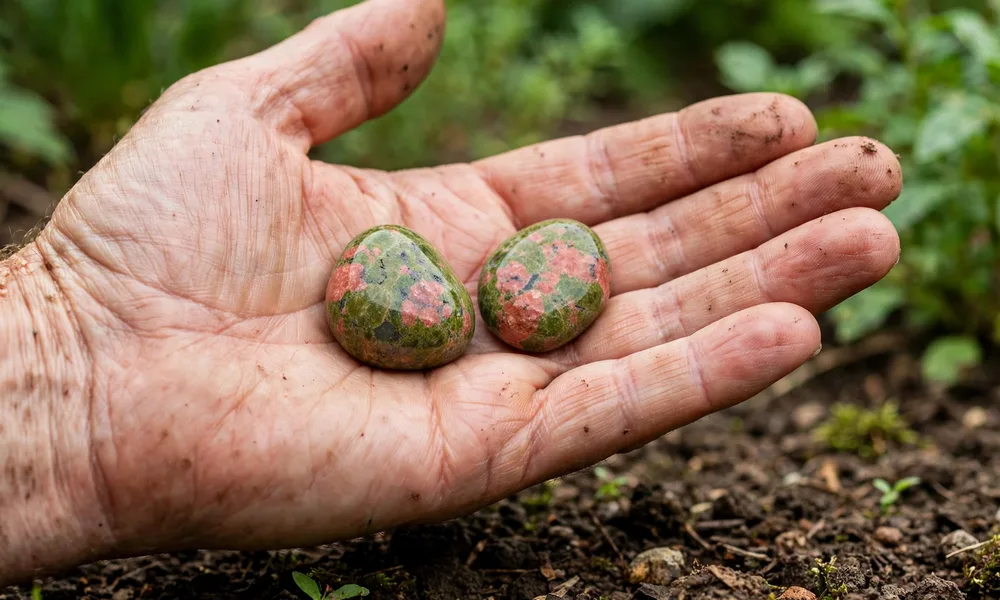
Unakite is a mottled stone, a mix of green epidote and pink feldspar, with soft grey quartz running through it. No two pieces look quite the same: one may be mostly green with pink patches, another mostly pink with green veins. That patchwork is the stone's whole charm.
The stone is named after the Unaka mountains, where it was first found, and it is usually cut into smooth tumbled stones. It is hard enough for gentle handling, but it likes to be kept dry. It is not a stone for water or for everyday rings: it is a stone for looking at, holding for a moment, and setting down somewhere pleasant.
Why Gardens Suit Unakite
A garden is the natural home for unakite. Its colours come straight from the garden: green leaves, soft pink flowers, grey stone paths. Set on dark soil or pale wood, it looks as if it grew there.
Gardens also slow us down, and that is the real point of grounding. A garden day is made of small, steady jobs: watering, weeding, trimming, and pausing to look at what has grown. A stone on the bench gives the eye a place to land during those pauses, and reminds you to take it slowly.
Choosing Unakite Stones
Choose unakite you can see before you buy it. Look for clear green and pink patches with a smooth, even polish, and turn the stone in daylight: the colours should stay steady, not dull or patchy. A small, well-polished stone is easier to carry and often looks better than a large, rough one.
Pick two or three stones rather than a whole bag. One stone can sit on the bench while another rests by the herbs, and that is enough. A single stone, chosen slowly, gives more pleasure than a dozen bought in a hurry, as how to create a small crystal corner at home shows: three stones and a little space are all a corner needs.
Unakite Beside Water, Never in It
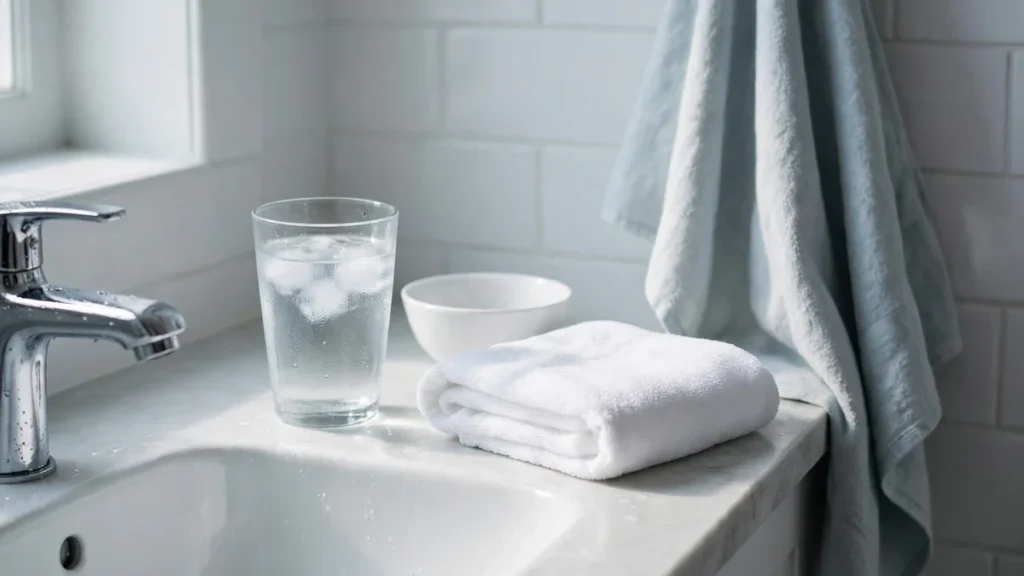
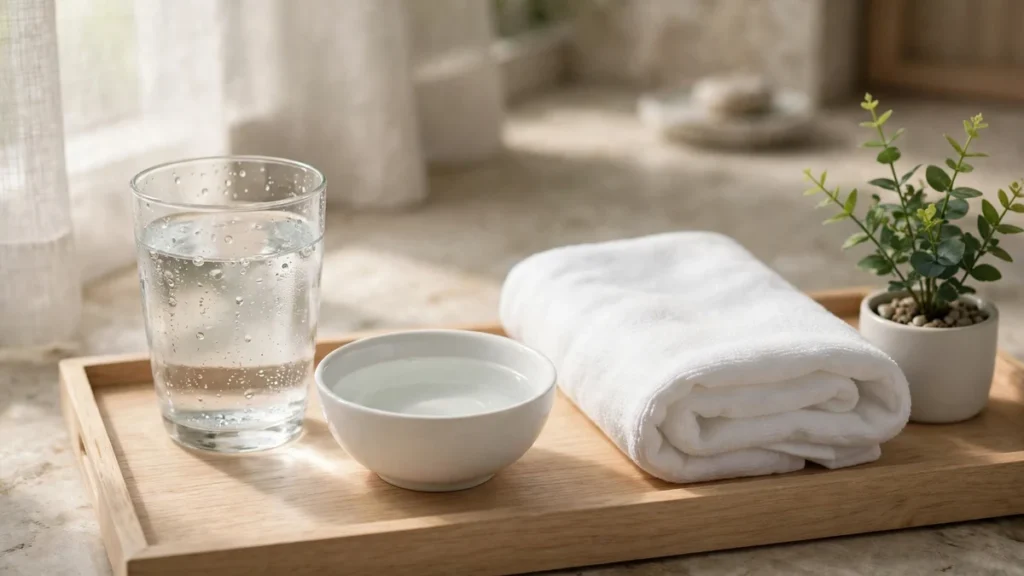
The safety rule for unakite is simple and absolute: the stone stays beside the water, never in it. A glass of fresh water stands on the garden table, and the unakite rests on the wood beside the glass. The water stays plain, and the stone stays dry. This is the only safe way to pair a stone with drinking water.
Unakite should not be soaked. Long soaking can dull its polish and let water into tiny cracks, and no stone belongs in drinking water: even a clean-looking stone can carry dust, soil, or residues from handling. A photograph of a stone inside a glass may look pretty, but a photograph is not a guide. In the garden, as at home, the stone stays outside the glass.
A Slow Morning in the Garden
A slow garden morning starts before the day grows warm. Pour a glass of fresh water and set it on the garden table beside your unakite. Stand for a moment and look at the beds: the herbs are still cool, and the soil is dark from watering. Drink the water slowly, in small sips, and let the morning arrive.
Then walk the garden with no plan beyond looking. Check the herbs, pinch off a dead leaf, and notice what has grown since yesterday. This is the whole routine, and it takes about twenty minutes.
Placing Stones on the Soil
Unakite looks best where it can touch the garden without getting lost in it. Set a stone on a bed edge, a flat piece of slate, or a small tray near the herbs, where you can see it from the path.
Keep the stone out of wet soil after rain. Lift it onto the bench or the table when you water the beds, and set it back once the soil has dried a little. A stone left in mud will stain, and a stone left in a puddle will stay damp for hours.
Unakite on the Garden Bench
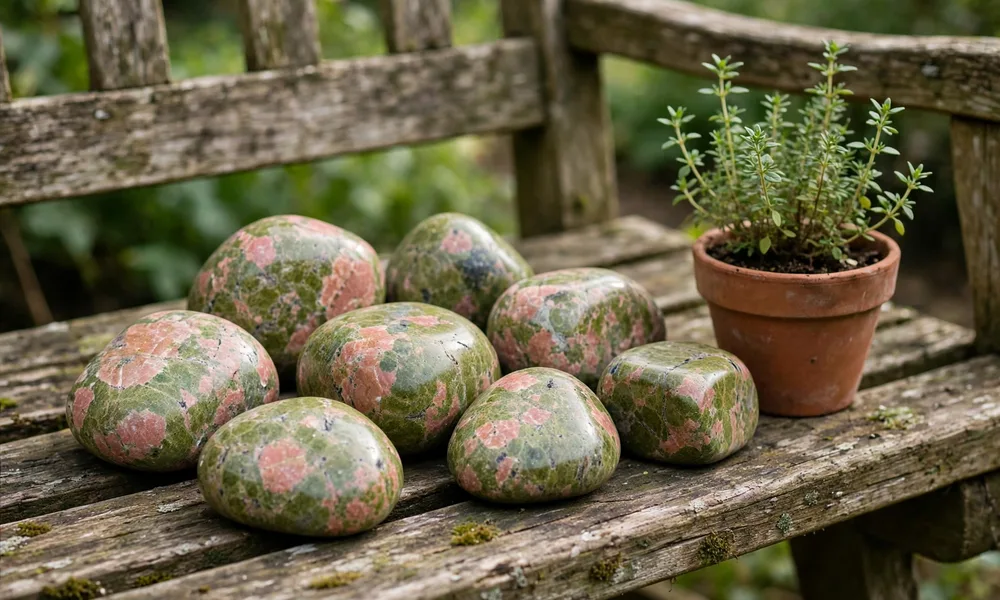
The garden bench is the best seat in the house on a fine day, and the best home for unakite too. A stone on the bench sits at hand height, where you can pick it up, turn it in the light, and set it down again. It is a small pleasure, and it costs nothing.
Choose a dry, shaded end of the bench, away from the watering can. If the bench is in full sun at midday, move the stone to the shaded end or bring it indoors for the hottest hours. Strong sun can fade some stones over time, and unakite prefers a cool, shaded spot to a hot plank.
Unakite Beside Potted Herbs
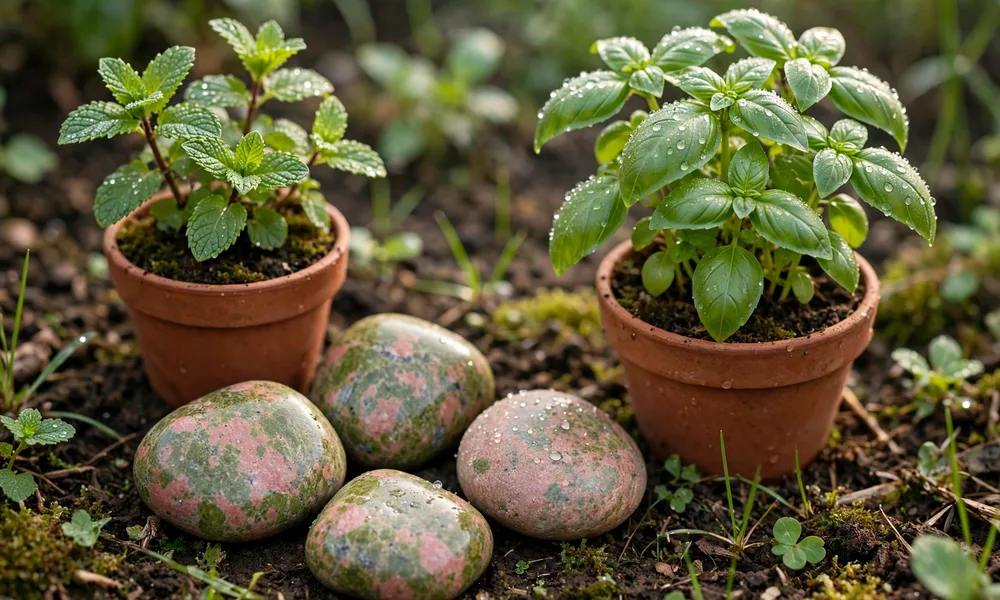
Potted herbs and unakite belong together. The pots are small and tidy, and a stone beside them adds colour without taking up space. Set one stone beside the basil, another beside the mint, and leave the rest of the sill clear.
Water the herbs carefully, keeping the water in the pots, not on the stones. If a stone gets splashed, wipe it dry with a soft cloth straight away. The same gentle care runs through green aventurine glow water for dull skin days, where the stone rests beside the water and never inside it.
A Basket of Stones for Garden Days
A small basket is the simplest way to carry unakite through a garden day. Line it with a soft cloth, set two or three stones inside, and carry it from bench to beds and back. The basket keeps the stones together and off the damp ground.
Keep the basket light. Two stones and a few leaves are enough; a heavy basket is a chore, not a pleasure. At the end of the day, bring the basket indoors: stones left outside overnight gather dew, and a stone left in the rain will need drying.
Cleaning and Caring for Unakite
Unakite needs gentle care. Wipe it with a dry, soft cloth after a garden day, and wash it only with lukewarm water and a drop of mild soap if it is truly dirty. Rinse it quickly, pat it dry at once, and never leave it soaking. Dry it fully, then store it in a soft pouch on its own.
Keep unakite apart from harder stones, and out of harsh sun and damp rooms. The full habit of good storage is set out in how to store crystals so they stay beautiful, and it applies to unakite as much as to any other stone.
What Unakite Will Not Do
Be honest about what a stone can and cannot do. Unakite will not heal you, calm your nerves by itself, or make your garden grow better. It will not cure tiredness, stress, or any condition. It is a beautiful object, and its value is the pleasure of looking at it.
The same honesty applies to the water beside it. Fresh water drunk slowly is good for you in the ordinary way, but it is not a treatment either. No stone, no glass of water, and no garden morning will replace rest, shade, and simple care.
| Garden spot | Stone care | Water rule |
|---|---|---|
| Soil bed edge | Wipe dry cloth | Glass beside stone |
| Wooden bench | Keep in shade | Never soak stone |
| Herb pots | Dry after splash | Stone stays dry |
| Small basket | Store pouch alone | Sip water slowly |
Your Unakite Garden Checklist
- Choose two or three smooth unakite stones with clear green and pink.
- Set a glass of fresh water beside the stones each morning, never in it.
- Place stones on dry soil edges, benches, herb pots, or a small basket.
- Move stones out of wet soil and midday sun, and wipe them dry.
- Clean gently with a soft cloth, dry fully, and store each stone apart.
- Bring the basket indoors at dusk and enjoy one slow garden morning.

Frequently Asked Questions
What is unakite grounding?
Unakite grounding means keeping a green-and-pink unakite stone close during calm garden time: a stone on the bench, a glass of water beside it, and a few unhurried minutes among the plants.
Can I put unakite in drinking water?
No. Unakite should never go into drinking water. Keep the stone beside the glass, never in it, so the water stays plain and the stone stays dry.
What is unakite made of?
Unakite is a natural mix of green epidote and pink feldspar, with soft grey quartz running through it. That mix gives the stone its mottled green-and-pink pattern, and no two pieces look quite the same.
Where should I place unakite in the garden?
Set it on a dry soil edge, a bench, beside potted herbs, or in a small basket, where you can see it from the path. Keep it out of wet soil and strong midday sun, and bring it indoors at dusk.
How do I clean unakite after a garden day?
Wipe it with a dry, soft cloth. If it is truly dirty, wash it quickly with lukewarm water and a drop of mild soap, rinse, and pat it dry at once. Never soak it.
Can I leave unakite outside overnight?
It is better not to. Stones left outside gather dew and rain, and a damp stone can stain or lose its polish. Bring the basket indoors at dusk.
The Bottom Line
Unakite grounding is a simple garden pleasure: a green-and-pink stone, a glass of water beside it, and a slow morning among the herbs.
Set your stones out tomorrow morning, and let the garden do the rest.
A Note for Garden Evenings
Keep it dry, keep it simple, keep it beside the water. The garden will grow whether you hurry or not, so take it slowly, with a stone in the basket and time to look.