
A crystal corner is a small, deliberate place in your home for a few stones you love: one shelf, one tray, or one quiet stretch of windowsill where three or four stones live together, with space around them and a glass of water beside them.
The pleasure of it is mostly in the pause it creates. You pass the corner in the morning, notice the light on the stones, and for a moment the day slows down. The corner asks very little of you: a few minutes to set up, and a few minutes a week to keep it clean.
This guide explains how to create one, step by step: choosing the spot, picking three stones, arranging them so the corner looks calm, and keeping everything clean and safe. No stone goes into drinking water anywhere in this guide.
Key Takeaways
- A small crystal corner is one shelf, tray, or windowsill where a few stones live together with space around them.
- Choose a spot you pass daily, with soft light and no knocks, damp, or strong sun.
- Start with three stones you like, not a large collection bought at once.
- Keep a glass of fresh water beside the stones, never with a stone inside it.
- Keep it clean with a dry cloth, and softer stones apart from harder ones.
What a Small Crystal Corner Is
A small crystal corner is a display with a job: to give a few stones a home of their own, on a shelf about the width of a book, a shallow tray, or a single windowsill ledge. Anything bigger stops being a corner and starts being a collection that needs managing.
The corner has three parts: the stones, usually three to five pieces; something to hold them, like a ceramic dish or a wooden tray; and a glass of fresh water beside them, changed each morning, which keeps the corner fresh because you visit it daily. It is not storage, so stones that are only being kept should live in a pouch or a lined box instead, and it is not a treatment: no stone in it will change your health, your sleep, or your luck.
Choosing the Right Spot
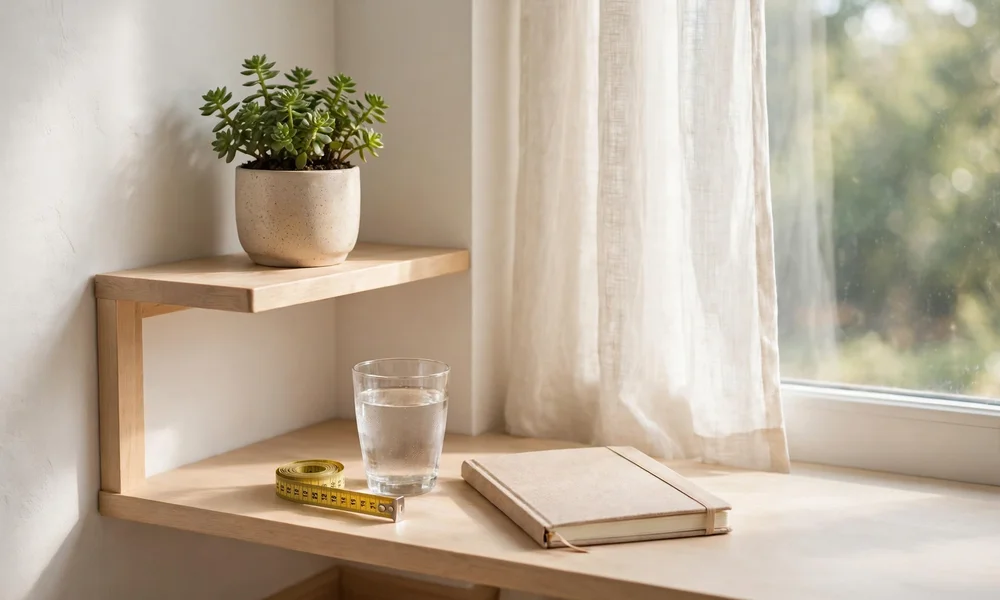
The spot decides whether the corner works, so choose it before the stones. The best spot is one you pass every day: the shelf beside your bed, the ledge near the kitchen window, the small table by the front door, or the corner of your desk.
Light matters more than size. Soft, indirect daylight is ideal: it shows the colour of the stones without bleaching them. Strong, direct sun is a problem, though: amethyst, rose quartz, and citrine can fade in harsh sunlight over months, so a south-facing windowsill in full sun is a poor choice. A spot with morning light and afternoon shade suits most stones well. The spot should also be steady, out of the path of elbows and bags, and dry, away from steamy bathrooms and sinks, because damp air dulls polish and marks wooden trays.
Starting with Three Stones
Three stones are enough to begin. One looks lonely, five can look crowded, and three gives you variety without clutter. Choose stones you genuinely like looking at, because you will see them every day.
A calm starter set covers three colours. Clear quartz is the classic first stone: colourless, glassy, and hard, at 7 on the Mohs scale, so it is easy to care for. Amethyst brings a soft violet, and rose quartz a pale pink. Together they give you clear, violet, and pink on one small dish. Buy slowly: one good stone a month builds a better corner than ten bought in one afternoon.
| Stone | Why it suits a corner | Care |
|---|---|---|
| Clear quartz | Bright and colourless | Wipe dry |
| Amethyst | Soft violet | Keep out of strong sun |
| Rose quartz | Pale pink | Keep out of strong sun |
The Glass of Water Beside Them
Every crystal corner in this guide has a glass of fresh water beside the stones. Fill a small, clean glass each morning, set it beside the dish, and drink it or pour it away at night. The water keeps the corner alive: it catches the light and gives you a reason to stop there daily.
One rule never changes: no stone goes into the drinking water. Stones may be safe to handle, but dust, polish residue, and tiny chips have no place in a glass you drink from, and some stones, like selenite, are damaged by water itself. The indirect method is the only method used here: the stone sits beside the water and the water stays clean. A fuller version of this idea is described in how to build a simple crystal water station at home. Choose a small, plain tumbler: easy to wash, and it does not compete with the stones.
Arranging It So It Looks Calm
Arranging a corner is a matter of space, height, and restraint. The most common mistake is filling every centimetre, so leave more empty space than feels natural: a corner that is half empty looks calm, while a full one looks like a shop shelf.
Give the stones different heights: a small upright point at the back, a tumbled stone in the middle, and a flat palm stone at the front. A tiny plant or a small candle can add height, but keep extras to one or two at most. If you use selenite, let it be the pale piece that lifts the corner: a guide to keeping a beauty shelf feeling fresh with selenite shows how one pale stone can brighten a shelf.
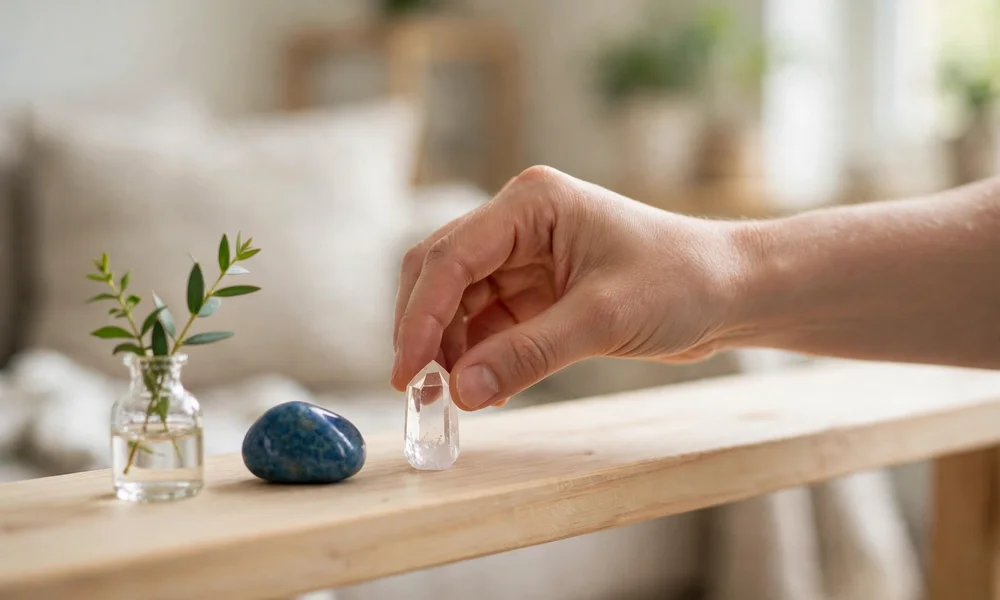
Place the three stones in a loose triangle, not a straight row, and turn each one until its best face catches the light. Then step back, look from the doorway, and remove one thing: whatever you remove was the clutter.
Light, Dust and Keeping It Clean
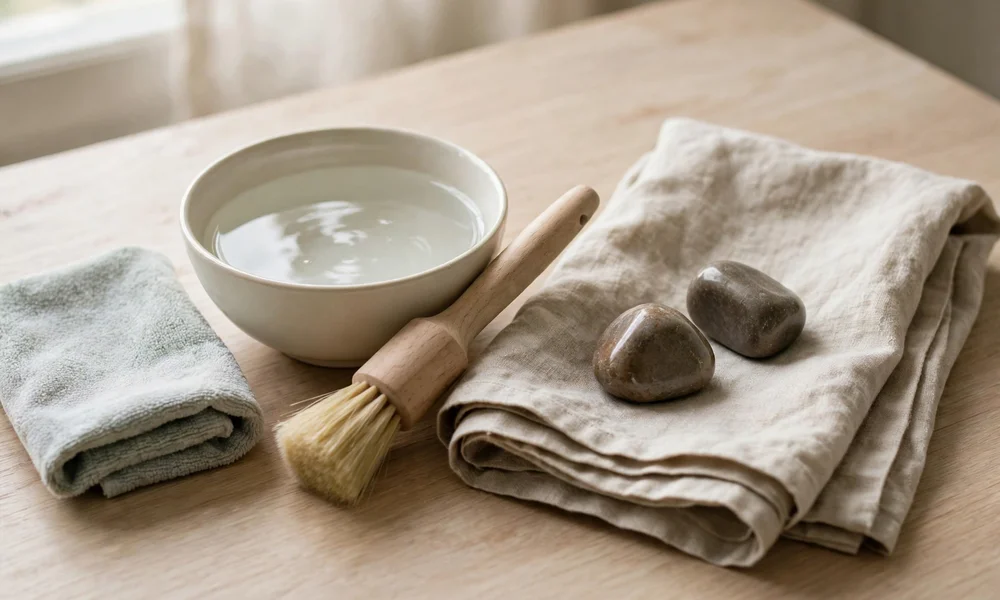
A crystal corner stays beautiful with small, regular care, mostly dusting. Dust shows quickly on a polished stone, dulling its shine. Once a week, lift each stone, wipe it with a soft, dry cloth, and wipe the shelf beneath it. The whole job takes two or three minutes.
Soft daylight is your friend, and a corner that catches the morning sun for an hour or two looks its best. Strong sun all day is not, especially for amethyst, rose quartz, and citrine, which can fade over months. If your spot gets fierce afternoon sun, move the corner into the shade, or choose stones less sensitive to light, such as clear quartz. Water is for cleaning some stones and never for others: hard stones like quartz can be rinsed briefly under lukewarm water and dried at once, but soft or water-sensitive stones must stay dry, since selenite dissolves slowly in water. When in doubt, wipe dry. For stones you are not displaying, the storage habits in how to store crystals so they stay beautiful apply: keep pieces apart, dry, and out of harsh light.
A Corner for Mornings and Evenings
A crystal corner earns its place when it fits into your day. In the morning, change the water and look at the stones for a few seconds while the kettle boils. That is the whole morning ritual: thirty seconds, and the day begins with a calm sight instead of a screen.
In the evening, a small lamp or a candle nearby gives the stones a warm, low glow, and the corner signals that the busy part of the day is over. Sit near it for a few minutes with a book or a cup of tea. If the corner is in a bedroom, keep it simple and tidy: two or three stones, a glass of water, and a small lamp are plenty.

What a Crystal Corner Will Not Do
Say plainly what a crystal corner will not do. It will not improve your health, cure any condition, bring luck, or protect your home. Stones are beautiful minerals, and beauty is what they offer. Any claim beyond that is not supported by evidence.
What the corner can do is simpler: it can make a room feel more considered, give you a small daily pause, and teach you to look closely at natural things, like light moving through quartz. Those modest pleasures hold up every day. If a health concern is persistent or worrying, please speak to a qualified health professional.
Your Small Crystal Corner Checklist
- Pick a spot you pass daily, with soft light and no damp or strong sun.
- Choose three stones you love, such as clear quartz, amethyst, and rose quartz.
- Set them on a dish or tray with space around each one, tallest at the back.
- Place a glass of fresh water beside the stones, never with a stone inside it.
- Dust the stones and the shelf once a week with a soft, dry cloth.
- Change the water daily, and remove one thing when the corner feels crowded.
Frequently Asked Questions
How much space does a crystal corner need? Very little. A shelf about the width of a book, a shallow tray, or a windowsill ledge is enough for three stones and a small glass of water.
Which stones are best for a first corner? Clear quartz, amethyst, and rose quartz: clear, violet, and pink, all hard enough to care for easily. Choose stones you like looking at.
Can I put a stone in the glass of water? No. Keep every stone beside the water, never inside it, so the water stays clean and water-sensitive stones like selenite are never damaged.
Will sunlight damage my stones? Strong sun over months can fade amethyst, rose quartz, and citrine. Soft morning light is fine; keep sensitive stones out of fierce afternoon sun.
How do I clean the stones in my corner? Wipe them weekly with a soft, dry cloth. Hard stones like quartz can be rinsed briefly and dried at once, but soft stones must stay dry.
Can a crystal corner go in a bedroom? Yes. Keep it simple: two or three stones, a glass of water, and a small lamp, dusted weekly so it stays restful.
The Bottom Line
A small crystal corner is a shelf, three stones, and a glass of water, arranged with space and kept clean. Choose a spot you pass daily, start with stones you love, and let the corner be a small daily pause. Begin this weekend: set them out, pour a glass of water, and step back. That is the whole project.
A Note for Quiet Corners
Keep it small, keep it clean, keep it yours. The best corners are rarely the biggest: a little light, a few honest stones, and a few unhurried seconds, repeated until they become part of how you live. Stay curious. Stay clear. Keep it calm.



