Somewhere deep underground, rainwater sinks slowly through rock, warming as it travels and gathering tiny amounts of minerals on its long journey. When it finally rises again, it arrives as thermal spring water: naturally warm, clear, and lightly mineral, steaming gently in the cool morning air.
Today, the same water reaches the bathroom in a simpler form: a bottle of thermal spring water, used as a fine mist or a gentle rinse. It is not a medicine, and it is not a miracle. It is warm mineral water, used well, and its value lies in comfort: a soft mist that cools the skin and a rinse that feels kinder than a hard splash.
This article explains what thermal spring water is, what it can and cannot do for skin, and how to use it safely at home. It covers mists, rinses, and bathing, and it states the limits clearly. Bottled thermal water is for the skin only, as a mist or spray, and nothing here is a drinking claim or a medical claim.
Key Takeaways
- Thermal spring water is groundwater warmed underground, carrying small amounts of minerals such as calcium, magnesium, and bicarbonate.
- Bottled thermal water is for skin only, as a fine mist or a gentle rinse; it is not a drink and not a treatment.
- A mist refreshes and softens the feeling of the skin; it does not moisturise, cleanse, or cure any skin condition.
- Mist lightly, let the skin drink it in for a minute, then seal in moisture with a light cream.
- Keep the water clean, the bottle capped, and the routine simple: mist, moisturise, protect.
What Thermal Spring Water Is
Thermal spring water begins as ordinary rain. It falls on hills and mountains, sinks into the ground, and travels slowly downward through layers of rock and soil. Deep below the surface, the earth is warm, and the water warms with it, sometimes for years, before pressure pushes it back up through a crack in the rock. By the time it reaches the surface, it is naturally warm and carries dissolved minerals picked up along the way.
The minerals vary from spring to spring, because every spring passes through different rock. Common ones are calcium, magnesium, bicarbonate, and silica, in small amounts. That mix gives each spring its own character: some waters feel soft and silky, others feel slightly salty or chalky. The amounts are tiny, measured in milligrams per litre, and that is exactly the point. Thermal water is gentle because its minerals are dilute.
How It Differs from Ordinary Water
Ordinary tap water is clean and safe, but it is treated to be drinkable, and it can feel hard on the skin in some areas. Hard water carries more calcium and magnesium from pipes and treatment, and it can leave the skin feeling tight after washing. Soft water, by contrast, feels silkier and rinses more easily. Soft water and kinder skin explains this difference well, and its gentle washing advice pairs neatly with a thermal mist.
Thermal spring water sits somewhere between the two. It is naturally soft in feel, lightly mineral, and warm at its source, though bottled water cools to room temperature. Unlike tap water, it is not chlorinated, and unlike a spa bath, it is not hot. A bottled mist is simply a convenient way to bring a little of that softness home, without a trip to a mountain spring.
The Mist: A Gentle Way to Use It
The most common way to use bottled thermal spring water is as a mist. Hold the bottle about twenty centimetres from your face, close your eyes, and spray two or three short bursts. Let the fine droplets settle for about a minute, then pat very gently with clean fingertips or a soft tissue, or leave the last trace of moisture to dry on its own before you moisturise.
A mist is best used on clean skin, after washing and before moisturiser. It can also refresh the skin during the day: after a long walk, a warm afternoon, or a few hours in dry indoor air, a short mist can make the skin feel cooler and less tight.

Rinsing with Thermal Water
A second way to use thermal spring water is as a rinse. After your usual gentle wash with lukewarm water, pour a little thermal water into a clean cup and splash it over your face, or soak a soft cloth in it and press the cloth gently to the skin. The rinse feels softer than tap water, and it leaves no tight feeling behind.
A rinse suits mornings when the skin feels dry, and evenings when you want a calm finish to the day. It also suits sensitive days, when the skin prefers the least possible friction: a cloth pressed gently is kinder than hands rubbing. Use a small amount each time; a cup is plenty, and the bottle will last for weeks if you use it this way.
Bathing in Thermal Springs
The oldest use of thermal spring water is bathing, and it is still the most relaxing. A warm spring bath, at a comfortable temperature, can ease tired muscles and quiet a busy mind, and the mineral water feels soft against the skin.
Keep the bath warm, not hot. Water above body temperature can dry the skin and leave it flushed, which is the opposite of the calm you went for. Twenty minutes is plenty for a soak, and a cool rinse afterwards helps the skin feel fresh. Not everyone should use hot spring baths. Pregnant women, young children, and anyone with a heart condition, low blood pressure, or a skin infection should check with a doctor first.

What It Does for Skin
So what does thermal spring water actually do for skin? The honest answer is modest, and that modesty is a strength. The water feels soft and soothing on the surface, it can ease the tight feeling after washing, and it can cool warm skin on a hot day.
The minerals in the water may help the skin's surface feel calm, and some studies suggest they can support the skin's barrier. But the amounts are small, and a mist is a brief contact, so any effect is gentle and short-lived. A mist does not moisturise by itself: water evaporates, and without a cream to seal it in, the skin can feel drier than before. That is why the routine matters more than the water. Mist, then moisturise while the skin is still slightly damp, and the water has done its job. Think of thermal water as a kind helper, not a hero: it softens the moment, and your moisturiser does the lasting work.
Building a Simple Thermal Routine
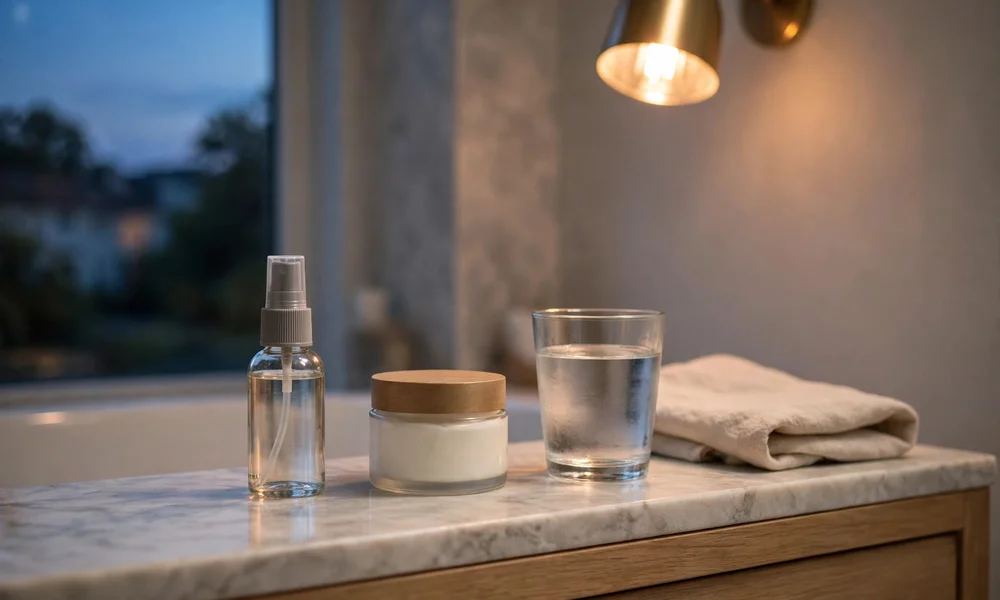
A good thermal routine is short enough to keep every day. In the morning, wash gently with lukewarm water, mist with thermal water, wait a minute, then apply a light moisturiser and sunscreen. The whole routine takes about five minutes, and it sets the skin up calmly for the day.
In the evening, wash again, mist again, and use a slightly richer moisturiser for the night. Keep the products few: a cleanser, a mist, a moisturiser, and sunscreen is a complete routine, and adding more rarely helps. Spring water and a soft skin reset describes a seasonal reset built around cool spring water, and its advice on lighter moisture and steadier habits fits well with a thermal mist.

Choosing a Good Bottle
Not all bottled waters labelled as spring water are thermal, so read the label. A true thermal spring water will say where it comes from and will usually name the spring. Look for a simple ingredient list — water and its natural minerals, nothing added — and a bottle that feels sturdy, with a fine, even spray nozzle. A coarse nozzle that spits large drops is not a mist; it is a squirt.
Keep the bottle capped, upright, and out of direct sunlight. If the water smells strange or looks cloudy, replace it. Cold water has its own charm too, and glacier water beauty, cool and clean is a good companion read for a cool, brisk rinse.
| Season | Mist moment | After mist |
|---|---|---|
| Summer | Cool afternoon refresh | Light moisturiser |
| Winter | After warm wash | Richer cream |
| Spring | Morning reset | Sunscreen, light cream |
| Autumn | Evening wind-down | Night moisturiser |
Your Thermal Spring Water Checklist
- Choose a real thermal spring water with a simple label.
- Mist clean skin from twenty centimetres, eyes closed.
- Wait one minute, then moisturise while skin is damp.
- Use as a gentle rinse on dry or sensitive days.
- Keep the bottle capped, cool, and out of sunlight.
- Replace the bottle if water smells strange or looks cloudy.
Frequently Asked Questions
What is thermal spring water?
Thermal spring water is groundwater that warmed deep underground and rose carrying small amounts of minerals such as calcium, magnesium, and bicarbonate.
Can I drink bottled thermal spring water?
Not the kind sold for skin. Bottled thermal water for the skin is a mist or a rinse only, and this article makes no drinking claims for it.
Does thermal spring water moisturise skin?
Not by itself. A mist adds water to the surface, but water evaporates, so always follow with a light moisturiser while the skin is still slightly damp. The mist refreshes; the cream does the lasting work.
Is thermal spring water good for sensitive skin?
Many people with reactive skin find a thermal mist gentler than hard tap water, because it feels soft and is not chlorinated.
How often can I use a thermal water mist?
As often as you like through the day, on clean skin or over bare skin after washing. Two or three short sprays are enough each time.
Does thermal spring water treat eczema or acne?
No. Thermal spring water does not treat, cure, or prevent any skin condition. If you have a skin problem that persists, speak to a doctor or dermatologist.
The Bottom Line
Thermal spring water is warm mineral water from deep underground, used at home as a fine mist or a gentle rinse. It softens the feeling of the skin, cools a warm afternoon, and makes a simple routine feel calmer.
Mist, moisturise, and carry on with your day.
A Note for Warm Water Days
Keep it gentle, keep it simple, keep it on the skin. Warm water from the earth is a small daily pleasure, and a small pleasure, used well, is enough.