Bright days ask for very little. The light comes in low through the window, the morning moves slowly, and there is nowhere you have to be in a hurry. A south sea pearl suits that kind of day: warm, golden-white, and glowing softly.
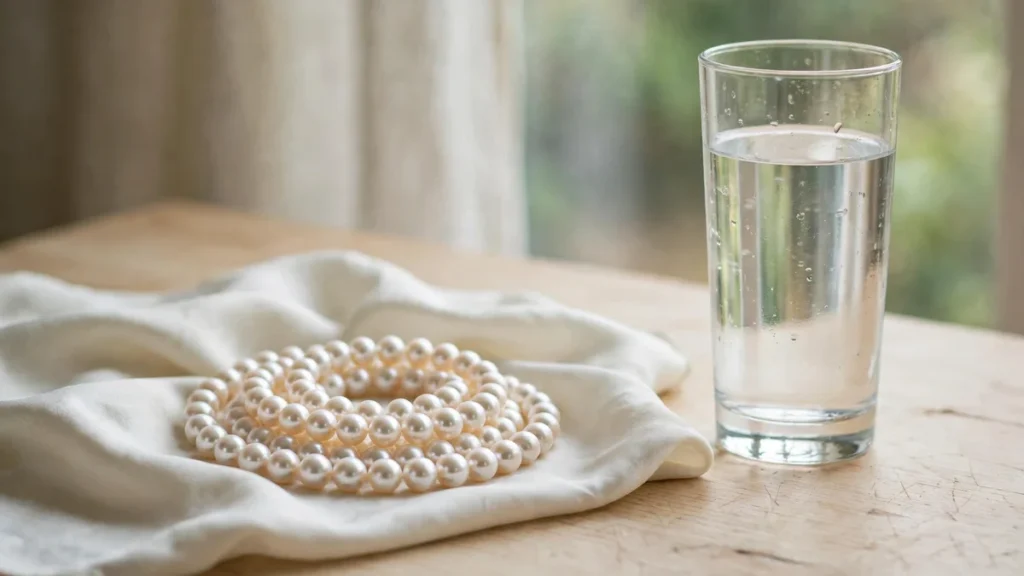
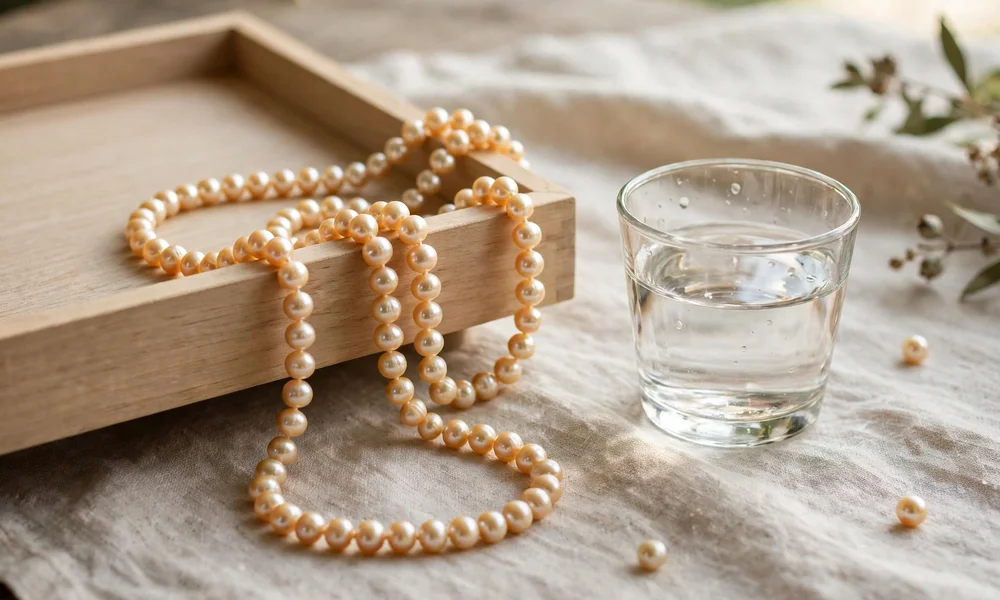
Pearls sit beside water only, never in it. A glass of fresh water stands on the tray next to the pearls, there to sip while you choose a piece for the day, never to hold a pearl or wash one. The water is for drinking, and the pearls are for wearing and looking at.
This guide looks at the south sea pearl in plain words: what it is, why its warm gold suits bright days, how to choose a piece, and how to keep it safe at home. It is gentle general information only, and a south sea pearl will not heal anything on its own.
Key Takeaways
- A south sea pearl is a warm golden-white saltwater pearl from Australia and the Philippines.
- Its soft gold glow suits bright days, pale linen, clear glass and unhurried mornings.
- South sea pearls are larger than freshwater pearls, with a deep, satiny shine.
- A south sea pearl is for wearing and for display, and it will not mend anything at all.
- Set the pearl beside your drinking water, never inside it, and never leave it sitting in liquid.
What a South Sea Pearl Is
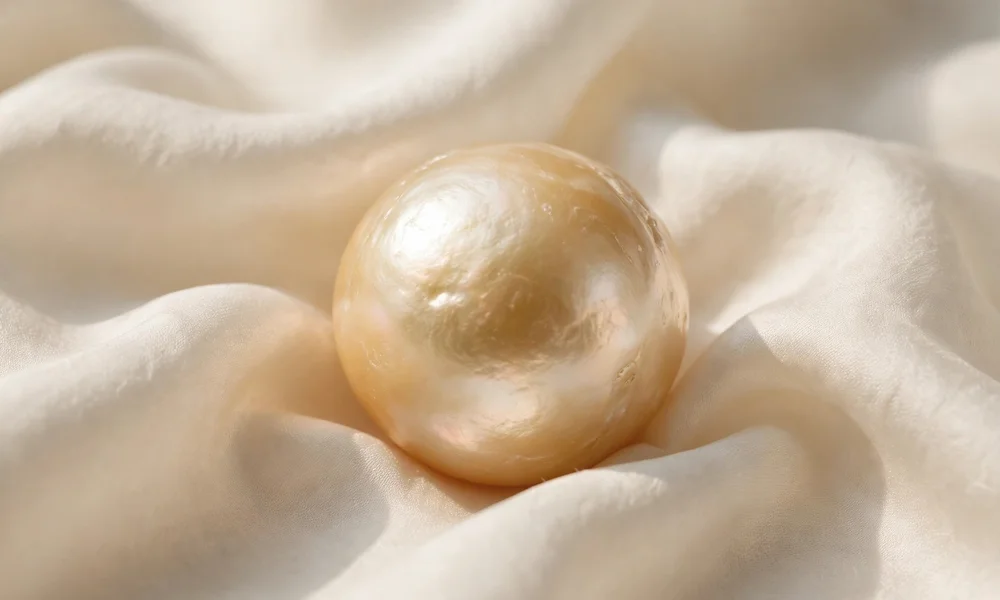
A south sea pearl is born in warm southern seas, inside a big oyster with a silver or gold lip. Over months and years, the oyster coats a small bead with coat after coat of nacre, a smooth lining that hardens into the pearl. Light sinks into those coats and comes back softly, so the pearl looks lit from inside instead of glittering on top.
South sea pearls are the largest pearls you will commonly meet, often ten to fifteen millimetres across, and their colour runs from white with a golden glow to a deep, honeyed gold. A single pearl feels cool and silky, with a little weight for its size, and its shine looks satiny, not sharp.
A south sea pearl is not a freshwater pearl, not a Tahitian pearl, and not a piece of glass. It comes from oysters in the warm waters off Australia and the Philippines, and each one takes years to grow. That slow growth gives it its size, its warmth, and its price.
Why Warm Gold Suits Bright Days
Warm gold fits a bright day because it lights the room without shouting. A bright day is an ordinary one done slowly: the bed made, breakfast eaten without rushing, water sipped at your own pace, and a quiet hour before the day fills up. A golden-white pearl adds a small piece of sunshine to that ease.
Bright days also suit pale colours, and the pearl sits happily among them: cream linen, pale wood, a white tray, a clear glass. Dark stones can look heavy in strong sun, but warm gold stays soft, even at noon.
Choosing a South Sea Pearl Piece
Do your shopping in daylight, with the piece in your own hand. First judge the shine: a fine pearl shows your face back clearly, the way a pale mirror would, while a poor one stays flat and chalky even in strong light. Then judge the colour as you turn it: the gold should hold steady, deep in sunlight and gentle in shade, without pale blotches or a milky film.
Then run your eyes over the surface. Tiny marks are natural, but deep pits, cracks, or skin that is peeling away are warning signs. Test the clasp, look at the stringing, and hold on to the receipt. If new metals bother your skin, wear the clasp against your wrist for a day before you commit. Walk away from a seller who hides where the pearls were grown, or who claims the piece will improve your health.
A Bright Day with a South Sea Pearl
Start a bright day by laying the pearls on their pale wooden tray and filling a tall glass to stand beside them. Rest a while, drink slowly, and lift one pearl for a moment to feel how cool and smooth it is.
Leave the tray out all morning, where the light is kind. Choose one piece to wear — a single pendant, a pair of studs, or a short strand — and put the rest back in their box. Lift the piece again after supper, when the lamps make its gold look deep, and wipe it gently before it goes away.
A Simple Morning Start
Five minutes is enough to begin. Set the tray down, pour the water, and pick the piece for the day: a short strand for a bright morning, or one loose pearl in a simple setting for a quiet one. A small choice made slowly beats a long search, and five minutes fits into almost any morning.
Begin with the lightest piece if the tray feels full: one pair of studs, or a single pendant on a fine chain. Light pieces still catch the shape of a bright day, and when they are on you may stop.
A South Sea Pearl at a Glance
| Warm golden white | Glass beside pearls | Pearls stay dry |
|---|---|---|
| Wear on bright days | Wipe after wearing | Store in soft cloth |
Freshwater Pearl
For the lake-grown cousin, read the freshwater pearl guide.
That guide follows a soft white pearl grown slowly in the still water of lakes and rivers, milky and calm, often smaller and a little off-round. A south sea pearl is its sea cousin: larger, warmer, and golden-white, grown in saltwater off Australia and the Philippines. One suits gentle days; the other suits bright ones.
Tahitian Pearl
For the dark saltwater cousin, read the Tahitian pearl guide.
That guide follows a dark grey-black pearl from French Polynesia, grown inside a black-lipped oyster, its colour running from charcoal to peacock green, violet and silver-grey. A south sea pearl is the opposite in colour: warm golden-white, glowing like late sun, with no dark drift at all.
Golden Pearl
For the closest golden match, read the golden pearl guide.
That guide follows a warm gold pearl for classic days, honeyed and even, at home beside a clear glass of water on a pale wooden tray. A south sea pearl shares that warmth, yet it is its own pearl: larger, grown in southern seas, and golden-white rather than deep gold.
A South Sea Pearl and a Freshwater Pearl: Not the Same Thing
A south sea pearl and a freshwater pearl are both pearls, and that is where the likeness ends. Stated plainly: a south sea pearl is a large, warm golden-white saltwater pearl from Australia and the Philippines, while a freshwater pearl is a smaller, soft white pearl grown in lakes and rivers.
The other pearls on this site each keep their own colour, and none of them is a south sea pearl. Tahitian pearl (id 6958) is dark grey-black from French Polynesia; silver pearl (id 5386) is soft grey for quiet days; pink pearl (id 4498) is soft pink for tender days; black pearl (id 4486) is deep grey for bold evenings; lavender pearl (id 5614) is soft violet for quiet days; blue pearl (id 5662) is soft blue for calm days; and green pearl (id 5710) is fresh green for calm days. The south sea pearl stands apart from all seven: warm golden-white, saltwater-grown, and made for bright days.
Nine Neighbours in This Batch
Nine other pieces share this batch, and each keeps its own place. First among the stones, alabaster glows milky white, herderite rests pale and calm, rosasite shows a soft rose colour, and chalcocite holds a dark gleam. Then among the things of the home, a handbag waits by the door, a trinket tray gathers small pieces, a jewellery box shuts over its treasures, and a keepsake sits quietly on its shelf. Last of all, a piggy bank stands ready for its coins. With all nine around it, the south sea pearl alone brings warm golden-white light to bright days.
Stones That Must Never Touch Water
The pearls rest on a dry cloth, and the stones that hate water rest further still. Pyrite turns dull and rusty when damp air reaches it, so it is kept in a closed box on another shelf. Once angelite has been wet, its clear blue clouds over and never clears again, which keeps it far from every glass. Amber, old sap grown hard, loses its warm shine after time in water and stays pale.
Apatite falls apart if it stays wet, while lepidolite, with lithium in its soft lilac layers, is another stone that must stay dry. None of these belongs near the glass, the jug or the bowl, and no stone at all belongs in drinking water.
Your South Sea Pearl Checklist
- Pick a south sea pearl with clear lustre and warm, even gold.
- Set a steady glass of fresh water a hand-span from the tray.
- Wear one piece for the day, then wipe it gently before it goes away.
- Store the pearls in a soft cloth pouch inside their box.
- Keep the pearls on a dry tray, and keep them out of water.
- If a skin worry or rash does not settle, ask a doctor, because a pearl is jewellery, not a treatment.

Frequently Asked Questions
How can I tell a south sea pearl from a freshwater pearl?
Look at the size and the colour. A south sea pearl is larger, often ten to fifteen millimetres across, and warm golden-white, while a freshwater pearl is smaller and soft white.
Is a south sea pearl worth its price?
Prices vary widely, and a trusted seller will explain why. A south sea pearl costs more because it grows slowly in the sea and takes years to form.
Can I hold a south sea pearl while I drink my water?
Yes, hold one briefly to feel its cool, smooth weight, then set it back on its tray. Keep it dry, and never drop it into the glass.
Where should a south sea pearl sit at home?
On a dry tray or in its box, in one place, away from the glass.
How do I clean a south sea pearl after wearing it?
Wipe it gently with a soft, dry cloth and put it away. Never soak it, and never use harsh cleaners or rough cloths.
Can I wear a south sea pearl every day?
You can, and a short strand or a pair of studs suits daily wear well. Wipe the piece after wearing.

The Bottom Line
A south sea pearl stays pleasant when it stays simple: one warm pearl, one glass of water beside it, and a bright day to wear it on.
A Note for Bright Days
A glass of water, a pearl glowing gold in the morning light, and a day taken slowly — that is the whole habit.