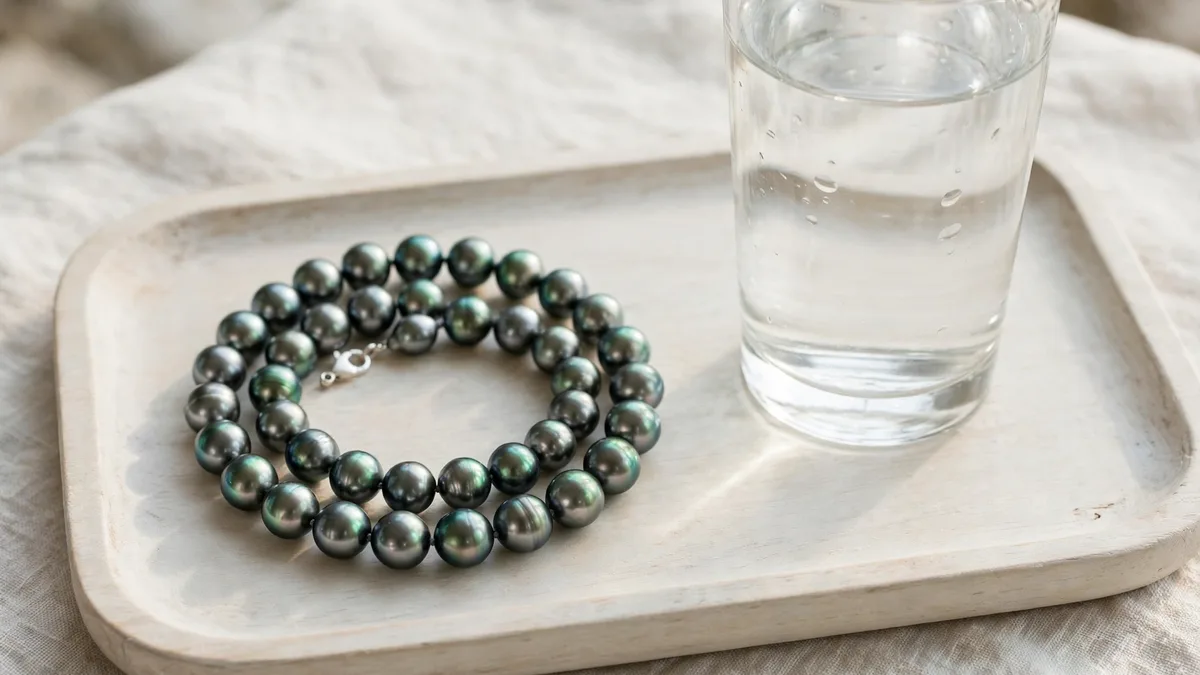
A Tahitian pearl is a dark grey-black saltwater pearl from French Polynesia, grown slowly inside a black-lipped oyster in warm Pacific water. Its colour is not painted on: the oyster lays down layer after layer of dark nacre, and the finished pearl glows charcoal, green, violet or silver-grey as it turns.
Tender days are the quiet ones, when nothing is badly wrong yet everything asks to be handled gently. Jewellery for such a day should be soft and light, and a Tahitian pearl suits that mood: dark, yet without hard glitter.
This guide looks at the pearl plainly: what it is, why its colour looks dark, how to choose a piece, how to wear it, and what it costs. Pearls sit beside water only and are never soaked, and no pearl can heal anything; it is jewellery, and it stays jewellery.
Key Takeaways
- A Tahitian pearl is a dark grey-black saltwater pearl from French Polynesia, grown inside a black-lipped oyster.
- Its colour runs from charcoal to peacock green, violet and silver-grey.
- It suits tender days because it is dark yet soft, with no hard glitter.
- Pearls sit beside water only and are never soaked, and they are jewellery, not medicine.
- Buy from a seller you trust, check the clasp, and keep the receipt.
What a Tahitian Pearl Is
A Tahitian pearl grows in the sea, inside a black-lipped oyster called Pinctada margaritifera. The oyster lives in the lagoons of French Polynesia, and over months and years it coats a small bead with nacre, the smooth material that lines its shell.
The nacre of this oyster is naturally dark. That is the whole secret: the pearl needs no dye to look grey or black, because the oyster itself makes dark nacre.
Tahitian pearls are usually larger than freshwater pearls, often nine to twelve millimetres across. A single pearl makes a quiet pendant; a matched strand makes a necklace that draws the eye without shouting.
Why Its Colour Looks Dark
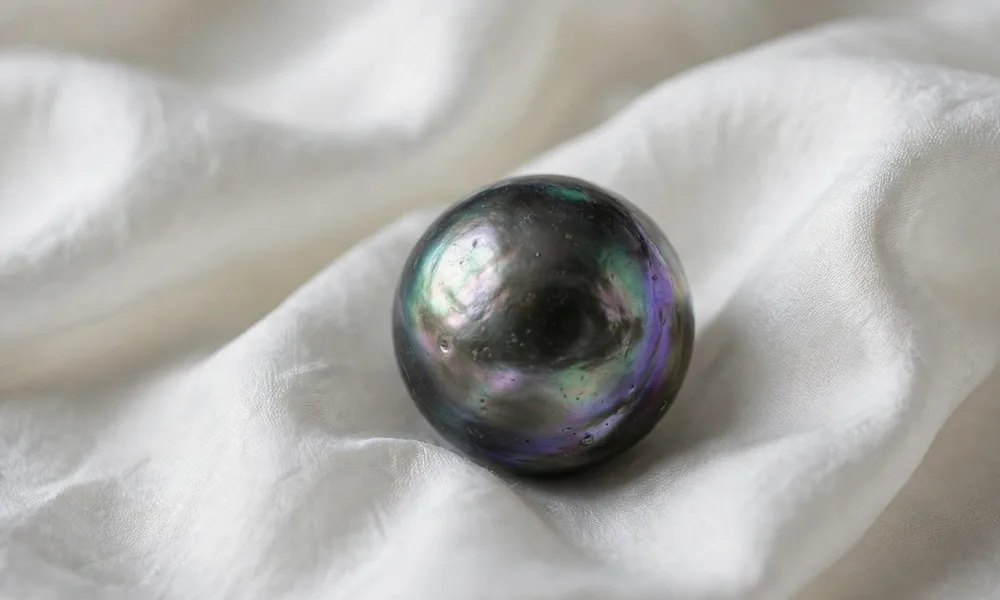
Hold a Tahitian pearl under a lamp and turn it slowly. The base colour stays dark grey, almost black, yet green, violet or silver drifts across the surface as it moves. That drift is called overtone.
The strongest overtones have names of their own. Peacock green is the most loved, a deep green with hints of gold and violet. Aubergine is a dark violet, and silver-grey is the palest of the family, cool and soft.
No two pearls share the same overtone exactly, which is why a strand is matched by eye, pearl by pearl. If a pearl looks flat black with no drift at all, look again in daylight.
Choosing a Tahitian Pearl Piece
Start with lustre, the shine on the surface. A good Tahitian pearl reflects your face clearly, like a dark mirror, while a dull one looks chalky even under a bright lamp. A strand that has been matched well shows one even glow from end to end, with no single pearl standing out as dull or oddly coloured.
Next, look at the surface. A few tiny marks are normal on a natural pearl, but deep pits, cracks or peeling patches are not. Round pearls cost the most.
Check the clasp and the stringing if you buy a strand. The clasp should close with a firm click, and the knots between pearls should be even. Buy from a seller you trust, and keep the receipt.
How to Wear It on Tender Days
Put pearls on last and take them off first. Perfume, hairspray and face cream go on before the pearls, never after.
A single pendant on a fine chain is the gentlest way to wear Tahitian pearl. It sits close to the skin and suits a soft grey jumper or a cream blouse. Stud earrings are just as easy.
Keep the colours around it soft: navy, charcoal, cream, dusty rose. Bright red or hard black can fight the pearl's quiet glow, while soft tones let the overtone do its work.
Caring for Tahitian Pearl
Pearls are soft, and they ask for soft care. Wipe each pearl with a dry, soft cloth after you wear it, and put the piece away in its own soft pouch, away from harder jewellery that could scratch it.
Never soak a pearl, never rinse it under a tap, and never use ultrasonic cleaners or steam. Water and soap can damage the thin nacre, and a soak is the fastest way to dull a good pearl.
Keep the piece out of the bathroom while you shower, since steam and spray settle on everything left nearby. A strand worn often may need restringing every few years.

Tahitian Pearl at a Glance
| Dark grey, saltwater | French Polynesia origin | Worn, never soaked |
|---|---|---|
| Soft cloth wipe | Dry box, alone | Last on, first off |
| Check the clasp | Gentle days only | Price varies widely |
Freshwater Pearl
Freshwater pearl soft white for gentle days is the soft white pearl grown in lakes and rivers, inside a mussel far from the sea. Its white is milky and soft, and its pearls are often smaller and a little off-round.
Tahitian pearl is the sea-grown opposite. It grows inside an oyster in salt water, not a mussel in a river; its colour is dark grey-black, not soft white.
Black Pearl
Black pearl deep grey for bold evenings dresses the same dark grey in evening clothes. Its guide is about lamps, deep colours and hours that feel sure of themselves.
The name black pearl is often used loosely for any dark pearl, Tahitian included, yet this guide treats Tahitian pearl as its own pearl, with a named home in French Polynesia and overtones of peacock green and violet. The colour may be close, but the setting is not.
Pink Pearl
Pink pearl soft pink for tender days is a soft pink pearl for tender days, grown layer upon layer inside a mollusc, pale and rosy.
It shares this guide's mood, and that is where the likeness ends. Pink is pale where Tahitian is dark, rosy where Tahitian is grey-green, and its charm is softness you can see at once.
Tahitian Pearl Beside the Other Pearls
Other pearls in this journal are named for their colours, and each one holds a single shade. Silver pearl, for quiet days, is a pale cool grey, the closest in tone to Tahitian, yet it stays light where Tahitian goes dark. Blue pearl is the colour of a clear sky, green pearl the colour of a young leaf, and lavender pearl a soft violet.
Tahitian pearl stands apart from all four by its dark base and its shifting overtone, and by its saltwater birth in French Polynesia. The others are colour first; Tahitian is depth first, a dark pearl that changes as it turns.
Nine Neighbours in This Batch
The batch around this pearl reads like two short shelves. Five guides begin with water: a diary, a photo album, a postcard, a scrapbook, and a memory box. Four more are stones: molybdenite in steel grey, wardite in soft blue, olivenite in deep green, and dolomite in soft pink.
The pearl sits between the shelves, dark and quiet, and borrows a little calm from each. From the water guides it takes the habit of keeping things dry and in order; from the stones it takes the habit of sitting still and being looked at.
Stones That Must Never Touch Water
Pearls sit beside water only, never in it, and the same dry rule guards the stones on the shelf beside them. No stone in this guide goes into drinking water, and none is soaked for any reason.
Apatite loses its polish when damp air lingers around it, so the piece stays in its box on a dry day. Lepidolite's pale flakes hold lithium, and that alone keeps it far from water that might touch skin. Pyrite, once wet, can spot and dull in ways no cloth will undo. Angelite's fine cracks widen when water seeps in, and the stone can split. Amber is hardened tree resin, not stone at all, and a soak clouds it.
Your Tahitian Pearl Checklist
- Choose a pearl with a clear, mirror-like shine in daylight.
- Check the surface for deep pits or peeling, and the clasp for a firm click.
- Put pearls on last, after perfume and cream, and take them off first.
- Wipe with a dry soft cloth after wearing, and store the piece alone.
- Never soak, rinse, steam or ultrasonically clean a pearl.
- If a pearl's string frays, stop wearing it and ask a jeweller — a good pearl deserves proper care, not a guess.

Frequently Asked Questions
Is a Tahitian pearl always black?
No, it is dark grey rather than true black, and the colour shifts with the light. Most pearls show green, violet or silver-grey overtones as they turn.
How can I tell a real Tahitian pearl from a dyed one?
Ask the seller whether the colour is natural, and buy from a seller you trust. A dyed freshwater pearl often looks flat and even, while a real Tahitian pearl shows a dark base with overtones that move as it turns.
Can I wear Tahitian pearl every day?
You can, but tender days suit it best, and daily wear means more wiping, more care, and earlier restringing. If you wear it daily, put it on last and take it off first.
Why is Tahitian pearl more expensive than freshwater pearl?
Tahitian pearls grow in the sea, one at a time, inside a black-lipped oyster, and the farming takes longer with more losses. Freshwater mussels grow many pearls at once in lakes and rivers, so their pearls cost less.
Can I clean Tahitian pearl with water?
No, never soak or rinse a pearl, and never hold it under a tap. Wipe it with a dry soft cloth after wearing.
What should I do if the string breaks?
Gather every pearl, put them in a soft pouch, and take them to a jeweller for restringing. Do not try to knot the strand yourself, since an uneven knot can wear the pearls.

The Bottom Line
A Tahitian pearl is worth it for tender days when you love its dark, shifting colour, buy it from a seller you trust, and care for it dry: a quiet pearl for quiet days, and nothing more.
A Note for Tender Days
A dark pearl on a soft cloth, a glass of water beside it, and a day that asks for nothing more than gentle — that is the whole tender habit.