Some days ask for very little. There is no big plan, no rush from one thing to the next, only a slow morning, a quiet afternoon, and an evening that arrives without hurry: on a quiet day, the best hours are the soft ones.
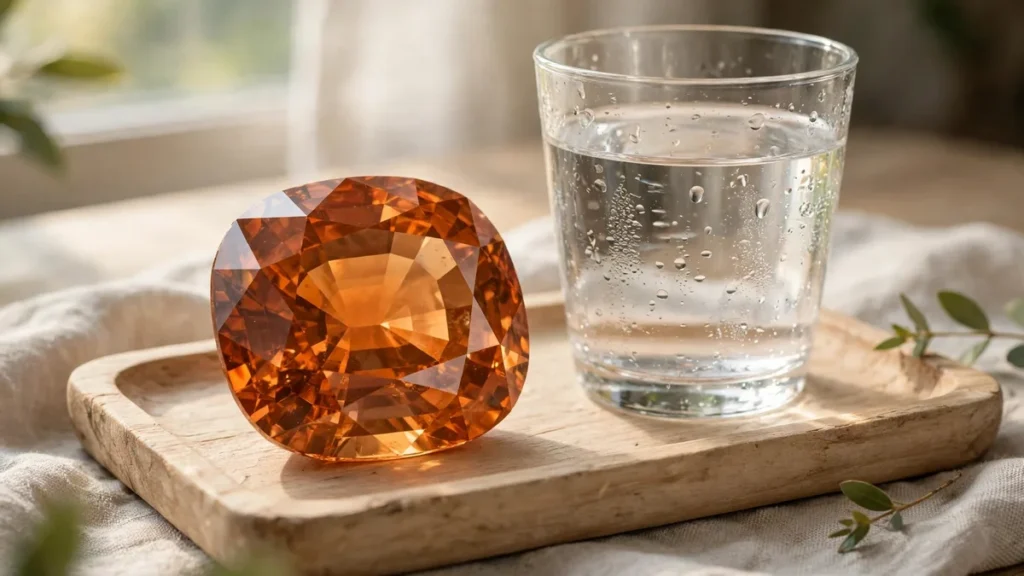
Purple sapphire is a stone for days like these: a soft violet corundum, clear and bright, with facets that catch the light in small violet flashes.
This guide is a spotlight on purple sapphire: what the stone is, how to choose a piece, how to display it, and how to enjoy it through a quiet day. The stone is for display and handling only, never a treatment, and it will not heal anything.
Key Takeaways
- Purple sapphire is a soft violet corundum, clear and bright, with facets that flash violet.
- Its soft violet colour suits quiet days, slow hours and gentle rest.
- Purple sapphire differs from pink, yellow, star and deep blue sapphire.
- Purple sapphire is for display and handling only; it will not heal anything.
- The stone stays beside drinking water, never in it, and stays dry and dusted.
What Purple Sapphire Is
Purple sapphire is the soft violet variety of sapphire, a corundum mineral coloured by tiny traces of chromium and iron inside the crystal. It is the same mineral family as blue sapphire and ruby, and it shares their famous hardness, scoring 9 on the Mohs scale, second only to diamond. It keeps its polish and feels cool and solid in the hand.
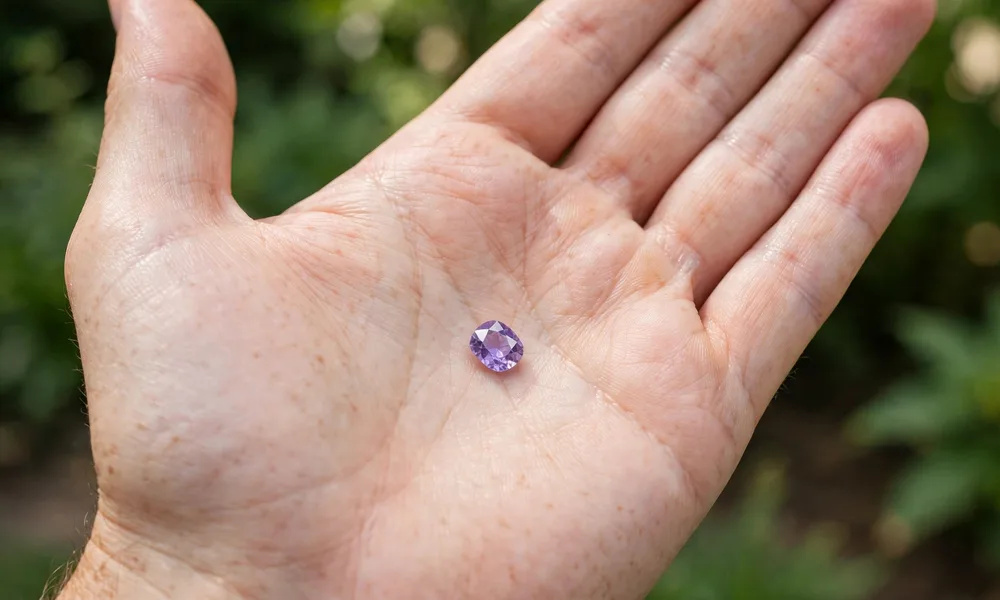
Its colour is a soft violet, from pale lilac to a gentle grape, never muddy and never harsh. A good purple sapphire is clear and lively, with facets that throw back small flashes of violet light as you turn it.
Why Soft Violet Suits Quiet Days
Soft violet suits quiet days because it is the colour of a calm evening that never hurries. A quiet day has no sharp edges: the light is soft, the hours are slow, and nothing demands to be finished at once. A small violet stone on the tray carries that same soft feeling through the whole day.
Violet also suits a quiet day because it never shouts for attention. A bright, strong colour would stir the mood and pull the eye, but soft violet sits back and lets the day do the talking.
Choosing a Purple Sapphire Stone
Choosing a purple sapphire stone is mostly a matter of looking closely and trusting your eye. A good piece shows a clear, even soft violet with bright facets that sparkle as you turn it, not a dull cloudy violet with no light at all, and not a painted-looking purple that feels too even to be natural. The surface should be smooth with no sharp chips or rough pits, and the facets should meet cleanly if the stone is cut.
If a piece feels pleasant in your hand and its soft violet makes you feel calmer, it is the right one. Buy from a trusted seller, never one who promises it will change your health, and wash your hands after handling it.
A Quiet Day with Purple Sapphire
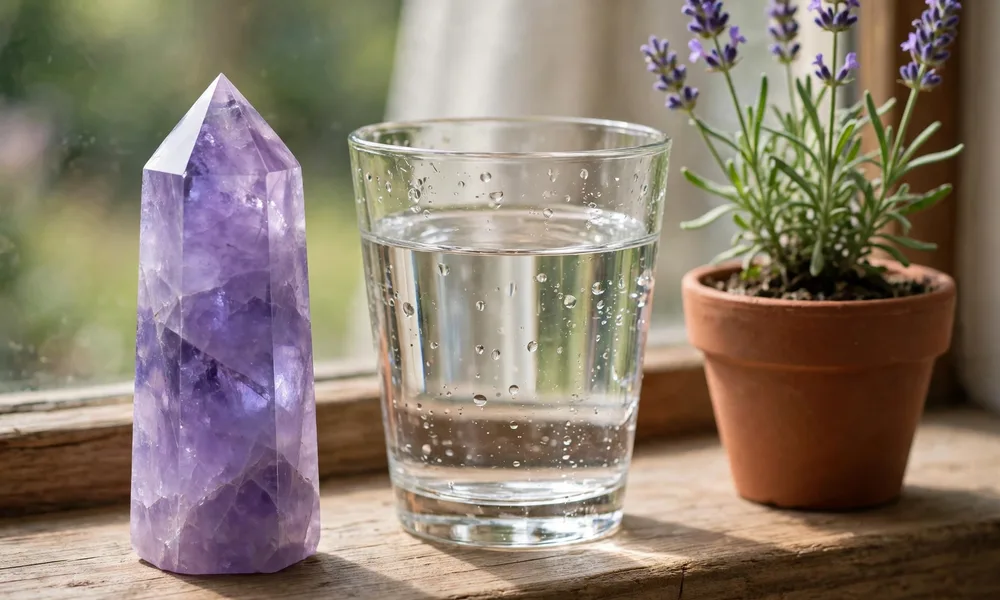
A quiet day with purple sapphire takes only a few minutes to begin: place the stone on its tray, fill a clear glass with fresh water, and set it beside the stone. When you sit down with your notebook or your morning tea, drink the water slowly, in small sips, and then pick up the stone and look at its soft violet facets for a few breaths.
Put the stone back, and let the day carry on at its own pace. The day is water, bright light, one soft violet stone, and a short pause before the hours begin.
Purple Sapphire Beside Water
Water belongs beside the stone, never around it: set a clear glass of fresh drinking water next to the stone on the tray. They share a tray, not a glass. Never place the stone inside drinking water, and never soak it, because even a hard stone deserves clean, dry care and the water should stay plain and fresh.
If the glass spills, lift the stone away and dry it at once with a soft cloth.
Purple Sapphire at a Glance
| Soft violet stone | Quiet days | Display only |
|---|---|---|
| Clear, even violet | Slow hours, rest | Beside water only |
| Bright faceted flashes | Water, light, pause | Dust with dry cloth |
| Cool, hard corundum | One stone, one tray | Never soak it |
Purple Sapphire and Pink Sapphire
Purple sapphire and pink sapphire are the same kind of stone, but they are different stones for different days. Pink sapphire is a clear soft pink corundum, and it suits tender days, when the hours need to feel gentler.
Purple sapphire is a soft violet corundum with the same bright facets, and it suits quiet days, when the house is still and the hours ask for rest. Where pink sapphire soft pink for tender days keeps a soft pink stone for tender days, this guide keeps a soft violet one for quiet days — same stone family, different colour, different calm.
Purple Sapphire and Yellow Sapphire
Purple sapphire and yellow sapphire are close cousins in the same corundum family, yet they suit opposite hours. Yellow sapphire is a warm sunny yellow corundum with a clear glow, and it suits bright days, on bright sunny days.
Purple sapphire is a soft violet corundum with a gentle glow, and it suits quiet days on your own, when the light is low and the hours move slowly. Where yellow sapphire warm yellow for bright days keeps a warm yellow stone for bright days, this guide keeps a soft violet one for quiet days.
Purple Sapphire and the Other Sapphires
Purple sapphire is one member of a large sapphire family, and each member suits a different kind of hour. Deep blue sapphire is a rich cornflower blue stone for deep rest at the bedside, kept beside a glass of cool, still water while the evening winds down.
Star sapphire is a soft blue domed stone with a six-rayed star inside it, a pale star that glides across the dome as you turn it in the light, and it suits quiet evenings. Where star sapphire soft blue for quiet evenings keeps a soft blue stone with a star for quiet evenings, this guide keeps a soft violet faceted stone for quiet days — same family, different colour, different light, and no star at all.

Purple Sapphire, Amethyst and Lavender Jade
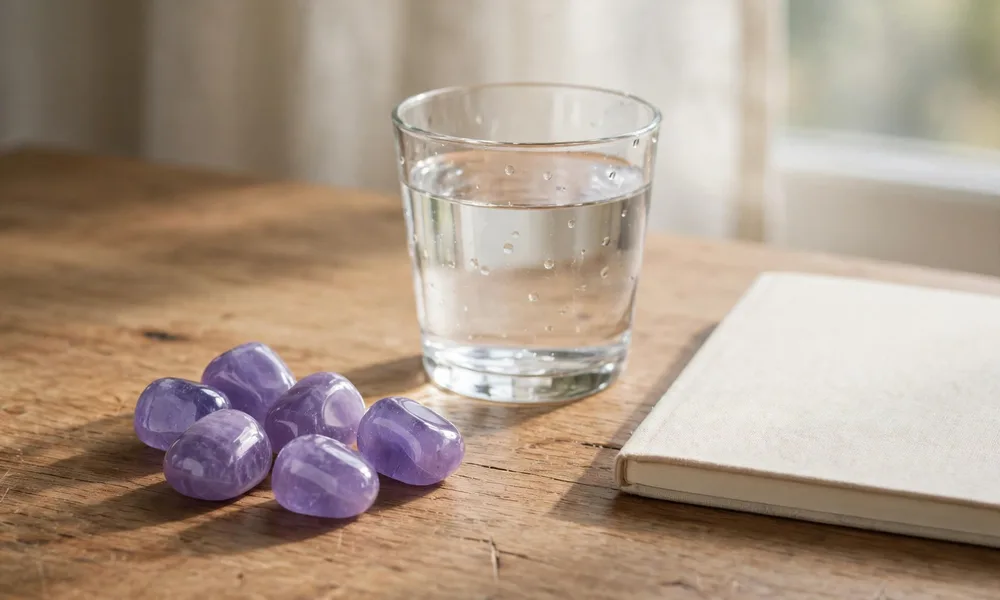
Purple sapphire shares its soft violet colour with other stones, but it is a different stone with a different feel. Amethyst is a violet quartz, softer than corundum, with a glassy purple colour that can run from pale lilac to deep grape, and it is often sold as clusters and points. It is a pretty stone, but it is not a sapphire, and it does not have the same hard, cool, faceted brightness.
Lavender jade is a dense, tough jade with a soft waxy shine, and it feels solid and a little heavy in the hand. Purple sapphire is a clear corundum, harder and brighter than both.
Stones That Must Never Touch Water
Not every stone is safe beside water. Malachite must never go in water or in elixirs, because it can release harmful substances. Hematite must never go in drinking water, and apatite, lepidolite — which contains lithium — pyrite, angelite and amber must never go in drinking water or in soaks either.
The rule stays the same for purple sapphire: display it on a tray, keep a glass of water beside it, and never let the two meet. Purple sapphire is a stable stone for display and handling, but it still stays beside water, never in it.
Keeping the Stone Dry and Clean
Purple sapphire is one of the hardest stones you can own, so it is easy to care for, but it still deserves gentle, dry care. Dust it weekly with a soft, dry cloth, never soap or polish, and never scrub it. A quick wipe keeps the violet bright and the facets sharp.
Keep the stone away from damp windowsills, steamy bathrooms and kitchen sinks. If it ever gets wet, dry it at once and leave it in open air for an hour.
Your Quiet Days Checklist
- Set the stone on a tray beside a clear glass of water.
- Drink a glass of fresh water slowly when the day begins.
- Hold the stone for a few breaths and look at its soft violet.
- Keep the stone beside water, never inside drinking water or soaks.
- Dust the stone dry weekly, and wash your hands after handling it.
- Remember the stone will not heal anything; see a doctor for health problems.
Frequently Asked Questions
What is purple sapphire?
Purple sapphire is the soft violet variety of sapphire, a corundum mineral coloured by tiny traces of chromium and iron inside the crystal. It is clear, hard and cool in the hand.
Is purple sapphire safe beside water?
Yes, it is safe to keep beside a glass of drinking water, on the same tray or shelf. It must never be placed inside drinking water or soaked, because the water should stay plain and the stone should stay dry.
Will purple sapphire heal anything?
No. Purple sapphire will not heal anything. It is a beautiful object for display and handling, and the calm comes from the pause and the quiet day.
How do I clean purple sapphire?
Dust it once a week with a soft, dry cloth, never soap or polish, and never scrub it. If it gets wet, dry it at once and leave it in open air for an hour.
How is purple sapphire different from amethyst?
Amethyst is a violet quartz, softer than corundum, often sold as clusters and points, while purple sapphire is a hard, clear corundum with bright facets. The colour is the same family, but the stone and the light are different.
Where should I keep my purple sapphire?
Keep it on a small tray in a dry room, with a clear glass of water beside it — a desk, a shelf or a windowsill works well.
The Bottom Line
Purple sapphire brings soft violet to quiet days: a clear corundum with bright facets, held beside a glass of fresh water in soft daylight. Keep it beside water, never in it, and dust it dry.
A Note for Quiet Days
Keep it soft, keep it dry, keep it quiet. A small violet stone, a glass of water, and a few slow minutes can carry a quiet day.