Bold days do not creep in quietly. They arrive with a plan half formed, a phone full of messages, and a list of things that cannot wait. The kettle boils, the curtains fly open, and before the first cup is finished the day is moving fast.
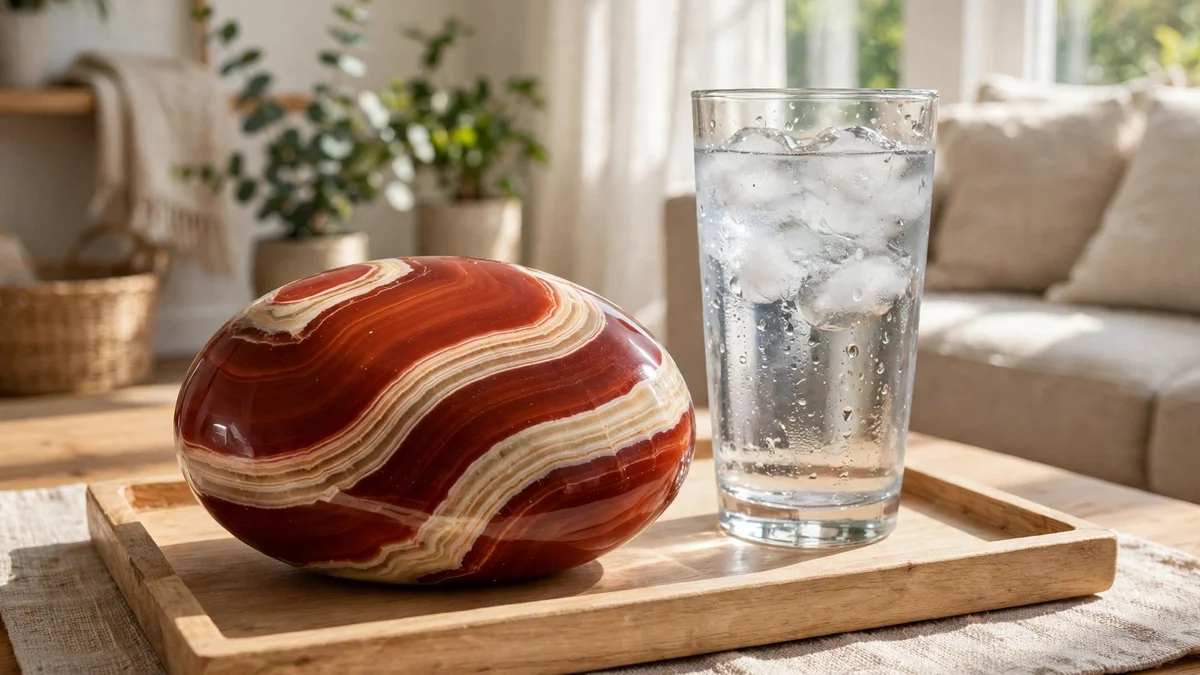
Red onyx fits a day shaped like that. It is a warm, deep red stone crossed with pale cream bands, the colour of embers that still hold their heat. Set it on a tray beside a glass of fresh water, and the pair gives the room a small spark for the hours ahead.
This guide sets out red onyx in plain words: what the stone is, how a good piece is chosen, and the tray where it belongs on bold days. One point is made clearly from the start: the stone is a beautiful object to display and to hold, with no power to change the body or mend an illness.
Key Takeaways
- Red onyx is a warm deep red chalcedony with pale cream bands.
- Its bold red suits busy days, bright rooms and confident plans.
- Red onyx differs from green onyx, blue onyx, black onyx and white onyx.
- Red onyx is for display and holding only; it will not heal anything.
- Keep it beside your drinking water, never dropped into it, and keep it dry.
What Red Onyx Is
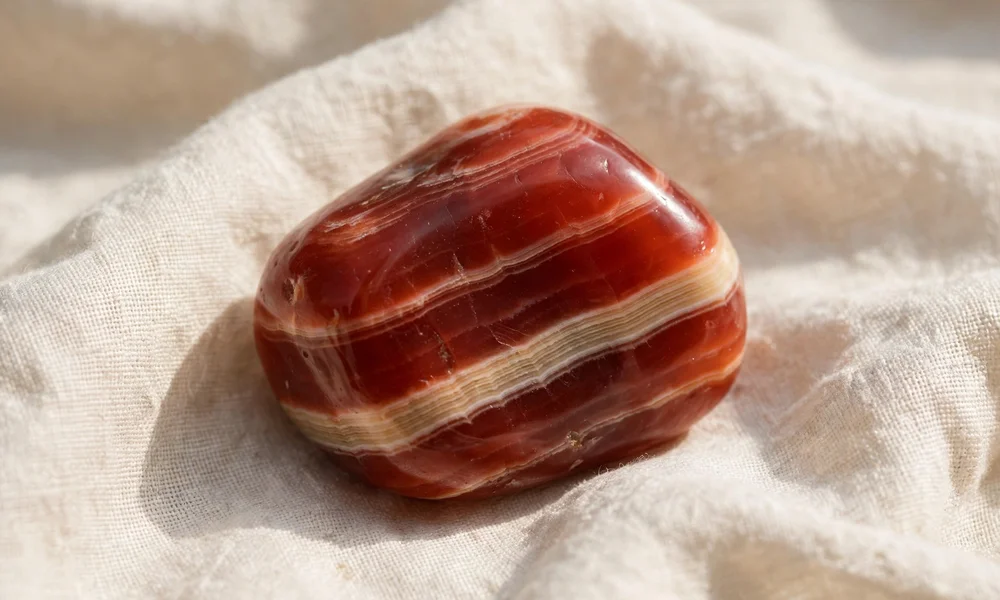
Red onyx is the warm red member of the onyx family, a banded chalcedony and a form of quartz. Its colour is a warm, deep red, richer than brick and softer than scarlet, crossed with pale bands of cream, white and lighter red that sweep through the stone in smooth layers. Those bands formed slowly, one thin mineral layer at a time.
Polished, it feels smooth, with a soft waxy shine rather than a sharp glassy gleam. Pick one up and it feels cool and firm, with a little more weight than its size suggests. Every piece carries its own band pattern.
Why Warm Red Suits Bold Days
Warm red fits bold days because it carries energy and appetite for the day. Pale colours ask the room to slow down, while red asks it to wake up. Think of ripe apples in a bowl, or the last light of a long evening.
Red onyx brings that warmth without shouting. The deep red fills a corner of a desk or tray, and the pale bands give the eye a place to rest. On a day packed with calls and errands, that warm flash can mark the start of things.
Choosing a Red Onyx Piece
Choosing a red onyx piece is mostly a matter of looking closely in daylight and trusting your own eye. A good piece shows a warm, even red with clear pale bands, not a dull brown-red, and the surface should be smooth with no sharp chips or rough pits.
A tumbled stone that fits your palm is plenty for a bold-day desk, easy to hold and move. If the piece feels pleasant and solid in your hand, it is the right one. Buy from a seller with a good name, never one who promises the stone will change your health.
A Bold Day with Red Onyx
Start the morning by setting the red onyx on its tray and filling a tall glass of water to stand beside it, where the light can reach them both. Drink slowly, hold the cool stone in your hand for a moment, and let the red colour set the tone before the first task of the day.
Keep the tray in sight all morning, somewhere the light reaches. Lift the stone once more before the busiest stretch, take one slow breath, and get on with the day. The stone does nothing on its own: the pause is yours, and the red is only a reminder to take it.
Red Onyx Beside Water
Pour a tall glass of cool water and set it on the tray next to the red onyx. The two share the tray and nothing more: the stone is never dipped, never left to soak, and never splashed on purpose, because water takes the shine off a polished surface and leaves marks behind.
That rule holds on every bold day. Handle the stone with clean, dry hands, and if the glass ever tips, lift the piece away at once, wipe it with a dry cloth, and return it only when the tray is dry again.
Red Onyx at a Glance
| Warm deep red | Bold days | Dry display |
|---|---|---|
| Cream, pale bands | Tray, desk, shelf | Stone apart |
| Cool, smooth, firm | Morning, midday, evening | Soft dry wipe |
| Banded chalcedony | Daylight, lamplight, pause | Never soak |

Red Onyx and Green Onyx
Green onyx and red onyx are both banded chalcedony, and the two share the same smooth feel and pale banding. Green onyx for calm days covers a soft green stone patterned with pale bands, kept on a tray for slow, unhurried hours.
Red onyx is the warmer, louder cousin. Where green onyx is soft green and made for calm, red onyx is deep red and made for bold days, with cream bands standing out against the red. One is a quiet green pool, the other a warm ember, and the day decides which belongs on the tray.
Red Onyx and Blue Onyx
Blue onyx and red onyx are both onyx, both banded, and both smooth to hold. Blue onyx for calm days covers a cool blue chalcedony patterned with pale bands, kept where you can see it, for mornings that move slowly.
Red onyx turns the temperature up. Where blue onyx is cool blue and made for calm, red onyx is warm red and made for bold days, with bands that look like cream ribbons across glowing rust. One cools the room, the other warms it, and the colour alone tells you which mood each was chosen for.
Red Onyx and Black Onyx
Black onyx and red onyx are both onyx, and both are steady stones for demanding days. Black onyx for busy days covers a smooth dark chalcedony, deep black with only faint pale bands, kept on a desk for long days.
Red onyx is the brighter of the two. Where black onyx is deep black and quiet, asking for nothing, red onyx is warm red with bold cream bands that catch the eye. One is a dark anchor, the other a warm spark, and both stay beside the water glass, never in it.
Red Onyx and White Onyx
White onyx is the next stone in this family, the sibling beside red onyx, and the two are opposites in colour. White onyx is a pale white stone with soft bands, made for bright days and light, airy rooms, where its gentle colour opens the space up.
Red onyx is its mirror image. Where white onyx is pale and quiet, red onyx is warm and deep, with cream bands glowing against the red. One is white for bright days, the other red for bold days, showing how wide one stone family can run.

Caring for Red Onyx
Looking after red onyx takes almost no effort. Rest it in a small bowl or a soft pouch, somewhere dry and out of strong sun, away from radiators and steamy bathrooms. A quick wipe with a dry cloth now and then is the only cleaning it needs, and soap and polish should never touch it.
Chalcedony is tough, yet a hard knock can still chip a polished edge, so carry the piece gently and never toss it into a bag with hard objects. Wipe away any splash at once, and never leave it sitting in water.
Stones to Keep Away from Water
Some stones must never go near water, so learn their names. Malachite comes first: it should never sit in a glass or a jug, since it can release things no drink should ever hold.
Then there is hematite, which must never rest in drinking water either. Apatite and lepidolite sit on that same dry list, and lepidolite carries lithium within it. Pyrite, angelite and amber sit on that same never-in-water list: none of them goes into a drink or a soaking bowl. Keep red onyx beside the glass, never in it, and treat every stone named here the same way.
Your Bold Days Checklist
- Lay the red onyx on a tray beside a full glass of water.
- Sip fresh water slowly while the bold morning gets going.
- Hold the stone loosely in one hand and take a slow breath out.
- Choose a seller you trust, and file the receipt somewhere safe.
- Keep the stone close to drinks, never inside them.
- Stones cure nothing; take health worries to a doctor.
Frequently Asked Questions
What is red onyx?
Red onyx is the warm red member of the onyx family, a banded chalcedony and a form of quartz. Its colour is a warm, deep red crossed with pale bands of cream, white and lighter red, polished smooth with a soft waxy shine.
How is red onyx different from green onyx?
Green onyx is soft green with pale bands, made for calm days and slow hours. Red onyx is warm deep red with cream bands, made for bold days, so the two share one banded family but suit opposite moods.
How is red onyx different from black onyx?
Black onyx is deep black chalcedony with only faint pale bands, kept for busy days as a quiet, steady presence. Red onyx is warm red with bold cream bands that stand out clearly, so it looks brighter and warmer on the tray.
Will red onyx heal anything?
No. It is a beautiful stone to display and to hold, and if you feel more settled afterwards, that ease comes from the slow minutes you spent with it, not from any power held in the stone itself.
Why must red onyx stay out of drinking water?
Because display stones belong on the tray and in the hand, not in drinks. Red onyx must never be dropped into a drink or left in a soak, since water can take the shine off its polish.
Where should I keep red onyx at home?
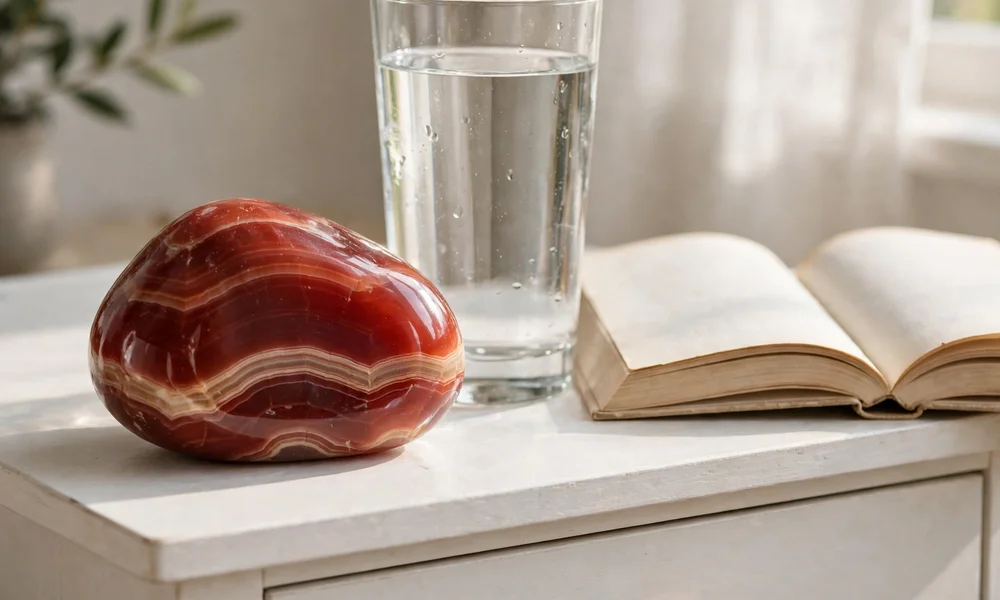
Find a warm, bright corner for it: a tray on a desk, a bedside table, or a shelf near a window, with a glass of water standing close by yet never touching the piece.
The Bottom Line
Red onyx brings warm red light to bold days: deep red stone with pale cream bands, resting on its tray beside a glass of water.
A Note for Bold Days
Keep the red warm, the stone dry, and the day bold. One glowing piece, one glass of water, and a few quiet minutes are enough.