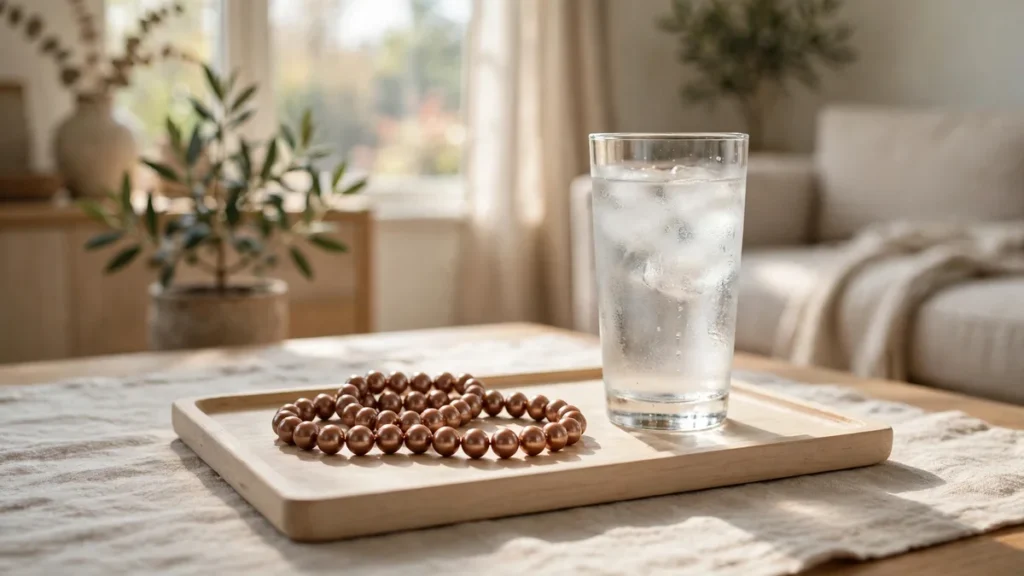
Some days ask for nothing more than calm. The morning moves slowly, the light is soft, and there is time to sit with a glass of water. On a day like that, a loud bright stone feels out of place, and a dark heavy stone feels too serious.
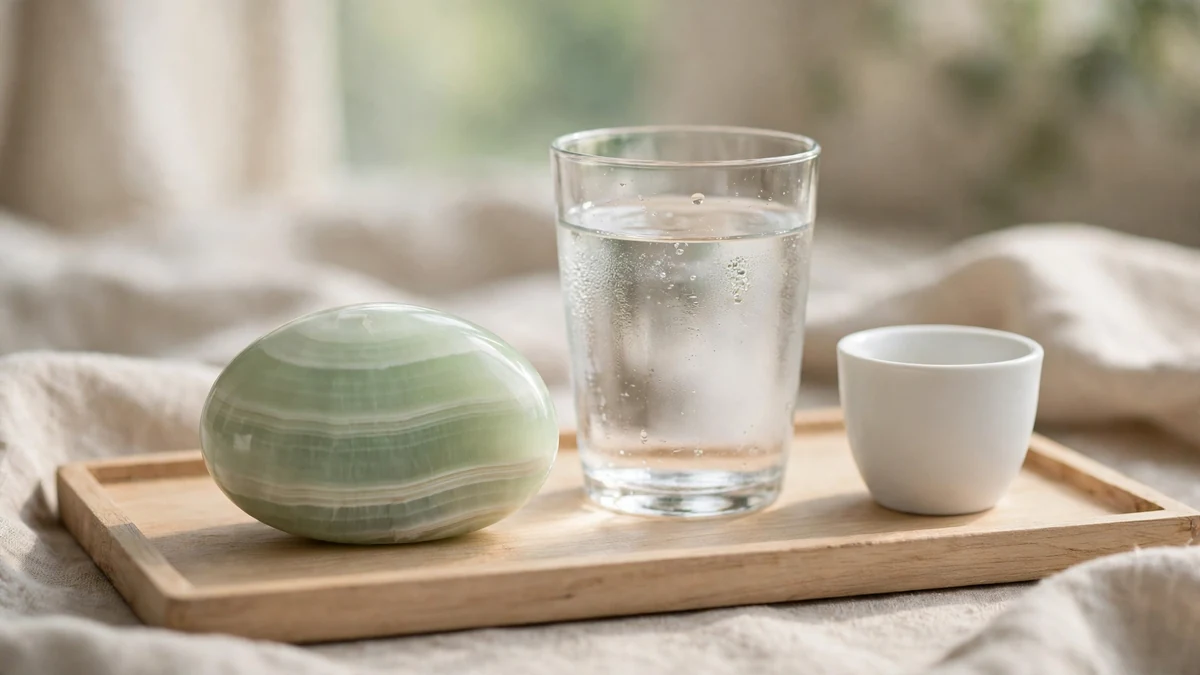
Green onyx is a stone for calm days like these: a soft green chalcedony patterned with pale bands, like quiet water moving slowly over a pale riverbed. Set it on a tray beside a glass of fresh water, and it looks like a small piece of a still green pool, kept where you can see it.
This guide is a spotlight on green onyx: what the stone is, how to choose a piece, how to display it on a desk, and how to enjoy it through a calm day. The stone is for display and handling only, never a treatment, and it will not heal anything.
Key Takeaways
- Green onyx is a soft green chalcedony with pale green bands.
- Its soft green colour suits calm days, soft light and slow hours.
- Green onyx differs from black onyx, green kyanite and prasiolite.
- Green onyx is for display and handling only; it will not heal anything.
- The stone stays beside drinking water, never in it, and stays dry.
What Green Onyx Is
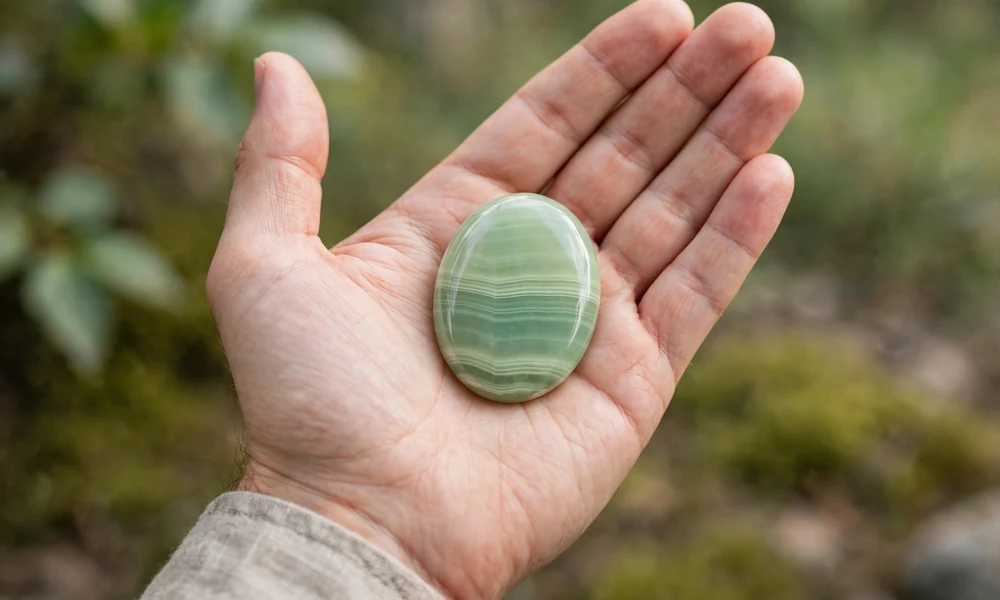
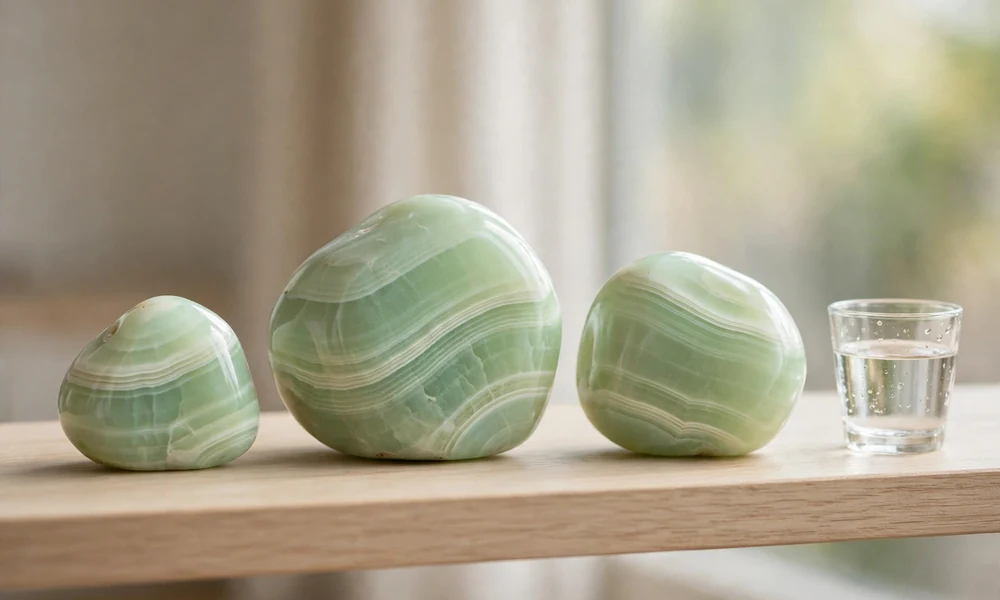
Green onyx is a variety of onyx, a banded form of chalcedony, which is itself a kind of quartz. Its colour is a soft green, lighter than moss and gentler than emerald, crossed with pale bands of cream, white and lighter green that run through the stone in soft, even layers. The bands form slowly, as mineral-rich water lays down one thin layer after another, so every piece carries a pattern that took a very long time to grow.
The stone is smooth when polished, with a soft waxy shine rather than a bright glassy gleam. Hold one in your palm and it feels cool, solid and a little heavy for its size, because chalcedony is a dense, tough stone. No two pieces wear quite the same bands.
Why Soft Green Suits Calm Days
Soft green suits calm days because it is the colour of shade and still water. Bright green can feel lively and wakeful, but soft green is quieter, like pale leaves in shade on a summer day or moss after rain. It looks its best in soft light, when the room is calm and nothing is hurrying.
The stone is simple: it sits on the desk or the tray while the day moves slowly, catching the light in its pale bands. The soft green gives the room a steady, grounded feeling, and the bands give the eye something gentle to follow.
Choosing a Green Onyx Stone
Choosing a green onyx is mostly a matter of looking closely and trusting your eye. A good piece shows a soft, even green with clear pale bands, not a dull grey-green or a muddy brown-green, and the surface should be smooth with no sharp chips or rough pits. The bands should look natural and even, not painted on.
A palm-sized tumbled stone is enough for a calm-day desk, easy to hold, dust and move. If a piece feels pleasant in your hand, it is the right one. Buy from a trusted seller, never one who promises it will change your health, and wash your hands after handling it.
A Calm Day with Green Onyx
A calm day with green onyx takes only a few minutes to begin: place the stone on its tray, fill a clear glass with fresh water, and set it beside the stone. When you sit down with your notebook or your morning tea, drink the water slowly, in small sips, and then pick up the stone and look at its soft green bands for a few breaths.
Put the stone back, and let the day carry on quietly: the desk and the window light. The day is water, soft light, one soft green stone, and a short pause before the hours begin.
Green Onyx Beside Water
Water belongs beside the stone, never around it: set a clear glass of fresh drinking water next to the stone on the tray. They share a tray, not a glass. Never place the stone inside drinking water, and never soak it, because onyx should stay dry and a stone has no place in a drink.
If the glass spills, lift the stone away and dry it with a soft cloth.
Keeping Green Onyx Safe
Green onyx needs only gentle care, and it is worth stating plainly: the stone is for display and handling only. Never put it in drinking water, never soak it, and never use it in a bath or a foot soak. Wash your hands with soap and water after handling the stone, and keep it away from small children and pets.
Dust the stone weekly with a soft, dry cloth, never soap or polish, and never scrub it. Keep the stone away from damp places, and dry it at once if it ever gets wet.

Green Onyx at a Glance
| Soft green stone | Calm days | Display only |
|---|---|---|
| Pale bands | Soft daylight | Never in water |
| Smooth solid feel | Desk and tray | Dust with dry cloth |
| Cool in hand | Water, light, pause | Wash hands after |
Green Onyx and Black Onyx
Green onyx and black onyx share a family name and a banded build, but they look and feel very different. Black onyx is deep even black, sometimes with faint pale bands, a dark stone for steady strength on busy days. Green onyx is soft green with pale bands, a light stone for calm days and slow hours.
Where black onyx steady strength busy days keeps a dark stone for busy days, this guide keeps a soft green stone for calm days. The two are cousins, not twins.
Green Onyx and Green Kyanite
Green onyx and green kyanite share a fresh green colour and a calm mood, but they are different stones to look at. Green kyanite grows in long flat blades, like green glass leaves fanned from one small base, with a soft glassy shine. Green onyx is smooth and rounded, its soft green crossed with pale bands.
Where green kyanite fresh green calm days keeps a bladed green stone for calm days, this guide keeps a banded green stone for calm days. The colour is close, but the shape and the pattern are not.
Green Onyx and Prasiolite
Green onyx and prasiolite are both soft green stones, but they are easy to tell apart once you know what to look for. Prasiolite is pale clear green quartz, light enough to let light through, with no bands and no pattern, just a gentle even tint. Green onyx is opaque, its soft green crossed with pale bands you can follow across the surface.
Where prasiolite soft green fresh mornings keeps a clear pale stone for fresh mornings, this guide keeps a banded opaque stone for calm days.
Green Onyx and the Other Green Stones
Green onyx is easy to tell apart from the rest of the green stones once you know what to look for. Epidote is deep forest green with lighter pistachio streaks, sold as pointed crystal clusters for steady days. Chrome diopside is a vivid emerald green, bright and glassy, for fresh mornings. Dioptase is a bright copper green in sharp crystal clusters, also for fresh mornings. Green kyanite is fresh green blades, and prasiolite is pale clear quartz. Green jade is soft green for slow mornings, green tourmaline is leaf green for new routines, and green fluorite is fresh banded green for clear mornings.
None of them is banded like green onyx. Green onyx stays its own stone: soft green, pale bands, calm days.
Stones That Must Never Touch Water
Not every stone is safe beside water, and some must never touch water at all. Malachite must never go in water or in elixirs, because it can release harmful substances. Hematite must never go in drinking water, and apatite, lepidolite — which contains lithium — pyrite, angelite and amber must never go in drinking water or in soaks either.
The rule stays the same for green onyx: display it on a tray, keep a glass of water beside it, and never let the two meet. The stone will not heal anything, and real health problems belong with a doctor.
Your Calm Days Checklist
- Set the stone on a tray beside a clear glass of water.
- Drink a glass of fresh water slowly while the day begins.
- Hold the stone for a few breaths and look at its soft green bands.
- Keep the stone beside water, never inside drinking water or soaks.
- Dust the stone dry weekly, and wash your hands after handling it.
- Remember the stone will not heal anything; see a doctor for health problems.

Frequently Asked Questions
What is green onyx?
Green onyx is a soft green variety of onyx, a banded form of chalcedony, a kind of quartz. It is smooth when polished, dense and solid, with pale bands running through its soft green colour.
Is green onyx safe to handle?
Yes, green onyx is safe to hold and display if you wash your hands with soap and water after handling it. It is for display only, never in drinking water, never in soaks, and kept away from small children and pets.
Can I put green onyx in drinking water?
No, never. The stone belongs beside a glass of water, not inside it. Keep a glass of water beside the stone on the tray, and never soak the stone.
Will green onyx heal anything?
No. Green onyx will not heal anything. It is a beautiful object for display and handling, and the calm comes from the pause and the slow day.
How do I clean green onyx?
Dust it once a week with a soft, dry cloth, never soap or polish, and never scrub it. If it gets wet, dry it at once and wash your hands after.
Where should I keep my green onyx?
Keep it on a small tray or desk in a dry room, with a clear glass of water beside it — a desk, a shelf or a windowsill works well.
The Bottom Line
Green onyx brings soft green to calm days: a banded stone, soft green with pale layers, held beside a glass of fresh water in soft daylight. Keep it beside water, never in it, wash your hands after handling, and dust it dry.
A Note for Calm Days
Keep it green, keep it dry, keep it calm. A small banded stone, a glass of water, and a few slow minutes can carry a day well.