
Bold days do not tiptoe in. They start with the curtains pulled wide, a diary full of plans, and a list of things that need doing before lunch. The kettle is already boiling, the phone is already buzzing, and the day is moving before the first cup is finished.
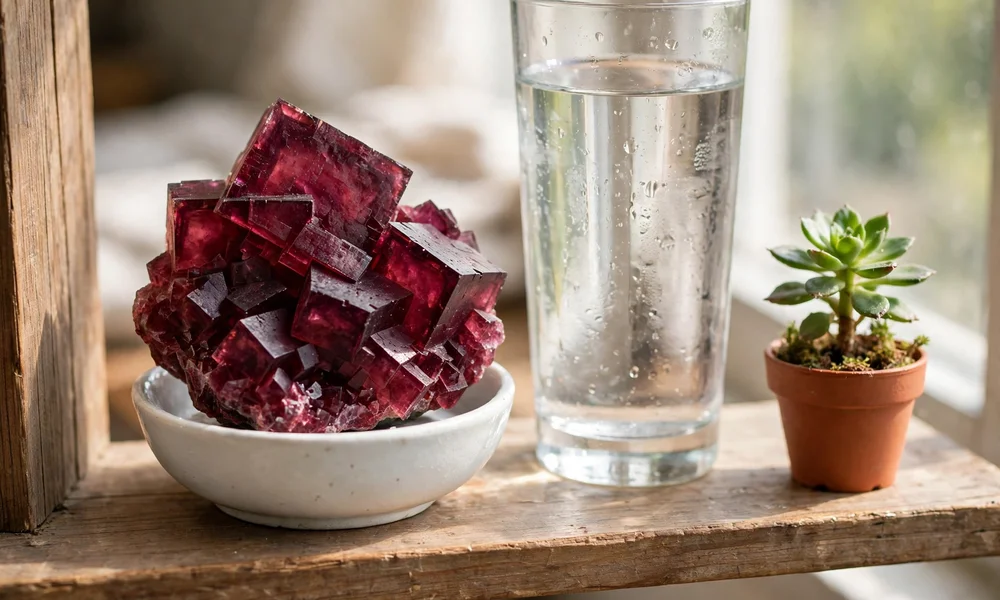
Red fluorite fits a day shaped like that. It is a deep red stone that grows in neat little cubes, the colour of ripe cherries and warm wine held up to a lamp. A small cluster on a tray can make a whole corner of the room feel awake and ready.
Keep one rule in mind while you read. Stones sit beside water, never inside it, and this guide is general information only. A stone cannot mend the body, and no crystal can take the place of a doctor when something is wrong.
Key Takeaways
- Red fluorite is a deep red fluorite with glossy cubic crystals.
- Its warm red suits bold days, busy mornings and clear light.
- Red fluorite differs from pink fluorite, clear fluorite and red onyx.
- Red fluorite is for display and holding only; it will not heal anything.
- Set it on a dry tray with a glass of water nearby, and keep the two apart.
What Red Fluorite Is
Red fluorite is fluorite in its boldest dress, a calcium fluoride mineral that grows in many colours, and red is the rarest of them. The red comes from tiny traces inside the crystal, and the best pieces glow a deep wine red when the light passes through them.
Its shape is what gives it away at a glance. Fluorite grows in cubes, sometimes single and sharp-edged, sometimes stacked in stepped clusters like small staircases. The faces are smooth and glassy, and a good piece catches the light on every edge.
Why Warm Red Suits Bold Days
Red is the colour of energy and appetite, the shade that says the day is for doing rather than waiting. It sits at the warm end of the spectrum, and a little of it goes a long way, which is why a small red stone can change the feel of a desk.
Red fluorite carries that energy without shouting. Its cubes throw the light back in sharp bright flashes, so the tray seems to sparkle as you walk past. On a busy day that sparkle feels like a small nudge to keep going.
Choosing a Red Fluorite Piece
A good red fluorite piece is chosen with the eyes first and the hands second. Look for a clear, even red, with sharp cube edges and a smooth glassy shine, not cloudy patches or chipped corners. The colour should run right through the crystal, not sit only on the surface.
Pick a modest piece. A cluster about as wide as a matchbox fills a tray nicely, and a lighter piece is simpler to pick up and put down without a knock. Check with the seller about where it was found before you pay.

A Bold Day with Red Fluorite
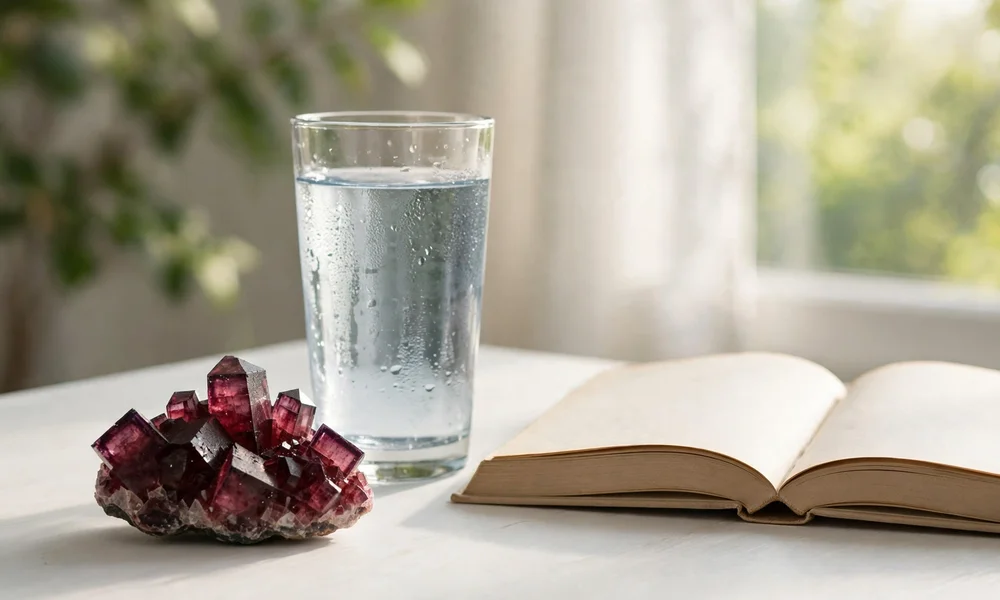
Begin the morning by setting the red fluorite on its tray in a patch of sunlight, with a glass of water standing nearby, near enough to catch the same sun yet clear of the stone. Sip the water at an easy pace, let the red flash catch your eye, and breathe once, slowly, before the day starts.
Keep the tray in view as the morning goes on. Each time you pass, the cubes catch the light differently, and that small change is the whole pleasure.
Red Fluorite Beside Water
Water and red fluorite share a tray but nothing more. Put the glass on one side and the stone on the other, and let them stay apart, since fluorite must never be dunked in a drink or left standing in a soak. Wipe away any splash straight away.
This rule holds for every stone in this guide, and it is worth learning by heart. Keep the glass full and the stone dry, and wash your hands after handling the piece if it has been out on an open shelf. The tray lets water and stone sit in one sunny scene while staying safely separate.
Red Fluorite at a Glance
| Deep red cubes | Bold days | Display only |
|---|---|---|
| Calcium fluoride, glassy shine | Desk, tray, shelf | Wash hands after |
| Wine red to cherry | Morning, midday, evening | Never in water |
| Cubic clusters, stepped | Sunlight, open windows | Dry cloth wipe |

Red Fluorite and Pink Fluorite
Pink fluorite is the closest relation, and the two stones share a family but little else in mood. Pink fluorite for tender days covers a pale rose stone with soft bands running through it, made for slow mornings and quiet rooms.
Red fluorite is its louder sister. Where pink fluorite is pale and gentle, red fluorite is deep and vivid, with a colour that fills the tray rather than whispering from it. One asks the day to slow down, the other asks it to begin, and the difference is plain the moment they sit side by side.
Red Fluorite and Clear Fluorite
Clear fluorite is the next stone in the family, the sibling beside red fluorite, and the two are opposites in colour. Clear fluorite for fresh days covers a stone with almost no colour at all, like clean glass, letting the brightness of the room pass straight through it.
Red fluorite keeps the light instead of passing it on. Its deep red cubes hold the colour inside them, glowing like wine in a glass, while clear fluorite stays open and empty. Clear fluorite suits a morning that wants to feel washed clean; red fluorite suits a morning that wants to feel awake and ready.
Red Fluorite and Red Onyx
Red onyx is the other warm red stone on the shelf, and it makes a useful contrast. Red onyx for bold days covers a warm, deep red chalcedony crossed with pale cream bands, the colour of embers that still hold their heat.
The two reds could hardly be built more differently. Red onyx is banded and smooth, a quartz that feels warm and heavy in the hand, while red fluorite is cubic and glassy, built from sharp little steps. Onyx is opaque and banded, fluorite is clear and cubed, and both suit bold days in their own way.
Red Fluorite and the Other Red Stones
Beyond the nearest neighbours, the red shelf holds more company. Garnet is a deep wine red with a heavy feel, carnelian is a smooth orange-red with a soft glow, and ruby is a bright pink-red that has been prized for centuries.
Red fluorite stands apart from all of them by its shape. No other red stone on the shelf grows in neat glassy cubes, and no other one shows its colour in such sharp stepped clusters. That earns it its own guide.
Caring for Red Fluorite
Looking after red fluorite takes little effort, yet the small things count. Store it somewhere dry and away from fierce heat — a lidded shelf or a little box padded with soft cloth works well — and do not toss it loose into a pocket beside keys or coins, since the cube edges chip without much force. Brush dust off with a dry, gentle brush, and leave water, soap, creams and sprays out of it. Should the tray get damp, pick the stone up and dry the tray before putting it back.
Stones That Must Never Touch Water
A few stones should always stay dry, and it pays to know them by name. Malachite tops that list: it must never sit in a glass or a jug, since it can release substances no drink should hold. Hematite is on the same dry-only list, and it too must never sit in drinking water.
Apatite and lepidolite sit on that list too, the second of them carrying lithium in its make-up. Pyrite, angelite and amber round out the list: none of them belongs in a glass, a jug, or a soaking bowl. Red fluorite is not among them, but the same habit keeps it safe too, so let every stone named here rest beside the glass, never inside it.
Your Bold Days Checklist
- Put the red fluorite on a dry tray with a full glass of water nearby.
- Drink the water at an easy pace as the bold morning gets moving.
- Look for sharp cubes and a clear, even red.
- Buy from a seller who can tell you where it came from.
- Keep the stone dry, away from children, food and drinks.
- A stone cannot fix health troubles; speak to a doctor about those.
Frequently Asked Questions
What is red fluorite?
Red fluorite is the red member of the fluorite family, a calcium fluoride mineral that grows in glossy cubes. Its colour is a deep wine red to cherry red, and the best pieces glow when light passes through them.
Is red fluorite rare?
Yes, red is the rarest colour of fluorite, far less common than purple, green or blue. Deep, clear red pieces are prized by collectors, and that is why it is worth asking a seller where a piece came from.
How is red fluorite different from pink fluorite?
Pink fluorite is a pale rose stone with soft bands, made for tender days, while red fluorite is deep and vivid, with a colour that fills the tray. One whispers and the other speaks up, and the cubes give red fluorite away at a glance.
How is red fluorite different from clear fluorite?
Clear fluorite has almost no colour at all, like clean glass, while red fluorite holds a deep wine red inside its cubes. Clear fluorite suits a fresh morning that wants to feel open; red fluorite suits a bold day that wants to feel awake.
Will red fluorite heal anything?
No. It is a lovely mineral to show on a tray and hold for a quiet minute, and if you feel brighter afterwards, that lift comes from the quiet minute itself, not from anything in the stone.
Where should I keep red fluorite at home?
Find it a bright, dry spot — a tray, a shelf by a window, or a desk — with a glass of water near it but never in contact, and beyond the reach of children.
The Bottom Line
Red fluorite brings warm red light to bold days: deep wine-red cubes glowing on a dry tray with a glass of water nearby, admired and never swallowed.
A Note for Bold Days
Keep the red bright, the stone dry, and the morning unhurried. One small cluster, one glass of water, and a few quiet minutes are enough.


