Once a month, the moon turns full, and the night feels a little different. The light through the window turns silver, the garden looks still and pale, and the house seems to slow down. It is a natural pause in the month, asking for nothing more than a few quiet minutes.
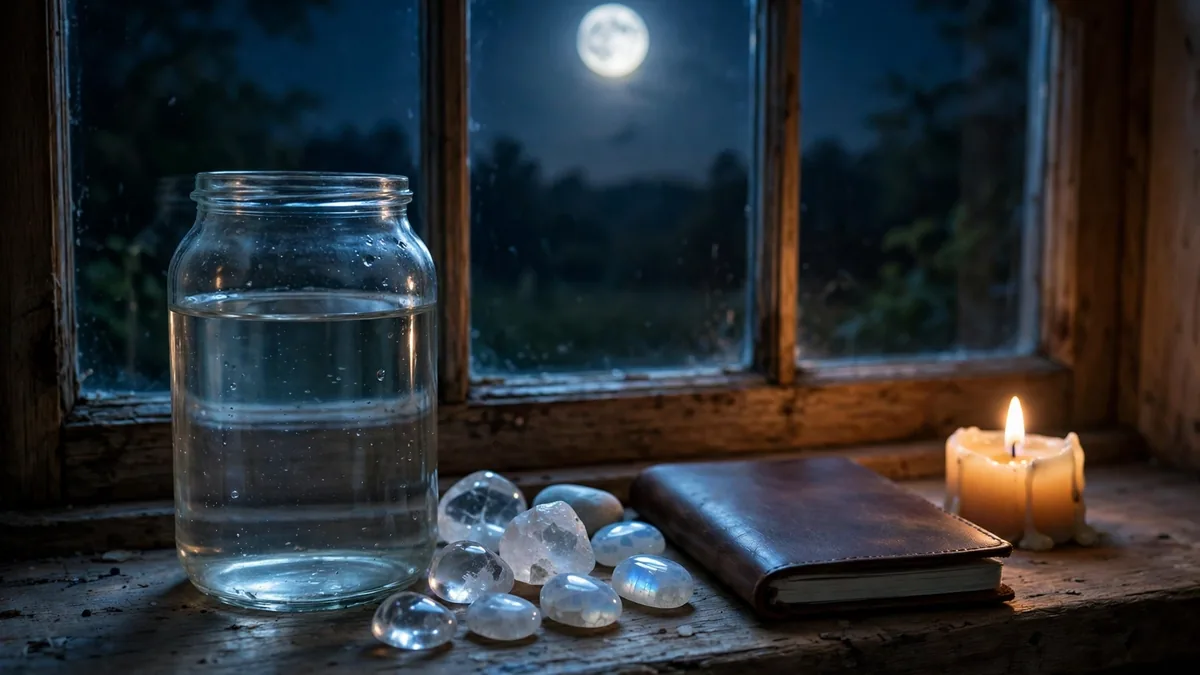
Moon water rituals use that pause. A jar of plain water is left on a windowsill under the moonlight overnight, while smooth stones rest beside it, never in the water. In the morning, the water is simply fresh water, and the ritual is the calm of making it and using it slowly.
This article explains the ritual step by step: what moon water is, which stones to keep beside the jar, how to set it out, and how to use the water gently. It also states the safety rules clearly. No stone ever goes into drinking water, and the water is never presented as anything more than plain water.
Key Takeaways
- Moon water means plain water left under moonlight overnight, once a month, usually near the full moon.
- The stones always stay beside the water, never in it; this indirect method is the only safe way.
- The ritual takes about ten minutes to set up and ten in the morning, and needs no special equipment.
- The value is the pause itself: a quiet monthly reset and a slower start to the day.
- Moon water is plain water. It will not heal, cleanse, or change your skin.
What Moon Water Is
Moon water is plain water that has spent a night under the moon. That is all it is. You fill a clean glass jar with fresh water, cover it lightly, set it where the moonlight can reach it, and leave it until morning. The moon adds nothing to the water. The water stays water.
People have kept moon customs for a very long time. In many old traditions, the full moon marked the middle of the month, a time to finish one thing and begin another. Families used it as a calendar long before printed diaries existed. A monthly ritual follows that same old rhythm: one night a month, the same jar, the same windowsill, the same quiet minutes.
Be clear about what the ritual is not. Moon water is not a medicine, and it will not cure tiredness, dull skin, or a restless mind. What it can do is give your month a shape: one small marker, kept once a month, that helps a busy life feel steadier.
Why Once a Month Works
A ritual you do every night can become a chore, and one you do once a year is easy to forget. Once a month sits between the two: often enough to feel familiar, and rare enough to feel special. By the third month, you will know the steps by heart.
The full moon is the easiest night to choose because it is the brightest and simplest to spot. You do not need a moon calendar or an app, though both can help. Step outside and look up: if the moon is round and bright, the night is right. If clouds cover it, the ritual still works. A cloudy full moon is still a full moon.
A monthly rhythm also gives you a moment to tidy up. The same evening you set out the jar, wipe the windowsill and put the stones back in their pouch. Small tasks like these, done once a month, stop clutter from building up.
Choosing Your Stones and Your Jar
Choose one or two smooth stones you already love. Moonstone is the natural choice: pale, soft, and milky, it catches the light of a silver night. Clear quartz is a good companion, plain and bright, and rose quartz adds a gentle pink note. Amethyst works well too, as in amethyst water for a calmer evening, where fresh water sits beside the stone.
The jar matters more than the stone. Use a clean glass jar with a lid, or a small glass bowl covered lightly with a clean cloth. Glass is best because you can see the water clearly and it washes easily. Avoid metal containers, which can mark the water, and any jar with a chipped rim. Wash it with warm water and a little mild soap, rinse well, and let it dry before filling.
Keep the stones beside the jar, never inside it. This is the indirect method, the only safe way to make moon water, explained in full in a beginner's guide to crystal elixirs at home. Some stones must never touch water at all: selenite dissolves, malachite can shed harmful dust, and hematite can rust.
The Ritual, Step by Step
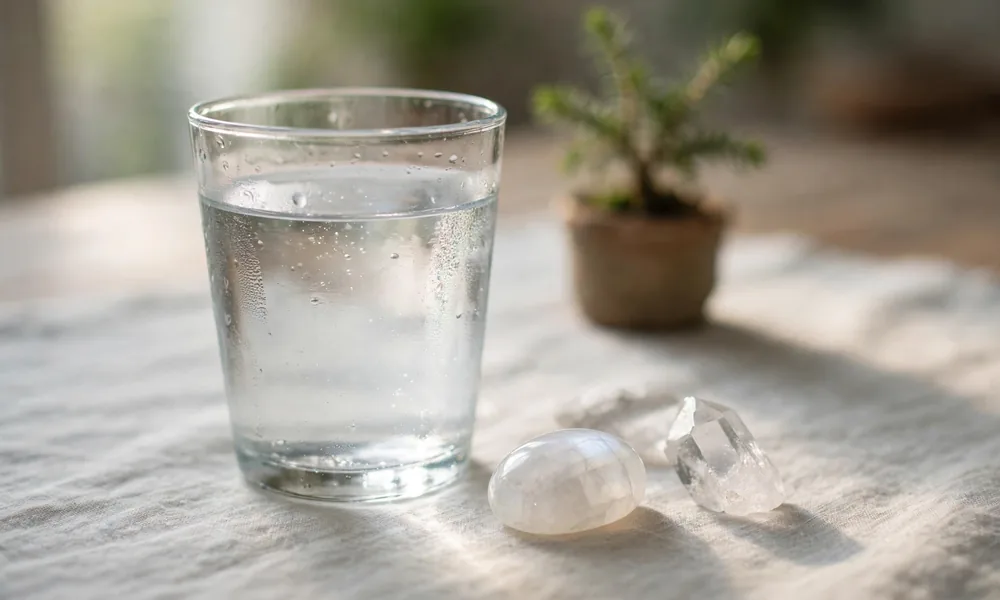
Begin in the early evening, while there is still enough light to work comfortably. Wash the jar, fill it with fresh drinking water, and set it on the windowsill where the moon can reach it. Place your stones beside the jar, not in it, and cover the jar lightly with its lid or a clean cloth to keep dust and insects out. Then leave it alone.
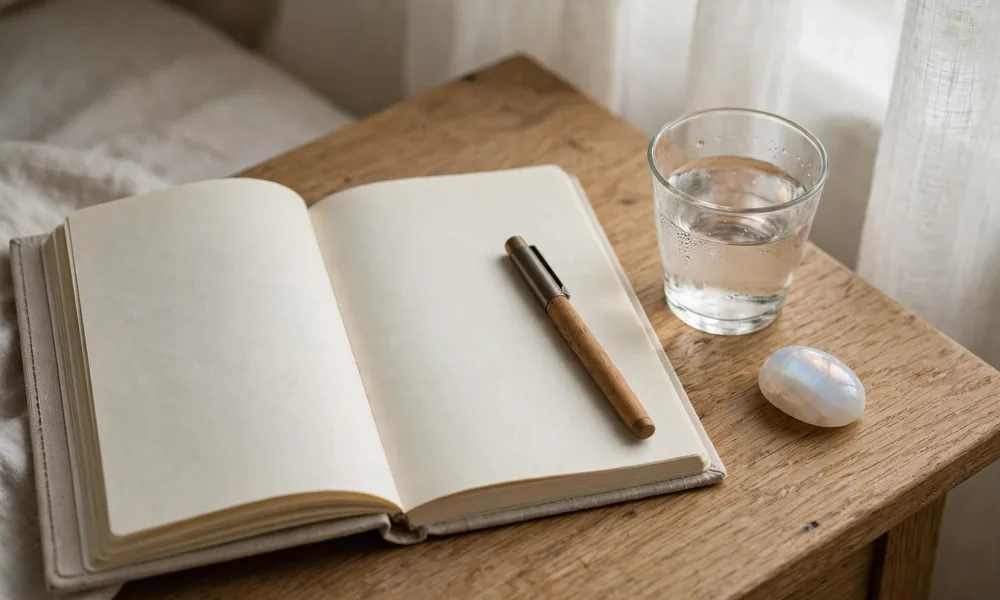
Take ten quiet minutes for yourself while the jar sits out. Sit near the window with a cup of herbal tea, or simply stand and look at the moon. There is no prayer to say and no words to repeat. The ritual is the pause: a small break from screens and noise. If you like, write one line in a notebook about the month just passed, and one about the month ahead.
In the morning, bring the jar inside before the sun grows strong. Pour a glass and drink it slowly, in small sips. The rest can be used through the day: wash your hands with some, or water a houseplant. Use it within the day and wash the jar afterwards. Never store moon water for weeks, and never drink water that smells strange or looks cloudy.
A Month of Small Moments
A monthly ritual works best when the rest of the month supports it. Keep the windowsill clear, so the jar has a home waiting for it, and keep the stones in one small pouch, so you are not searching for them on the night itself.
You can pair the moon night with other gentle habits. A face mist in the morning fits the same calm mood. How moonstone hydration mists refresh tired skin describes a fine water mist for tired afternoons, sharing this ritual's spirit: water, light, and a slow minute, with the stone as a companion rather than an ingredient. The mist is for the skin, the moon water is for drinking, and the two never mix.
If you miss a month, nothing is lost. Set the jar out the next month, and the rhythm returns.

Stones That Must Never Touch Water
Some stones are beautiful to look at and dangerous to soak. Selenite is soft and will dissolve in water, losing its shape and shine. Malachite must never go in water or elixirs, because its dust can be harmful. Angelite and lepidolite are soft and porous, and water dulls them quickly. Turquoise is porous too, and it can stain or crack. Opal holds water inside itself, and soaking can cloud it. Pearl is a thin layer of nacre that water and soap can damage, and amber is soft resin that clouds with moisture.
For all of these, the rule is simple: dry, soft cloth only. Wipe them gently, keep them dry, and store them in a soft pouch. When in doubt, treat any stone as dry-only.
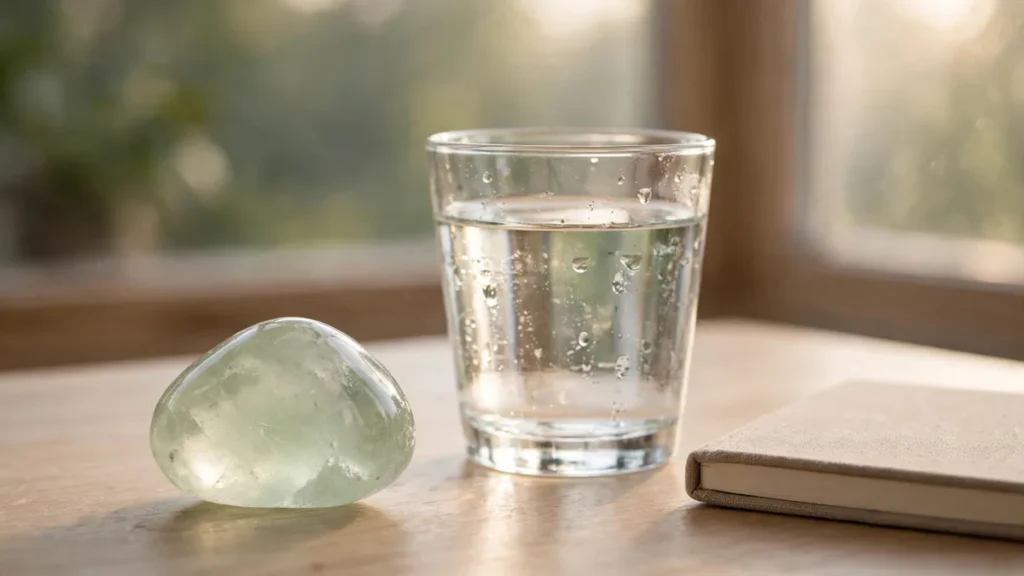
This rule matters most. A stone in a glass looks pretty in a photograph, but a photograph is not a guide. At home, the stones stay beside the water, on the sill, in the moonlight, where they can be admired safely.

Using the Water Gently
Moon water is plain water, so use it as you would any fresh water. Drink a glass slowly in the morning, wash your hands with it, or water a plant. Do not boil it into a remedy, mix it with oils or salts, or give it to anyone as a treatment.
Rainwater is not a substitute here. Rain falling through city air can carry dust and dirt, and it is not safe for drinking or for the skin. Moon water starts as fresh drinking water from your tap or filter, and that is what keeps it safe.
| Moon night | Water use | Stone care |
|---|---|---|
| Full moon | Drink slowly | Beside jar only |
| Cloudy night | Use same day | Wipe dry cloth |
| New moon | Fresh water only | Store in pouch |
| Missed month | Try next month | Keep stones dry |
Your Moon Water Checklist
- Choose the full moon night and wash a clean glass jar.
- Fill the jar with fresh drinking water and cover it lightly.
- Place moonstone or clear quartz beside the jar, never in it.
- Take ten quiet minutes by the window while the jar sits out.
- Bring the jar in by morning and use the water that day.
- Wash the jar, dry the stones with a soft cloth, and store them away.
Frequently Asked Questions
What is moon water?
Moon water is plain fresh water left in a clean covered jar under moonlight overnight, usually near the full moon. The stones rest beside the jar, never in it.
Can I drink moon water?
Yes, if it started as fresh drinking water, was covered overnight, and is used the same day. Drink it slowly, in small sips. Never drink water that smells strange, looks cloudy, or sat uncovered.
Which stones should I use for moon water rituals?
Moonstone and clear quartz are the simplest choices, with rose quartz or amethyst as companions. Whichever you choose, keep them beside the jar, never in it.
What if the night is cloudy?
The ritual still works. Set the jar out as usual, cover it lightly, and bring it in by morning. A cloudy full moon is still a full moon.
Can I use rainwater for moon water?
No. Rainwater can carry dust and dirt from the air, and it is not safe for drinking or for the skin. Always start with fresh drinking water.
Does moon water help the skin or sleep?
Not directly. Moon water is plain water, and it will not cure dull skin, tiredness, or restless sleep. Its value is the calm monthly pause and a slower morning.
The Bottom Line
Moon water rituals are a gentle monthly reset: one jar of fresh water, a few stones beside it, and ten quiet minutes under the full moon. It costs almost nothing.
Set your jar out at the next full moon.
A Note for Moonlit Nights
Keep it simple, keep it monthly, keep it safe. The moon will return, the jar will wait, and the quiet will do the rest.