A quiet day has no agenda worth writing down. The post can wait, the phone can stay face down, and the hours can pass at whatever pace they choose. It is the kind of day that arrives after a long week, when the body is tired and the mind wants a room that stays still.
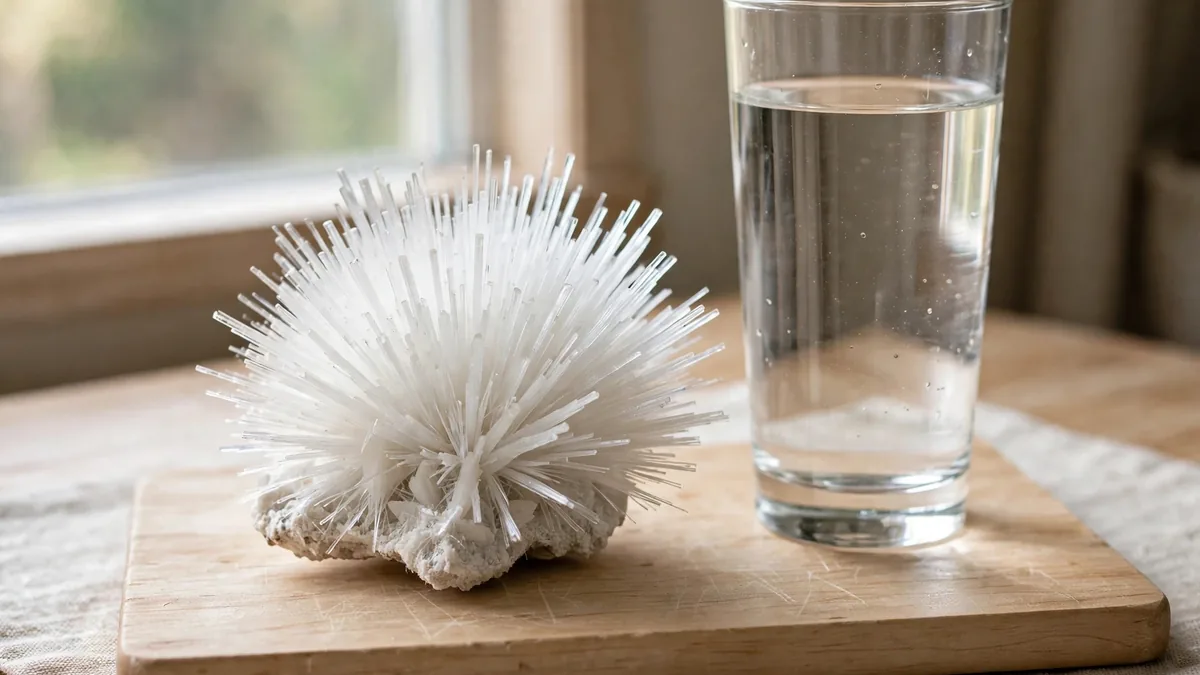
Mesolite fits that kind of day. It is a white zeolite that grows in fine, hair-like needles, gathered into soft sprays and round tufts, pale as frost on a windowpane and light as a bundle of thread.
This guide takes a close look at mesolite: what the stone is, how to pick a good cluster, how it stands apart from the other white stones and zeolites on this site, and how to look after it without ever wetting it. It is a lovely thing to admire, and it promises nothing for your health.
Key Takeaways
- Mesolite is a white zeolite of fine fibrous needles, gathered into soft sprays and round tufts.
- Its pale, thread-like sprays suit whole quiet days, dim light and unhurried hours.
- It is an object to look at and to hold, not a remedy for anything.
- The water stays in its own glass, and the stone stays dry beside it.
- One small cluster is enough for a whole quiet day.
What Mesolite Is
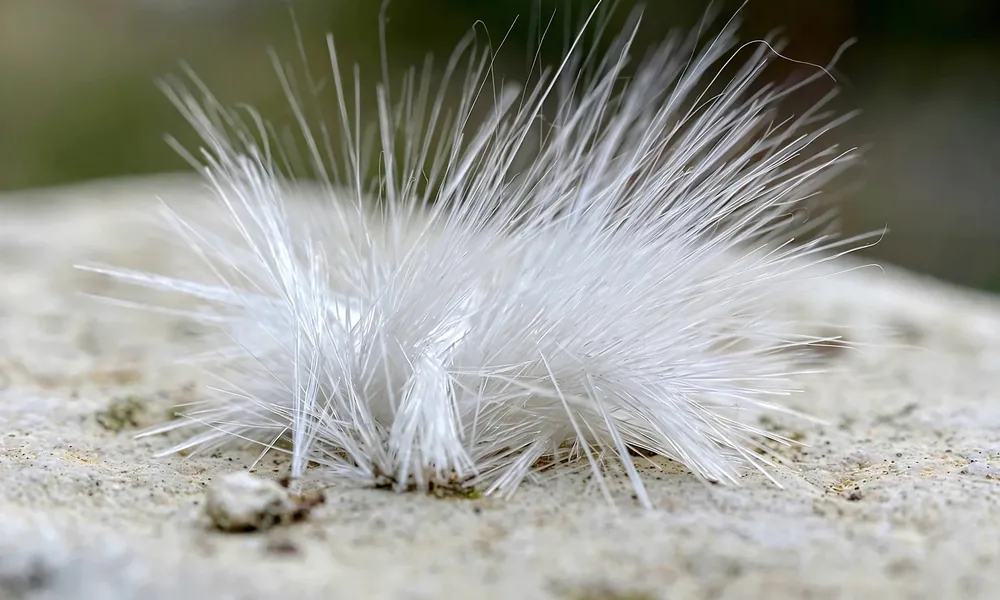
Mesolite is a zeolite, one of a pale family of minerals that form inside volcanic rock, and its best-known pieces are white or nearly colourless, with a soft, silky glow. The needles grow outward from a shared base, sometimes in a neat fan, sometimes in a round ball like thistledown caught on stone.
Pick a cluster up and it feels cool and surprisingly light, with a surface that shimmers as you turn it, because each needle catches the light on its own. The fibres are the whole point: without them the stone would be only a pale lump.
Why Soft White Suits Quiet Days
Soft white suits quiet days because it never competes with the room. A bright stone would pull the eye toward itself all day, and a dark one would sit like a weight on the shelf, but white simply rests where it is put. It suits a day that asks for nothing, because the stone itself asks for nothing.
Other pale stones on this site play different parts. White calcite keeps a fresh space feeling clean and bright, and howlite steadies a busy morning, yet neither one wears the fine needle spray that mesolite does. Mesolite belongs to the hours when the day slows right down.
Choosing a Mesolite Piece
Hold the cluster up to a window before you buy it, and turn it slowly in the daylight. Look for needles that stay white in every light, with a soft silky shine and no painted-on brightness, and for a base that sits flat without rocking. The fibres should look like fine threads, not like plastic bristles.
Ask the seller straight out where the piece was found. Walk away from any cluster that looks dyed, any price that seems far too high for a common zeolite, and any seller who claims the stone will change your health.
A Quiet Day with Mesolite
Start the evening before: clear a small wooden board, set the mesolite at one end and a tall glass of water at the other, and leave a hand's width of bare wood between them. In the morning, sit down with the board, sip the water slowly, and let your eyes follow the fine white threads.
That is the whole plan. There is no timetable and no second step, only the board, the glass and the cluster.
Mesolite Beside Water
Mesolite and water make a calm pair, but they belong apart. Set the cluster down at one side of the board and the glass at the other, with a clear stretch of wood showing between them, so nothing damp ever touches the fibres and nothing from the stone ever reaches your drink.
If a needle cluster ever tips into a glass by mistake, pour the water away and wash the glass. Never drop the stone into a glass, a jug or a bath on purpose.
Mesolite at a Glance
| White needle spray | Sill, shelf, tray | Look, do not soak |
|---|---|---|
| Pale, soft, fibrous | Dim light, calm air | Keep it dry |
| Light, cool, fragile | Whole quiet days | Wash hands after |
| Small single cluster | Glass standing near | Never in a drink |

Mesolite and Natrolite
Natrolite for bright days is the closest cousin mesolite has: another white zeolite of fine needles, fanning out from one shared base like a small frozen firework. The two look alike at first glance, yet they suit different hours of the day.
Natrolite belongs on a bright shelf in strong morning light, where its needles catch the sun. Mesolite belongs to dimmer, slower hours, where its softer spray suits a day with no plans.
Mesolite and Heulandite
Heulandite for quiet mornings is another soft white zeolite, yet it grows in a wholly different shape: flat pearly plates, stacked in thin layers like the pages of a small book. Where mesolite is all fine threads, heulandite is all broad, flat sheets, and the difference is plain the moment the two sit side by side.
Heulandite suits the first hour of the morning, when the light is pale and the day has not yet begun. Mesolite suits the whole day that follows. Same pale family, different shape, different hour.
Mesolite and Stilbite
Stilbite for calm shelves is the peach member of the zeolite family, made of thin blades that spread like a small fan or pinch together like a bow tie, in a warm peach shade. Mesolite could hardly look more different: white where stilbite is peach, and thread-like where stilbite is blade-like.
The two stones suit different rooms. Stilbite warms a shelf with its peach glow, while mesolite cools a table with its pale white spray.
Mesolite and the Other Zeolites
Beyond natrolite, heulandite and stilbite, the zeolite family on this site runs wider still. Thomsonite is a banded zeolite in pale pink, cream and white, with smooth curved bands instead of fibres, and it suits quiet days of its own. Scolecite is another white zeolite of fine needle lines, yet its needles run through a smooth polished stone rather than standing out in an open spray, and it belongs to slow mornings rather than whole quiet days. Apophyllite is a clear, glassy mineral sold as a single point with a neat pyramid tip, built to catch daylight in a bright corner.
Then there is chabazite, the queued zeolite cousin of mesolite, which grows in peachy rhombohedral crystals, small blocky shapes with a warm blush, nothing like mesolite's white threads. Mesolite stands apart from all of them by its fibres alone.

Where Mesolite Lives at Home
Give mesolite a place you pass when the day feels long. A dresser top, a bedside corner, or a low shelf near a window all do, so long as the cluster is in plain sight and out of the way of elbows. Dim morning light flatters it best.
Choose a spot away from running water and bathroom steam, up high where little hands cannot reach it. A cluster left where you can see it gets enjoyed every day, while one hidden in a drawer is quickly forgotten, and its fine needles snap easily if fingers go rummaging. Dust it with a soft, dry brush once a week, and rest it in a pouch of its own between displays, away from keys and harder stones.
Stones That Must Stay Away from Water
Water and certain stones simply do not belong together, and some stones hide things that must stay out of anything you drink. Malachite is green with copper, so keep it far from every glass and jug. Hematite stains with rust once it has been left wet, and pyrite loses its shine and rusts the same way after a long damp spell.
Then there are the stones too fragile for water at all. Angelite slowly dissolves when it is soaked, amber, which is ancient tree resin and not rock at all, turns soft and cloudy after hours underwater, apatite is far too tender for a bath, and lepidolite holds lithium in its pale scales. Mesolite keeps the same boundary: dry stone, full glass, and the two never meeting.
Your Quiet Days Checklist
- Set the mesolite on a dry board, with a full glass of water standing apart from it.
- Drink the water in slow sips while the morning light changes.
- Rest the cluster in your palm for a minute, then set it down gently.
- Wash your hands once the cluster is back in its place.
- Buy only from a seller who says plainly where the stone was found.
- For any health worry, talk to a doctor; a stone mends nothing.

Frequently Asked Questions
What is mesolite?
Mesolite is a white zeolite mineral that grows in fine, hair-like needles, gathered into soft sprays and round tufts from a shared base. It feels cool and light in the hand, with a soft silky shine.
How is mesolite different from natrolite?
Natrolite is also a white zeolite of fine needles, but it suits bright days and strong morning light, while mesolite suits dimmer, slower hours. The two share a needle shape but belong to different moods.
How is mesolite different from heulandite?
Heulandite grows in flat pearly plates stacked like the pages of a small book, while mesolite grows in fine white threads. Heulandite suits the first hour of the morning, and mesolite suits the long quiet day that follows.
How is mesolite different from chabazite?
Chabazite is the queued zeolite cousin of mesolite, and it grows in peachy rhombohedral crystals, small blocky shapes with a warm blush. Mesolite grows in fine white needles, so the two look nothing alike.
Is mesolite safe to hold?
Holding it briefly is usually fine for grown-ups, provided the needles are whole and unbroken. Set it down gently, wash your hands with soap, and keep it out of reach of children.
Where should I keep mesolite at home?
Any dry, still corner will do: the top of a dresser, a low shelf, a quiet bedside table. Let the glass stand nearby yet apart, and keep the cluster where knocks and damp cannot reach it.
The Bottom Line
Mesolite is a soft white companion for quiet days: one cluster of fine needles in dim light, a glass of water beside it on the board.
A Note for Quiet Days
Let the day move slowly and the stone stay dry. One mesolite cluster, one glass of water, and a few unhurried hours.