Some mornings, skin wakes up already unsettled. A warm room, a new cleanser, a restless night, or a change in the weather can leave it tight, warm, and quick to flush. On those days, the usual routine feels like too much, and the skin seems to ask for less: less rubbing, less product, and more quiet.
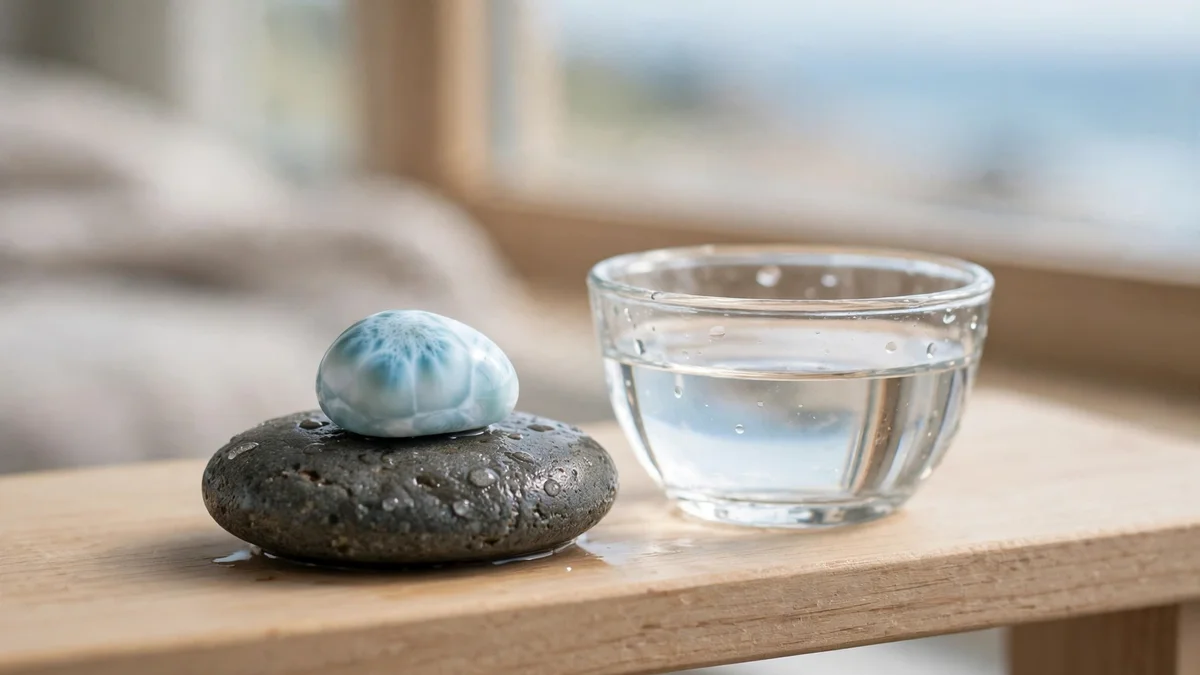
Larimar sea calm is a small ritual built for exactly those days. Larimar is a pale blue stone the colour of shallow sea water, and it sits on the shelf beside a bowl of cool, plain water while you wash gently and slowly. The stone never goes into the water. It is there to set the mood: sea-blue, still, and unhurried.
This article explains the ritual step by step: what larimar is, why cool water suits sensitive skin, how to build a short morning and evening routine, and which habits to leave out. Nothing here treats or cures any skin condition. It is simply a calmer way to care for skin on the days it needs gentleness most.
Key Takeaways
- Larimar is a pale blue pectolite; keep it beside water only, never in drinking water or on wet skin.
- Cool water suits sensitive skin better than hot water, which strips natural oils and adds heat.
- A short, repeatable ritual beats a long routine on sensitive days: cleanse gently, cool, moisturise, protect.
- Change one thing at a time, and patch test anything new before it touches your face.
- The ritual supports comfort and calm; it does not treat, cure, or prevent any skin condition.
What Larimar Is
Larimar is a rare blue variety of the mineral pectolite, found mainly in the Dominican Republic. Its colour runs from pale sky blue to soft turquoise, often with white veining that looks like foam on shallow water. It is a fairly soft stone, so it needs gentle handling and a soft cloth, not harsh cleaners or rough scrubbing.
Because larimar is a pectolite, it belongs firmly in the beside-water-only group. It should never be placed in drinking water, soaked in a glass, or used to stir or infuse water for the skin. The safe way to enjoy it is the indirect method: the stone rests on the shelf, on a cloth, or in a small dish, while the water stays plain and separate in its own glass or bowl.
Why Sensitive Skin Loves Cool Water
Sensitive skin reacts quickly to heat. A hot shower, a steaming bowl, or water that feels warm on the wrist can leave the face flushed and tight within minutes. Heat hurries water out of the skin, which is the opposite of what a reactive day needs. Cool water does the reverse: it feels settling, it rinses without adding warmth, and it asks nothing of the skin.
Cool does not mean icy. Water straight from a cold tap in winter can feel like a shock, and a shock is not calming. Aim for water that feels cool and pleasant on the inside of your wrist, the way a shaded stream feels on a warm day. Aquamarine and cool water for sensitive skin follows the same principle with a different stone, and its short cleanse-cool-moisturise rhythm is a good companion to this ritual.
Building Your Larimar Shelf
A ritual needs a home, and for larimar sea calm that home is a small shelf or tray. Choose one clear spot in the bathroom, away from the direct splash of the shower, and keep everything for the ritual there: the stone in its dish, a clean glass of water, a soft white cloth, and your usual gentle cleanser and moisturiser. When everything lives in one place, the ritual takes two minutes instead of ten.
Keep the shelf simple. A crowded shelf invites clutter, and clutter invites rushing. One stone is enough; a second is fine if you love it, but five stones and three bottles turn a calm ritual into a display.

The Morning Ritual, Step by Step
Begin by washing your hands with mild soap and lukewarm water. Then take your glass of cool water and splash your face gently, two or three times, with cupped hands. Do not scrub and do not rub. Let the water run, and pat your face dry with the soft cloth, pressing lightly instead of dragging it across the skin.
If you use a cleanser, choose the gentlest one you own and use a small amount, massaged in with fingertips for no more than thirty seconds. Rinse with cool water and pat dry again. While your skin is still slightly damp, smooth on a light moisturiser. Damp skin holds moisture better than dry skin, so this small timing detail makes a real difference. The ritual is done in about five minutes.
The Evening Wind-Down
Evenings are when sensitive skin shows the day it has had. Dust, sun, and long hours can leave it tired, and the evening ritual is about washing the day off gently and letting the skin rest. Use the same cool water and the same slow pace as the morning.
Remove makeup first, if you wear it, with a gentle remover on a soft cotton pad, wiping outward in slow strokes. Then cleanse as in the morning, rinse cool, and pat dry. A slightly richer moisturiser suits the night, when the skin has hours to rest, but keep it simple: one cream, applied thinly, is enough. Layering three products on a reactive day often causes more trouble than it solves.

What to Leave Out on Sensitive Days
Sensitive days are defined as much by what you skip as by what you do. Strong exfoliants, scrubs with rough grains, and peels of any kind should wait for a calmer week. So should new products: a sensitive day is the worst time to try a new serum, because if the skin reacts, you will not know whether the product or the day caused it.
Fragrance is another common trigger. Heavily scented cleansers, toners, and creams can sting reactive skin, so choose fragrance-free options while the skin is unsettled. A sea salt and rose water skin reset is a useful read for the days when the skin feels steadier, but save salt-based steps for then, not for a flare day.

Choosing a Gentle Cleanser
A gentle cleanser for sensitive skin is usually a simple one. Look for a short ingredient list, no added fragrance, and a texture that feels like a light lotion or a soft gel rather than a foaming wash. Foaming cleansers can strip the skin's natural oils, which is the last thing reactive skin needs. A cream or milk cleanser rinses away cleanly with cool water and leaves the skin feeling soft rather than tight.
Massage it in with fingertips in slow circles, keep it away from the eyes, and rinse thoroughly: cleanser left on the skin can irritate it through the day. If your current cleanser leaves the skin feeling tight or squeaky after washing, it is too strong for sensitive days. Put it aside for a calmer week, and use the gentlest option you have.
Moisturiser, Sun Protection, and Stone Care
Moisturiser is the step that locks the ritual in. Apply it while the skin is still slightly damp from the cool rinse, using a small amount smoothed gently over the face and neck. A light lotion suits warm days, while a slightly richer cream suits cold or windy weather.
Sun protection matters every day, and sensitive skin is no exception. A gentle mineral sunscreen with zinc oxide or titanium dioxide is often the kindest choice, since it sits on the surface rather than soaking in. Apply it after the moisturiser has settled for a minute or two, and reapply if you spend long hours outdoors. Sea colours can shape a whole look too: Turquoise water colours for a beauty look.
| Sensitive day | Water choice | Stone care |
|---|---|---|
| Warm flush | Cool rinse only | Beside water only |
| Tight skin | Lukewarm wash | Wipe dry cloth |
| New product | Patch test first | Store in pouch |
| Sunny morning | Cool rinse, sunscreen | Keep out sun |

Your Larimar Sea Calm Checklist
- Set the larimar in its dish beside a glass of cool, plain water.
- Wash hands, then splash the face gently with cool water.
- Cleanse with a small amount of gentle, fragrance-free cleanser.
- Pat dry softly, then moisturise while skin is still damp.
- Apply gentle mineral sunscreen before going out in the day.
- Wipe the stone dry, tidy the shelf, and note how skin feels.
Frequently Asked Questions
What is larimar sea calm?
Larimar sea calm is a gentle ritual for sensitive skin days: a pale blue larimar stone rests beside a bowl of cool, plain water while you wash slowly and moisturise lightly. The stone never goes into the water.
Can larimar go in drinking water?
No. Larimar is a pectolite and should never be placed in drinking water or used to infuse water. Keep it beside the water only, on the shelf or in a dish, and drink plain water separately.
Is cool water really better than warm water for sensitive skin?
For most reactive skin, yes. Hot water strips natural oils and adds heat, while cool water rinses gently without warming the skin.
How long does the larimar ritual take?
About five minutes in the morning and five in the evening. The shelf stays set up, so there is nothing to prepare.
What should I avoid on a sensitive skin day?
Avoid strong exfoliants, scrubs, peels, new products, heavily scented creams, and hot water.
Does larimar treat sensitive skin or any skin condition?
No. Larimar is a beautiful stone that sets a calm mood for the ritual, but it does not treat, cure, or prevent any skin condition. If skin problems persist, speak to a doctor or dermatologist.
The Bottom Line
Larimar sea calm is a small, gentle ritual for the days when skin needs kindness: cool water, a slow pace, a simple cleanser, and a sea-blue stone resting beside the bowl. It takes five minutes, costs almost nothing, and asks for nothing more than patience.
Set your shelf tonight, and let tomorrow morning begin slowly.
A Note for Sensitive Days
Keep it cool, keep it short, keep it kind. The sea is patient, and your skin will thank you for the same patience.