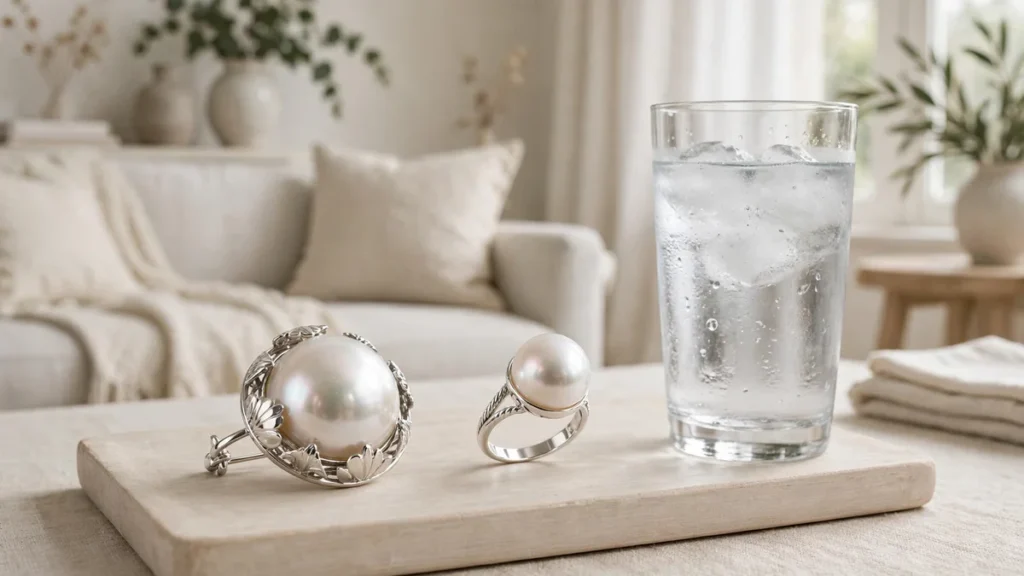
Bright days have a gentle rhythm of their own. Sunlight comes in early and stays, the rooms look pale and tidy, and nothing needs hurrying. A small pearl with an uneven shape fits that rhythm well, because it is lovely without being showy.
The pearl in question is the keshi pearl, and it breaks the usual picture of what a pearl should be. It is tiny, it has no seed inside it, and its outline wanders from bump to hollow. Light plays across those bumps in a way a perfectly round bead never manages.
This guide covers what a keshi pearl is, why its glow suits a bright day, how it stands apart from the round white pearl and the coloured pearls, and how to keep a piece safe beside a glass of water. A keshi pearl is jewellery and display, nothing more: it should never go into drinking water, it is not a cure, and it cannot fix anything.
Key Takeaways
- A keshi pearl is tiny, seedless and uneven, with a bright glow that moves as it turns.
- It grows by chance, with no bead at its centre, so its shape is never regular.
- Its soft gleam fits bright days, pale wood, white cloth and a glass of clear water.
- A keshi pearl is for wearing and looking at only, and it heals nothing at all.
- Place it next to drinking water, never inside it, and do not let it sit in a soak.
What Keshi Pearl Is
Inside a shelled sea creature, a pearl builds up coat after coat of nacre, a smooth pearly material laid down over months. With most farmed pearls, a worker slips a little round bead into the shell first, and the nacre wraps around that bead, which is why the finished pearl comes out round. A keshi pearl skips that step entirely, starting on its own with no bead to shape it.
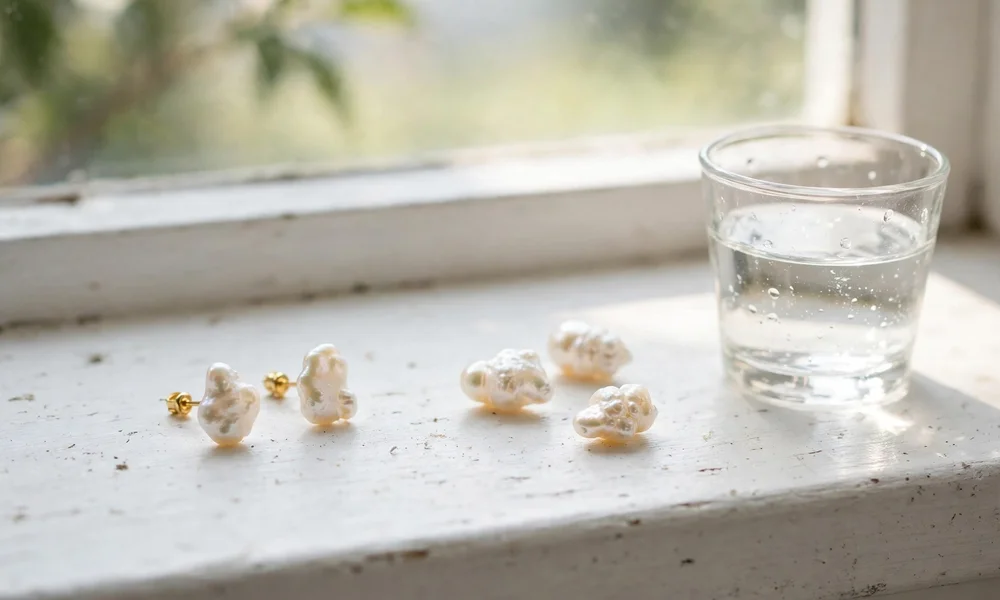
That chance beginning explains the shape. Without a round core to follow, the pearl grows lumpy and crooked, and it stays small, because there is no bead to bulk it out. The whole pearl is solid nacre from skin to centre.
Why Soft Shine Suits Bright Days
A bright day is full of white light, and a hard sparkle would only add glare. The keshi pearl does the opposite: it takes the sun in and returns it as a milky glow, soft at the edges. That is why it looks at home on a pale tray in a sunny room.
Choosing a Keshi Pearl Piece
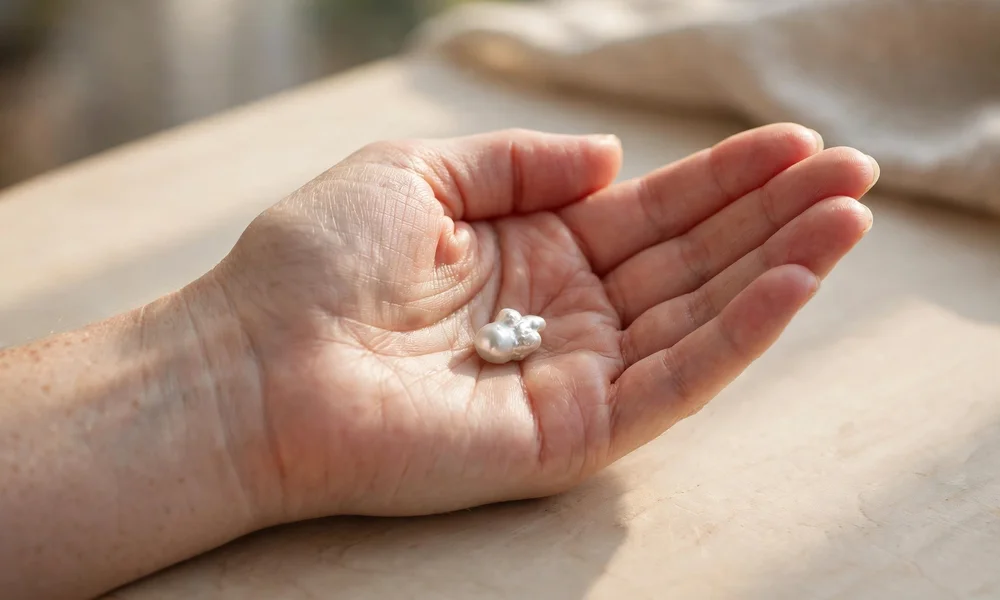
Look at keshi pearls in honest daylight, with the piece resting in your palm. Turn it slowly and watch the shine: it should stay lively from every angle, brightening on the high spots and softening in the hollows. The skin should feel smooth, with no chalky marks and no greyish film.
A good first piece might be a short string, a pair of studs, or a single loose pearl set simply. Since the beads will never match in shape, judge the piece as a whole: the pearls should share one silvery white colour. Be wary of a seller who cannot say plainly whether the pearls were farmed or found wild.
A Bright Day with Keshi Pearl
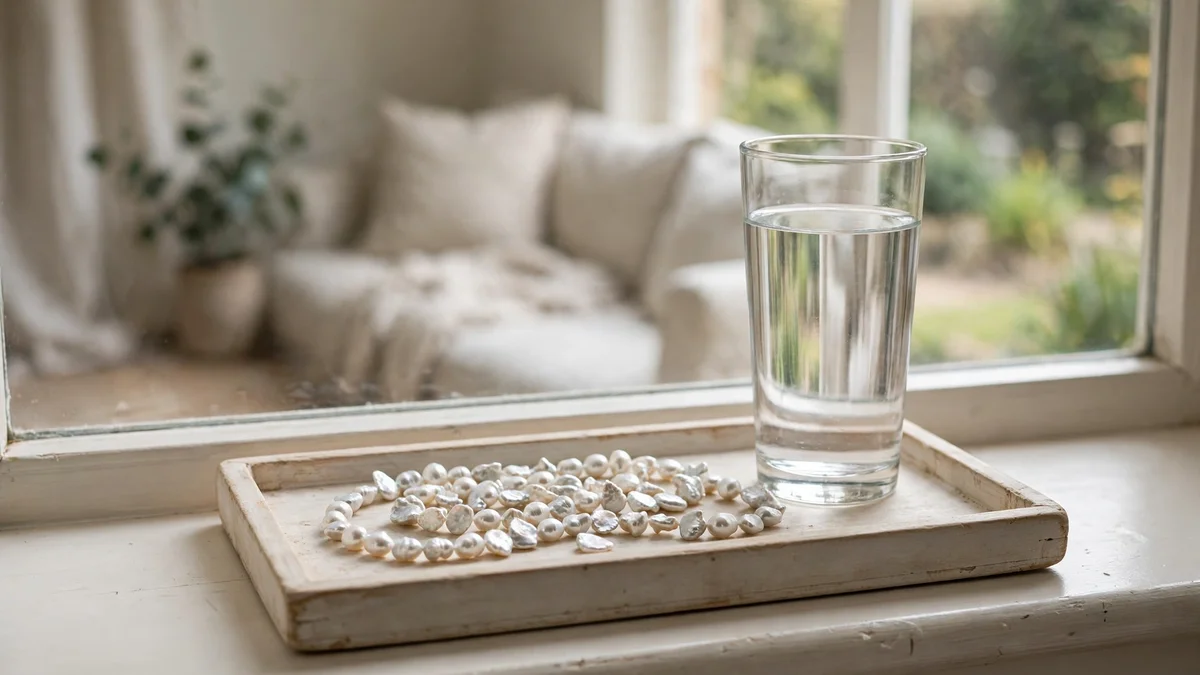
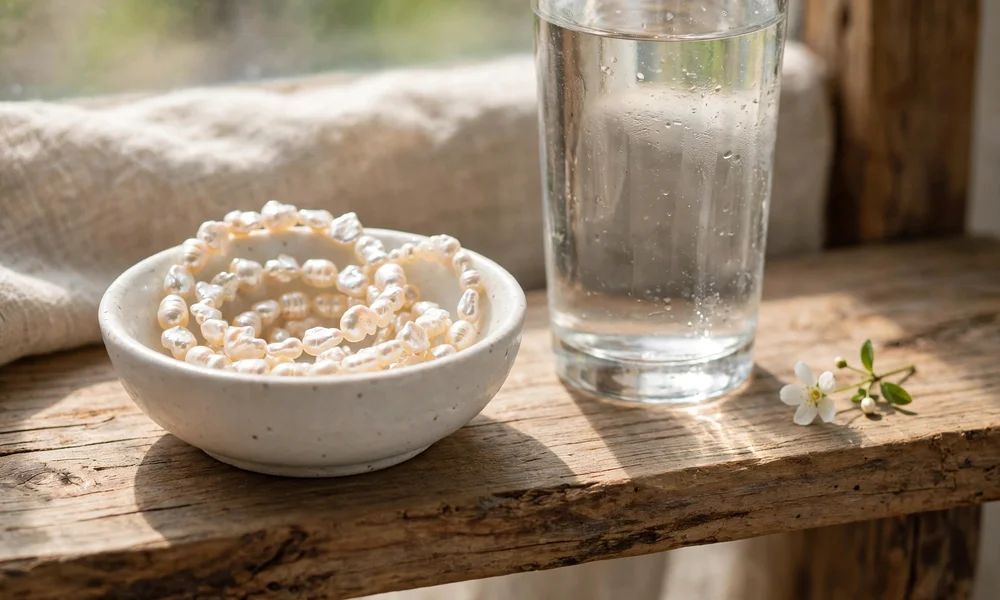
Begin the morning by setting the keshi pearls on a tray and filling a tall glass of water to put next to them, so both catch the daylight together. Sit down for a little while, take the water in slow sips, and pick up one pearl.
Keep the tray where you can see it through the morning, on a desk or a shelf in good light. If the weather turns fine, wear the pearls outside.
Keshi Pearl Beside Water
Fill a tall glass with cool drinking water and set it down on the tray next to the keshi pearls. Glass and pearl share the tray, and that is as close as they should ever get: the pearl must stay out of every drink, and it must never be left sitting in water.
Pearls are soft, so pick them up with clean, dry hands only. If the glass ever spills, move the pearls aside at once, pat them dry with a soft cloth, and put them back only after the tray itself is fully dry.
Keshi Pearl at a Glance
| Small, uneven shine | Bright days | Display only |
|---|---|---|
| Seedless, high lustre | Tray, shelf, desk | Glass stays separate |
| Cool, smooth, silvery | Daylight, lamplight, pause | Wipe with dry cloth |
| All nacre, no bead | Morning, midday, evening | Keep it dry |
Keshi Pearl and White Pearl
White pearl is the nearest relative to keshi in this journal, since both are whole gems that grow within a mollusc, built from coat after coat of nacre. The white pearl is the familiar one: a round, even gem in a soft white, with a calm glow, treasured for classic mornings when the first light is pale. Pearl for classic mornings tells the story of that round white gem, while this guide tells the story of a small, crooked one.
The difference is plain to the eye. White pearl is neat and regular, while keshi pearl is bumpy and bright, with a shine that jumps from curve to curve.
Keshi Pearl and Mother of Pearl
Mother of pearl is not a gem at all, but the pale inner skin of certain shells, shimmering with faint colours of pink, blue and green that slide about as the light shifts. It is most often kept flat, as a dish or a tray. Keshi pearl, by contrast, is a whole little gem, silvery white all the way through, with no shifting colours in it. Mother of pearl for classic days is about that pale shell skin, while this guide is about a small, lumpy gem.
Their uses differ as much as their looks. The shell skin lies flat and is admired from above, while a keshi pearl is picked up, worn, and rolled between the fingers.
Keshi Pearl and Abalone
Abalone is the inner surface of a sea snail shell, rubbed and polished until it blazes with blue, green and violet. It belongs to fresh days, open windows and bright mornings. Abalone for fresh days is about that vivid shell, while this guide is about a quiet silvery gem for bright days.
Abalone changes colour quickly when you tilt it, flashing from blue to green, while a keshi pearl keeps one steady silvery glow from every side. One is loud and changeable, the other is soft and uneven.
Keshi Pearl and the Other Pearl Colours
Three other pearls belong to the same family, and each one carries its own colour. The golden pearl is warm gold, like sun late in the afternoon, and it suits classic days. The black pearl is deep and dark, with a cool gleam that suits bold evenings. The pink pearl is a gentle pink, pale and tender, with a soft blush that suits easy days.
Keshi pearl carries none of those colours. It is silvery white, small and crooked, and its charm is its shape rather than its tint.
Keshi also stands apart from baroque pearls and freshwater pearls. Baroque is a wide name for any pearl with an uneven outline, and plenty of baroque pearls still grow around a bead, so they come out bigger and heavier. Freshwater pearls grow in river mussels rather than the sea, and they often turn out round or egg-shaped.
It also stands apart from pearl powder, which is not a gem in any sense: pearl powder is pearls ground down to a fine dust for use in skincare. Keshi pearl is a whole gem you can hold in your hand.
Caring for Keshi Pearl
A keshi pearl needs very little looking after, but what it needs is gentle. Rest it on a small tray or inside a soft pouch, somewhere with good light, and keep it away from heaters, steamy bathrooms and cleaning sprays.
Pearls are far softer than most gems, and a hard knock against a table edge can leave a mark or take the edge off the shine. If a pearl ever gets wet, pat it dry at once.
Stones That Must Never Touch Water
Some stones must be kept away from water entirely, and their names are worth learning. Keep malachite out of every glass and jug, since it can shed something harmful into water. Hematite does not belong in a drink either. The same goes for apatite, lepidolite, which carries lithium, and pyrite, angelite and amber: none of these should ever sit in water you might drink.
Keshi pearl keeps the same rule: next to the water, never in it, and never left to soak. Keep every stone on that keep-dry list well away from glasses, jugs and taps.
Your Bright Days Checklist
- Set the keshi pearls on a tray, with a full glass of water beside them.
- Sip a glass of fresh water unhurriedly as the bright day begins.
- Hold one keshi pearl in your palm and breathe slowly for a moment.
- Buy pearls from a seller you trust, and hold on to the receipt.
- Never put the pearls in a drink or a soak; the glass stays separate.
- A pearl cannot heal you; take health worries to a doctor.

Frequently Asked Questions
What is a keshi pearl?
A keshi pearl is a tiny pearl that forms by chance inside a shelled sea creature, with no bead at its centre. It is solid nacre, crooked in outline, and bright in its shine.
How is keshi pearl different from a round white pearl?
A round white pearl forms around a bead, which makes it even and smooth. A keshi pearl forms around nothing, which makes it small, lumpy and irregular.
Is keshi pearl the same as a baroque pearl?
Not exactly. Baroque covers any pearl with an uneven outline, and many baroque pearls still grow around a bead. Keshi is narrower: a sea pearl with nothing inside it at all.
Is keshi pearl safe beside water?
Yes, so long as the two never touch. Put the glass next to the pearls on the tray, and never drop a pearl into a drink or leave it sitting in water.
Will a keshi pearl heal anything?
No. It is a pretty gem to wear and to admire; any calm you feel comes from the quiet minutes, not the pearl.
Where should I buy keshi pearls?
Buy from a seller you trust, one who will say plainly whether the pearls were farmed or found wild.
The Bottom Line
A keshi pearl brings a soft shine to bright days: a tiny, seedless, crooked gem with a lively glow, resting on its tray beside a glass of fresh water.
A Note for Bright Days
Let the glow stay gentle, the pearl stay dry, and the day stay unhurried. One small keshi pearl and one glass of water are plenty.