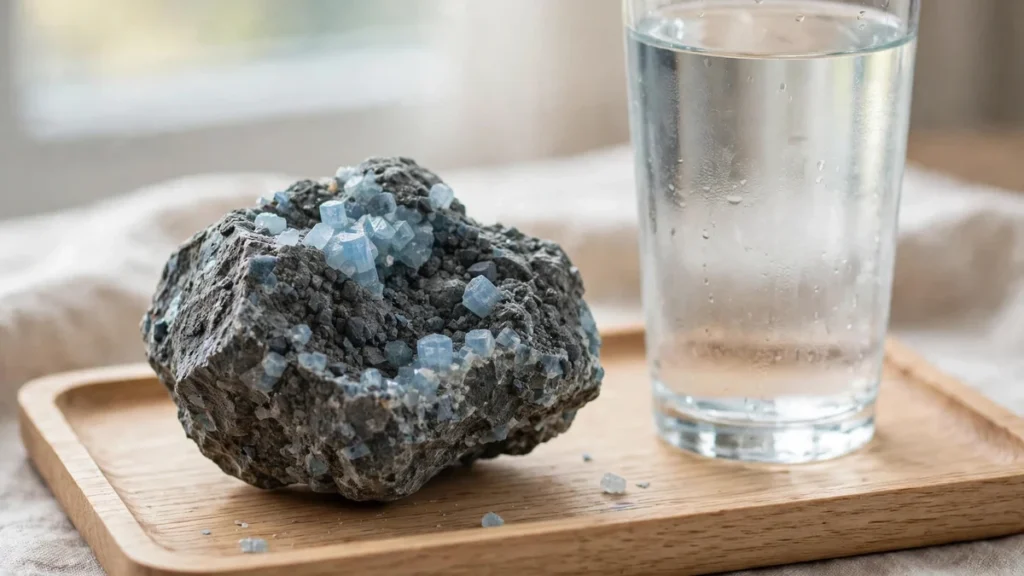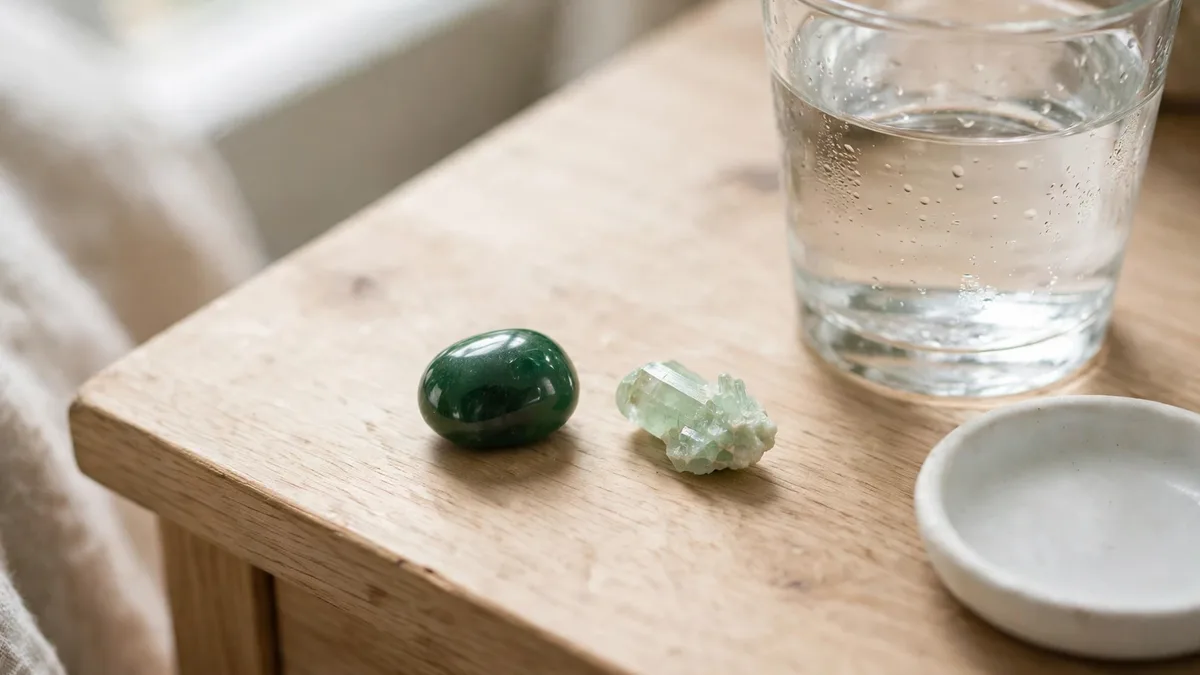
Some days do not ask for speed. They ask for a slower pace, a clear table, and a little green light in the corner of the room. A calm day is not an empty day: the work still gets done and the house still runs, but everything happens at a gentler speed, with a pause between one thing and the next.
Hiddenite is a stone that suits those calm days. It is the green variety of spodumene, a pale to soft green crystal that looks like new leaves held up to the light. Set it beside a glass of water on a desk or a bedside table, and it sits there like a small piece of spring, kept for the slow hours of the day.
This guide explains what hiddenite is, how to choose one, how to keep it beside water, and how to build a short calm-day habit around it. The stone is display and handling only, never a treatment, and it will not heal anything or make a busy day calm on its own.
Key Takeaways
- Hiddenite is the green variety of spodumene, a pale green stone for calm days.
- Its soft green colour suits slow, unhurried hours, not rushed ones.
- Hiddenite is for display and handling only; it will not heal anything.
- The stone stays beside drinking water, never in it; this is the only safe way.
- A calm day needs very little: light, water, one stone, and a clear first step.
What Hiddenite Is
Hiddenite is the green variety of spodumene, a mineral family that also gives us pink kunzite. Its green colour comes from tiny traces of chromium in the crystal, the same element that colours emeralds green, and it ranges from a very pale mint to a soft, clear leaf green. Most pieces sold today are small polished tumbled stones, smooth and cool to hold.
The stone is named after William Earl Hidden, the American mineral expert who first described it, and it was first found in North Carolina. It is rarer than kunzite, so most pieces are small, and a small piece is all a calm-day corner needs. The same gentle spodumene family is described in kunzite gentle pink for tender skin rituals, where the pink stone suits tender days in the same quiet way.
Why Green Suits Calm Days
Green is the colour of leaves, grass, and quiet gardens, and the eye rests on it without effort. A green stone on a desk does the same work as a plant on a windowsill: it gives the eye somewhere calm to land when the screen grows tiring and the mind starts to race. The colour does not shout, and it does not demand attention, which is exactly what a calm day needs.
Hiddenite suits calm days because its green is soft, not bright: pale and clear like morning light through a leaf. Look at it for a moment between tasks, and the day feels a little slower, in an ordinary and honest way. The same slow looking runs through sugilite calm for quiet evenings, where a purple stone suits the quiet hour at the end of the day.
Choosing a Hiddenite Stone
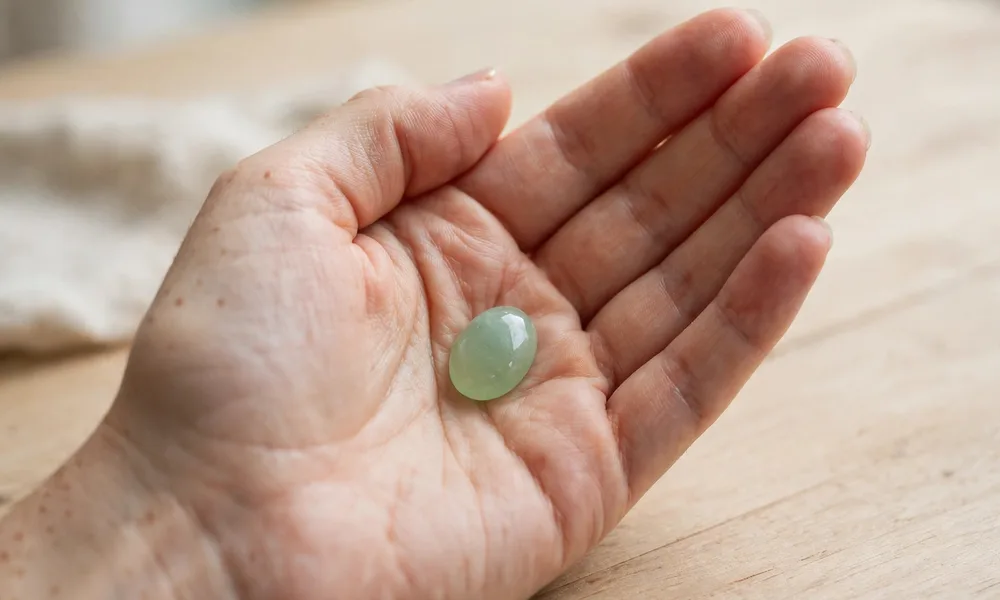
Choose a stone you can see clearly before you buy it, in daylight as well as in the shop light if you can. Look for an even green colour you love at first sight, a smooth polish with no sharp edges, and a surface that glows softly when you turn it in the light.
Good hiddenite is clear rather than cloudy, with no dark patches or cracks. Buy from a trusted seller who can tell you plainly what the stone is, and never from one who promises it will change your health or your mood. A small tumbled piece, about the size of a coin, is ideal.
Keeping It Beside Water
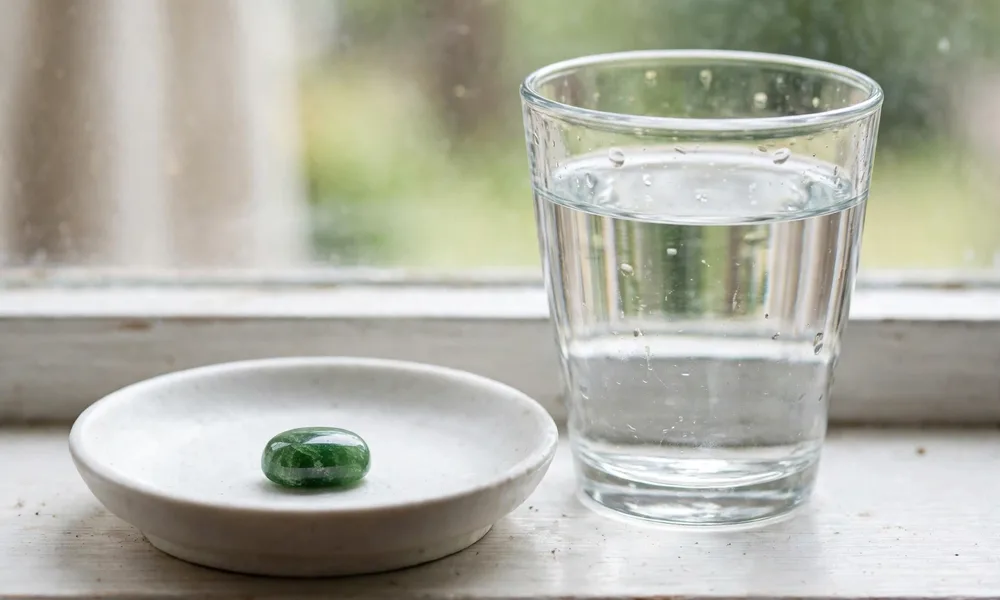
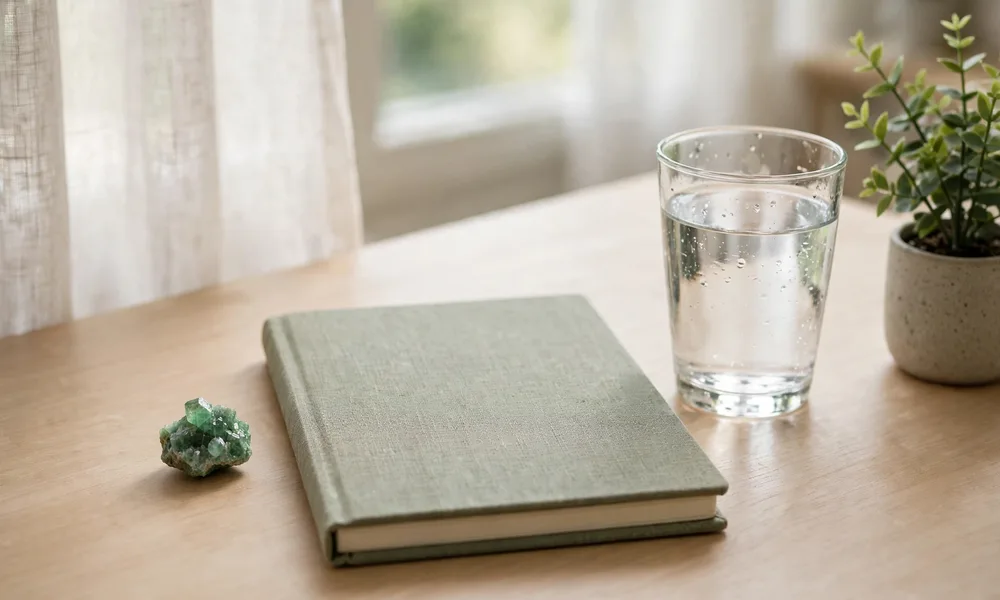
Hiddenite is a fairly hard stone, but the rule for this journal never changes: stones stay beside water, never inside drinking water. Keep a glass of water on the desk or bedside table, and the stone on its dish beside the glass, where you can see them both in the daylight.
This matters because a stone can carry dust into the water, can chip, and can be swallowed by accident if it is small. A stone beside the glass gives you the same calm sight with none of the risk, and the water stays plain and safe to drink. The rule is strictest for stones that must never touch water at all: malachite never goes in water or elixirs, hematite never goes in drinking water, and apatite, lepidolite, pyrite, angelite and amber never go in drinking water or soaks, since lepidolite contains lithium and the others can shed dust or dissolve.
A Calm Day Corner
A calm day corner takes only a few minutes to set up, and starts the evening before. Leave the desk clear, the journal open, and the stone on its dish where the morning light will find it. A corner set at night says, without words, that the morning will be slow.
When the morning comes, sit down slowly, drink your water, and hold the stone for a moment if you like, feeling its cool weight. Then write down the one thing that matters most today, in a single short line. A corner kept simple is a corner that gets used.
Hiddenite and Calm Days
Hiddenite suits calm days because both move at the same steady pace. The stone does not ask to be used, and a calm day does not ask to be filled. Together they make a quiet space where a single slow hour, or a single honest line in a journal, feels like enough.
Try keeping the stone beside your glass while you read the morning pages, and let the green remind you that leaves grow slowly. Nothing is decided yet, nothing is lost, and the day is yours to take at your own speed.
Cleaning and Caring for the Stone
Cleaning hiddenite is simple, because its surface is smooth and fairly hard. Wipe it with a soft, dry cloth after handling, and wash it now and then with lukewarm water and a drop of soap, rinsing well and drying straight away. Keep it on its dish, away from the edge, so it cannot roll off and chip.
Do not soak the stone for long, do not scrub it roughly, and do not leave it in strong sunlight all day. Gentle care keeps its polish bright, and a bright polish is what makes the green glow. A stone cared for gently will keep its colour for years.
What Hiddenite Will Not Do
Be honest about what hiddenite will not do. Hiddenite will not heal anything: it will not cure an illness, ease a medical condition, fix a busy schedule, or make a hard day calm on its own. It is a beautiful green spodumene, and spodumene is all it is, and no honest seller should claim otherwise.
The quiet is the part that helps, in an ordinary way: a clear corner can steady a scattered day, and one clear step can keep the hours calmer. The stone keeps you company while you do that work. If you are unwell, or if a problem is medical, see a doctor, not a stone.
Buying Honestly
Buy hiddenite honestly, and expect honest sellers to do the same. A good seller will tell you the stone is a natural green spodumene, show you the piece before you pay, and never promise that it heals, protects, or changes your health. If a seller makes medical claims, walk away.
Prices vary with size and the clarity of the green, and a small tumbled piece costs very little. The same plain honesty runs through celestite soft light for bedrooms that rest, where a pale blue stone is sold as a beautiful stone, never as a cure.

Hiddenite at a Glance
| Soft green | Calm day | Stone care |
|---|---|---|
| Pale leaf green | One clear step | Wipe stone dry |
| Cool smooth surface | Glass beside stone | Dish beside glass |
| Fits in palm | Journal open daily | Mild soap only |
| Glows in daylight | Phone in other room | Shade from harsh sun |
Your Hiddenite Calm Day Checklist
- Clear the desk each night, the journal open, and the stone on its dish.
- Keep the phone in another room so the day belongs to the quiet.
- Hold the stone for a moment, then drink your water slowly.
- Keep the stone beside your glass of water, never inside it.
- Write down one clear step for the day, in a single short line.
- Remember the stone will not heal anything; the clear step is the part that helps.
Frequently Asked Questions
What is hiddenite?
Hiddenite is the green variety of spodumene, coloured by tiny traces of chromium, and it ranges from pale mint to soft leaf green. It is sold as polished pieces or crystals, kept as a display and handling stone, never as a treatment.
Is hiddenite the same as kunzite?
They are cousins, not twins. Both are spodumene, but kunzite is pink and coloured by manganese, while hiddenite is green and coloured by chromium. Each has its own colour and mood.
Can I put hiddenite in my drinking water?
No. Stones always stay beside drinking water, never in it. Keep the stone on its dish beside the glass. A stone can carry dust into the water, can chip, and can be swallowed by accident if it is small.
How do I choose a good hiddenite?
Look at the stone in daylight as well as shop light, and choose one with an even green colour you love at first sight. Pick a smooth polish, a clear surface with no cracks, and a trusted seller who says plainly what it is.
How do I clean hiddenite?
Wipe it with a soft, dry cloth after handling, and wash it now and then with lukewarm water and a drop of plain soap, rinsing well and drying straight away. Do not soak it for long, and keep it out of harsh sunlight.
Will hiddenite heal anything?
No. Hiddenite will not heal anything: it will not cure an illness, ease a medical condition, or fix a busy schedule. It is a beautiful green spodumene, and the clear calm step is the part that helps, one slow hour at a time.
The Bottom Line
Hiddenite is a soft green spodumene, and a calm day is one clear corner, kept simply.
Put the stone on its dish, pour the water, and take the first step.
A Note for Calm Days
Keep it green, keep it slow, keep it simple. The leaves will do the rest.