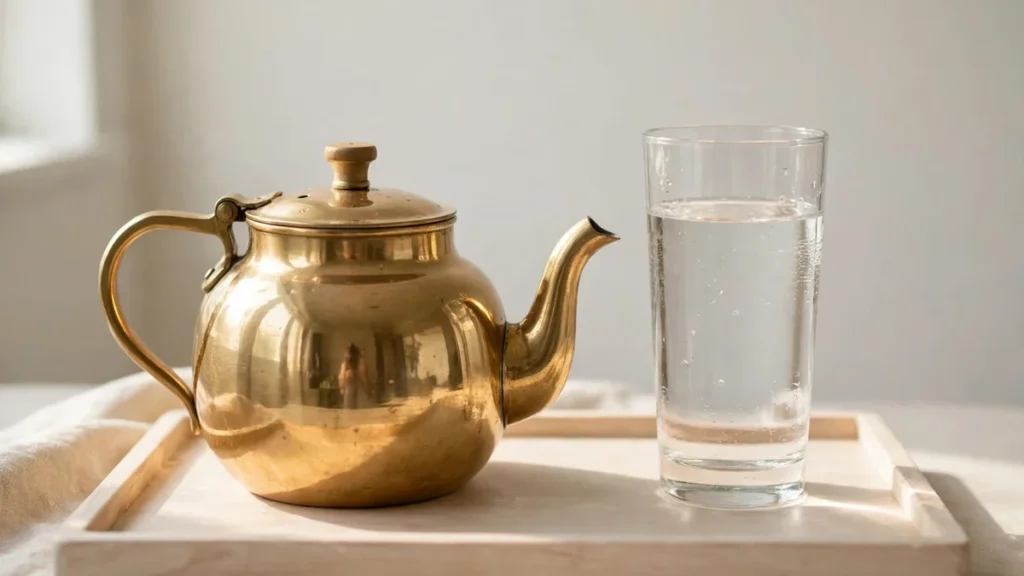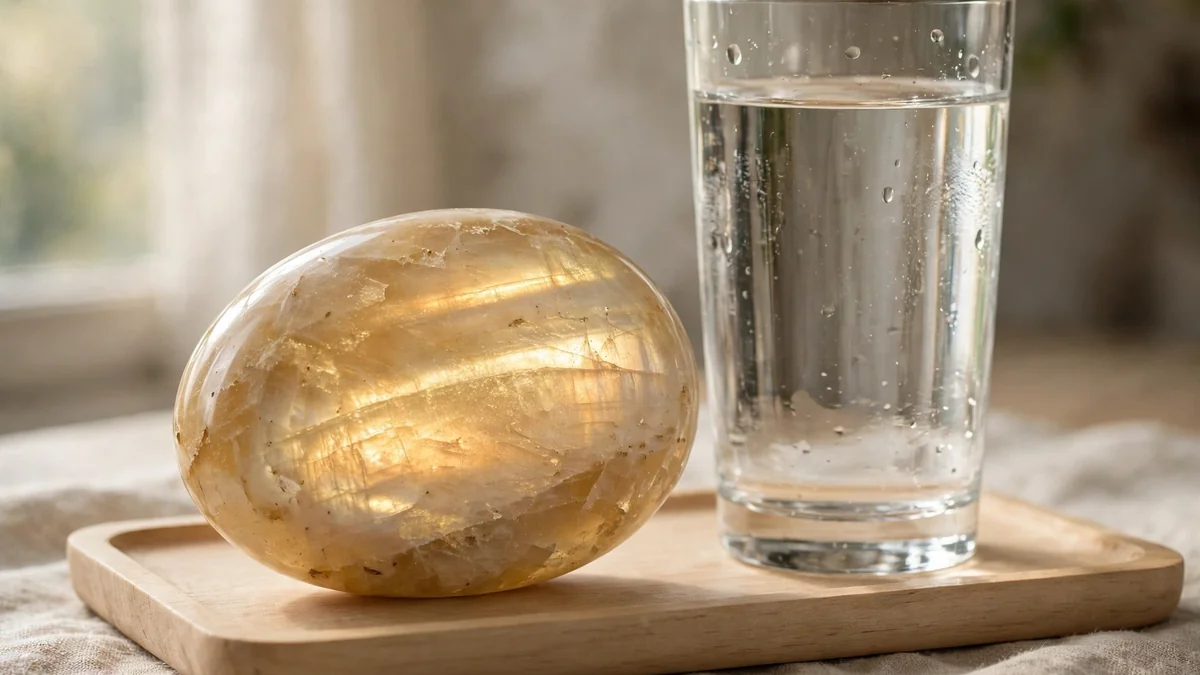
Some days arrive dressed in gold. The sun comes over the rooftops, the floorboards turn honey-coloured, and even a plain glass of water catches a warm glint. Those are the days when a golden stone feels at home, because the light outside and the colour on the tray seem to answer each other.
Golden moonstone is that stone: a warm gold feldspar whose soft golden sheen slides across its surface whenever the piece is turned, like sunlight moving over still water.
What follows is a slow look at this golden stone: the feldspar it belongs to, the glow that moves inside it, the way to spot a fine piece in a shop, and the small daily habit of keeping it on show beside water. Think of it as a handsome object for a sunny shelf, and nothing beyond that, because no stone can fix anything in the body.
Key Takeaways
- Golden moonstone is a feldspar in deep gold, lit by a sheen that slides when the stone moves.
- That rich gold colour suits bright days, strong sunshine and unhurried afternoons.
- It is an object to admire and handle, with no power to treat or heal anything.
- Water stays in its own glass, a little way off; the stone stays dry.
- A single fist-sized piece is enough company for a whole bright day.
What Golden Moonstone Is
Golden moonstone wears the richest gold in its family, a feldspar built up in fine layers. Its gold ranges from pale honey to a deeper amber, and a soft sheen crosses it as the stone moves, warm and golden rather than blue or silver.
A polished piece starts cool in the hand, then takes on warmth from your skin, its surface smooth and its light soft rather than sharp. That moving sheen gives the stone its character: strip it away and only plain gold remains, with nothing to set one piece apart from the next.
Why Warm Gold Fits Bright Days
Gold is the colour of the middle of the day, when the sun stands high and fills a room from wall to wall. It lifts a table the way a bowl of late-summer fruit does. On a bright day, with the windows open and light pouring in, a golden stone on a tray simply matches the hour.
A pale stone would wash out in that strong light, and a very dark one would sit heavily against white linen. Warm gold holds its colour in full sun and keeps the tray cheerful through the afternoon.
Choosing a Golden Moonstone Piece
Hold the piece up where daylight falls on it and roll it between your fingers, watching the sheen travel. The gold should stay deep and level across the whole stone, with no ashen smears, no milky blotches and no nicks along the rim. A good piece lies steady on a flat surface and sits happily in a closed fist.
Put a plain question to the seller about where the stone was dug up and shaped. Walk away from gold that looks painted on, from a price far above an everyday stone, and from any seller who claims it can make you well.

A Bright Day with Golden Moonstone
Lay a pale wooden board on the kitchen table, with the stone near one end and a tall glass of water near the other, and a hand-span of bare wood between them. Drink the water at a leisurely pace while the golden sheen wanders over the stone as the sun rises.
That is the whole morning: board, glass and stone, and nothing more. Leaf through a magazine, or simply follow the sunlight as it crosses the table.
Golden Moonstone Beside Water
Water and golden moonstone look lovely together, but they must keep their distance. Keep the glass at one end of the board and the stone at the opposite end, with bare wood in the middle so the drink stays clear and the stone stays untouched by damp. The board is for display, never for dipping.
Once the stone is settled, rinse your hands with soap and water before you pick up the glass. The stone goes into no glass, no jug and no bath, ever.
Golden Moonstone at a Glance
| Deep golden glow | Sunny shelf, desk | Look, never soak |
|---|---|---|
| Rich, even gold | Strong daylight | Keep it dry |
| Smooth, cool stone | Bright days, slow hours | Hands washed after |
| Fist-sized piece | Glass nearby | Out of drinks |

Golden Moonstone and Yellow Moonstone
Yellow moonstone for bright days is the closest colour to golden moonstone, and the two are easy to tell apart once they sit side by side. Yellow moonstone is a warm yellow feldspar, the colour of buttercups in a jam jar, with a soft golden glow that slides as the stone turns.
Golden moonstone runs deeper and richer than its yellow sister: where yellow is fresh and lemon-bright, gold is honeyed and warm, like late-afternoon sun against pale honey. Yellow sings in the morning; gold glows through the whole bright day.
Golden Moonstone and Orange Moonstone
Orange moonstone for bright days is the warm orange member of this family: a feldspar the colour of apricot lit from inside, crossed by a silvery orange shimmer. Where orange is deep and marmalade-warm, golden moonstone is lighter and more purely gold.
The two stones suit different hours of the same bright day. Orange belongs to the boldest part of the morning, when the light is strong and the room feels awake. Gold belongs to the long middle of the day, when the sun has settled and the light turns soft and honeyed.
Golden Moonstone and the Other Moonstones
No other moonstone on this site carries this gold. Peach moonstone for soft mornings is a soft peach feldspar for the first drowsy hour, when the house is still waking and the light is low; gold, by contrast, wants the day in full swing. White moonstone glows milky with a blue light for pale mornings, and grey moonstone keeps a quiet mid-grey sheen for calm days.
Green moonstone brings garden green to calm days, rainbow moonstone throws blue and violet sparks across quiet nights, and black moonstone holds a dark grey for the hour before sleep. The moonstone hydration mist belongs elsewhere entirely: it is a face spray for tired skin, not a stone to display. What sets golden moonstone apart is plain to see — deep gold, and a golden sheen that no sister stone shares.
Where Golden Moonstone Lives at Home
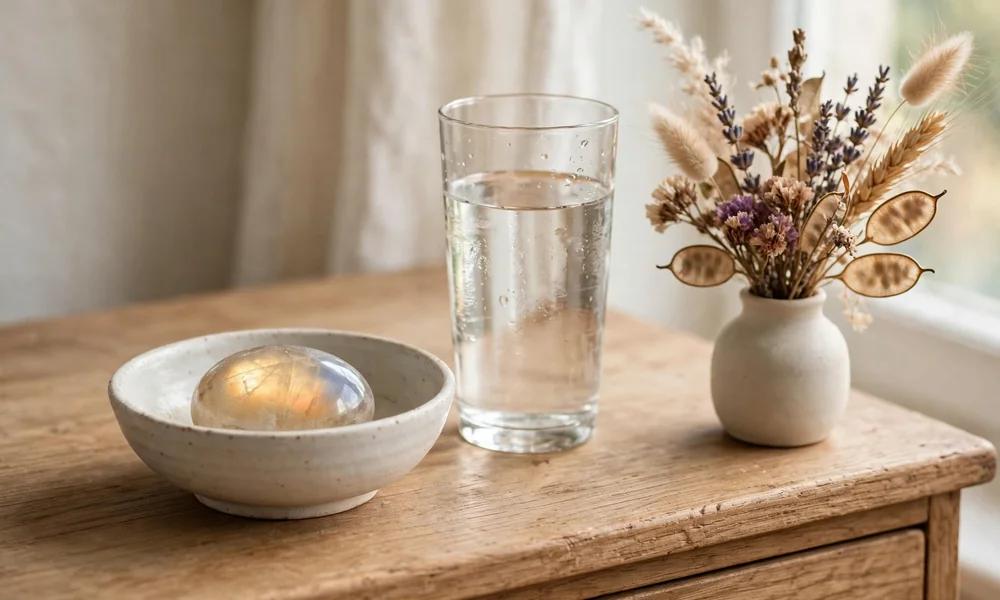
Keep golden moonstone where daylight finds it during a bright day. A shelf by the window, the top of a bookcase, or a mantelpiece all work, as long as the stone stays visible and clear of passing elbows. Full sunshine shows its gold at its best.
Choose a spot well away from sinks and showers, where steam and spray never land, and above the reach of little hands. A stone left in view gets enjoyed daily.
Looking After Golden Moonstone
Golden moonstone is a tough stone, but a small habit keeps its sheen lively. Wipe it over with a soft dry cloth when you dust the room, and that is the whole cleaning routine. Keep soap, polish and sprays in the cupboard, since wetness and chemicals only take the shine away.
When it is not on show, slip it into a soft pouch by itself, far from keys, coins and harder gems. Hard sun through a window can fade the gold over months, so a bright shelf beats a sill that roasts all afternoon.
Stones That Must Stay Away from Water
Water and certain stones are a bad match, and a few of them hide things that must never end up in a drink. Malachite's green bands carry copper, so keep it well away from every drinking glass. Hematite rusts when left wet, and that rust marks whatever lies underneath. Pyrite fades and rusts in the same fashion after a soaking.
Some stones are simply too soft to bathe, and others hold something that wants to stay dry. Angelite dissolves slowly in water, while amber — ancient tree resin, not stone — turns soft and cloudy after a long dip. Apatite is too tender for baths, and lepidolite's pale flakes contain lithium. Keep all of them away from drinks, and treat golden moonstone exactly the same way.
Your Bright Days Checklist
- Lay the golden moonstone on a dry board, a full glass of water beside it.
- Sip the water gently while sunshine fills the room.
- Hold the stone in your hand for a slow breath, then set it down.
- Rinse your hands with soap after the stone is back on its board.
- Choose a seller who can tell you plainly where the stone was found.
- If health worries you, see a doctor; no stone can heal anything.

Frequently Asked Questions
What is golden moonstone?
Golden moonstone is a warm gold feldspar in the moonstone family, lit by a soft golden sheen that slides across the stone as you turn it. A polished piece is smooth to the touch, cool when lifted and solid in the palm.
How is golden moonstone different from yellow moonstone?
Yellow moonstone is a warm yellow stone that glows like buttercups, made for bright days. Golden moonstone runs deeper and richer, a honeyed gold rather than a fresh yellow, so the two share one family but wear different shades.
How is golden moonstone different from orange moonstone?
Orange moonstone is an apricot-coloured feldspar with a silvery orange shimmer. Golden moonstone is warmer gold with a soft golden sheen, lighter and more purely gold than its orange sister.
How is golden moonstone different from peach moonstone?
Peach moonstone is a soft peach feldspar that suits the first drowsy hour, with a faint pale shimmer. Golden moonstone is a warm gold stone with a golden sheen, made for bright days in full sun.
Is golden moonstone safe to hold?
Most people can handle it for a minute or two without any trouble. Put it back on its tray afterwards, wash your hands with soap, and store it where children cannot reach it and away from food.
Where should I keep golden moonstone at home?
Pick a bright, dry place for it — a tray, a shelf or a ledge — keeping the glass a little apart and the stone away from bumps and wet.
The Bottom Line
Golden moonstone gives bright days a golden companion: one glowing stone in strong light, with a glass of water standing beside it.
A Note for Bright Days
Keep the day golden and the stone dry. One golden moonstone, one glass of water, and a few slow hours in the sunshine.