Some days arrive with a bruised feeling, when the light seems too sharp and every small task asks for more patience than you have. The day ahead looks long before it has even begun, and on those days a loud colour only makes things worse.
A soft pink stone can sit quietly beside you instead. Cobalt calcite holds a gentle blush pink, pale as the inside of a seashell, and it asks nothing of the person looking at it.
This guide is about that quiet company: what cobalt calcite is, how to pick a piece, and how to keep it safely beside a glass of water. It cannot soothe skin, settle nerves, or fix a hard day, and any ache that lingers belongs with a doctor.
Key Takeaways
- Cobalt calcite is a soft blush-pink calcite whose colour comes from cobalt.
- Its gentle pink suits tender days, slow mornings and quiet rooms.
- Cobalt calcite is new here: it differs from pink, pink mangano and red calcite.
- Keep it beside drinking water only, never inside it, and handle it gently.
- A tender-day habit needs very little: soft light, water, and one pink stone.
What Cobalt Calcite Is
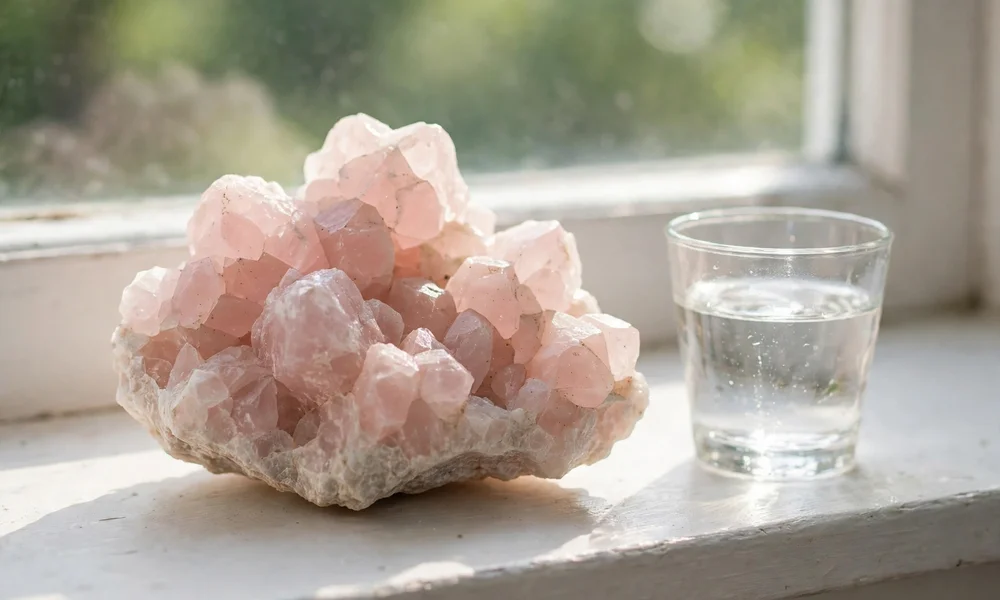
Cobalt calcite is a pink variety of calcite, a mineral made of calcium carbonate, whose blush colour comes from small traces of cobalt held inside the stone. The finest pieces come from mines in the Congo, where cobalt-rich ground lends the calcite its soft rose tint.
Shops usually stock it as smooth rounded tumble stones, or as little palm-sized pieces that sit neatly in the hand. Hold one and it feels cool and solid, with a soft waxy shine that warms slowly as you hold it.
Why Soft Pink Suits Tender Days
Soft pink suits a tender day because it is the colour of a cheek after a good sleep and a room where nothing is shouting. Tender days are already full of sharp edges, and a soft colour gives the eye somewhere gentle to rest. A small pink stone on the tray carries that softness into the room.
Pink also suits tender days because it never pretends to be strong. A bold red would demand energy you may not have, but blush pink simply sits there, calm and unhurried, while the water is poured and the light stays low.
Choosing a Cobalt Calcite Piece
Choose a piece you can look at closely before you buy it, in daylight if you can manage it. Look for an even blush pink, a smooth polish with no sharp edges, and a size that sits comfortably in your palm. The pink should look like rose petals in a book, not like paint, and any white bands should be faint and soft.
Be careful with stones that look too bright, with a flat bubblegum pink or a glossy plastic shine. Real cobalt calcite feels cool to the touch, has a little weight for its size, and shows small natural marks inside when held up to the light. Buy from a seller who can say plainly where the stone came from, and walk away from anyone who promises it will change your health.

A Tender Day with Cobalt Calcite
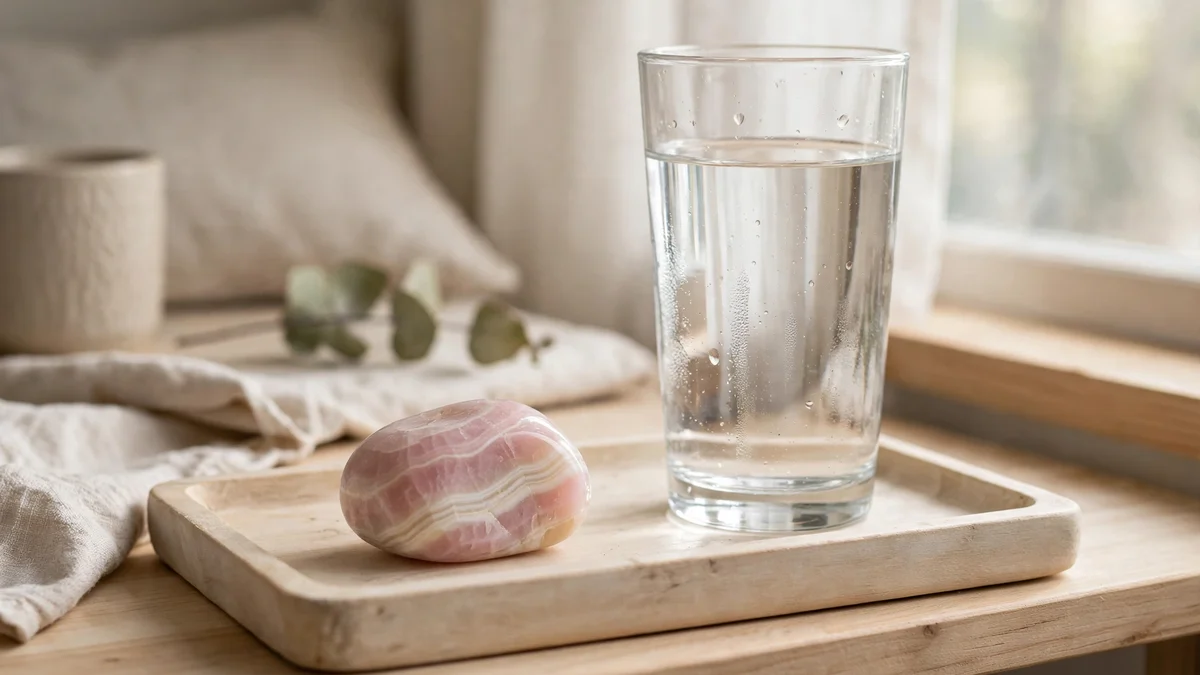
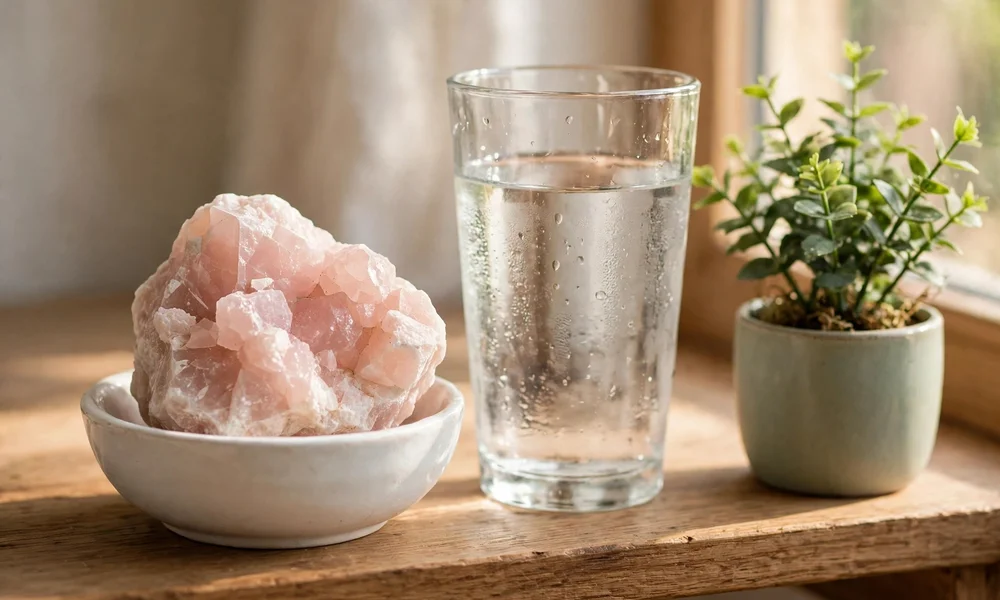
Begin a tender day by placing the cobalt calcite on its tray where soft light falls, and put a glass of water next to it, near enough to catch the same light yet kept apart from the stone. Take a slow sip, let your eyes rest on the pink for a moment, and breathe once, without rushing, before anything else begins.
Keep the tray somewhere you can glance at it during the morning. As the light moves, the pink shifts a little each time you look, and noticing that quiet change is the pleasure of it. The stone itself does nothing at all: the rest belongs to you, and the pink only marks the moment.
Cobalt Calcite Beside Water
Keep the glass and the cobalt calcite on one tray, but always apart. Put the water at one side and the stone at the other, with a clear gap between them, because calcite is soft and a soak can take the shine off its surface and leave it rough. If a drop lands on the stone, wipe it off straight away with a dry cloth.
Never drop it into a glass, never leave it in a soak, and never use it to stir a drink. The tray keeps the water and the stone in the same gentle picture while keeping them safely apart.
Cobalt Calcite at a Glance
| Blush pink stone | Tender days | Beside water only |
|---|---|---|
| Cobalt colours it | Tray, desk, shelf | Dry cloth wipe |
| Cool, smooth, waxy | Soft light, slow mornings | Never in drinks |
| Faint white bands | One stone, one glass | Handle with care |
Cobalt Calcite and Pink Calcite
Pink calcite is the closest pink neighbour, and the two stones share a colour but not a story. Pink calcite for gentle mornings covers a pale milky pink calcite whose colour comes from tiny traces of manganese in the rock, sometimes crossed with gentle white bands like the first light across a window.
Cobalt calcite is coloured differently, and it shows. Where pink calcite is pale and milky, cobalt calcite carries a warmer blush, a rose tint that comes from cobalt rather than manganese. Both are soft calcites that stay dry beside water, but the cobalt piece looks a shade deeper, as though the pink had been left in the sun a little longer.
Cobalt Calcite and Pink Mangano Calcite
Pink mangano calcite is the deeper rose cousin, and it makes a useful comparison. Pink mangano calcite for tender skin covers a soft rose pink calcite, also coloured by manganese, that sits on a vanity shelf as a small pink reminder to be gentle with tender skin.
Cobalt calcite is paler than its mangano cousin. Where pink mangano calcite is a warm, deep rose, cobalt calcite is a lighter blush, closer to a seashell than to a rose petal. Both stay dry beside their glass of water.
Cobalt Calcite and Red Calcite
Red calcite is the bold member of the family, and it could hardly look more different up close. Red calcite for bold mornings covers a deep warm red calcite, coloured like ripe cherries held up to the light, made for mornings that start with energy and a full list.
Cobalt calcite is the opposite in mood: pale, soft and content to sit quietly, where red calcite is deep, warm and sure of itself. Red suits a morning with a plan; cobalt suits a day that needs gentleness.
Cobalt Calcite and the Other Calcites
Beyond the three nearest neighbours, the calcite shelf holds more company. Blue calcite is cool and calm, honey calcite glows golden, yellow calcite is sunny, white calcite is clean and fresh, green calcite is cool, orange calcite is bright, and chocolate calcite is warm brown and steady.
Cobalt calcite stands apart from all of them by its colour and its source. No other calcite on the shelf carries this soft blush pink from cobalt, and that is why it earns its own guide.
Caring for Cobalt Calcite
Looking after cobalt calcite is simple, but the few rules count. Store it somewhere dry and away from strong heat, like a covered shelf or a little box with a soft lining, and never drop it loose into a pocket beside keys or coins, which will scratch a soft stone.
Brush dust off with a dry, soft brush, and keep water, soap, creams and sprays far away from it. Should the tray get wet, pick the stone up, wipe the tray until it is fully dry, and only then put the stone back. Gentle handling and a dry cloth are all it ever asks for.
Stones That Must Never Touch Water
A few stones should never be wetted at all, and it helps to know them by name. Malachite comes first on that list: keep it away from glasses and jugs, because it can let go of things that should never reach a drink. Hematite is on that same never-wet list, and it should never sit in drinking water either.
Apatite and lepidolite are on the list too, and lepidolite holds lithium inside it. Pyrite, angelite and amber finish it off: not one of them belongs in a glass, a jug, or a bowl of water for soaking. Cobalt calcite is soft as well, so keep all of these stones next to the glass, never in it.
Your Tender Days Checklist
- Put the cobalt calcite on a dry tray with a full glass of water nearby.
- Drink the water in slow sips as the tender morning unfolds.
- Handle the stone gently and put it back on its tray.
- Buy from a seller who names the stone and its source plainly.
- Keep the stone dry, away from children, food and drinks.
- A stone heals nothing; take lasting pain to a doctor.
Frequently Asked Questions
What is cobalt calcite?
Cobalt calcite is a pink variety of calcite, a mineral made of calcium carbonate, whose blush colour comes from small traces of cobalt. It is usually sold as smooth polished tumbled pieces.
Is cobalt calcite safe to touch?
You may pick it up and hold it briefly, then set it back on its tray. It is a soft stone, so handle it gently and keep it away from children and food.
Why must cobalt calcite stay out of water?
Calcite is a soft stone, and water can take the shine off it and leave the surface rough. Never drop it into a glass, leave it soaking, or stir a drink with it, and wipe off any splash right away.
How is cobalt calcite different from pink calcite?
Pink calcite is a pale milky pink coloured by manganese, while cobalt calcite is a warmer blush pink coloured by cobalt. Both are soft calcites that stay dry beside water, but the cobalt piece looks a shade deeper and rosier.
Will cobalt calcite heal anything?
No. It is a lovely stone to keep on display and to look at, and if a quiet minute with it leaves you calmer, that calm comes from the rest itself, not from anything held in the stone.
Where should I keep cobalt calcite at home?
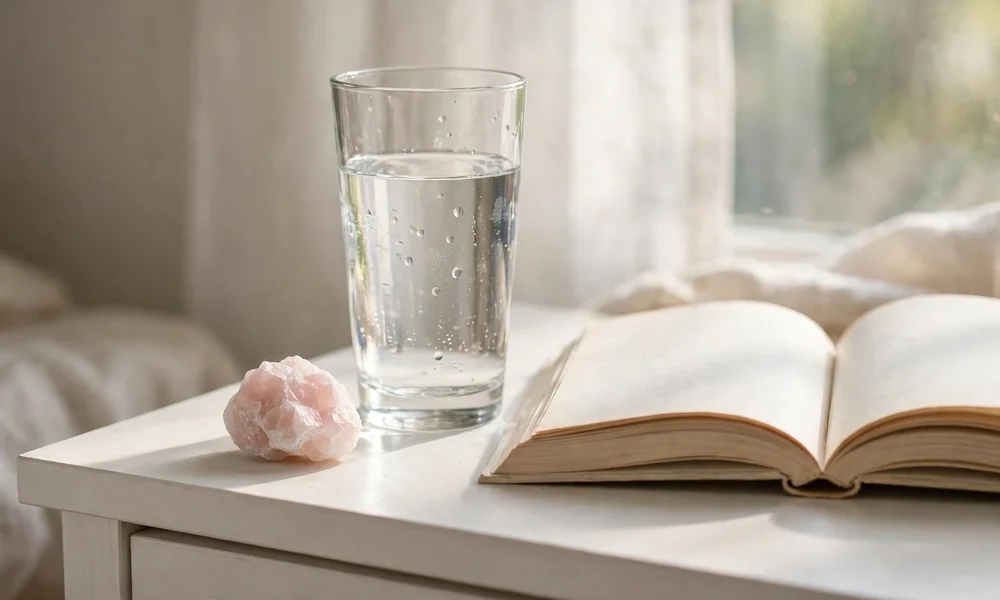
Choose a calm, dry spot for it — a tray, a shelf by a window, or a bedside table — with a glass of water nearby but never in contact with it.
The Bottom Line
Cobalt calcite brings soft pink light to tender days: a blush stone coloured by cobalt, kept on a dry tray near a glass of water, looked at with pleasure and never put in a drink.
A Note for Tender Days
Keep the pink soft, the stone dry, and the morning slow. One small stone, one glass of water, and a few quiet minutes are enough.