
A glass of warm honey water is golden, lightly sweet, and warm in the hands, and it asks for nothing more than a minute of your attention before the day begins.
This ritual adds one beautiful companion to that glass: a piece of citrine, the warm yellow stone, set on the table beside it. The stone never goes into the water. It sits beside the glass, catching the morning light, while you stir your honey water and drink it slowly.
That is the whole ritual. A warm drink, a bright stone, and a few unhurried minutes — a sweet way to begin the day, and a habit simple enough to keep.
Key Takeaways
- Citrine and honey water is a morning ritual: a glass of warm honey water, with a citrine stone beside the glass.
- The citrine stone is a display piece only — it never goes into the honey water or any drink.
- Stir one teaspoon of honey into a glass of warm, not hot, water until it dissolves.
- Drink it slowly, in the morning light, before the rush of the day begins.
- Honey water is a pleasant drink, not a treatment: it does not cleanse, cure, or detoxify anything.
What Citrine and Honey Water Is
Citrine and honey water is a morning ritual with two parts: the drink, warm water with a little honey stirred in, and the stone, a piece of polished citrine, honey-yellow in colour, placed on the table beside the glass.
The pairing works because the two belong together by colour and by mood. Honey is golden and warm, citrine is golden and warm, and morning light makes both of them glow. The ritual is not a recipe with exact measures and not a ceremony with rules: it is a small, pleasant way to start the day.
You need very little to begin: a glass, warm water, a teaspoon of honey, and a piece of citrine you like looking at. If you already keep citrine beside your morning glass of plain water, this is a gentle variation on that habit: citrine morning water for a gentle start is the plain-water version of this ritual.
Citrine Beside the Glass, Never Inside It
This is the most important rule of the ritual: the citrine stone stays beside the glass, never inside the honey water. Citrine is a display piece here, not an ingredient.
There are two good reasons for this. First, a drink should stay clean and simple: water and honey, nothing else. A stone in a glass can carry dust, and it can chip or crack if it knocks against the glass. Second, keeping the stone beside the glass keeps the stone safe too — no soaking, no sticky honey on its surface.
This is the indirect method, and it is the only method this journal recommends for stones and drinks: the stone sits near the water, never in it. Set the citrine on a small dish or directly on the table, an inch or two from the glass, where the morning light can reach it.

Honey Water: A Simple Morning Drink
Honey water is warm water with honey dissolved in it. It has been drunk in the morning for a very long time, in many places, because it is simple, sweet, and warming — a kinder start than a cold glass or a rushed coffee.
Honey itself is mostly natural sugars, with tiny amounts of other compounds that give each honey its flavour: floral, woody, or dark and rich, depending on the flowers the bees visited. A light, floral honey suits this drink best, because its sweetness is gentle rather than heavy.
Why Mornings Suit a Slow Ritual
Mornings suit a slow ritual because the day has not yet made its demands. The house is quiet, the light is low and golden, and there is a short window — often just ten minutes — before messages, meals, and errands begin.
A warm drink helps in a practical way too. After a night's sleep, the body has gone hours without water, and a warm glass is a gentle way to start drinking again. Warm water feels kinder than cold water first thing in the morning, and the sweetness of honey makes the glass something to look forward to rather than a chore.
There is also a simple pleasure in doing one thing slowly. Stirring honey into warm water takes a minute, and in that minute you are doing nothing else. If mornings often feel rushed, a gentler approach to drinking water helps too: drinking more water, gently is a good next read.
Making Your Honey Water Well
Good honey water starts with good water. Use clean drinking water, warmed in a kettle or a pan until it is warm to the touch — about 40 degrees, warm enough to dissolve honey easily, cool enough to sip at once. Water that is boiling hot will scorch the honey, so let a boiled kettle stand for a few minutes first.
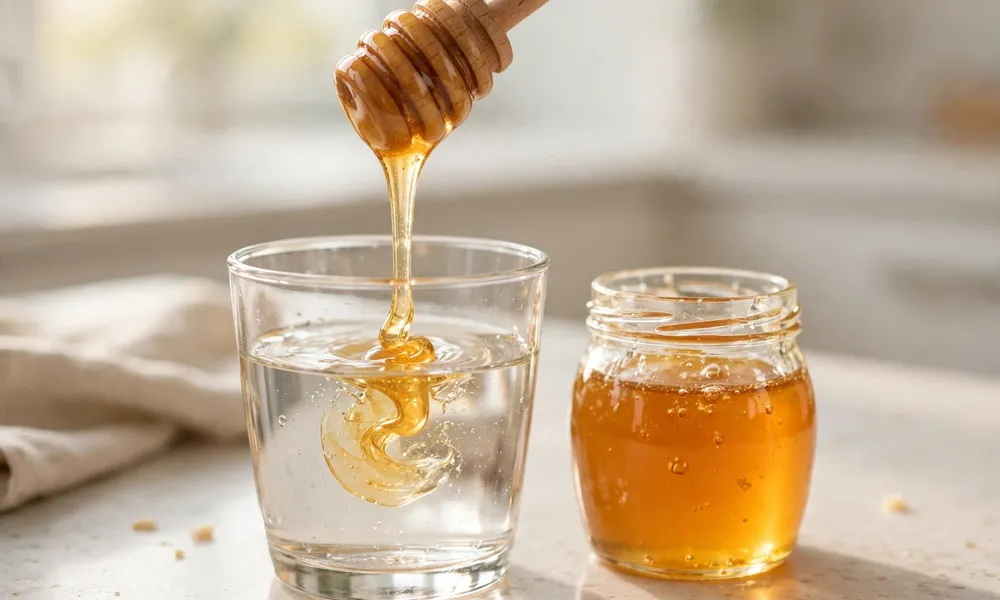
Use one teaspoon of honey per glass. Raw or runny honey dissolves fastest; thick, set honey needs a little more stirring. Stir with a clean spoon or a wooden dipper until the water turns clear and golden, with no honey left at the bottom of the glass.
The Ten-Minute Morning Ritual, Step by Step
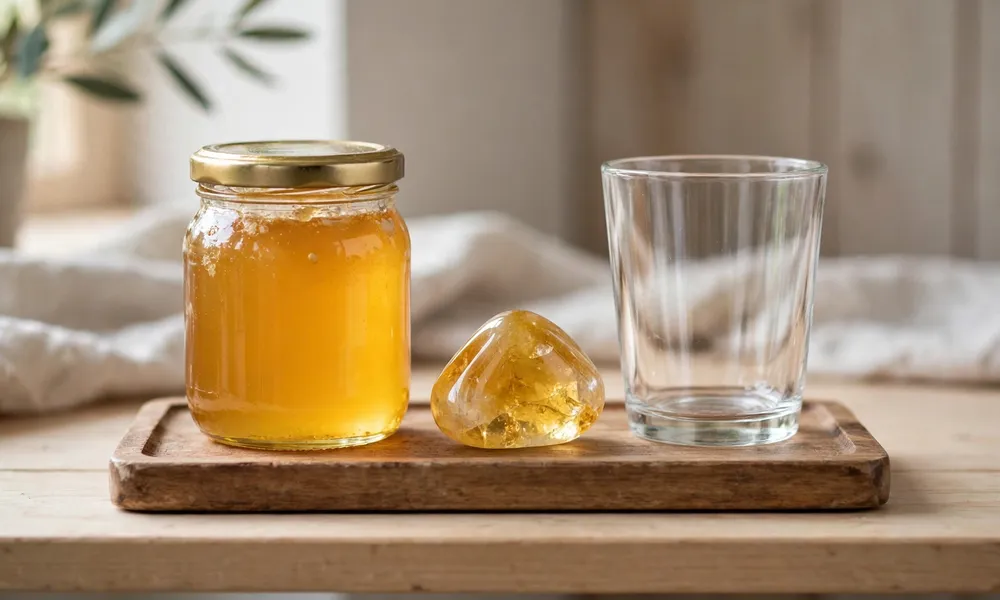
Begin the night before, if you like: set the glass, the honey jar, and the citrine on the kitchen table, so everything is waiting for you. In the morning, warm a glass of water and stir in one teaspoon of honey until it dissolves.
Place the citrine on the table beside the glass, an inch or two away, where the light falls on it. Sit down, hold the warm glass in both hands for a moment, and take the first sip slowly. Drink the whole glass over five or ten minutes, without rushing.
While you drink, let the morning arrive. Look out of the window, listen to the house waking up, or simply sit with the warmth of the glass. When the glass is empty, rinse it, put the citrine back on its shelf or leave it on the table for the day, and begin your morning routine.
Choosing Honey and Keeping Citrine Clean
Choose a honey you enjoy. A light, floral honey — acacia, orange blossom, or a mild local honey — suits this drink best, because it sweetens without overpowering the water. Dark honeys, like buckwheat, are stronger and better saved for toast. Buy honey from a seller you trust, and check the label: the ingredients should list one thing, honey.
Store honey at room temperature in a closed jar, away from direct sunlight. It keeps for a very long time, and if it crystallises — turning cloudy and firm — that is natural: stand the jar in warm water for a few minutes and it will turn runny again.
Keep your citrine clean too: wipe it with a soft, dry cloth once a week, and wash it occasionally with lukewarm water and mild soap, drying it well afterwards. Never soak citrine in honey water. Clear quartz is another stone that loves morning light: clear quartz, a study in light is worth reading next.

Making It a Daily Habit
A morning ritual works best tied to something you already do. If you always open the curtains first, make the honey water second. If you always boil the kettle first, stir the honey in while it cools.
Keep the ritual short. Ten minutes, one glass, one stone — that is the whole thing. A ritual that takes half an hour will be skipped on busy mornings; a ritual that takes ten minutes will survive them.
If you miss a morning, nothing is lost. Drink plain water instead, or simply start again tomorrow.
| Day | When | With |
|---|---|---|
| Weekdays | After waking | One glass, one teaspoon |
| Saturday | Slow morning | One glass, breakfast tray |
| Sunday | Before a walk | One glass, citrine on the table |
Your Citrine and Honey Water Checklist
- Warm a glass of clean drinking water until it is warm, not hot, to the touch.
- Stir in one teaspoon of honey until it has completely dissolved.
- Place the citrine stone on the table beside the glass — never inside the water.
- Sit down and drink the glass slowly over five to ten minutes.
- Rinse the glass, wipe the citrine with a soft cloth, and put both away.
- Keep honey water as a morning drink only; plain water stays your everyday drink.
Frequently Asked Questions
Can I put the citrine stone in the honey water? No, never. The citrine stays beside the glass, never inside it. The honey water is a drink made of water and honey only, and the stone is a display piece.
How much honey should I use? One teaspoon per glass is enough for most people. Stir until it dissolves completely, taste, and add half a teaspoon more only if you like it sweeter.
Is honey water good for my health? Honey water is a pleasant drink, not a treatment. It does not cleanse, detoxify, cure, or prevent any condition. It is warm water with a little honey: enjoyable, comforting, and nothing more. If you have diabetes or a health condition affected by sugar, please speak to your clinician about honey.
Can I make honey water with cold water? You can, but honey dissolves slowly in cold water and the drink is less comforting. Warm water is better: it dissolves the honey quickly and feels kinder first thing in the morning.
What kind of citrine should I use? Any polished piece you like looking at: a small tumbled stone, a point, or a smooth palm stone. Choose a piece with a warm, even yellow colour.
Can children drink honey water? Children over one year old can drink honey water, but honey should never be given to babies under one year old. For children, use half a teaspoon and serve it lukewarm.
The Bottom Line
Citrine and honey water is a sweet morning ritual: a glass of warm honey water, and a citrine stone beside the glass, never inside it. Ten minutes, one teaspoon of honey, and a little morning light.
Begin tomorrow. Warm the water, stir in the honey, set the citrine beside the glass, and drink slowly. That is the whole ritual, and it is enough.
A Note for Golden Mornings
Keep it sweet, keep it slow, keep it yours. The best mornings are rarely the busiest ones: a warm glass, a bright stone, and a few unhurried minutes before the day begins. Stay curious. Stay clear. Keep it golden.



