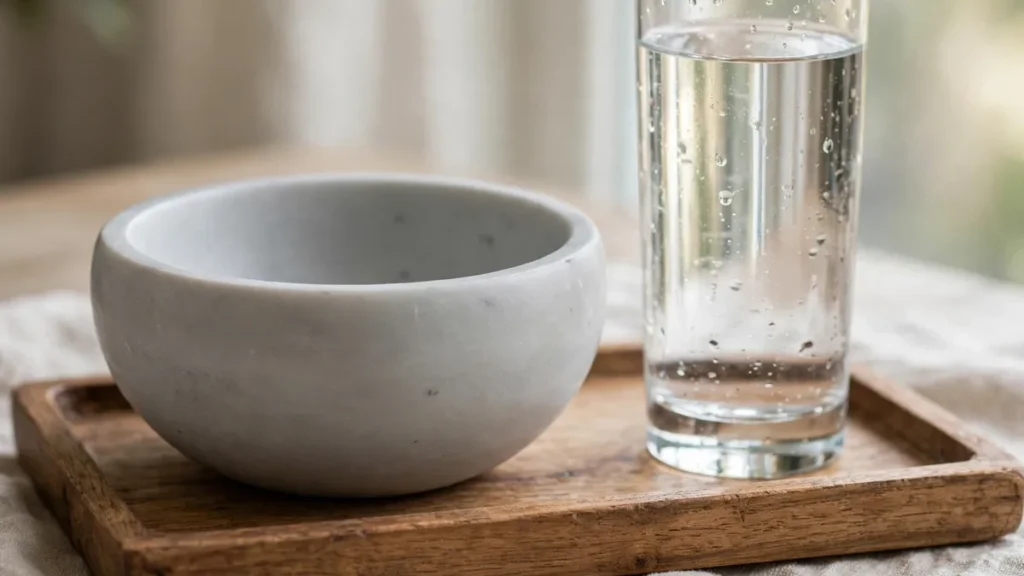
Cinnabar is the reddest stone most collectors ever meet. Its crystals glow a deep, almost wet-looking red, and a single small cluster on a shelf can colour a whole corner of a room. Painters once ground it into vermilion, the bright red of old manuscripts, and the colour still pulls.
The short answer to the question in the title is yes, with rules. A solid piece can sit at home behind glass, touched briefly, with hands washed afterwards. Those limits exist because cinnabar is mercury sulfide, and mercury is poisonous, so keep the stone off the body, out of every glass, and far from the reach of children and pets.
Cinnabar is decoration, not medicine: it will not heal anything, and worrying symptoms belong with a doctor, not with a stone. What follows looks at the mineral as it is: what it is made of, how it differs from the other red display stones, and how to keep it safe on a quiet shelf.
Key Takeaways
- Cinnabar is mercury sulfide, a deep red mineral and the main ore of mercury.
- Soft, only 2 to 2.5 on Mohs, it darkens in strong light.
- Mercury inside: display only, never in water, never worn.
- Wash hands after handling; keep it from children and pets.
- A closed case on a high, dry, shaded shelf is home, water in a glass beside it.
What Cinnabar Is
Cinnabar is mercury sulfide, formed where hot water rich in mercury and sulfur once moved through cracks in rock and cooled. The finest come from old mines in China and Spain. Its crystals are short and blocky, flat-faced and clean-edged, and fresh faces shine with a glassy light.
A piece feels cool and heavy, because mercury is dense. Most cinnabar sells as a cluster on its base, or a single crystal, in scarlet to deep dark red. The red is the point of the stone, and also its warning: so strong a colour comes from a metal to respect.
Why Deep Red Suits Bold Days
Deep red suits a bold day because it refuses to hide. Pink alone feels gentle, orange alone feels light, but deep red is rich and sure at once, like a bright scarf on a day that matters. A bold day suits cinnabar because the piece asks nothing: no preparation, no ceremony, simply there when you sit down, catching the light.
When a day asks you to speak up or attempt something new, one warm object waiting on the tray can steady the start. The stone will not speak for you or make a hard day easy, but a strong colour is a steady place to rest while you gather yourself.
The Mercury Rule First: Display Only
Mercury inside cinnabar shapes every rule in this guide. Mercury harms if swallowed or mixed into food and drink, so the stone must never touch drinking water, an elixir, a bath, a soak or a wash, nor sit beside food. Display it in a closed case, hold it briefly, then wash your hands with soap and water.
Keep it from small children and pets, who may put things in their mouths, and in a dry room where it will not be knocked over. Never cut, crush, sand or scrape it, and never heat it: heating frees mercury vapour, dangerous to breathe, so leave that test to the books.
Choosing a Cinnabar Piece
Buy from a seller who names the stone and tells you it holds mercury, never one who promises health changes. Then look for one even deep red, flat faces that catch the lamp, and a base that sits flat. A small cluster suits a bold-day desk; one lone crystal fits a shelf.
Check for loose crystals before carrying it home, and ask for a shut box, since soft cinnabar breaks easily in transit. When it arrives, unpack it over a tray, look it over in daylight, and wash your hands. A good seller answers plain questions about where the piece came from; one who dodges them is one to leave.
Displaying Cinnabar at Home
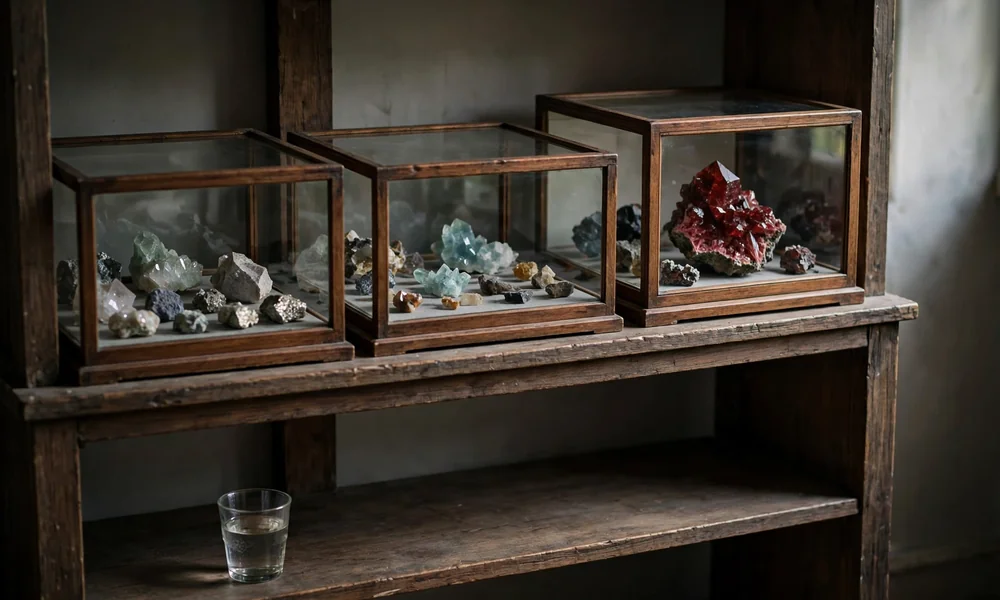
Display cinnabar in a closed glass case on a high, dry shelf, to be seen, not touched. A case keeps dust off, small hands away, and the piece from the floor. Set the case on a dark tray, which deepens the red, and keep your glass on a table well away.
Strong light darkens cinnabar over time, so keep the case in soft light, never on a sunny sill. Clean the case, not the stone: polish the outer glass with a dry, soft cloth. To move it, wear cotton gloves, lift by the base, and set it down gently.

Cinnabar Beside Water
Water belongs beside the stone, never around it: set a clear glass next to the case. They share a tray, not a glass. Never place the stone in drinking water, and never soak it: cinnabar holds mercury, and a stone has no place in a drink.
End the day by wiping the case glass, checking the latch, and setting a fresh glass beside it. Drink the water slowly, wash your hands, and leave the stone to the dark shelf. If the glass spills, lift the case away, dry the tray, and wash your hands. Never let water sit under the case.
Cinnabar at a Glance
| Deep red crystal | Bold days | Display only |
|---|---|---|
| Mercury sulfide | Bright daylight | Never in water |
| Soft, Mohs 2.5 | Desk and tray | Hands washed after |
| Cool in hand | Water, light, pause | Shaded dry shelf |
Cinnabar and Realgar
For the other warm red stone for bold days, see the realgar guide.
That guide keeps short red-orange blocks in a shut case, lifting them only for a brief look and a wash after, because realgar holds arsenic. No one wears it, no water touches it, and children and pets stay away. Cinnabar keeps the same rules for a different reason: mercury, not arsenic, in deep red crystals that darken in strong light, while realgar fades in sun. One is mercury red, the other arsenic red; both live behind glass.
Cinnabar and Stibnite
Stibnite, the grey display stone kept under matching careful rules, has its own page: the stibnite guide.
That guide keeps steel-grey needles in a shut case, lifting them only for a brief look and a wash after, because stibnite holds antimony. No one wears it, no water touches it, and children and pets stay away. Cinnabar is the opposite colour and mood: deep red and bold where stibnite is steel grey and quiet, yet both live the same careful life behind glass, in the shade, on a high dry shelf.
Cinnabar and Vanadinite
For the closest red match, see the vanadinite guide.
That guide keeps deep warm red hexagonal crystals on a tray for days you must speak up, under lead's own rule: show it only, keep it out of water and away from food, and wash after handling. The two could hardly look closer, or differ more underneath. Vanadinite is lead vanadate, hard and steady in strong light; cinnabar is mercury sulfide, soft and quick to darken in sun. Lead red stays bright on an open tray; mercury red needs a shaded case.

Nine Neighbours in This Batch
Fulgurite keeps the warm brown of the lightning strike that made it. Soapstone stays soft and grey. Wurtzite holds its deep brown steady. Pyrolusite keeps its deep black in the shade. Cinnabar is this batch's red one, burning behind glass. The freezer hums down in the kitchen. The oven warms the room on cold evenings. The staircase carries you up step by step. The hallway leads you in from the front door. The attic waits at the top, windows shut, until someone opens them.
Stones That Must Never Touch Water
Cinnabar is not the only stone water harms. Damp air turns pyrite's bright gold to rust-coloured stains that pale linings can hold. Angelite turns cloudy after one wetting and never turns clear again. Amber, hardened tree resin from long years ago, goes milky when it soaks.
Two more stay dry for another reason. Apatite is one: damp air softens it until it flakes. Lepidolite is another, since its pale flakes hide lithium, which has no place near a drink. Keep them all beside the glass, and the glass for drinking only.
Your Cinnabar Checklist
- Keep the piece in a closed case on a high, dry, shaded shelf.
- Handle it briefly, by the base, and wash hands with soap after every touch.
- Never put cinnabar in water, an elixir, a soak, or near food.
- Never cut, crush, sand or heat it, and never make dust.
- Keep the case from children and pets; dust the glass, never the crystals.
- Set a glass of fresh water beside the case, and drink from the glass.

Frequently Asked Questions
Is a solid piece of cinnabar safe to keep at home?
Yes, in a closed case on a high, dry, shaded shelf, handled briefly with hands washed after. The mercury stays locked in the solid stone, so a display piece is safe to look at, never worn, never in water, never near children or pets.
Why must cinnabar never go in water?
Because cinnabar is mercury sulfide, and mercury is poisonous if it gets into food or drink. A stone in a glass can chip or shed flakes, and none of that belongs in a drink. The glass beside the case is for drinking; the stone stays dry.
What should I do if cinnabar touches my drinking water?
Throw the water away, wash the glass well, and wash your hands. Do not drink from it until clean, and set the stone back in its case. If you swallowed any and feel unwell, ask a doctor straight away.
Does sunlight harm cinnabar?
Yes, strong light darkens cinnabar over time, dulling the bright red. Keep the case in soft light, never on a sunny sill, so the colour stays bright.
How do I clean a cinnabar display?
Dust the outside of the case with a soft dry cloth; leave the crystals alone. Never wipe the stone wet, and never use soap or polish on it. To move it, wear cotton gloves and lift by the base.
Can I wear cinnabar as jewellery?
No, cinnabar is a display-only stone and should never be worn. Long skin contact, knocks that chip soft crystals, and flakes near the mouth all argue against it. Enjoy the red behind glass; choose another stone for wearing.
The Bottom Line
Cinnabar is safe behind glass in a shaded, dry place, with clean hands and a glass of water standing apart.
A Note for Deep Red Days
A deep red cluster behind glass, a glass of water beside it, and a shaded shelf — that is all a bold day needs.