
Some weeks arrive already full. The calendar is crowded before Monday has properly begun, messages stack up faster than you can answer them, and by Wednesday the days blur into one long list of things still to do. Nothing dramatic has happened, yet everything feels slightly too much.
Chrysocolla calm water is a small, steady answer to that kind of week. Chrysocolla is a blue-green stone, mottled with turquoise, teal and earthy brown, and it has long been kept as a calm, cooling presence on a desk or bedside table.
This article explains what chrysocolla calm water means, how to set it up in a few minutes, and how to use it through a stressful week without turning it into another task.
Key Takeaways
- Chrysocolla calm water means a blue-green chrysocolla stone kept beside a glass of drinking water, never in it.
- The ritual is a pause, not a cure: a visible reminder to breathe, drink water, and choose one small next step.
- Set it up once, in a place you pass often, so the habit needs no willpower during a busy week.
- A calm week is built from small repeats: water within reach, a short pause, and a kinder plan for the day.
- If stress feels overwhelming or persistent, please speak to a qualified health professional.
What Chrysocolla Calm Water Actually Is
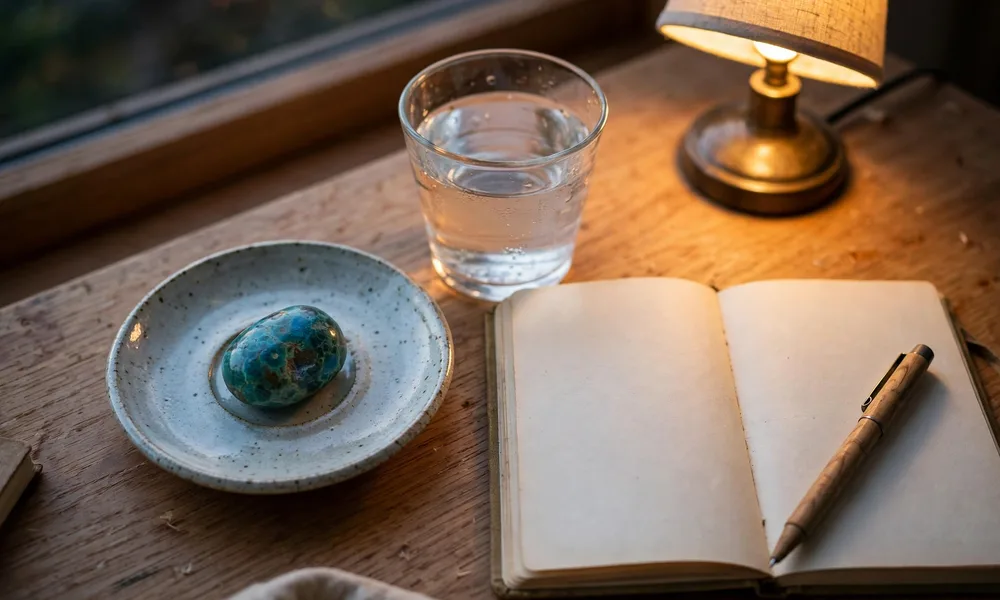
Chrysocolla calm water is not a recipe and not a remedy. It is a pairing: a stone you like to look at, and a glass of water you will actually drink. The stone sits on a dish, a tray or a folded cloth.
Chrysocolla itself is a copper mineral, and its colour is its most striking quality. No two pieces look quite the same: some are mostly turquoise, some are deep teal, and many carry veins of brown or black matrix through the blue-green.
The water matters just as much as the stone. A glass of fresh water within reach is one of the easiest small comforts in a stressful week, and it is easy to forget when you are busy. The stone draws the eye; the water does the practical work.
Why Stressful Weeks Need a Visible Anchor
Stressful weeks have a particular rhythm. The mornings start early, the afternoons stretch long, and the evenings arrive with work still unfinished. In that rhythm, good intentions evaporate.
A visible anchor changes that. A small, beautiful object on your desk interrupts the flow of the day in a gentle way. That second is enough to take a sip of water, stretch your shoulders, or decide what actually matters next.
This is why the anchor should live where you work or rest, not in a drawer. A stone hidden away cannot remind you of anything. Five minutes of clearer thinking pairs well with this pause, because a calmer moment is a good time to choose one clear next step.
Choosing a Piece of Chrysocolla You Love
Choose chrysocolla the way you would choose any beautiful object: by looking at it. A polished tumbled stone is smooth, cool to hold, and easy to keep on a desk. Hold it in natural light and turn it slowly, as you would study a clear crystal in the light, noticing which colours catch your eye first.
Size matters more than rarity. A piece about the size of a plum or a small egg is large enough to notice and small enough to fit on a tray beside a glass.
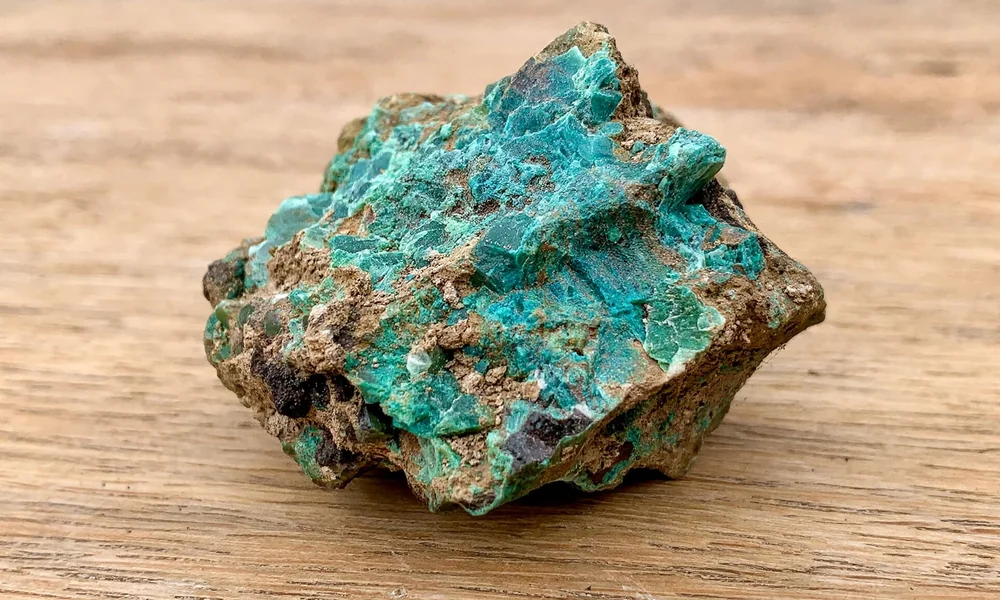
Ask the seller what the material is, whether it has been treated or dyed, and how they describe its origin. Request a photograph of the actual piece when you buy online, because chrysocolla varies so much in colour that a stock photo can mislead.
Setting Up Your Calm Water Corner
Setting up takes about five minutes, and it is worth doing on a Sunday evening or a quiet morning before the week begins. Choose a spot you pass often: a desk corner, a kitchen shelf, or a bedside table.
Place a small dish, a ceramic saucer or a folded linen cloth first. This protects the surface and gives the stone a defined home. Set the chrysocolla on it, turning it until the colours you like best face outward.
Keep the corner simple. One stone, one glass, and perhaps a small notebook are enough. If you add too much, the corner becomes another display to manage, and the calm feeling fades.
The Morning Pause: Starting a Busy Day Gently
Mornings set the tone for a stressful week, and a short pause at the start costs almost nothing. When you sit down to work, before you open your messages, look at your calm water corner for a moment. Take a slow sip of water.
This pause works because it is short. Two minutes is enough, and two minutes is honest about a busy morning. A long morning ritual that you abandon by Tuesday helps nobody; a short one you keep all week is worth far more.
The Midday Reset: Water, Breath and One Decision
Midday is when stressful weeks usually peak. The morning's energy has faded, the afternoon still stretches ahead, and the list of unfinished things looks longer than it did at nine o'clock.
Stand up, walk to the corner, and refill your glass with fresh water. Drink it slowly, standing still, rather than carrying it back to your desk to forget. Take three slow breaths, letting your shoulders drop as you breathe out. A short thinking exercise can help you write that step down in plain language, so it stops circling in your head.
The Evening Wind-Down: Leaving the Week at the Desk
Evenings in a stressful week often blur into more work, because the day never feels finished. A small evening ritual at your calm water corner can draw a line under the day, even when tasks remain.
When you finish work, tidy the corner: empty the glass, rinse it, and set it upside down to dry. Wipe the dish if needed, and turn the stone so a fresh face shows tomorrow.
This small closing matters because stressful weeks rarely end neatly. There will always be one more email.
A Week at a Glance: A Simple Rhythm
A calm water ritual works best when it has a loose rhythm rather than strict rules. The table below shows one way to shape a stressful week around small pauses, with each day carrying a slightly different emphasis.
| Day | Focus | Small pause |
|---|---|---|
| Monday | Begin gently | Morning pause, one priority written down |
| Tuesday | Keep water close | Refill the glass at midday, three slow breaths |
| Wednesday | Midweek reset | Five-minute pause, choose the next small step |
| Thursday | Lighten the load | Cross one thing off, or ask for help with it |
| Friday | Close the week | Evening wind-down, tidy the corner, rest |
| Weekend | Rest and notice | A slow glass of water, no plan required |
Chrysocolla Beside Water, Never in It
This point deserves its own section, because it is easy to misunderstand. Chrysocolla should never be placed in drinking water. Some minerals can shed particles, react with water, or carry residues from polishing and handling, and chrysocolla is a soft, porous stone that is not suited to soaking.
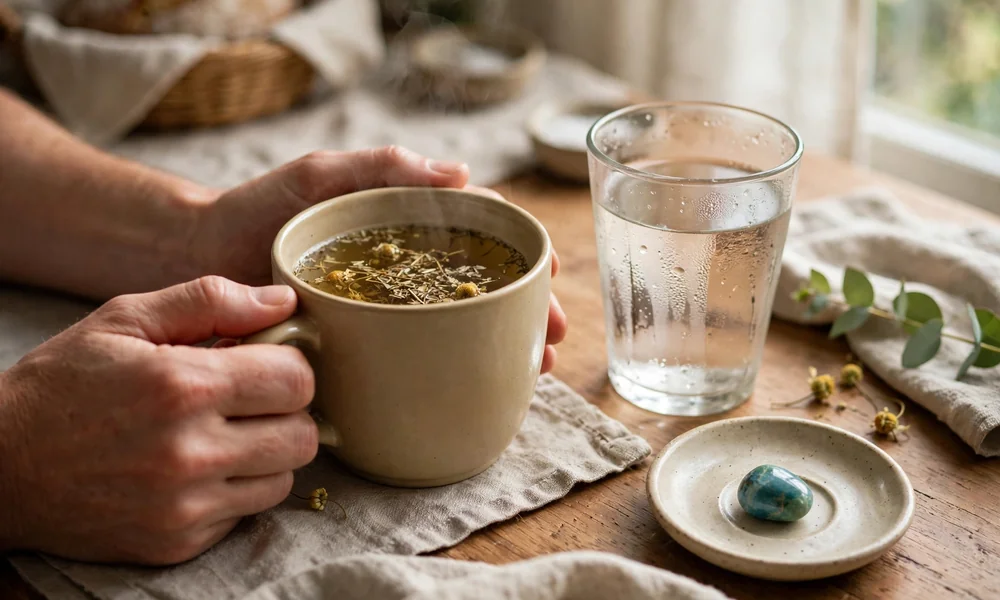
Keeping the stone beside the water still gives you everything the ritual offers: the colour, the pause, and the reminder to drink. The water you drink stays plain, fresh and clean, exactly as it should be.
Care for the stone simply. Wipe it with a soft, dry cloth when dusty, and keep it out of harsh sunlight for long periods if you want its colours to stay vivid.
Chrysocolla and the Rest of Your Wellbeing
A calm water corner is one small part of a wider picture, and it works best alongside ordinary, practical care. Sleep, food, movement and time with people you like all matter more than any single object on a desk. Wellbeing without the overwhelm makes this point gently: begin with the question of what would make today a little easier, and let the answer be practical.
If you enjoy the ritual, let it sit beside other small habits rather than replacing them. A short walk at lunch, a proper meal eaten away from the screen, and a regular bedtime are all quieter and more powerful than they look.
What Calm Water Will Not Do
Say plainly what chrysocolla calm water will not do. It will not cure anxiety, stress, insomnia or any health condition. It will not remove the causes of a stressful week, finish your work, or make difficult news easier.
What it can do is simpler and more honest. It can give you a visible place to pause, a glass of water within reach, and a few unhurried minutes in a busy day.
If stress feels overwhelming, persistent, or is affecting your sleep, appetite or daily life, please speak to a qualified health professional. A calm corner can support a good week, but it cannot replace care, and asking for help is a sensible, ordinary step.
Your Stressful Week Checklist
- Choose a chrysocolla piece you enjoy looking at, in a size that fits your desk.
- Set up a small corner: stone on a dish, a clean glass of fresh drinking water beside it, never in it.
- Begin each morning with a two-minute pause, a sip of water, and one priority written down.
- Reset at midday: refill the glass, take three slow breaths, choose the next small step.
- Close the evening with a tidy corner and a line about the day, then rest.
- If stress feels overwhelming or persistent, speak to a qualified health professional.
Frequently Asked Questions
What is chrysocolla calm water?
Can I put chrysocolla in my drinking water? No. Chrysocolla is a soft, porous stone and should never be placed in drinking water.
Will chrysocolla reduce my stress? No stone can cure or treat stress.
How long does the daily ritual take? About two minutes in the morning, five minutes at midday, and a few minutes in the evening.
Where should I keep the stone? Where your eyes naturally fall during the day: a desk corner, a kitchen shelf, or a bedside table.
What if I miss a day? Nothing is lost. The corner will still be there tomorrow, and the next pause counts just as much.
The Bottom Line
Chrysocolla calm water for stressful weeks is a small, honest ritual: a beautiful blue-green stone beside a glass of fresh water, and a few short pauses built around it. That is a modest promise, and it is one a stone and a glass of water can keep.
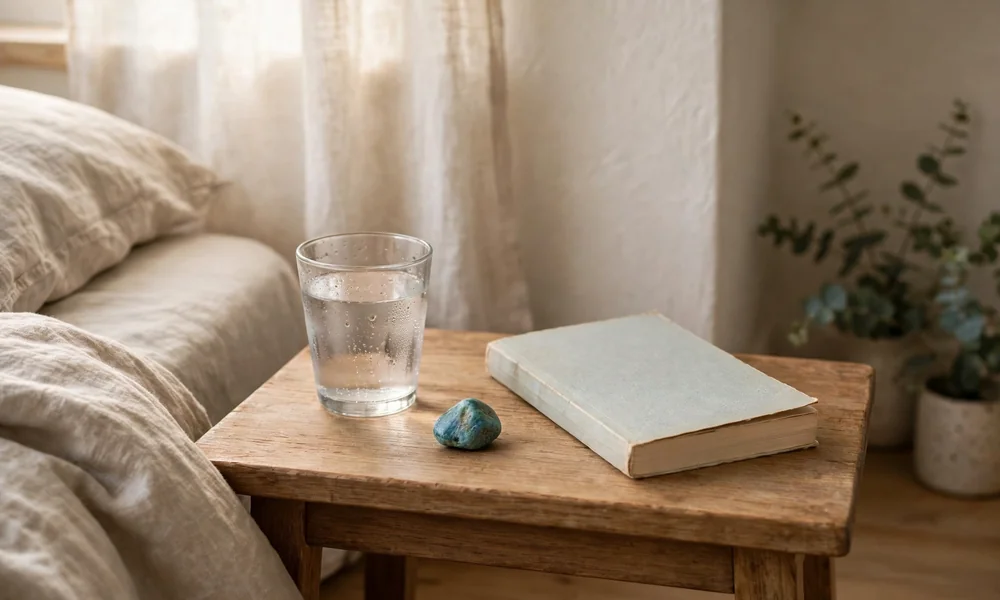
Begin with whatever you already have: a stone you love, a clean glass, and a few unhurried minutes. Set the corner up tonight, and let tomorrow start a little more gently.
A Note for Stressful Weeks
Keep it simple, keep it gentle, and keep it yours. The best rituals are rarely the most elaborate. They are the ones that fit a real, crowded week and still leave room to breathe. Stay curious. Stay clear. Drink water, pause often, and be kind to yourself while the week runs its course.



