There are mornings when the house stays dim and the day has no shape yet. The blinds stay half closed, the kettle hums once and goes quiet, and nobody is in a hurry to decide anything. A pale stone would look washed out in that light, and a patterned one would feel busy.
Black jasper suits those dim hours: a plain deep black stone, dark from edge to edge, with a low soft glow instead of a bright shine. It does not ask to be looked at, and it does not try to cheer anything up, which is exactly right for a day with nothing planned.
What follows is a close look at black jasper: what the stone is, how to choose a fine piece, and its own place among the other jaspers here. The stone is only a lovely thing to look at and hold; it cures nothing.
Key Takeaways
- Black jasper is a plain deep black jasper, dark all the way through, with no pattern at all.
- Its plain black suits dim rooms, slow mornings, and days with nothing planned.
- Black jasper is only for looking and holding alone; it heals nothing at all.
- Keep the stone next to a glass of drinking water, never in it, always dry.
- One small black stone is enough for a whole quiet day at home.
What Black Jasper Is
Black jasper is jasper in its darkest plain form, a hard opaque kind of quartz that takes a smooth polish. It forms slowly underground, as fine quartz grains settle together into solid rock, and the dark colour comes from tiny traces of iron and other minerals spread evenly through it.
Run a thumb over a polished piece and it feels cool, dense, and sleek, with a gentle satin gleam that catches the light without flashing. Hold it up to a lamp and no light passes through; the black runs right through to the middle.
Why Deep Black Suits Quiet Days
Darkness can feel restful when the day itself is unhurried. A bright red stone would look loud against a dim room, and a pale stone would disappear into the grey light, but black jasper holds its shape and gives the eye one steady place to rest.
Choosing a Black Jasper Piece
Look for a black that is even and deep, with no grey patches and no pale streaks. Turn the stone under a lamp: the surface should glow softly all over, like wet slate, and not show dull chalky spots or sharp chips along the rim.
Pick a size that sits easily in your palm. Ask the seller where the stone came from, and set aside any piece whose black looks painted on or unnaturally glossy.

A Quiet Day with Black Jasper
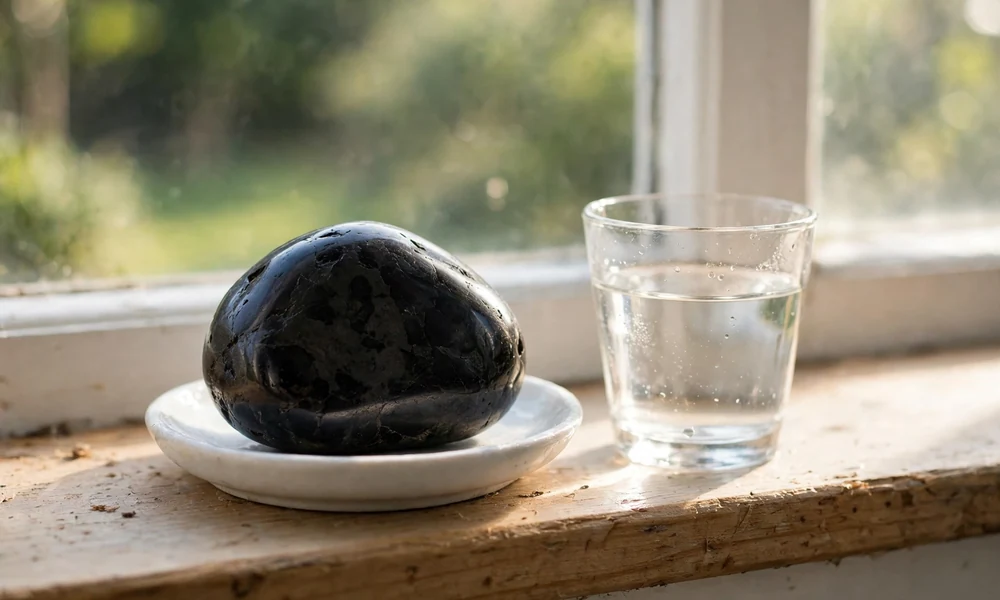
Set the black jasper on a dark slate board near the window, with a tall glass of cool water kept well away across the room in soft morning light. Sip slowly and let your eyes rest on the dark stone as the morning drifts slowly by. Nothing is required; board, water, and stone together are plenty for the whole calm quiet day.
Open a book for a chapter, or watch shadows cross the floorboards. When the glass is empty, refill it and keep going.
Black Jasper Beside Water
The tray holds two separate things: a glass of water and a black stone. Give each one its own corner, with empty wood in the middle, so the water never touches the jasper and the jasper never gets wet.
Wash your hands once the stone is back on its tray, before you reach for your drink. The stone belongs on dry wood only — not in cups, jugs, baths, or any water you plan to swallow.
Black Jasper at a Glance
| Plain deep black | Even, dark colour | Display only |
|---|---|---|
| Cool, dense, smooth | Tray, shelf, windowsill | Wash hands after |
| Soft satin glow | Dim light, slow days | Never in water |
| Small stone, plain | Quiet days, rest | Dry cloth wipe |
Black Jasper and Zebra Jasper
Zebra jasper is the closest bold cousin black jasper has, and the two are easy to tell apart once they sit side by side. Zebra jasper for bold days covers a black-and-white striped stone, graphic and striking, like ink lines drawn across pale rock.
The difference is pattern. Zebra jasper wears its black in bold stripes over white, and it suits bright days that want contrast. Black jasper wears no pattern at all, just one even deep black, and it suits dim days that want calm.
Black Jasper and Black Agate
Black agate is the other plain black stone on this site, and it is worth knowing how the two differ. Black agate for quiet days covers a deep black chalcedony, dark from edge to edge, with a calm polished face that takes in low light.
Both stones are black and both suit quiet hours, yet they come from different branches of the quartz family. Black agate is a banded chalcedony, smooth and glassy, while black jasper is an opaque quartz, denser and more matte. Pick the agate for a glassy shine, and the jasper for a soft earthy dark.
Black Jasper, Brown Jasper and White Jasper
Two more jaspers arrive in this same batch, each carrying a colour black jasper leaves out. Brown jasper, the sibling stone numbered 772, is a warm brown jasper, earthy and steady, for days that want grounding. White jasper, the sibling numbered 774, is a clear white jasper, bright and clean, for days that want light.
Black jasper is the dark one between them, holding only deep black. The three together make a simple set: brown for warmth, white for brightness, black for stillness.
Black Jasper and the Other Jaspers
Beyond the closest cousins, the jasper family still keeps many colours, and none of them is the plain black of this guide. Picasso jasper paints broad black, grey, and cream streaks across its face like strokes, while fancy jasper curls soft pale pink, cream, and sage green. Leopardskin jasper wears cream, tan, and dark brown spots, and dalmatian jasper is cream with black spots.
Bumblebee jasper bands warm yellow with dark stripes, and zebra jasper stripes black over white. Rainforest jasper and kambaba jasper are green, one with pale leaf shapes and one with dark swirls, while green jasper is solid deep green. Mookaite jasper bands mustard, brick red, and brown, brecciated jasper joins rust, cream, and brown fragments, and polychrome jasper swirls terracotta, ochre, teal, and cream. Yellow jasper is warm and sunny, ocean jasper circles green, cream, and pale blue, picture jasper paints brown landscapes, and red jasper is deep brick red.
Black onyx is not a jasper at all, though it shares the deep black look. Black onyx for busy days covers a dark banded chalcedony, and its black comes from fine even layers rather than the dense opaque grain of jasper. Onyx suits busy weeks that want steady strength; black jasper suits quiet days that want stillness.

Caring for Black Jasper
Black jasper is hard, yet it still likes a gentle home and a soft hand. Keep it somewhere dry and cool, inside a lined box that shuts firmly, or on a high shelf clear of falling jars, far from strong sun and damp corners. Keep it apart from harder stones that scratch.
Wipe dust away with a dry soft cloth, moving lightly over the curved top instead of pressing down. Keep soap, sprays, and polishing pastes in the cupboard.
Stones That Must Never Touch Water
A few stones need to stay well away from anything you drink, and it is worth knowing which ones before they reach a tray. Malachite is first on that list: the copper compounds inside its green bands do not belong in anything you swallow, so it should never be dunked or stirred into a drink. Hematite comes next — it can rust and leave stains, so keep it out of drinking water too.
Other stones belong on a shelf and nowhere near a glass: apatite, and lepidolite, whose pale flakes carry lithium within them. Pyrite, angelite, and amber are dry-only stones as well; soaking them or sipping water they have touched is never a good idea. Black jasper stays dry on its tray just the same, beside the glass and never inside it.
Your Quiet Days Checklist
- Rest the black jasper on a dry tray, with a full glass a little way off.
- Sip the water slowly while the morning light stays low.
- Wash your hands with soap after you set the stone down.
- Choose a shop that tells you in plain words where the stone came from.
- Keep it in a cool dry drawer, away from small hands.
- For any health worry, talk to a doctor; a stone cannot help.

Frequently Asked Questions
What is black jasper?
Black jasper is a plain deep black jasper, a hard opaque quartz that forms slowly underground from fine quartz grains. Its dark colour comes from tiny traces of iron and other minerals spread evenly through the stone.
How is black jasper different from zebra jasper?
Zebra jasper wears bold black stripes over white, graphic and striking, for bright days that want contrast. Black jasper wears no pattern at all, just one even deep black, for dim days that want calm.
How is black jasper different from black agate?
Both stones are black and both suit quiet hours, yet they come from different branches of the quartz family. Black agate is a smooth glassy chalcedony, while black jasper is a denser, more matte opaque quartz.
How is black jasper different from black onyx?
Black onyx is a dark banded chalcedony, and its black comes from fine even layers. Black jasper is an opaque quartz whose black runs through dense grain, and it suits still quiet days rather than busy weeks.
Is black jasper safe to hold?
Holding it for a short while is fine. Wash your hands with soap right after you set it down, and keep the stone far from children and from food.
Where should I keep black jasper at home?
Choose a calm dry spot — a tray, a shelf, or a sill — with the glass close by but apart, away from bumps and damp.
The Bottom Line
Black jasper lends hushed days a dark friend: one plain black stone in soft light, on a dark tray beside a glass of water, looked at, never sipped.
A Note for Quiet Days
Let the morning stay dim and the stone stay dry. One small black jasper, one glass of water, and a few slow hours with nothing to do are plenty.